Limited Time: 20% Off All Prints
Free worldwide shipping on orders over $69
Delivery 4-12 business days
Home / Trending Art Styles / How to Choose Minimalist Art Prints for Modern Interiors
Modern interiors often rely on simplicity, clean lines, and intentional design choices. In a world that feels increasingly cluttered and loud, our homes have become the ultimate retreat—a place where the eyes can rest and the mind can reset. One of the easiest and most effective ways to reinforce this aesthetic is through carefully chosen minimalist art prints, which add character and soul to a space without overwhelming the sensory experience.
Choosing art for a minimalist home is different than decorating a traditional space. It isn’t about filling every empty inch of wall; it is about finding the one piece that speaks volumes through its restraint. Whether you are moving into a new home or looking to refresh your current minimalist art prints collection, understanding how to balance color, scale, and composition is key to achieving that coveted gallery-like feel.
In modern minimalist wall decor, the philosophy of “less is more” takes center stage. However, “less” does not mean “nothing.” Without art, a minimalist room can feel cold, clinical, or unfinished. The role of the artwork is to provide a focal point that anchors the room’s furniture and architectural lines.
Minimalist interiors rely heavily on negative space—the empty areas around an object. In a calm visual composition, the negative space is just as important as the art itself. When you choose a piece of minimalist wall art, you aren’t just looking at the lines or shapes on the paper; you are looking at how that piece interacts with the “silence” of the wall. The goal is to create balance through thoughtful placement and subtle visual impact, ensuring that the art complements the room rather than dominating it.
One of the defining features of modern minimalist interiors is a cohesive, disciplined color palette. While you can certainly have pops of color in a minimalist home, the most successful spaces usually revolve around a core set of neutrals.
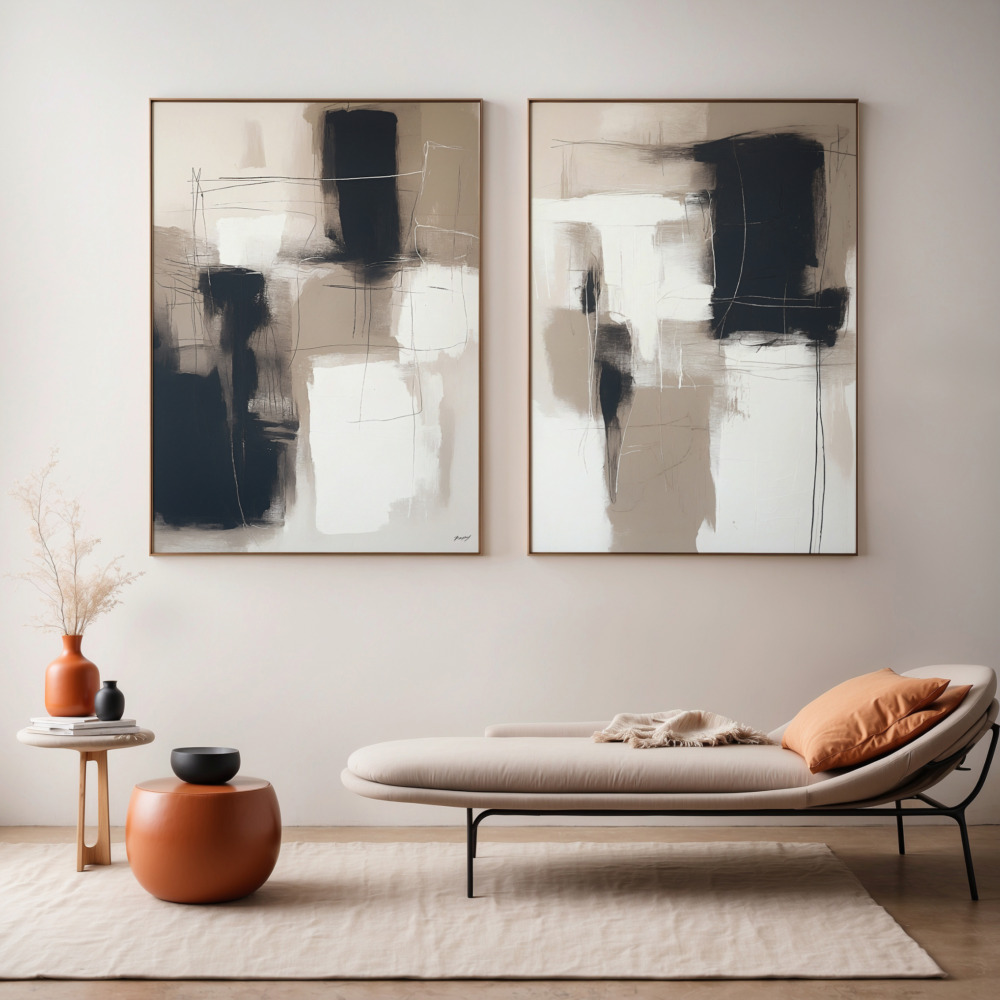
Neutral wall art prints in tones such as beige, sand, cream, and charcoal work particularly well. These colors harmonize with natural materials like light oak, stone, and linen. A warm minimalist palette prevents the room from feeling stark, adding a layer of “softness” that is essential for a livable home. When the colors in your art match the undertones of your walls and furniture, the room feels unified and expansive.
This focus on a warm, natural palette is also central to the Japandi wall art collection, where Scandinavian simplicity meets Japanese minimalism to create an even deeper sense of tranquility.
Minimalism is a broad umbrella that covers several different artistic styles. Depending on the “vibe” of your home, you might find that one style resonates more than others.
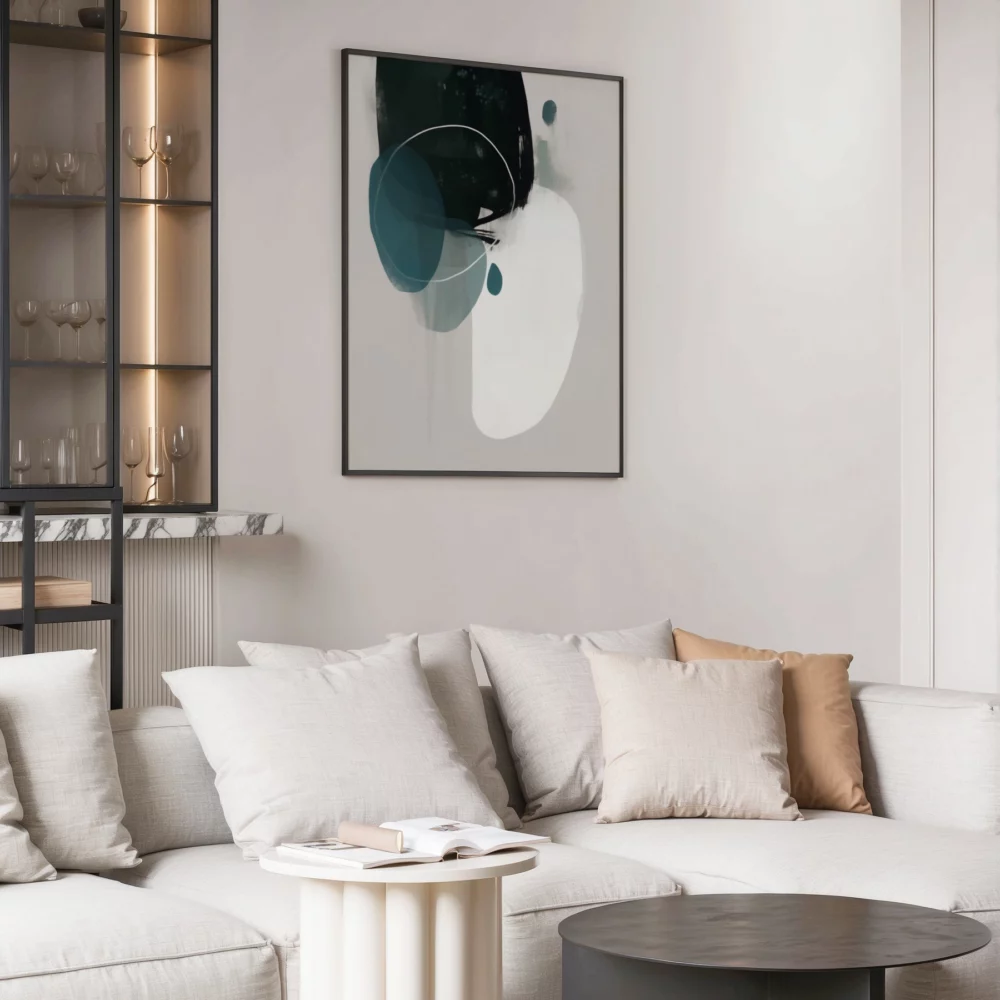
Abstract minimalist wall art often uses organic abstract forms—think of soft circles, pebble shapes, or flowing washes of color. These pieces are excellent for adding a sense of movement to a room without the clutter of a literal subject matter. They work beautifully in living rooms where you want a sophisticated, modern energy.
Minimalist line drawings are perhaps the most iconic form of the genre. Usually featuring a single black line on a white or beige background, these prints celebrate the beauty of the “unfinished” stroke. Simple black line art is perfect for bedrooms or hallways where you want a clean, rhythmic look.
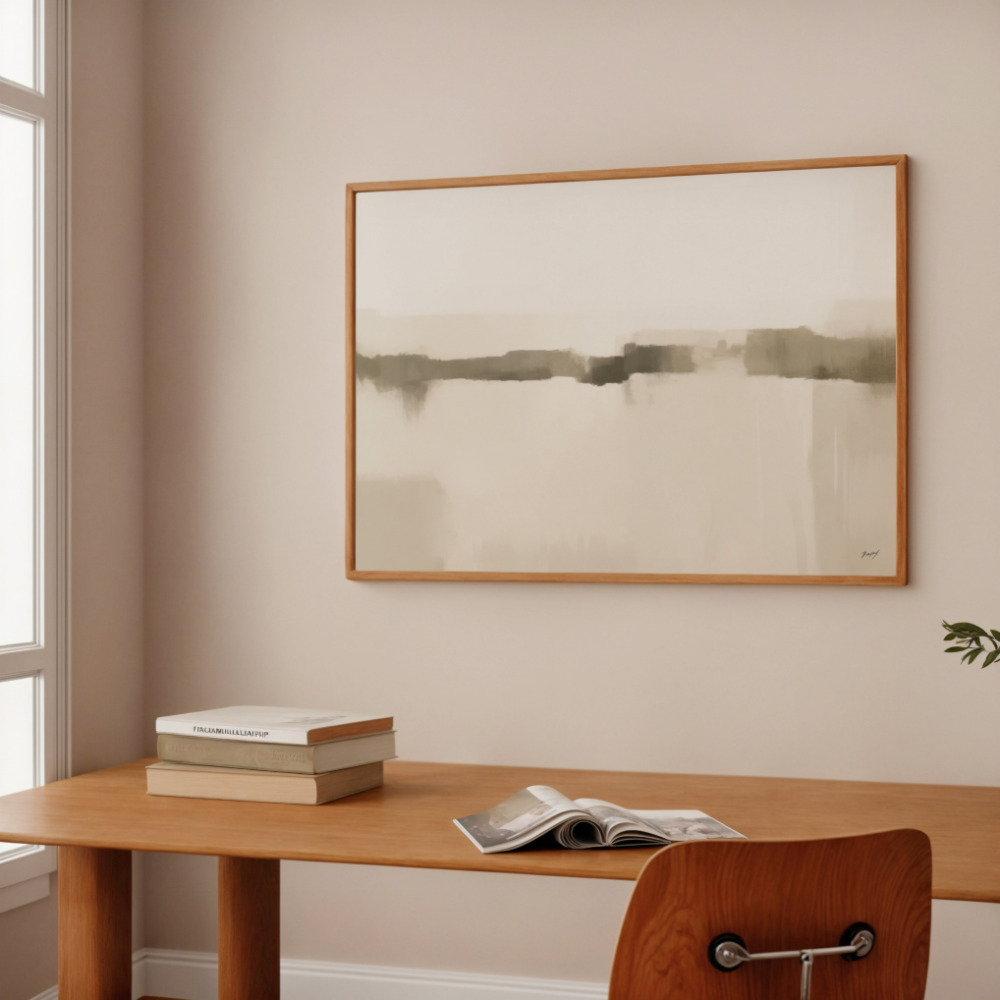
If your home features many plants or natural wood, nature-inspired wall art is a perfect match. These aren’t high-definition photographs, but rather calm landscape prints that use simplified shapes to suggest a horizon, a leaf, or a mountain range. They bring the peace of the outdoors inside while maintaining a simple wall decor philosophy.
In minimalist design, size matters. Because you are hanging fewer pieces, the scale of those pieces becomes a major design statement.
A common mistake in small-space decorating is using too many small pictures. In a minimalist interior, one large minimalist wall art piece is almost always better than five small ones. An oversized canvas print creates a striking focal point above a sofa or bed. It commands attention and makes the room feel more “designed” while maintaining the calm atmosphere essential to the home.
If you prefer a collection of art, you can still achieve a minimalist look with a modern gallery wall. The secret is consistency. Use identical frames and maintain a strictly neutral wall art prints theme. Keep the spacing between the frames perfectly even to create a sense of order and grid-like precision.
Many modern minimalist interiors are deeply inspired by the principles of Scandinavian minimalist art. In the Nordic countries, design is driven by the need for light and the celebration of natural materials.
Nordic art prints bring a specific kind of “soft minimalism” to a home. They often incorporate muted earth tones, depictions of the rugged Northern landscape, and textures that mimic stone or wood. By incorporating Nordic art prints into your decor, you bring in the concept of Hygge—ensuring that your minimalist home feels like a cozy sanctuary rather than a cold museum.
As you search for the perfect modern minimalist wall decor, you will likely encounter the term “Japandi.” While they are related, they offer different moods.
Traditional minimalist art prints focus on pure reduction, geometric shapes, and often a cooler color palette. It is about the “less is more” approach in its sleekest form. Japandi wall art, however, adds a layer of “warm minimalism.” It blends Scandinavian Japanese design to include more organic textures, “imperfect” handmade lines (Wabi-sabi), and a slightly deeper, earthier color palette.
If your home is full of concrete and glass, traditional minimalism works well. If your home is full of wood, plants, and soft textiles, Japandi-inspired pieces will likely feel more at home.
The “finish” of your art is just as important as the image itself. In a minimalist home, the materials should feel authentic and high-quality.
Minimalist Canvas Prints: Canvas offers a textured, matte finish that eliminates glare. Because canvas prints often don’t require a traditional glass frame, they have a “softer” presence on the wall, making them ideal for oversized statement pieces.
Fine Art Paper Prints: For those who love crisp detail and a classic look, fine art paper prints are the way to go. When paired with modern wall art frames—typically thin profiles in black, white, or natural oak—paper prints provide a sophisticated, gallery-style finish.
At printstudio.art, I use Giclée printing processes to ensure that whether you choose canvas or paper, the colors remain vibrant and archival-quality for decades.
Before you make your final selection, keep these three actionable tips in mind:
Match the Room’s Undertone: If your walls are a “cool” white, look for prints with gray or black accents. If your walls are “warm” (cream or off-white), stick to beige, tan, and brown tones.
Balance the Scale: Measure your furniture before buying. A print above a sofa should typically be about 2/3 to 3/4 the width of the sofa itself.
Trust Your Gut: Minimalism is about intentionality. If a piece of art doesn’t make you feel a sense of calm or “click” with your personal style, don’t buy it just because it’s “minimal.” Every piece should have a purpose.
Choosing the right minimalist art prints can transform a modern minimalist interior into a calm, balanced space. By focusing on neutral tones, thoughtful composition, and natural inspiration, you can create an environment that feels both elegant and peaceful.
Minimalism is not about the absence of things; it is the presence of the right things. A single, well-chosen piece of minimalist wall art can change the entire energy of a room, providing a visual anchor that allows everything else to fall into place.
I invite you to explore my curated minimalist art collection to discover original pieces designed to complement contemporary homes and bring a sense of lasting harmony to your walls.