Limited Time: 20% Off All Prints
Free worldwide shipping on orders over $69
Delivery 4-12 business days
Home / Trending Art Styles / Why Designers Can’t Stop Using Geometric Prints
Walk into any design-forward space today, and you’ll likely spot them: clean lines, perfect circles, bold triangles creating visual harmony on the walls. Minimalist geometric art prints have become the go-to choice for interior designers and homeowners who understand that less truly can be more. But what makes these seemingly simple designs so captivating, and why do they work in virtually any space?
The appeal of geometric minimalism isn’t just a passing trend—it’s rooted in fundamental design principles that have stood the test of time. From the revolutionary Bauhaus movement of the 1920s to today’s Scandinavian-inspired interiors, geometric forms have consistently proven their power to create balance, focus, and sophistication in our living spaces.
Geometric minimalism strips away the unnecessary to reveal pure form. This design philosophy celebrates the beauty of fundamental shapes—circles, squares, triangles, and lines—arranged with intentional precision. Unlike busy, detailed artwork that demands constant attention, geometric art prints offer visual rest while maintaining interest.
The genius lies in their duality. At first glance, they appear simple, almost effortless. Look closer, and you’ll discover layers of mathematical relationships, color theory applications, and compositional balance that make them endlessly fascinating. This sophisticated simplicity is why they never feel overwhelming, regardless of room size or existing décor.
Modern geometric art draws heavily from historical movements like Bauhaus, De Stijl, and Constructivism. These pioneering schools understood that basic geometric forms could communicate complex ideas about order, harmony, and the relationship between elements. Today’s minimalist geometric prints continue this legacy, offering contemporary interpretations of these timeless principles.
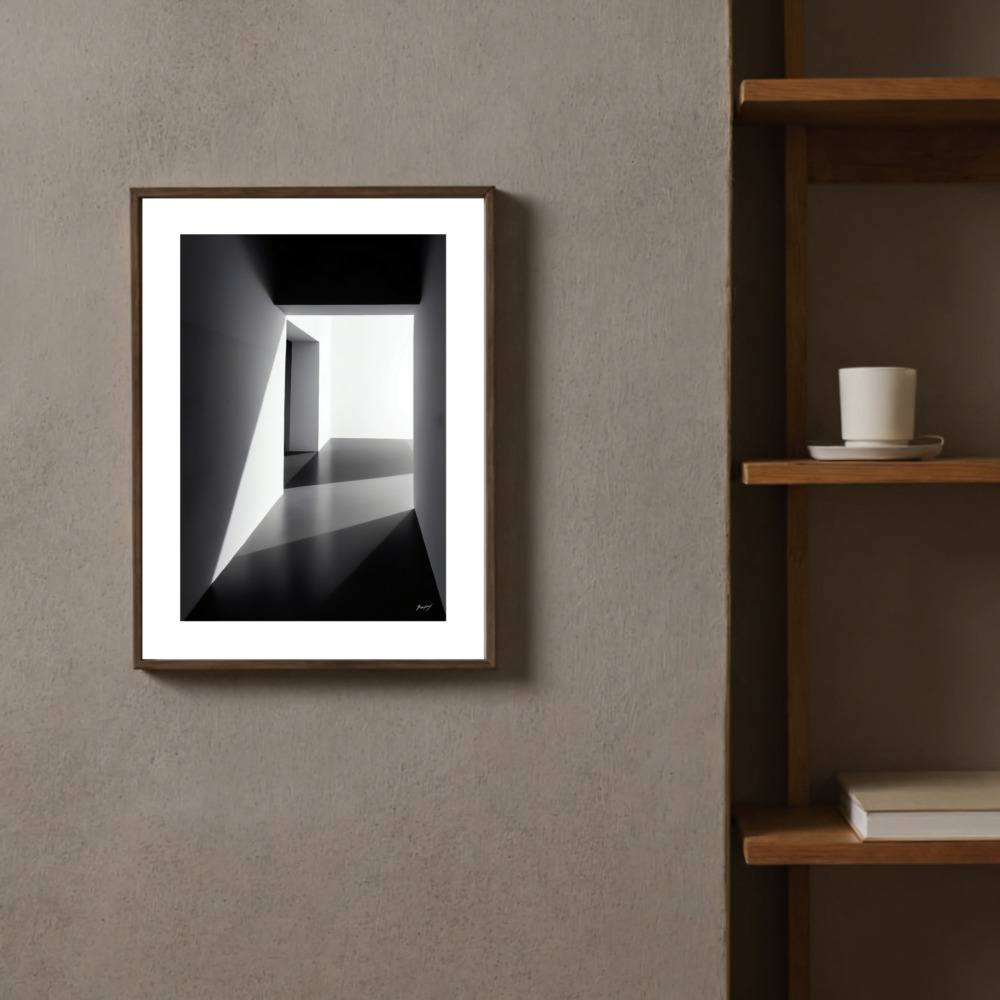
The monochromatic palette holds particular power in geometric design. Black white geometric art eliminates the variable of color, forcing viewers to focus entirely on form, composition, and the interplay of positive and negative space. This creates artwork that’s remarkably versatile and timelessly elegant.
Color trends come and go—remember when everyone had teal and coral accents?—but black and white remains perpetually relevant. This means your investment in monochromatic geometric prints won’t look dated in five years. They anchor a room’s aesthetic without dictating the color direction of your other design choices.
The high contrast of black and white creates drama and definition that colored pieces sometimes lack. A well-designed monochromatic geometric print can serve as a powerful focal point, drawing the eye and creating visual hierarchy in your space. The stark contrast also ensures these prints remain visible and impactful even in dimly lit rooms or from across a large space.
Black and white geometric designs complement virtually any color scheme. Planning to refresh your throw pillows next season? Your geometric art will work just as well with burgundy velvet as it did with sage green linen. This adaptability makes black and white geometric art prints an intelligent choice for anyone who likes to update their décor periodically.
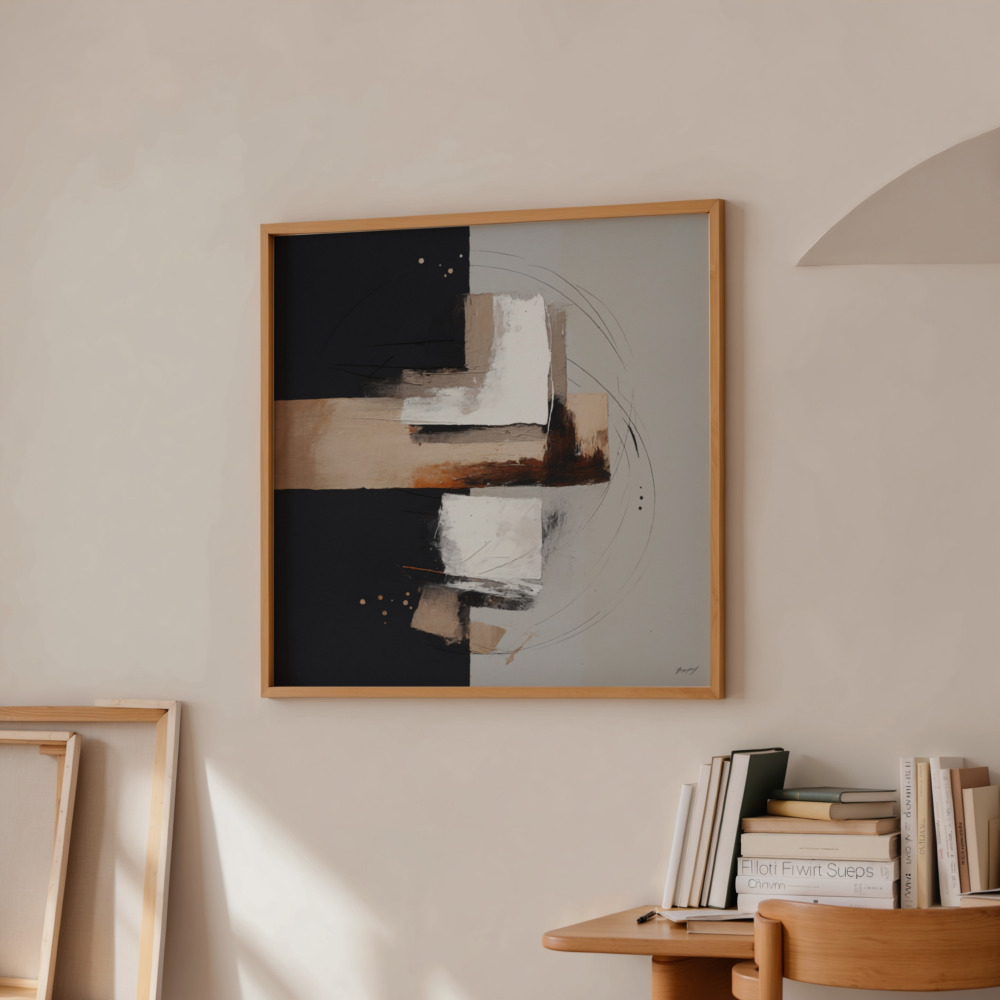
You can’t discuss geometric minimalism without acknowledging Bauhaus. This German art school, operating from 1919 to 1933, revolutionized how we think about design by merging art with industrial production and emphasizing function alongside form. Bauhaus art prints continue to influence contemporary design a century later.
Bauhaus artists like Wassily Kandinsky, Paul Klee, and Josef Albers explored how geometric shapes could convey emotion and movement. They experimented with the psychological effects of different forms—how a circle feels more welcoming than a sharp triangle, or how diagonal lines suggest motion while horizontal lines communicate calm. These insights remain relevant in today’s geometric art.
The Bauhaus principle of ‘form follows function’ translated beautifully to wall art. Bauhaus-inspired prints aren’t decorative afterthoughts; they’re intentional design elements that serve the function of creating visual balance, establishing rhythm, and defining spatial relationships within a room. This purposeful approach is why Bauhaus aesthetics still feel contemporary rather than dated.
Contemporary geometric art prints often reference Bauhaus color theory, particularly the school’s exploration of primary colors combined with black, white, and gray. Even when modern designers expand beyond this limited palette, they frequently apply Bauhaus principles about color relationships and compositional balance.
Size matters significantly with minimalist geometric art. Large-scale prints with bold, simple shapes work beautifully as standalone statement pieces, particularly in minimalist or contemporary spaces where they won’t compete with ornate furniture or busy patterns. Small to medium prints with more intricate geometric patterns work well in gallery walls or layered arrangements.
Consider your room’s existing lines and angles when selecting geometric art. Spaces with lots of horizontal elements—like long, low furniture or expansive windows—benefit from prints with vertical emphasis to create balance. Conversely, rooms with high ceilings or tall bookcases can use horizontal geometric compositions to draw the eye across the wall rather than just upward.
The complexity of your geometric print should inversely relate to the visual business of your space. If your room features patterned textiles, varied textures, or collections of objects, opt for simpler geometric prints with plenty of negative space. In more minimalist rooms with clean lines and neutral colors, you can introduce more complex geometric compositions without overwhelming the space.
Frame selection significantly impacts how geometric art reads in a room. Simple, thin frames in black, white, or natural wood keep the focus on the artwork itself and maintain the minimalist aesthetic. Thicker frames or those with metallic finishes can add weight and luxury but may compete with the clean lines of the artwork if not carefully considered.
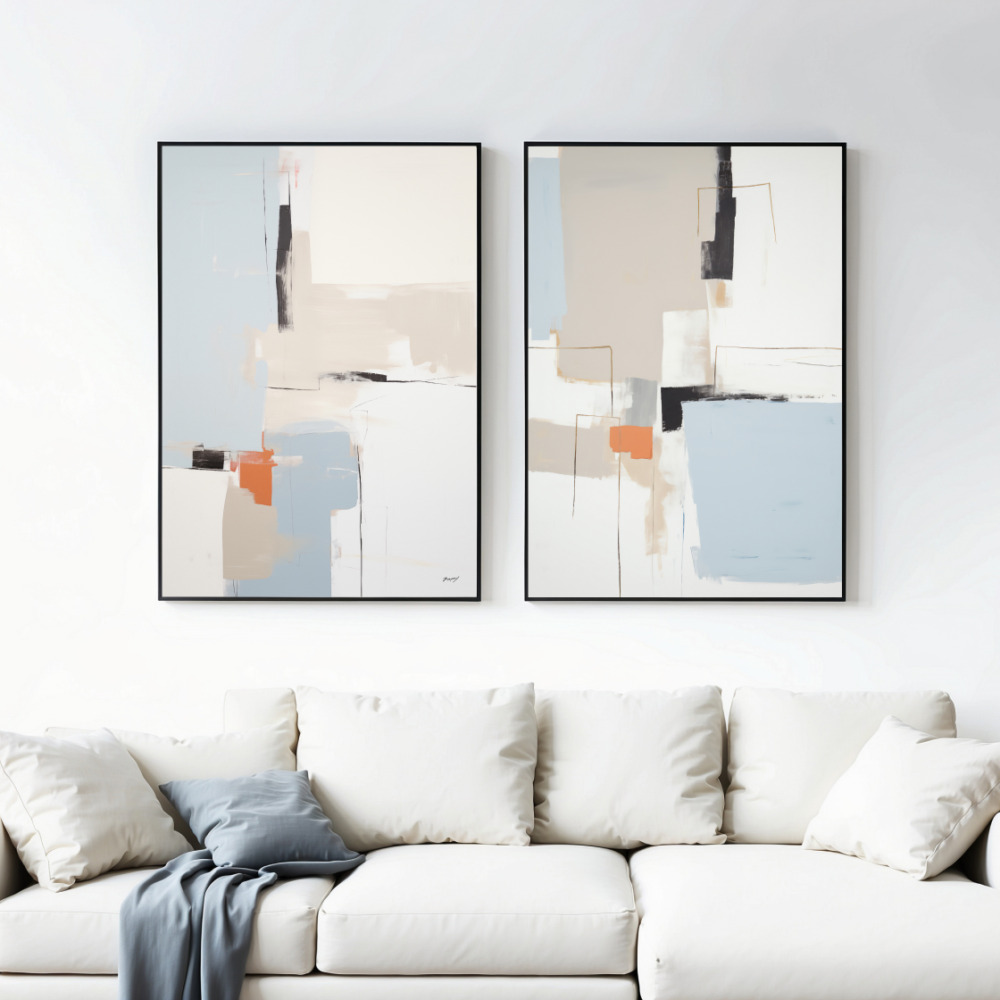
When hanging multiple geometric prints together, repetition with variation creates cohesion without monotony. Choose prints that share a common element—perhaps all featuring circles, all using the same color palette, or all maintaining similar line weights—while varying other aspects like composition or scale.
The spacing between prints is as important as the prints themselves in geometric arrangements. Consistent spacing creates order and calm, reflecting the precision of the geometric art itself. As a general rule, maintain 2-3 inches between frames in a gallery wall arrangement, though you might go wider in larger spaces or with oversized prints.
Symmetrical arrangements of geometric prints reinforce the order and balance inherent in the artwork. Consider diptychs or triptychs where related geometric designs span multiple frames, or create a grid arrangement of similarly sized prints for maximum impact. Asymmetrical arrangements can work too, but require more careful attention to visual weight distribution.
Humans are pattern-seeking creatures, and geometric art satisfies this innate tendency. Our brains find pleasure in recognizing patterns, symmetry, and mathematical relationships. Geometric minimalism offers these satisfying patterns without the cognitive overload that highly detailed or chaotic imagery can create.
Different geometric shapes trigger different psychological responses. Circles and curves suggest softness, unity, and completeness, making them feel welcoming and calming. Squares and rectangles communicate stability and reliability, creating a sense of order. Triangles imply direction and movement, adding dynamic energy to a composition. Understanding these associations helps you select geometric art that supports your room’s intended atmosphere.
The predictability of geometric patterns provides psychological comfort in an unpredictable world. In spaces where we seek rest and restoration—bedrooms, reading nooks, meditation areas—the orderly nature of geometric art can contribute to a sense of control and calm. Yet the endless possible combinations of basic shapes ensure this order never becomes boring.
Despite their modernist origins, geometric prints adapt surprisingly well to diverse design aesthetics. In Scandinavian interiors, black and white geometric art reinforces the emphasis on simplicity, functionality, and connection to nature’s own geometric patterns. The clean lines complement light woods and neutral textiles perfectly.
Mid-century modern spaces are natural homes for geometric art, as both share DNA from the same modernist movements. Pair geometric prints with iconic furniture pieces from the era, and the combination feels authentically cohesive rather than styled. The geometric art bridges the decades, making vintage pieces feel contemporary.
Even in more traditional or eclectic spaces, geometric prints can work as a contemporary counterpoint that keeps the room from feeling too precious or dated. The key is using the right scale and color palette—perhaps a large, bold geometric piece to anchor a corner filled with inherited antiques, creating intentional contrast that highlights both elements.
Industrial and loft-style spaces particularly benefit from geometric art’s clean lines and graphic quality. The precision of geometric forms provides visual relief against exposed brick, concrete, and metal, while still maintaining the modern, urban aesthetic. Large-scale Bauhaus-inspired prints can hold their own against the raw architecture these spaces showcase.
Start by considering what you want your wall art to accomplish. Are you filling a large, empty wall that needs a bold focal point? Creating a cohesive gallery wall that ties together a seating area? Adding visual interest to a hallway? Your goal should guide your selection of size, complexity, and whether you need a single statement piece or a collection.
Don’t rush the decision. Live with paint samples on your walls; use painter’s tape to map out potential print sizes and arrangements. These temporary measures help you visualize how geometric art will actually function in your space, accounting for factors like natural light, viewing angles, and relationship to furniture placement.
Trust your instincts, but also give pieces time to grow on you. The best geometric art often reveals its depth slowly. A print that seems merely ‘nice’ at first glance might become increasingly compelling as you notice new relationships between forms, appreciate the negative space, or realize how perfectly it balances your room’s proportions. This slow reveal is part of what makes minimalist geometric art so enduringly satisfying.
The enduring popularity of minimalist geometric art prints isn’t accidental—it’s the result of design principles refined over a century, psychological truths about human perception, and the universal appeal of order and beauty. Whether you’re drawn to stark black and white compositions, Bauhaus-inspired primary colors, or subtle neutral palettes, geometric art prints offer a sophisticated, versatile way to complete your space. The right geometric print doesn’t just fill wall space; it brings mathematical harmony, visual interest, and timeless style to your everyday environment.