Limited Time: 20% Off All Prints
Free worldwide shipping on orders over $69
Delivery 4-12 business days
Home / Trending Art Styles / What Is Japandi Wall Art? The Complete Guide to Scandinavian-Japanese Style
In the landscape of modern interior design, trends often come and go with the seasons. However, every few decades, a style emerges that feels less like a passing fad and more like a fundamental shift in how we choose to live. Japandi wall art is the visual heartbeat of one such movement.
As the world becomes increasingly digital and chaotic, our desire for calm neutral interiors has never been stronger. We are looking for homes that don’t just look good on camera, but feel good to inhabit. Japandi—the elegant fusion of Japanese minimalism and Scandinavian functionality—is the answer to that search. It is a design language that prioritizes soul over “stuff” and serenity over showiness.
At printstudio.art, we believe that the art on your walls should be the final, meditative touch to your sanctuary. Whether you are a long-time fan of Scandinavian Japanese design or are just starting to declutter your space, this guide will walk you through everything you need to know about Japandi art prints and how to use them to transform your home into a high-fidelity retreat.
To understand the art, you must first understand the philosophy. Japandi is not a 50/50 split between two styles; it is a synergistic blend where the strengths of one culture complement the other.
While it feels modern, the connection between Japan and Scandinavia actually dates back over 150 years. When Japan’s borders opened in the 19th century, Danish architects and designers were among the first to visit. They found a culture that shared their deep respect for wood, natural light, and functional simplicity.
Traditional Japanese minimalism can sometimes feel a bit rigid or formal, centered on the philosophy of Wabi-sabi (finding beauty in imperfection) and Ma (the appreciation of empty space).
Scandinavian design principles, on the other hand, focus on Hygge—the quest for comfort, warmth, and “coziness.”
When you combine them, you get warm minimalism. Japandi takes the clean, organized lines of Japan and “softens” them with the tactile, cozy textures of the North. It is a style that values craftsmanship, sustainability, and intentionality above all else.
If you were to strip away the noise of a standard gallery, what remains is the essence of Japandi minimalist art. This style of artwork is characterized by a specific set of visual “rules” that aim to lower the viewer’s heart rate.
Japandi art avoids jagged, aggressive, or chaotic lines. Instead, you will see organic abstract compositions—shapes that look like they were formed by nature, such as smooth river stones, the curve of a mountain, or the silhouette of a falling leaf. The compositions are balanced but rarely perfectly symmetrical, echoing the “perfectly imperfect” nature of life.
Because Japandi is so rooted in the earth, the look of texture is vital. Even on a flat Giclée print, Japandi style wall decor often features visual textures that mimic handmade washi paper, rough linen, or weathered stone. This “tactile” quality prevents the art from looking like a cold, digital file.
Standard minimalism can sometimes feel clinical—like something produced by a machine. Japandi minimalist art feels human. You can see the slight wobble in a hand-drawn line or the “bleed” of a watercolor wash. It feels as though an artist’s hand was involved in every step.
Color is perhaps the most important tool in the Japandi toolkit. Unlike the “all-white” minimalism of the early 2000s, Japandi utilizes a muted minimalist palette that feels grounded and expensive.
The primary colors of japandi art prints are what we call “earth neutrals.” These include:
Sand and Warm White: To provide a soft, light-reflecting base.
Beige and Taupe: These add a layer of warmth that prevents the room from feeling “flat.”
Clay and Terracotta: Muted, sun-bleached earth tones that bring in a sense of the outdoors.
To prevent a room from looking like a cloud of beige, Japandi art often incorporates high-contrast “anchor” colors. However, these are never neon or primary colors. Instead, look for:
Charcoal and Slate: To provide structure and depth.
Olive or Forest Green: Deep, desaturated greens that feel like a forest at dusk.
Indigo: A traditional Japanese color that provides a cool, sophisticated contrast to warm wood furniture.
By focusing on beige wall art and soft earth colors, you ensure that your walls harmonize with the natural wood and stone elements of your home.
Not all Japandi art looks the same. Depending on your personal taste, you can lean more into the “abstract” or the “literal.”
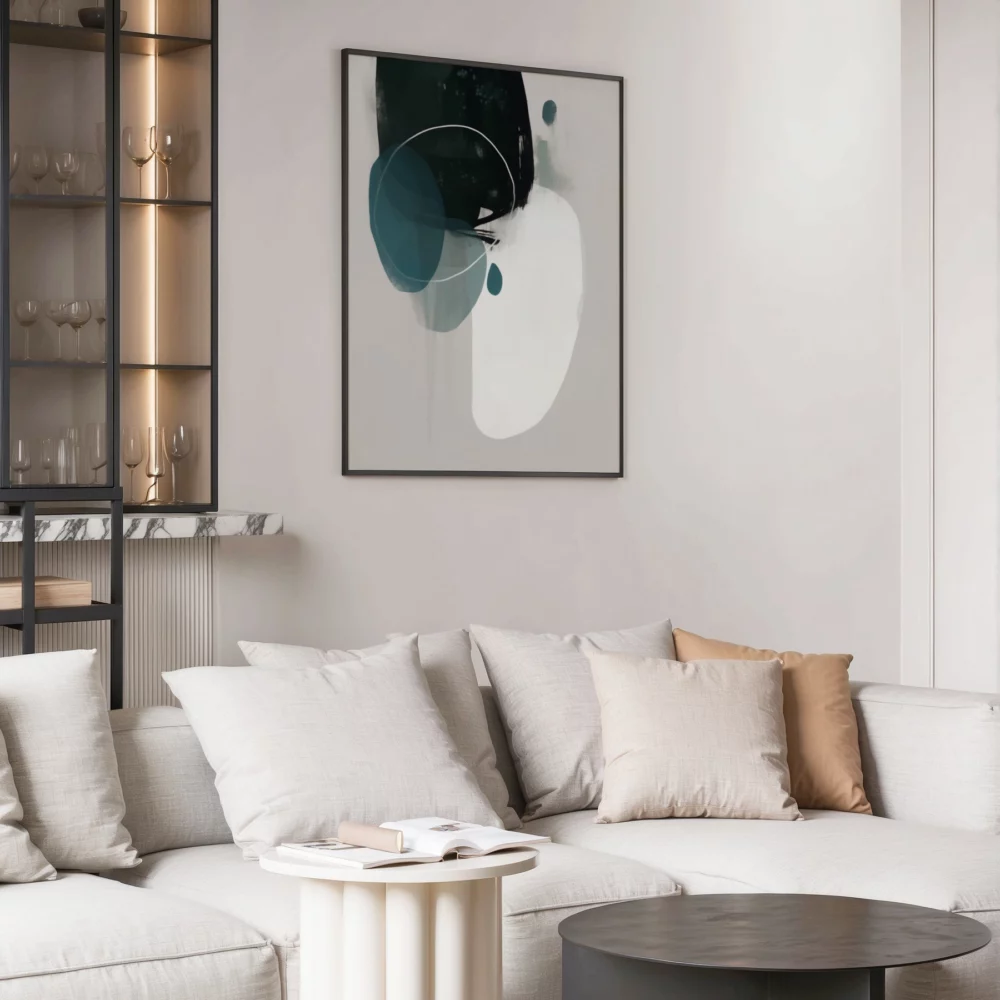
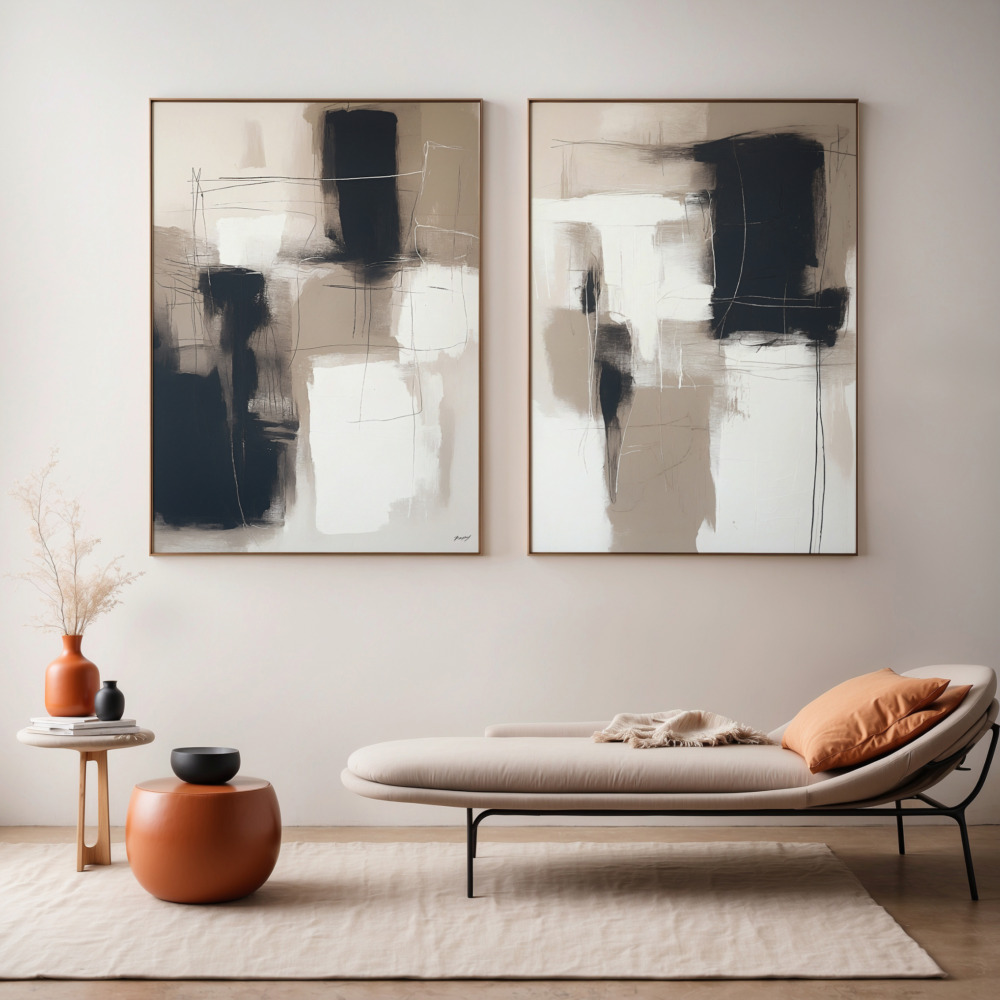
This is the most popular form of minimalist abstract wall art. It typically features large, bold shapes in a limited color palette. These pieces are designed to be “meditation points.” They don’t demand that you figure out a puzzle; they simply ask you to breathe and appreciate the balance of the form.
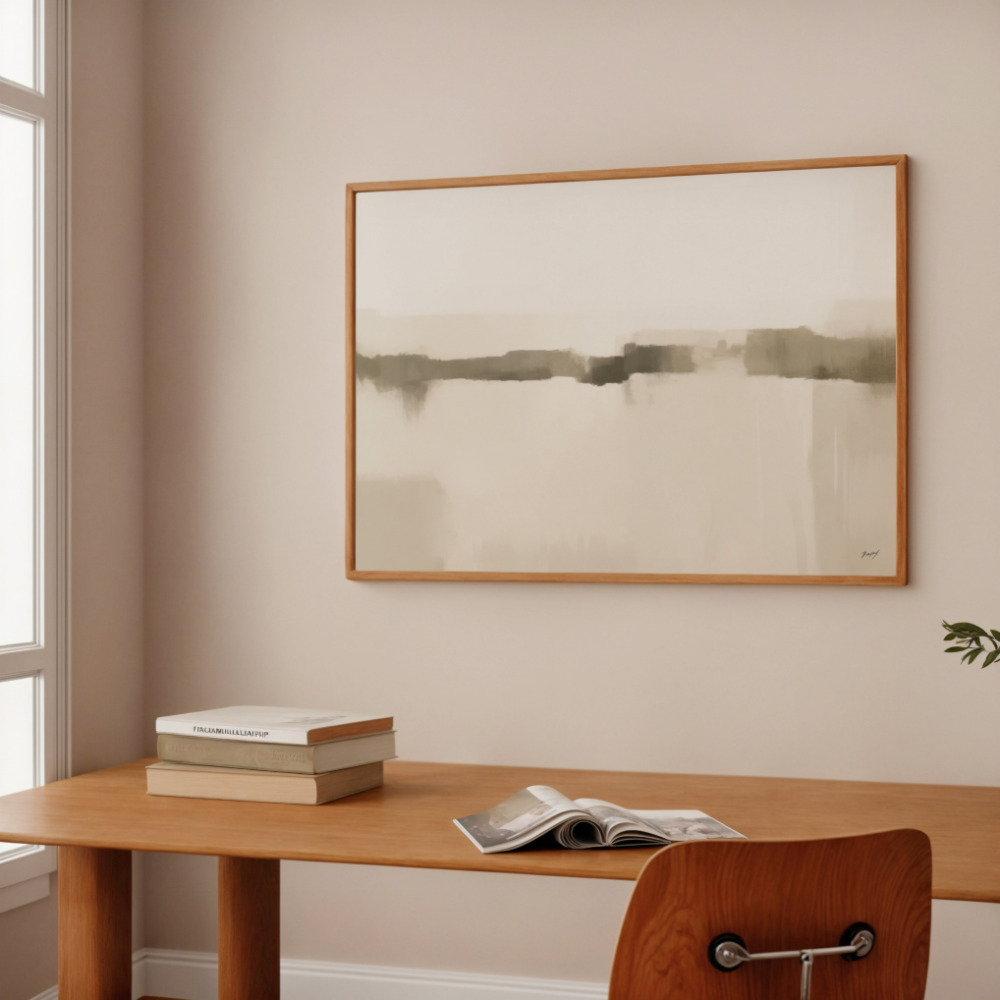
These are not high-definition photos of mountains. Instead, they are calming landscape prints that use “suggestive” imagery. A single horizontal line might represent the horizon; a few misty gray washes might represent a forest. These nature-inspired pieces are perfect for bringing a sense of the outdoors into an urban apartment.
Heavily influenced by Japanese calligraphy (Shodo), minimalist line drawings use a single, fluid stroke to represent a face, a body, or an organic form. These pieces celebrate “Ma”—the white space around the line is just as important as the line itself.
Many interiors combine these styles with curated Japandi art prints to create a calm focal point without overwhelming the senses.
Because of its neutral and non-aggressive nature, Japandi art is incredibly versatile. However, there are three areas where it truly shines:
In the living room, art should be a conversation starter that doesn’t scream. A large wall art piece placed above a sofa acts as an anchor. It pulls the different wood tones of your furniture together and creates a “center” for the room.
The bedroom is where the “Zen” aspect of Japandi is most needed. Calm bedroom decor often utilizes landscape-inspired prints or soft, circular abstracts. Placing a pair of vertical Japandi prints above the headboard creates a sense of symmetry and order that helps the mind transition to sleep.
In an office, you need focus. High-contrast or busy art can be distracting. Neutral wall art for modern interiors provides a “visual rest” for your eyes when you look up from your computer screen, helping to reduce eye strain and mental fatigue.
This is a common point of confusion. If Japandi is minimal, is it just the same as “Minimalism”? Not quite.
Minimalist Art Prints are often about reduction. They seek to strip away everything until only the absolute core is left. This can sometimes result in art that feels geometric, sharp, or “industrial” (think of metal frames and perfect circles).
Japandi Art is about refinement and warmth. It takes the “less is more” approach of minimalism but adds a layer of organic texture and “humanity.”
Minimalism says: “Let’s make this as simple as possible.”
Japandi says: “Let’s make this as simple as possible, but keep it warm and connected to nature.”
If you find standard minimalism a bit too “cold,” you are likely looking for the warm minimalism found in Japandi.
When selecting pieces for your shop at printstudio.art, here is the advice I give to my collectors:
Japandi loves “breathing room.” If you have a large wall, don’t be afraid to hang one large Japandi wall art piece rather than a gallery of small ones. The single, large image feels more confident and peaceful.
In Japandi design, the frame is not just a protector; it’s an extension of the piece. I recommend:
Natural Oak Frames: For a classic Scandi look.
Thin Black Frames: For a “calligraphic” Japanese look.
No Frame (Canvas): For a more modern, textured appearance.
Avoid ornate gold frames or heavy, dark mahogany, as these clash with the “lightness” of the style.
If you are hanging multiple pieces, look for a “thread” that connects them. Perhaps they all share a specific shade of taupe, or they all use a similar brush-stroke style. Our Nordic art prints often pair beautifully with Japandi pieces to create a cohesive home narrative.
The rise of Japandi is closely linked to the slow living design movement. We are living in an era of “burnout,” and our homes have become our primary places of recovery.
Calming interiors are no longer a luxury; they are a necessity for mental health. Japandi art fits this need perfectly because:
It is Timeless: Because it avoids “trendy” colors (like “Millennial Pink” or “Neon”), it won’t look dated in three years.
It Promotes “Ma”: By encouraging empty space on your walls, it gives your mind “room to breathe.”
It Connects to Nature: Even in a high-rise apartment, an organic abstract print provides a psychological link to the natural world.
Japandi wall art is more than just a decoration; it is a commitment to a calmer way of living. By blending the cozy functionality of the North with the ancient, balanced wisdom of the East, we create spaces that feel intentional, timeless, and deeply personal.
At printstudio.art, I am proud to produce Giclée prints that honor these traditions. Every piece is crafted on archival, acid-free paper to ensure that the subtle “sand” tones and “charcoal” lines remain as vibrant and soul-soothing fifty years from now as they are today.
Browse the full Japandi wall art collection to discover original artist-made pieces inspired by this refined aesthetic and find the perfect focal point for your urban sanctuary.
Japandi wall art is a hybrid style that combines the minimalist, nature-focused aesthetics of Japanese art with the warm, functional, and cozy elements of Scandinavian design.
The palette is rooted in earth tones: beige, sand, cream, taupe, charcoal, olive green, and muted indigo.
No. While both value simplicity, Japandi is “warmer” and more focused on natural textures and organic shapes, whereas pure minimalism can be more geometric and industrial.
Focus on large-scale pieces, use natural wood frames, and ensure there is plenty of “negative space” around each artwork to allow the room to breathe.