Limited Time: 20% Off All Prints
Free worldwide shipping on orders over $69
Delivery 4-12 business days
Home / Trending Art Styles / 7 Ways to Create a Calm Japandi-Inspired Bedroom
In the modern world, the bedroom has become more than just a place to sleep; it is our final sanctuary. It is the one room in the house where the noise of the outside world—the notifications, the deadlines, and the clutter—should never be allowed to enter. If you’ve been searching for a design aesthetic that prioritizes peace, balance, and intentionality, you have likely come across the term Japandi.
Japandi is not just a fleeting interior design trend; it is a philosophy. By merging the rustic warmth of Scandinavian “Hygge” with the timeless elegance and functional minimalism of Japanese “Zen,” Japandi creates spaces that feel both curated and lived-in. It is a style that favors quality over quantity and calm over chaos.
Creating a Japandi bedroom is about more than just buying a new bed frame. It is about rethinking how you interact with your space. In this guide, we will explore the seven essential ways to transform your sleeping area into a tranquil retreat, using natural materials, strategic lighting, and the perfect Japandi wall art to tie the room together.
Before we dive into the practical steps, it is important to understand the DNA of Japandi. At its core, this style is a marriage of two distinct but highly compatible cultures.
Scandinavian design (often referred to as Scandi) focuses on functionality. Because of the long, dark winters in Northern Europe, Scandi interiors prioritize light, warmth, and comfort. This is where we get the concept of “Hygge”—the feeling of coziness and well-being. Scandi style brings soft textiles, light woods, and practical storage to the mix.
Japanese design is rooted in the philosophy of “Wabi-sabi,” which finds beauty in imperfection, and “Ma,” the appreciation of negative space. Japanese interiors are often minimalist, using clean lines and low-profile furniture to create a sense of groundedness. There is a deep respect for craftsmanship and natural elements.
When you combine these two, you get the best of both worlds. You lose the clinical, sometimes “cold” feeling of pure minimalism and replace it with the warmth of Scandinavian textures. You lose the rigid formality of traditional Japanese design and replace it with Scandinavian comfort. The result is a minimalist bedroom design that feels incredibly welcoming.
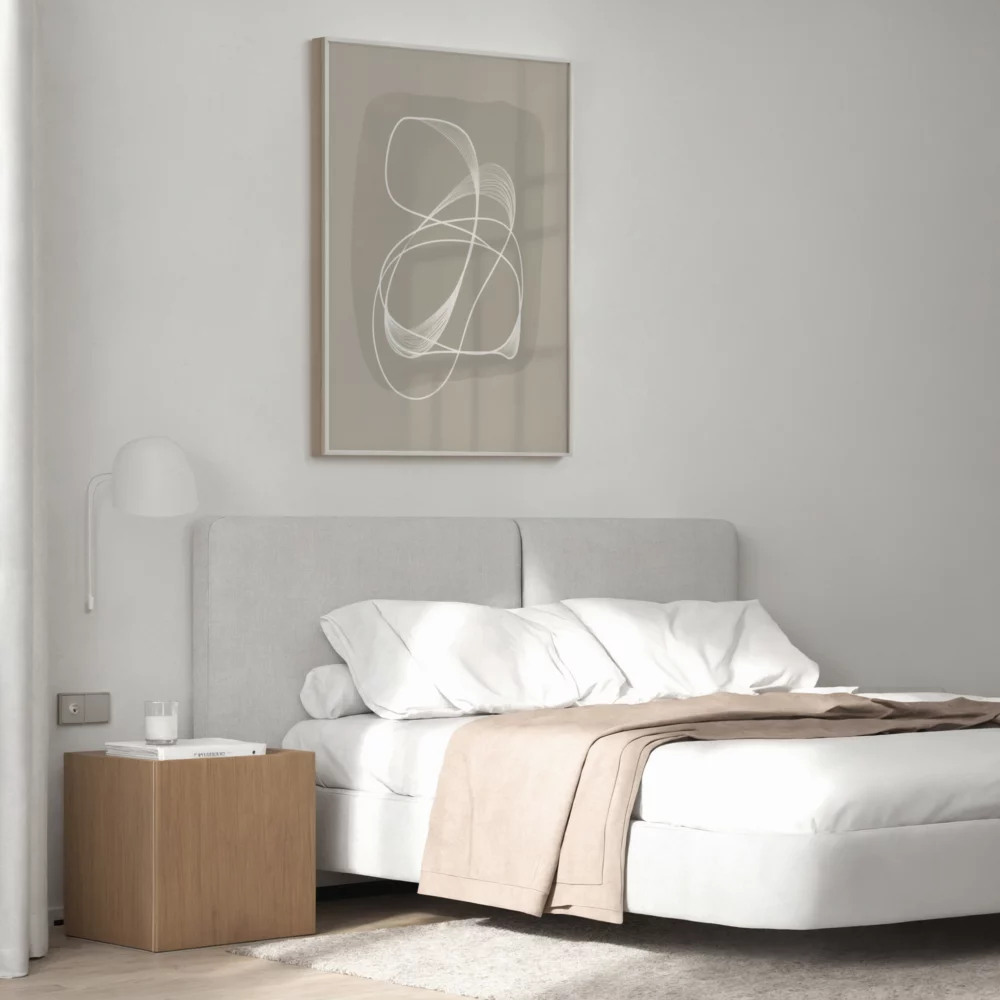
The foundation of any Japandi bedroom decor is the color palette. Unlike traditional modern design, which might use high-contrast blacks and whites, Japandi favors “muted” and “earthy” tones. The goal is to create a visual landscape that doesn’t demand your attention, but rather allows your eyes to rest.
Start with a base of warm whites or soft beiges. Avoid “stark” whites, which can feel like a hospital or an art gallery. Instead, look for whites with a drop of yellow or gray in them to create a “creamy” effect. From there, layer in:
Taupe and Sand: These colors mimic the natural world and provide a soft middle ground.
Muted Grays: Think of the color of river stones or morning mist.
Earth Tones: Terracotta, olive green, or ochre can be used as subtle accents to add depth without breaking the tranquility.
In Japandi design, we avoid jarring transitions. If you have a beige wall, choose a headboard that is just a few shades darker. This low-contrast approach is a hallmark of Scandinavian Japanese bedrooms, as it prevents the room from feeling “busy.”
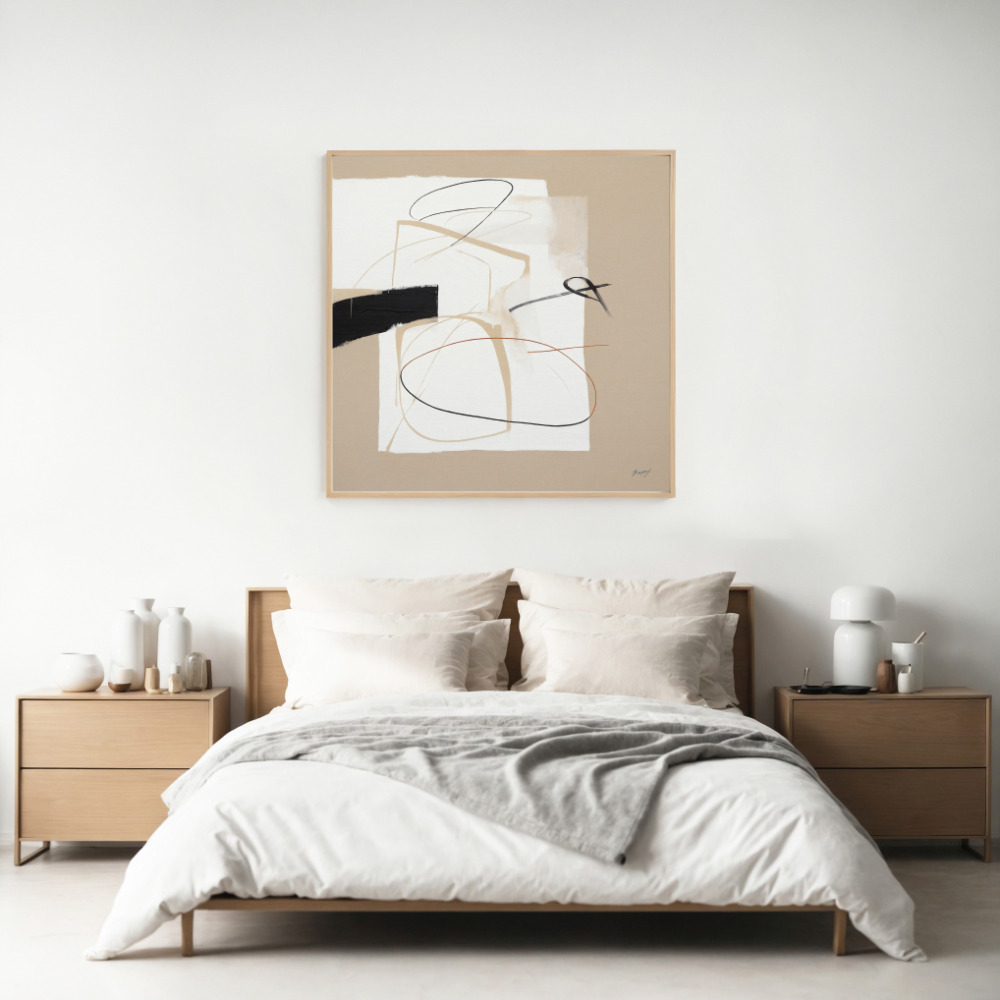
One of the most recognizable features of a Japandi-inspired room is the height of the furniture—or rather, the lack of it. In Japanese culture, there is a traditional preference for being “close to the earth.”
The centerpiece of your bedroom should be a low-profile platform bed. Look for frames with clean, straight lines and no ornate carvings or tufted upholstery. A wooden platform bed in a light oak or walnut not only looks beautiful but also creates a sense of openness in the room. By keeping the bed low, you leave more “negative space” above it, which makes the ceiling feel higher and the room feel airier.
Clutter is the enemy of calm. However, Japandi isn’t about living with nothing; it’s about having a place for everything. Choose nightstands and dressers with “handle-less” designs or simple finger-pulls. The goal is for the furniture to look like a seamless part of the architecture rather than a bulky addition to the room.
Texture is what prevents a minimalist room from feeling “cold.” Since Japandi is a celebration of the natural world, the materials you choose are incredibly important for your minimalist bedroom design.
Wood is the soul of Japandi. Scandinavian design typically uses light woods like ash, birch, and light oak. Japanese design often incorporates slightly darker or richer tones like cedar or cypress. Mixing these tones is perfectly fine in Japandi, as long as the wood has a natural, matte finish. Avoid glossy or highly varnished woods, as they feel artificial.
For your bedding and curtains, opt for organic materials. Linen is the ultimate Japandi fabric. It is breathable, has a beautiful natural “crinkle” (celebrating imperfection), and feels luxurious against the skin. Pair linen sheets with a heavy wool throw or a cotton duvet cover in a neutral hue. These layers add “tactile warmth,” which is essential for that Scandi feeling of Hygge.
In a Japandi bedroom, every object should serve a purpose—either functional or aesthetic. The philosophy here is “quality over quantity.” Instead of a shelf filled with small trinkets, choose one large, handmade ceramic vase.
Try to keep your nightstand and dresser surfaces as clear as possible. A single book, a glass of water, and a small lamp are all you need. If you find yourself accumulating “stuff,” it might be a sign that you need better-hidden storage solutions.
This is a core tenet of both Japanese and Scandi design. A beautiful wooden comb, a stone tray for your jewelry, or a handcrafted linen robe hanging on a wooden peg—these are objects you use daily, but they also contribute to the room’s beauty. When your everyday items are beautiful, you don’t need “extra” decor to fill the space.
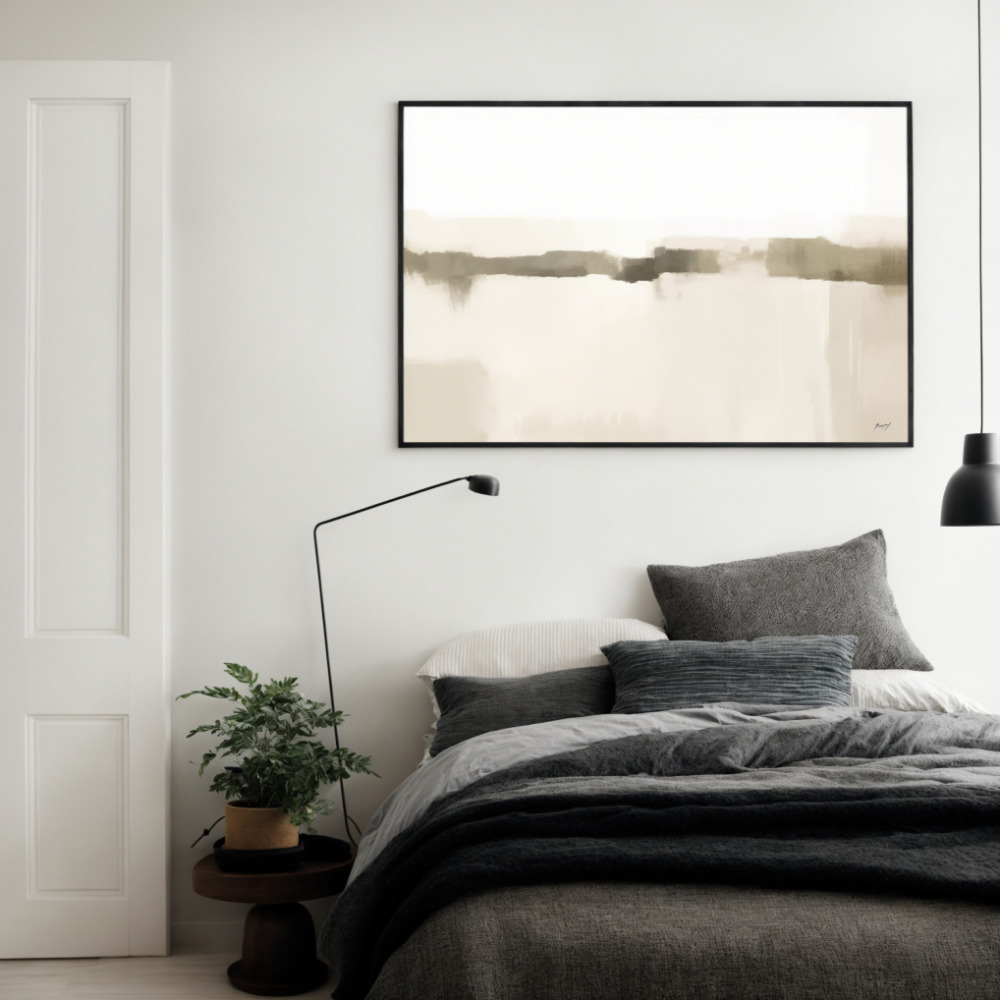
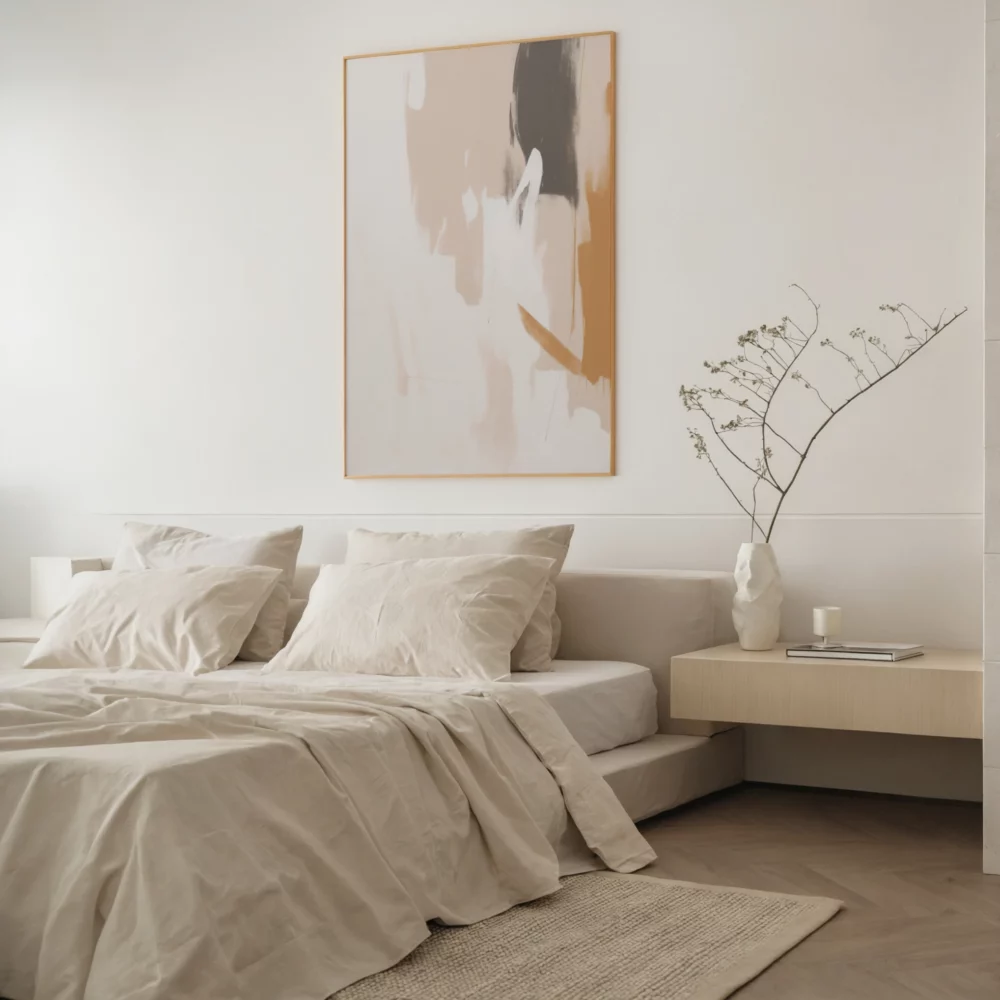
While the walls in a Japandi room should remain relatively clear to appreciate the negative space, a well-chosen piece of art acts as the “anchor” for the entire design. Without it, the room can feel unfinished or overly sterile.
When selecting Japandi wall art, look for pieces that reflect the principles we’ve discussed:
Minimal Line Art: Simple, fluid strokes that suggest a form without over-explaining it.
Neutral Abstracts: Art that uses the palette of your room—beiges, grays, and blacks—to create a mood.
Nature-Inspired Prints: Think of delicate botanical sketches, mountain silhouettes in the mist, or the texture of stone.
For Japandi art, the frame is just as important as the print. A thin, natural wood frame (oak or maple) is usually the best choice. It blends into the wall and complements the furniture. If you want a more “Japanese” feel, a thin black frame can provide a sharp, clean border that mimics the look of traditional ink wash paintings.
Ready to find your centerpiece? Explore our artist-made Japandi wall art collection to find prints designed to bring balance and harmony to your bedroom walls.
Lighting is the most underrated element of interior design, especially in the bedroom. To achieve a Japandi feel, you must move away from harsh overhead “big lights” and focus on layered, warm illumination.
Check your light bulbs. For a calm bedroom, you want bulbs in the 2700K to 3000K range. This produces a soft, amber-toned light that mimics the glow of a sunset, signaling to your brain that it is time to wind down.
Nothing says Japandi like a paper lantern. Inspired by traditional Japanese chochin or andon lamps, these fixtures diffuse light through a paper or fabric shade, creating a soft, cloud-like glow.
Floor Lamps: Use a tall paper lamp in a corner to soften a hard angle.
Bedside Lamps: Choose small, ceramic-based lamps with fabric shades to add texture to your nightstand.
Layering: Instead of one bright light, use three dim lights in different corners of the room. This creates depth and a sense of “enclosure” that feels very safe and cozy.
The final “secret ingredient” to Japandi bedroom ideas is the concept of Ma. In Japanese design, Ma is the space between objects. It is the “silence” that allows the “music” to be heard.
In most Western bedrooms, we try to fill every corner. We put a chair in one corner, a plant in another, and a floor mirror in a third. In Japandi, we intentionally leave spaces empty.
Leave a few feet of empty wall space around your art.
Don’t push every piece of furniture against the wall; let things “breathe.”
If a piece of furniture doesn’t feel absolutely necessary, remove it.
Because there is so much negative space, the items you do choose to display become statement pieces. Whether it’s a single branch in a vase or a specific piece of minimalist bedroom design, the surrounding emptiness gives that object “room to speak.”
As you begin your transformation, it is easy to veer off track. Here are the four most common mistakes I see when people try to implement Japandi decor.
If you find yourself browsing “home decor” aisles and buying things just because they are “cute,” stop. Japandi is the opposite of “cute” or “trendy.” If an item doesn’t bring a sense of calm or serve a function, it doesn’t belong in your Japandi sanctuary.
There is a fine line between “minimalist” and “cold.” If your room feels like a hospital, you likely have too much cool white and not enough warm wood or texture. Remember to include the “Scandi” side of the equation—soft rugs, linen curtains, and warm-toned wood.
While mixing wood is encouraged, mixing too many can create visual “noise.” Try to stick to two dominant wood tones—for example, a light oak for the bed and a darker walnut for small accents. If you introduce cherry, pine, mahogany, and ash all in one room, the eye won’t know where to rest.
Minimalism is often about “less.” Japandi is about “better.” A plain white room with a metal bed frame is minimalist, but it isn’t Japandi. Japandi requires the warmth of nature and the soul of craftsmanship.
Creating a Japandi-inspired bedroom is a journey of editing. It is the process of stripping away the distractions of modern life until only the essentials remain. When you walk into a finished Japandi room, you shouldn’t feel the urge to “do” anything. You should simply feel the urge to be.
Calm doesn’t come from the objects you buy; it comes from the intention behind them. By focusing on neutral tones, natural materials, and the perfect minimalist wall art, you are creating a space that honors your need for rest.
If you are ready to start your journey, I recommend beginning with your walls. Art is often the easiest way to set the “vibe” of a room before you commit to larger furniture changes. At printstudio.art, my goal is to create pieces that provide that much-needed moment of Zen in your busy life.
Ready to transform your space?
Shop the Japandi Collection | Explore Abstract Art | About the Artist