Limited Time: 20% Off All Prints
Free worldwide shipping on orders over $69
Delivery 4-12 business days
Home / Trending Art Styles / Good Art Prints Don’t Have to Cost a Fortune
Gallery owners mark up original art by 300-500%. Smart decorators skip the middleman and create museum-quality walls with affordable fine art photo prints that deliver the same visual impact for a fraction of the cost.
Galleries survive on one simple fact: most people believe expensive means better. A $3,000 original painting hanging in a white-walled SoHo space creates an aura of exclusivity that has nothing to do with aesthetic value. The same composition, expertly printed on archival paper and properly framed, delivers identical visual impact in your living room for under $150.
Professional designers know this secret and exploit it ruthlessly. High-end residential projects regularly feature museum-quality prints alongside originals, and clients never know the difference. The key lies in understanding that what makes art powerful isn’t the price tag—it’s scale, composition, and confident placement.
Print technology has reached a tipping point where the quality gap between originals and reproductions has virtually disappeared. Giclée printing on cotton rag paper produces color accuracy and longevity that rivals traditional media, while maintaining the texture and depth that makes art feel substantial rather than decorative.
Canvas prints seduce budget-conscious buyers with promises of “gallery-wrapped” sophistication, but they’re often the wrong choice for serious rooms. The stretched canvas format works brilliantly for bold, graphic images but fails spectacularly with detailed photography or subtle tonal work. Paper prints under glass create depth and protection that canvas simply cannot match.
The economics tell the real story. A quality 24×36 inch paper print costs $80-120 including professional matting. The same size canvas print runs $60-90 but requires expensive custom framing to look sophisticated. Canvas corners sag over time, surfaces collect dust, and colors fade without UV protection. Paper prints behind glass maintain their integrity for decades.
Consider your wall color when making this choice. Canvas works on white or light neutral walls where the print needs to project forward. Dark walls demand the depth and contrast that only matted prints under glass can provide. The reflection becomes part of the composition, adding layers of visual interest that flat canvas never achieves.
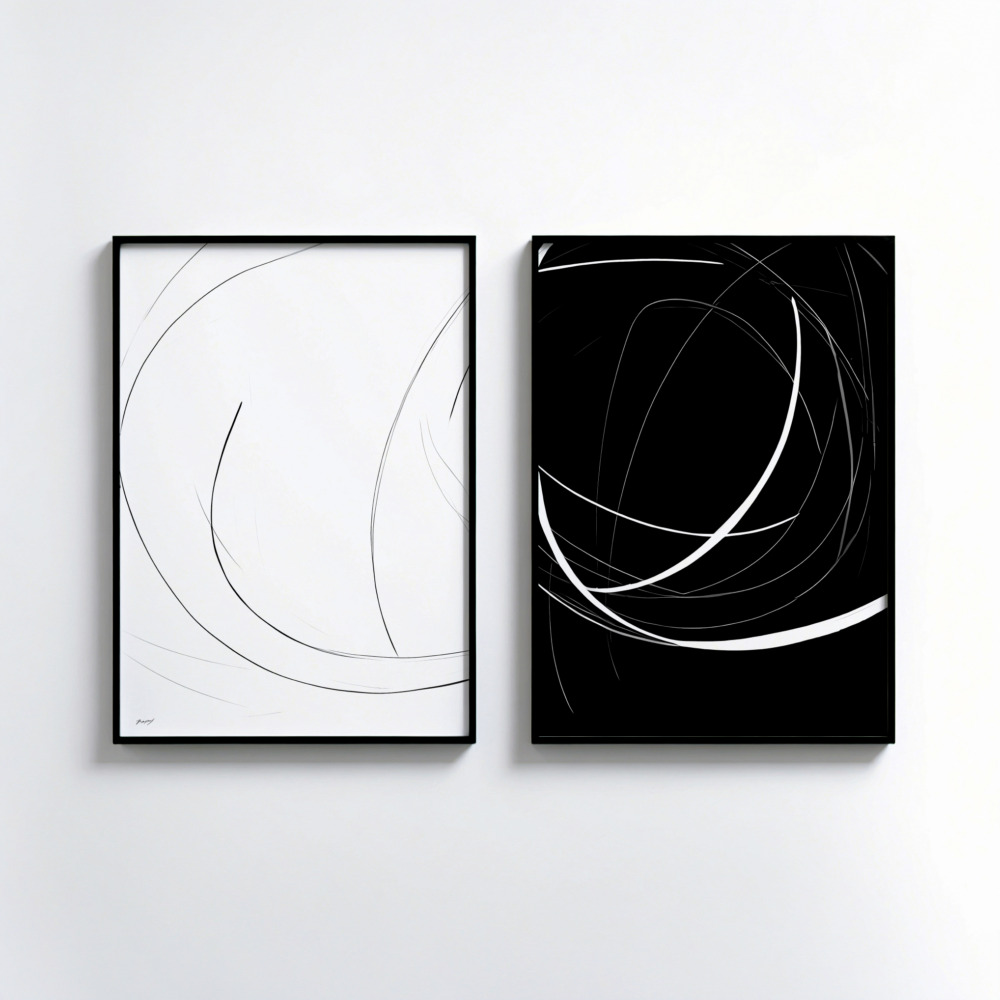
Gallery walls succeed through repetition and relationship, not individual masterpieces. Buying art prints cheap in coordinated sets of 3-5 pieces creates exponentially more impact than single statement works. A trio of complementary abstracts at $50 each outperforms one $300 print every time, simply through the power of intentional grouping.
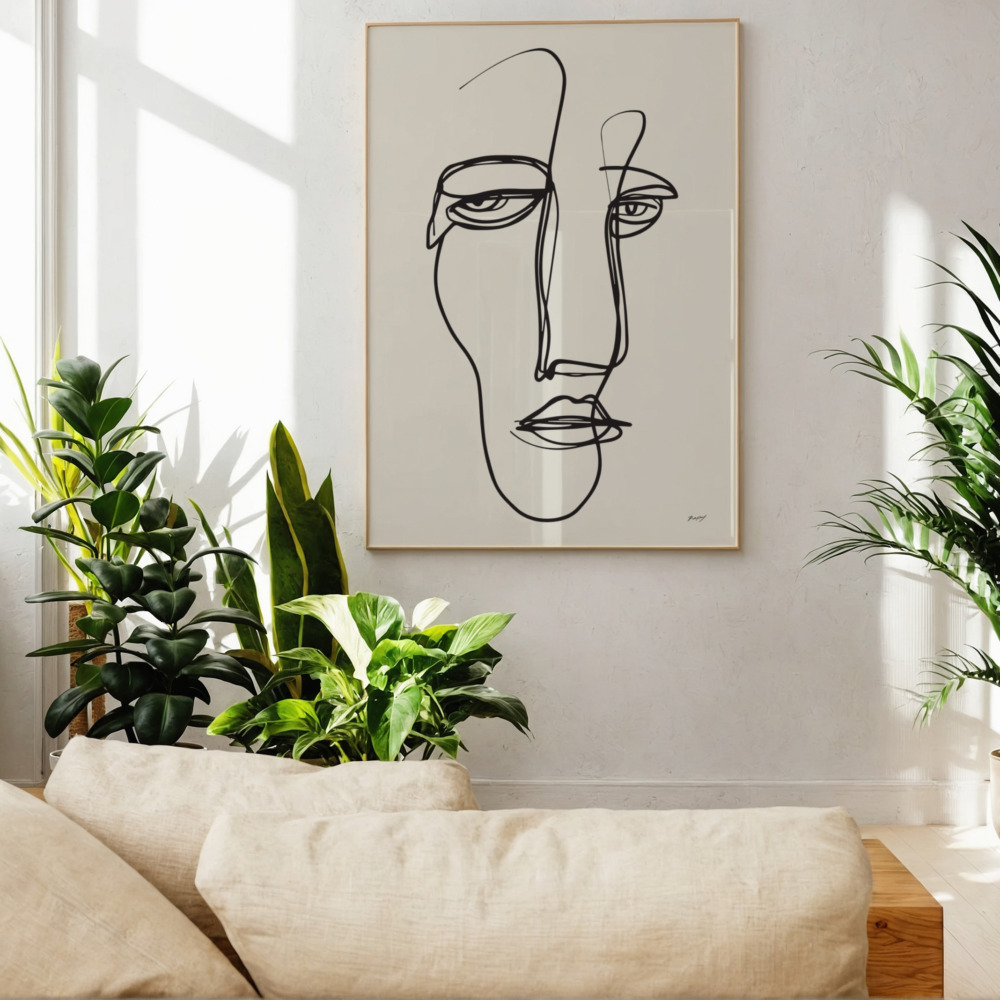
Smart buyers identify their color palette first, then source multiple pieces that share tonal relationships while varying in scale and intensity. This approach naturally leads to bulk purchasing from the same source, which unlocks volume discounts and ensures color consistency across prints. When you shop our black and white line art collection, you’re seeing this principle in action—each piece works independently but gains power through proximity to its companions.
The mathematics of wall coverage favor multiple smaller prints over single large pieces. Five 16×20 prints cost roughly the same as one 30×40 print but cover 40% more wall space while offering greater flexibility in arrangement. This approach also spreads risk—if one piece doesn’t work in your space, you haven’t blown your entire budget on a mistake.
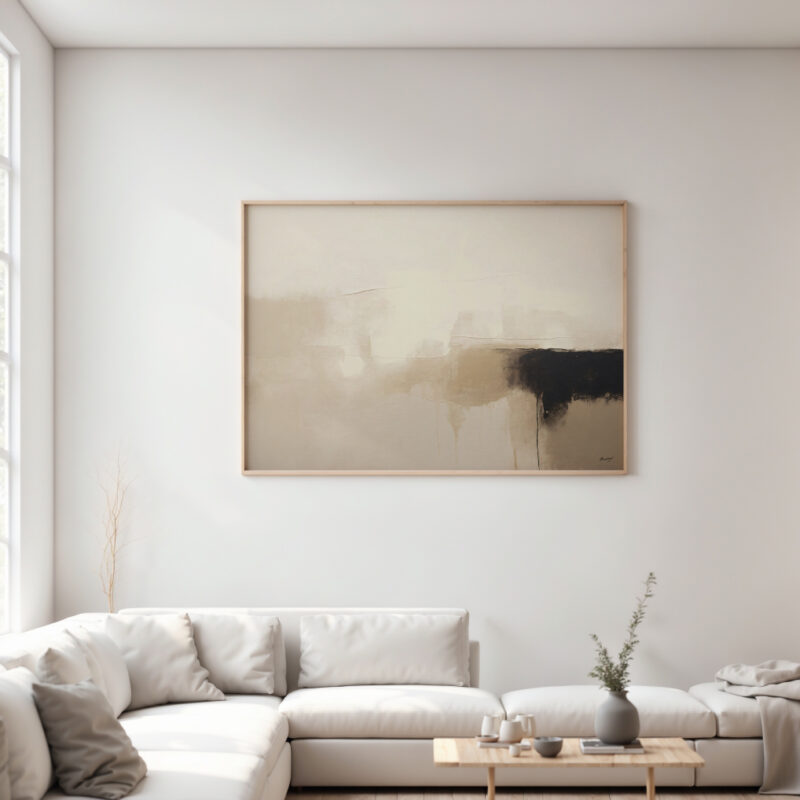
Custom framing markup ranges from 200-400%, turning a $40 print into a $200 wall piece. This industry practice exists because most people find framing intimidating, but the actual process requires no special skills—just attention to detail and quality materials. Standard frame sizes eliminate the guesswork and bring costs down to $25-45 per piece.
The secret lies in buying prints that fit standard frame dimensions: 16×20, 18×24, 24×36. These sizes offer the widest selection of quality frames at reasonable prices, while avoiding the custom cutting fees that destroy budgets. Michaels, Target, and IKEA all carry frames in these dimensions that rival custom work when paired with quality matting.
Mat cutting requires practice, but pre-cut mats in standard sizes cost $8-15 versus $35-60 for custom cutting. The key insight: plan your print sizes around available mat dimensions rather than fighting the system. This constraint actually improves decision-making by eliminating choice paralysis while ensuring professional results.
Monochromatic collections deliver maximum sophistication per dollar spent because they eliminate the complexity of color matching while ensuring visual cohesion. Black and white photography, line drawings, and minimalist abstracts work in any room regardless of existing décor, making them safe investments that won’t require replacement when you redecorate.
Nature-based prints offer exceptional versatility and timeless appeal that transcends decorating trends. Botanical studies, landscape photography, and organic abstracts complement both modern and traditional interiors while maintaining broad market appeal for resale value. When you see more nature wall art, you understand why these themes consistently outperform trend-driven alternatives.
Geometric and architectural prints represent the sweet spot between contemporary relevance and long-term durability. These styles photograph beautifully for social media while aging gracefully in actual living spaces. The clean lines and mathematical relationships work equally well in minimalist lofts and suburban family rooms, maximizing your investment across different life stages.
Size anxiety causes more decorating failures than any other factor. People consistently choose prints that are 30-40% too small for their intended spaces, creating weak visual anchors that disappear into the wall. A 16×20 print above a standard sofa looks apologetic; the same image at 24×36 commands attention and justifies its wall real estate.
The 2/3 rule governs successful art placement: your print or grouping should cover roughly two-thirds the width of the furniture below it. This means a 72-inch sofa needs 48 inches of art coverage, achievable through one large piece or a strategic grouping. When you browse Japandi art prints in larger formats, you see how proper scale transforms simple compositions into commanding focal points.
Ceiling height dramatically affects perceived print size. Standard 8-foot ceilings make 24×36 prints feel substantial, while 10-foot ceilings demand 30×40 or larger to maintain visual weight. This relationship explains why the same print can feel perfect in a showroom but inadequate in your actual space—always account for your specific proportions when choosing sizes.
Neutral-based prints with subtle color accents offer maximum decorating flexibility while minimizing long-term replacement costs. Earth tones, soft grays, and muted blues work across multiple room configurations and color schemes, protecting your art investment when furniture changes or rooms get repurposed.
Monochromatic schemes using variations of a single hue create sophisticated unity while allowing for budget-friendly mixing of different print sources. A collection spanning cream, beige, and soft brown can incorporate botanical studies, abstract compositions, and architectural photography without visual conflict. This approach lets you take advantage of sales and seasonal pricing without compromising cohesion.
Bold accent colors should be limited to easily replaceable elements rather than major art pieces. A neutral foundation with colorful pillows, throws, or small decorative prints allows for seasonal updates without requiring complete wall redecoration. When you explore our silhouette art collection, you see how strong graphic elements maintain interest while staying colorfully neutral enough for long-term satisfaction.
You don’t need gallery prices to get gallery impact. The right affordable fine art photo prints at proper scale create more visual interest than one overpriced original. Start with a cohesive collection that fits your space and budget.