Limited Time: 20% Off All Prints
Free worldwide shipping on orders over $69
Delivery 4-12 business days
Home / Trending Art Styles / Japandi Decor Ideas for Small Apartments: Creating Your Urban Sanctuary
Living in a small apartment often feels like a constant battle against clutter. In urban centers where square footage comes at a premium, our homes can quickly become overwhelmed by the sheer “noise” of daily life. We want a home that feels cozy and welcoming, yet we crave the breathing room of a minimalist retreat. This is exactly why Japandi decor ideas have become the gold standard for modern apartment living.
Japandi is the intentional fusion of Japanese minimalism and Scandinavian functionality. It is a design language that speaks to our need for “Hygge” (Scandi coziness) and “Wabi-sabi” (the Japanese appreciation for imperfection and simplicity). In a small space, this combination is magic. It allows you to strip away the unnecessary without losing the warmth that makes a house a home.
In this guide, we will explore how to implement Japandi style apartment principles to make your small space feel twice its size. From choosing the right furniture to selecting the perfect Japandi wall art, here is how to create a calm, curated, and expansive urban sanctuary.
When you are dealing with limited square footage, every design choice has a magnified impact. A single bulky chair or a cluttered wall can make a room feel claustrophobic. This is why the Japanese Scandinavian interior philosophy is so effective for small-space dwellers.
In interior design, we talk about “visual weight.” A heavy, ornate Victorian cabinet has a high visual weight—it stops the eye and makes a room feel full. Japandi furniture, characterized by clean, straight lines and tapered legs, has a low visual weight. It allows the eye to travel through the room and see more of the floor and walls, which trick the brain into thinking the space is larger than it is.
Dark colors absorb light, making walls feel like they are closing in. Japandi’s palette of warm whites, creams, and light woods reflects light, pushing the boundaries of the room outward. By keeping the color contrast low, you remove the hard “stops” that define the edges of a small room.
Japandi isn’t about living in an empty white box; it’s about minimalist apartment decor that serves a purpose. In a small apartment, every item must earn its keep. Japandi encourages “multi-functional beauty,” where a stool is also a side table and a piece of art is also a source of serenity.
The foundation of any Japandi small apartment is a cohesive, low-contrast color palette. In a small space, a “busy” color scheme is the fastest way to create a sense of chaos.
While Scandi style often leans toward cool grays and stark whites, the Japanese influence in Japandi brings in warmth. Instead of “Brilliant White,” look for:
Oatmeal and Beige: These provide a sandy, natural base that feels grounded.
Taupe: A sophisticated middle ground between gray and brown.
Soft Terracotta or Olive: These can be used as “earth accents” to prevent the room from feeling sterile.
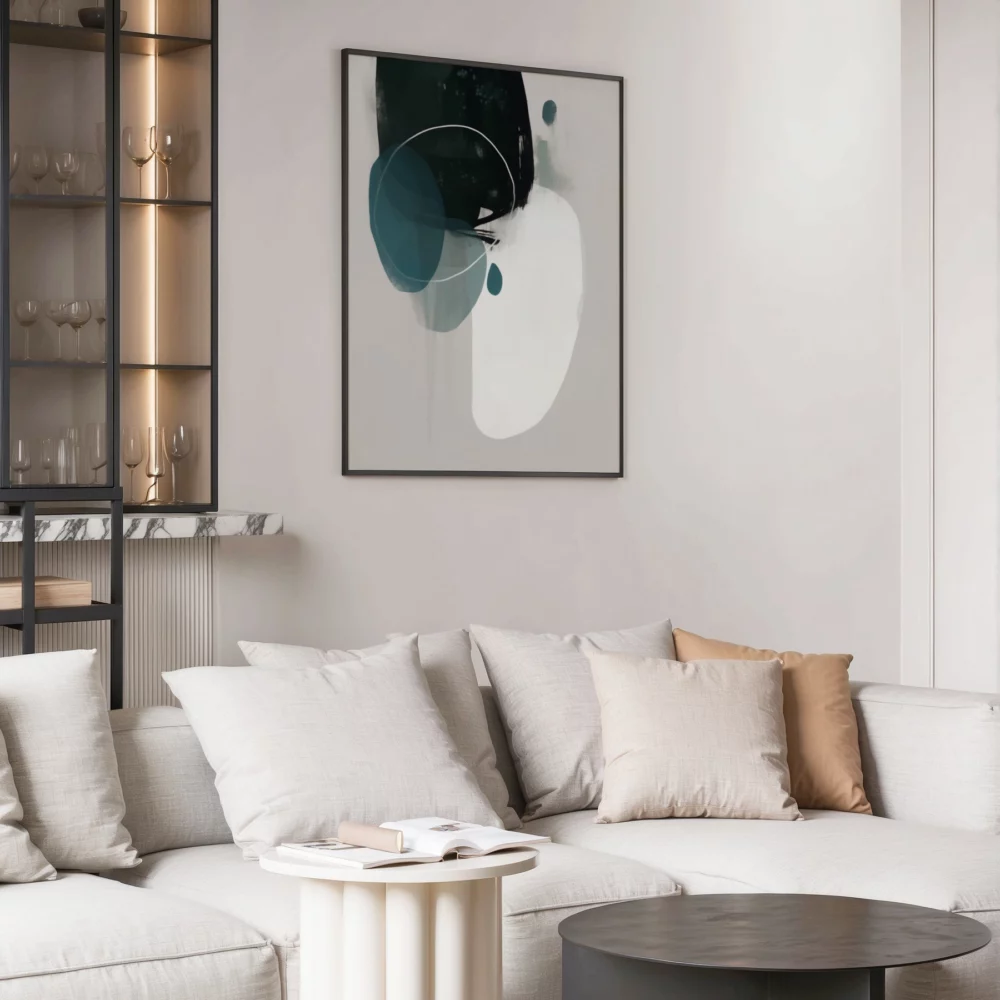
In a Japandi apartment, try to keep 60% of the room (walls and large rugs) in your lightest neutral. 30% (furniture and curtains) should be in a secondary neutral or natural wood tone. The final 10% can be your accent color—usually a matte black or a deep forest green—found in your lighting fixtures or neutral wall art for small spaces.
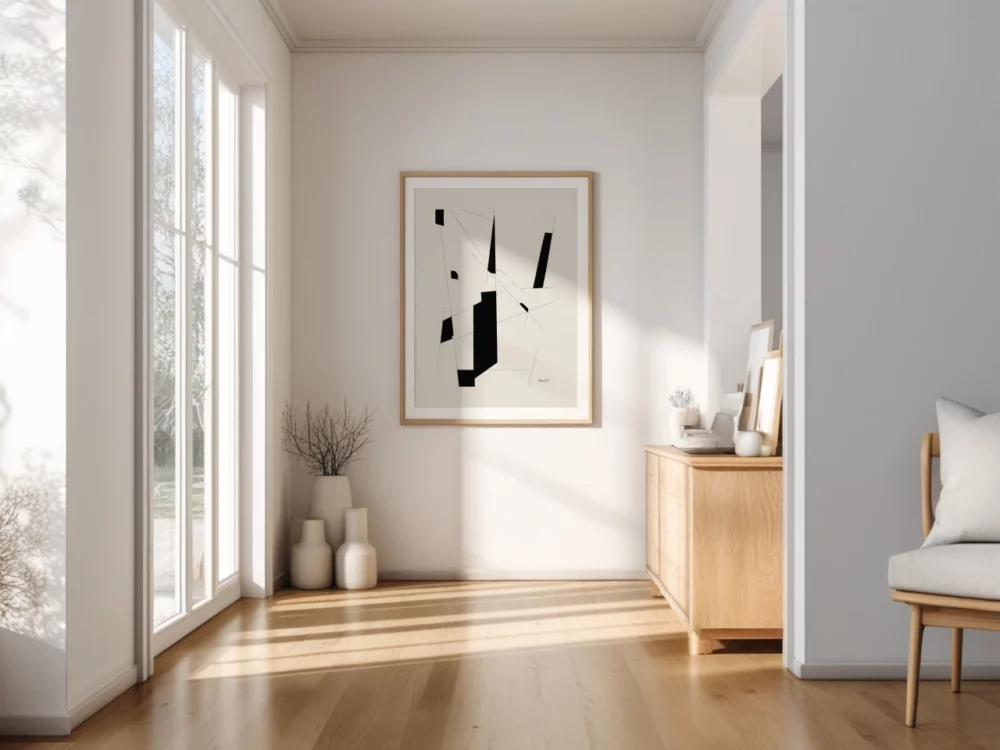
In a small apartment, vertical space is your best friend, but “visual height” can be your enemy.
Japanese interior design traditionally focuses on living close to the floor. By choosing a low-profile platform bed or a slimline sofa with short legs, you create more “air” between the top of the furniture and the ceiling. This extra vertical space is essential for making a studio or one-bedroom apartment feel like it has room to breathe.
When shopping for a Japandi style apartment, look for pieces that pull double duty:
Storage Ottomans: A woven or linen-covered ottoman can serve as a coffee table, extra seating, and a place to hide blankets.
Slimline Desks: In a work-from-home world, look for a ladder desk or a floating wall-mounted desk that takes up zero floor space.
Platform Beds with Drawers: This eliminates the need for a bulky dresser in a small bedroom.
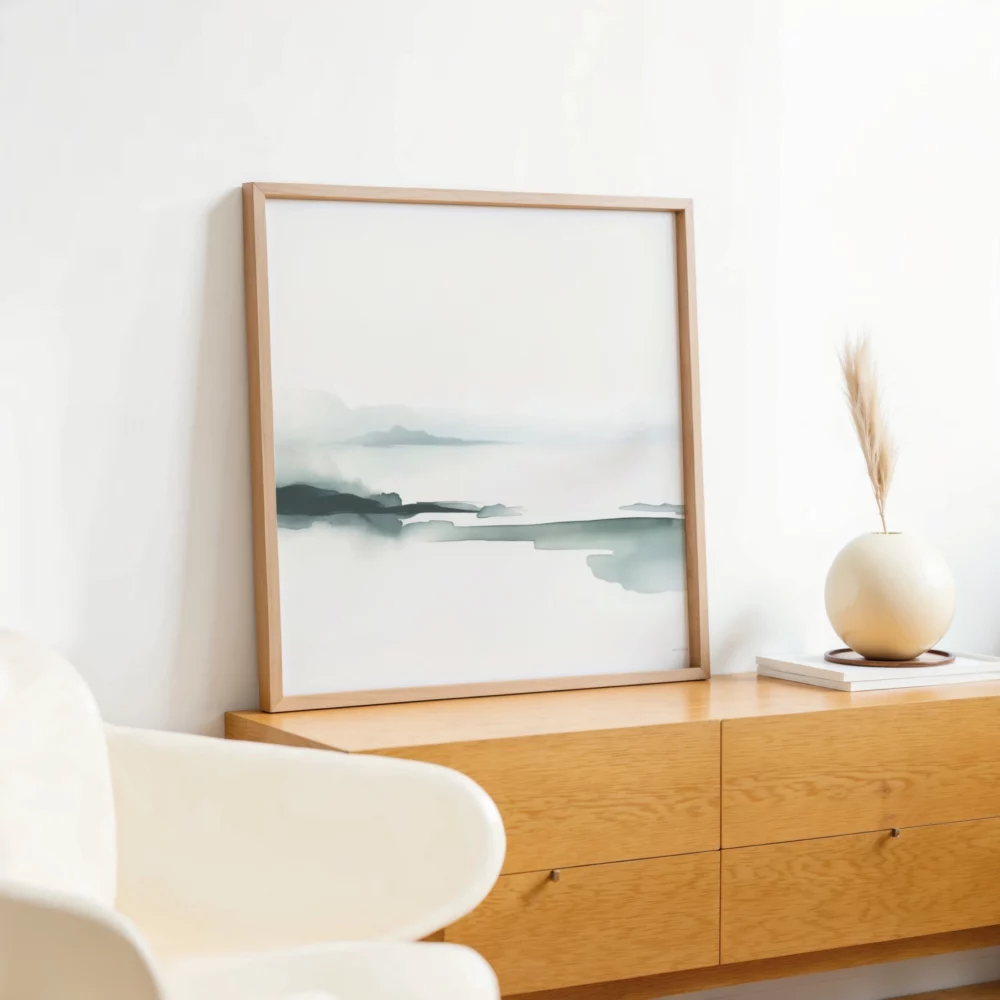
In a small apartment, the temptation is to create a “gallery wall” with twenty small pictures. However, in Japandi design, this often creates too much visual noise.
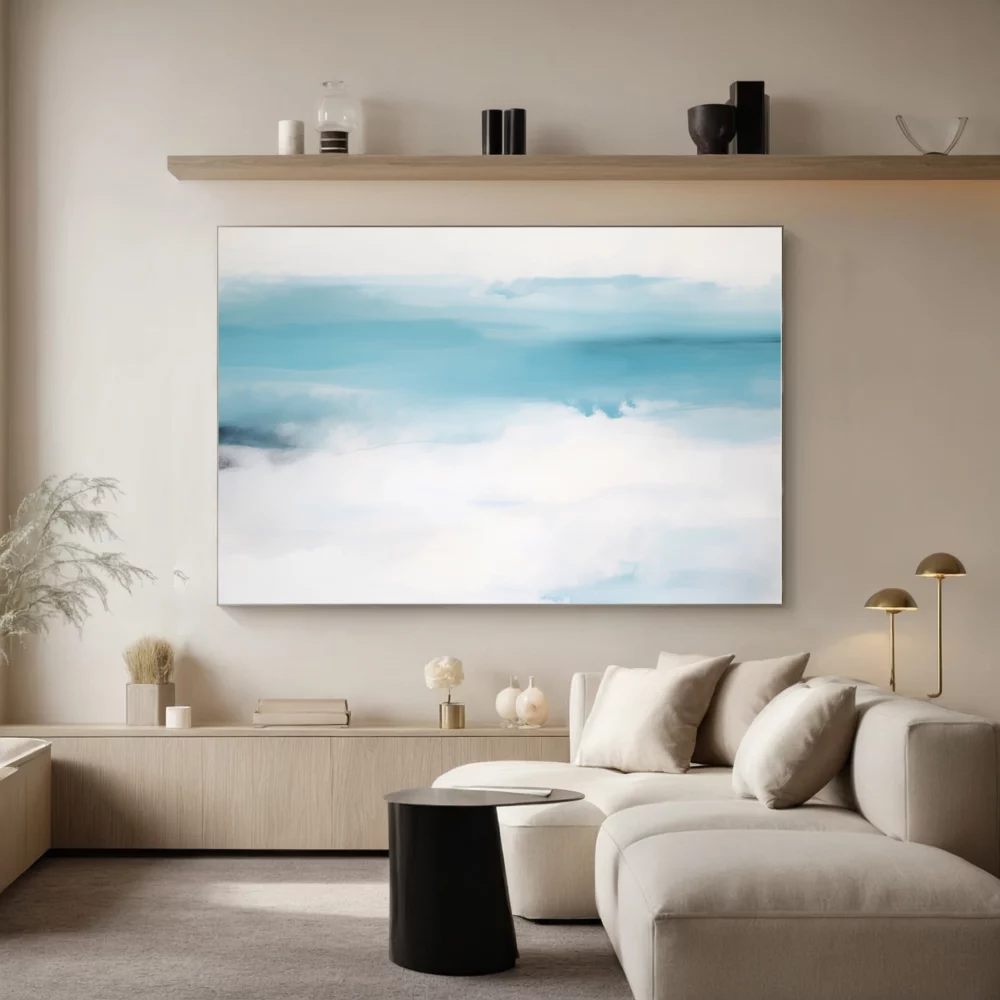
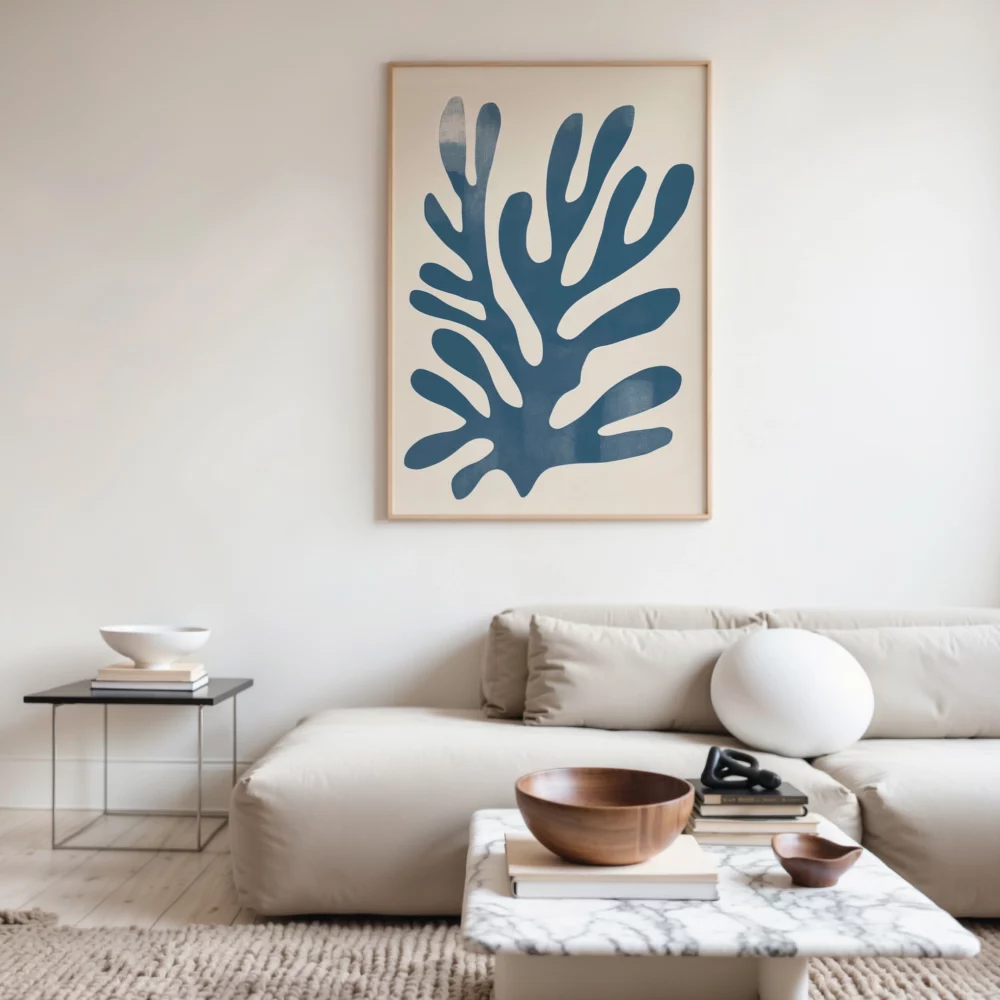
Instead of a cluttered wall, choose one large, high-quality statement piece. A single large-scale Japandi wall art print acts as a focal point, drawing the eye in and giving the room a sense of purpose. It creates a “destination” for the eye to rest, which actually makes the wall feel wider.
In Japanese aesthetics, the space around an object is just as important as the object itself. This is known as “Ma.” When you hang a piece of art, leave plenty of empty wall space around it. This “breathing room” is what creates the sense of Zen and calm that Japandi is famous for.
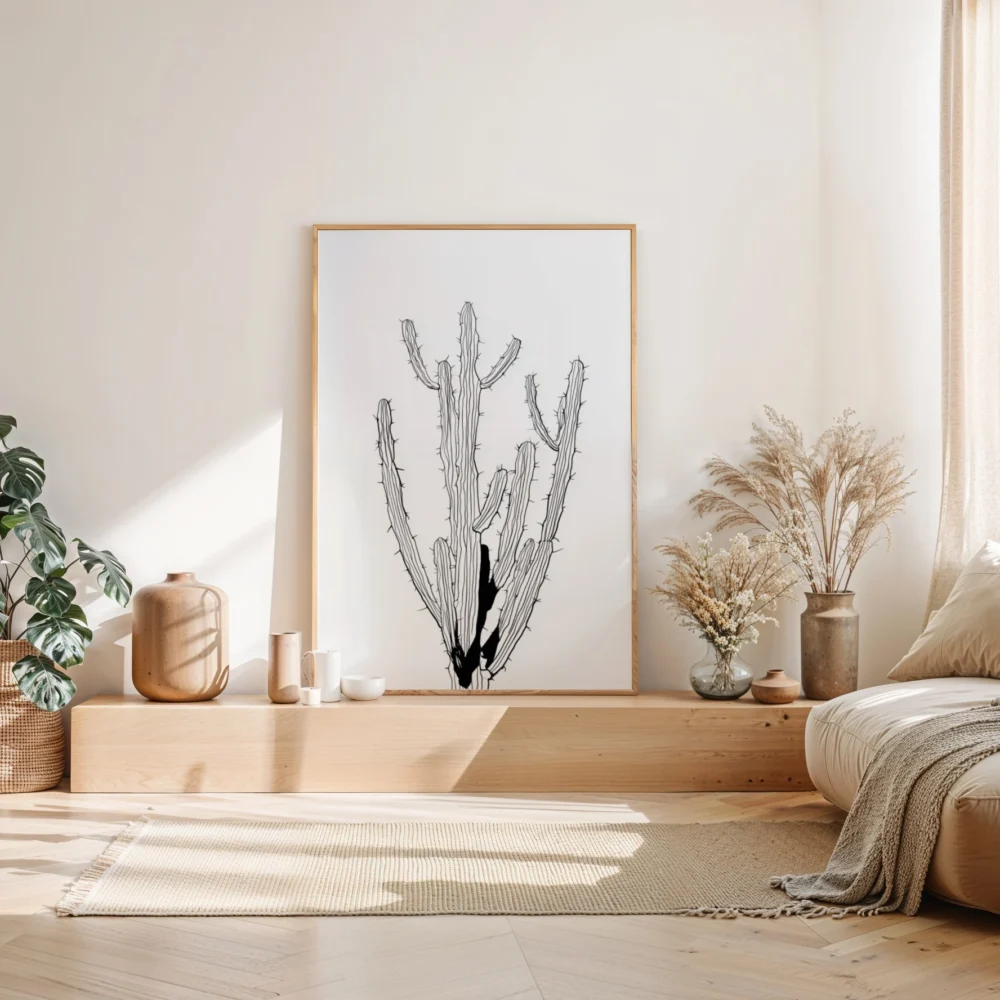
Design Tip: For small spaces, I recommend my Minimalist Line Art Collection. These pieces use thin, fluid lines and plenty of white space, ensuring they never overwhelm a small room.
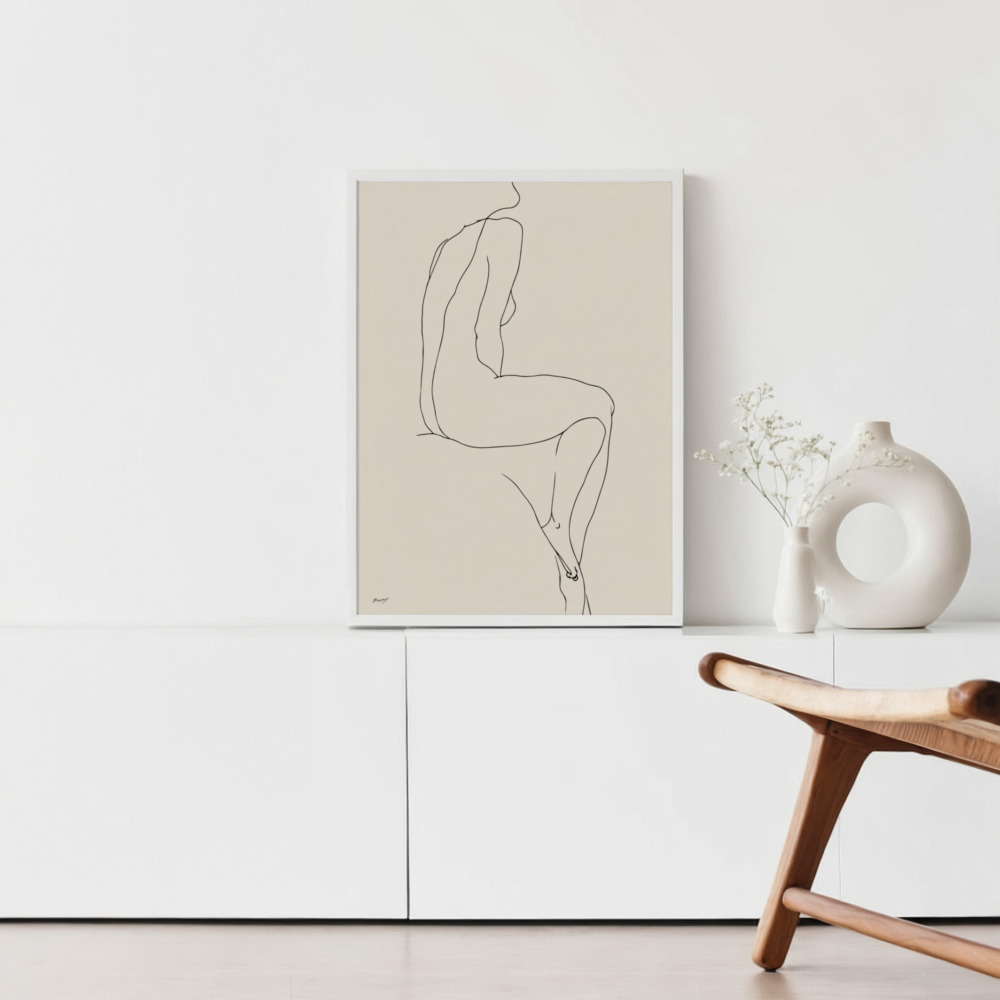
The “Scandi” side of Japandi is all about texture. Because you are using fewer items in a minimalist apartment decor scheme, the items you do have should be high-quality and tactile.
Light woods like oak, ash, and bamboo are staple materials. They bring a sense of the outdoors inside, which is vital for apartment dwellers who may not have a garden. The light color of these woods ensures the room stays bright, while the natural grain adds a layer of visual interest that doesn’t feel cluttered.
Jute and Sisal: A jute rug is a great way to add “rough” texture that contrasts beautifully with soft linen bedding.
Ceramic Accents: Hand-thrown ceramic vases or mugs celebrate the “Wabi-sabi” philosophy of finding beauty in the handmade and slightly imperfect.
Linen: Use linen curtains to allow natural light to filter through while providing privacy. Linen’s natural drape is much softer and more “Japandi” than heavy velvet or stiff polyester.
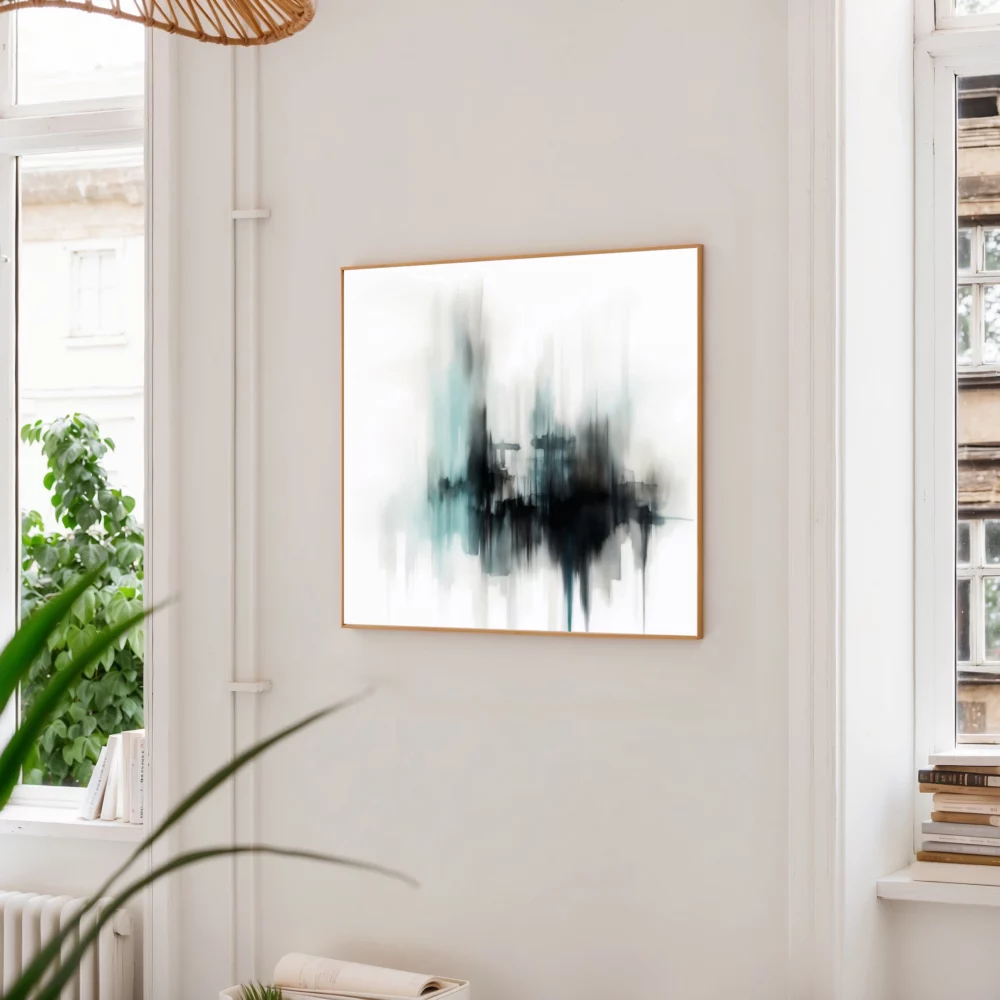
Light is the most effective tool for making a small space feel expansive. A Japanese Scandinavian interior is always centered around the light source.
Avoid heavy, dark drapery. In a small Japandi apartment, you want as much natural light as possible to hit your light-colored walls. Sheer linen or cotton curtains provide a soft, diffused light that makes the entire room glow.
While mirrors aren’t “traditionally” Japanese, they are a vital tool in modern Japandi apartments. Placing a large, thin-framed mirror opposite a window will bounce the natural light into the darker corners of the room, effectively doubling the perceived space.
Avoid the “big light” (the harsh overhead fixture). Instead, use layered lighting to create “pockets” of warmth:
A paper floor lamp in a corner.
A small ceramic lamp on a sideboard.
Warm LED strips under kitchen cabinets.
Layering light creates shadows and depth, which makes a small apartment feel more dimensional and less like a “box.”
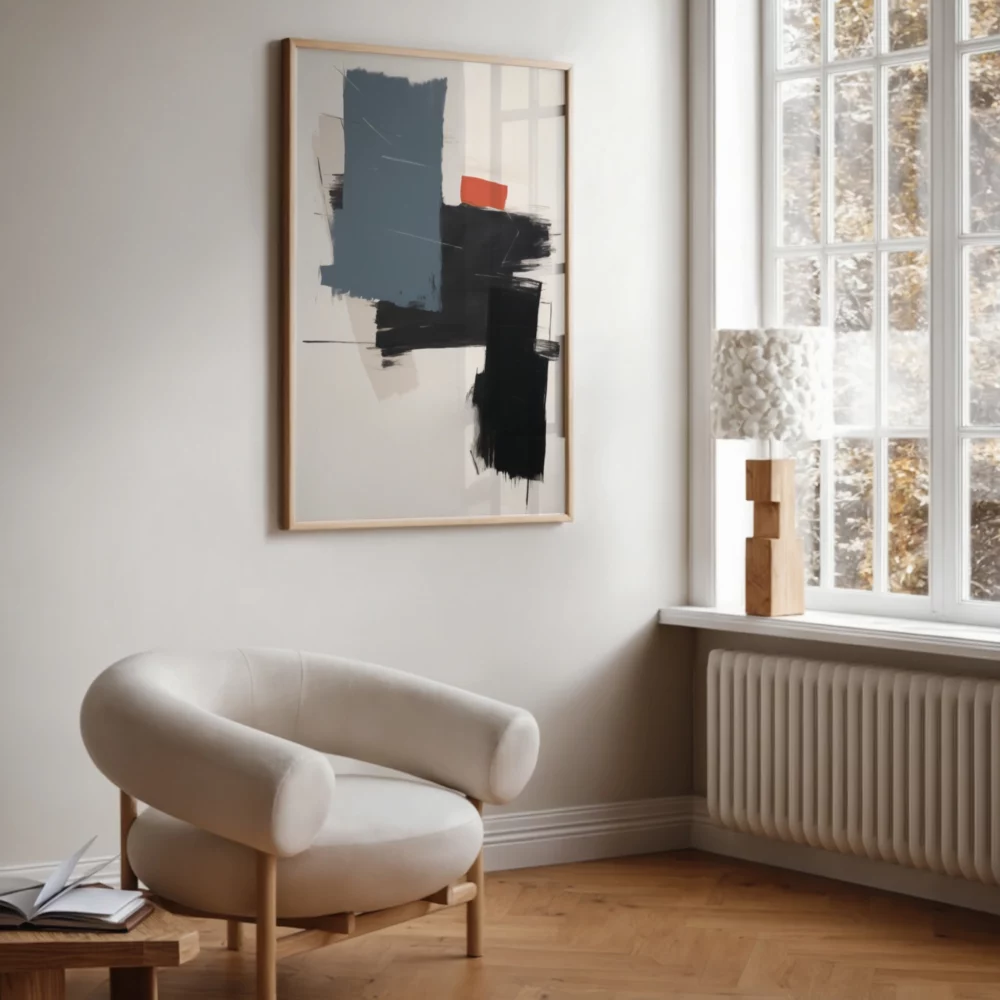
You cannot have a Japandi home if you have a clutter problem. However, Japandi decluttering isn’t just about throwing things away; it’s about shifting your mindset.
If you have items that you need but don’t want to see (electronics, paperwork, miscellaneous cords), use hidden storage. Choose furniture with closed doors rather than open shelving. In a small space, “visual silence” is achieved by hiding the chaotic elements of life.
Make it a rule to keep your horizontal surfaces—dining tables, coffee tables, and kitchen counters—as clear as possible. On a large dining table, a single ceramic bowl is enough. On a coffee table, perhaps one art book and a candle. This lack of surface clutter is the hallmark of Japandi decor ideas.
If you’re unsure where to start, I always recommend reading about the difference between Giclée and standard prints to understand why investing in a few high-quality, long-lasting pieces is better than buying many cheap, disposable ones.
Even in a tiny studio apartment, you can create “zones.” Japandi is about creating harmony within a space, and that often means carving out a tiny area for peace.
A single low-profile chair, a small wooden side table, and a piece of neutral wall art can define a reading nook. Even if it’s only 3 square feet, this “zone” feels separate from your work or sleeping area, giving your mind a place to transition into rest.
In a small apartment, the entryway often becomes a “clutter magnet.” Use a simple wooden bench and a few wall hooks. By organizing this small transition zone, you set a calm tone the moment you walk through the door.
While Japandi is a relatively simple aesthetic, it’s easy to get the balance wrong in a tight room.
People often think “Japandi” means “anything made of wood or bamboo.” If you fill your shelves with twenty different bamboo baskets and wooden figurines, you’ve lost the minimalism. Stick to 1-3 high-quality pieces per surface.
If you remove all color and texture, you’ve moved away from Japandi and into “Ultra-Minimalism.” If the room feels like a cold office, add a wool throw, a warm-colored print, or a living green plant to bring the Scandi “Hygge” back in.
In a small space, you should try to limit yourself to two wood tones. For example, a light oak for the floor and furniture, and perhaps a darker walnut for a single accent piece. Too many different wood grains and colors will make the floor and walls feel “choppy.”
A heavy black bookshelf might look great in a warehouse loft, but it will “eat” the light in a small apartment. If you want to use black (a common Japandi accent), use it sparingly in frames, light fixtures, or small hardware.
The beauty of Japandi is that it doesn’t require a mansion to look beautiful. In fact, Japandi style apartments often look better because the small scale forces you to be more intentional with your choices.
It is a style that encourages us to slow down, appreciate the grain of a wooden table, and enjoy the way the light hits a piece of minimalist art on a quiet Sunday morning. By focusing on quality over quantity and harmony over “stuff,” you can transform even the smallest studio into a spacious, soul-soothing sanctuary.
Small apartments benefit most from intentional design. When every item is chosen for its beauty and its function, the walls seem to disappear, leaving you with nothing but room to breathe.
Ready to start your small apartment transformation?
Shop the Japandi Collection | Explore Neutral Abstract Art | About the Artist