Limited Time: 20% Off All Prints
Free worldwide shipping on orders over $69
Delivery 4-12 business days
Home / Trending Art Styles / Why Your Home Office Art Is Killing Your Productivity
That random landscape print above your desk isn’t just boring—it’s actively working against you. The right workspace art can increase focus by 38% and reduce stress hormones, but most people get it completely wrong.
Your brain processes visual information 60,000 times faster than text, which means every piece of art in your peripheral vision is either helping or hindering your cognitive performance. Studies from the University of Exeter found that employees with control over their workspace design showed 32% higher productivity levels than those in sterile environments.
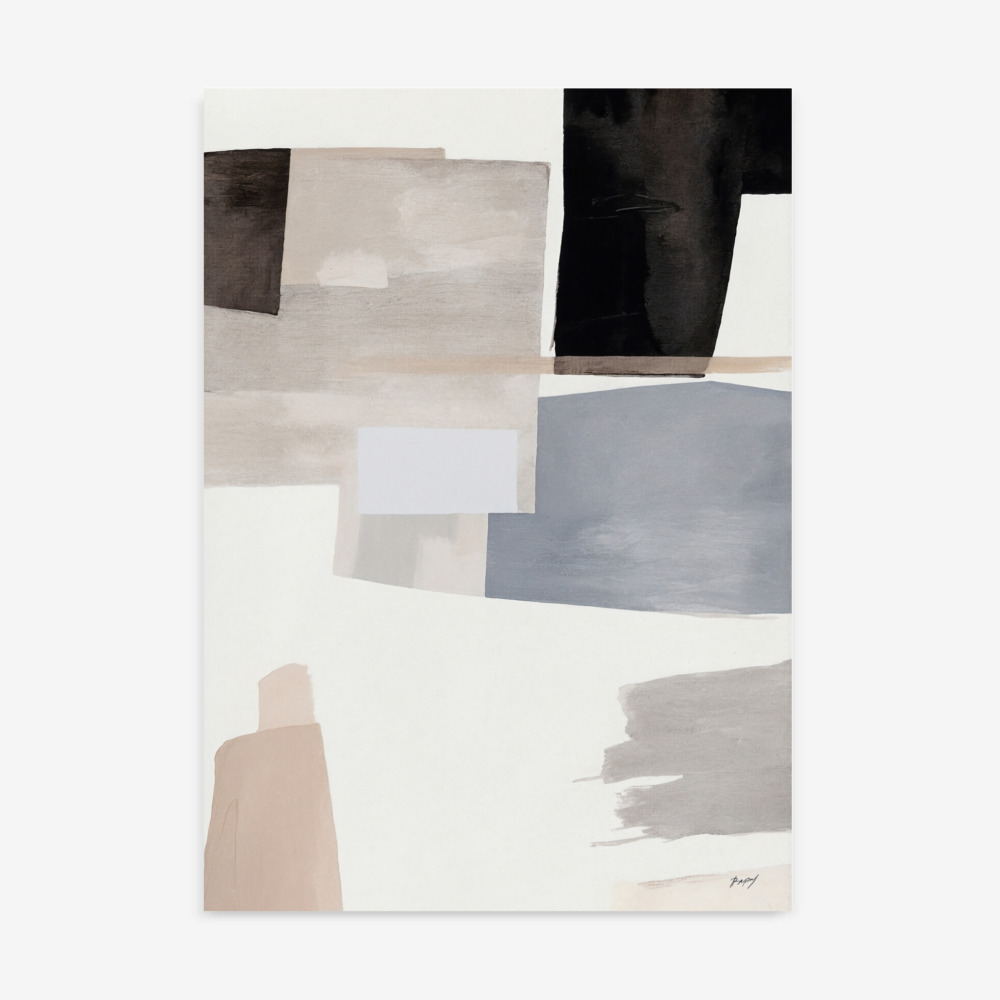
The key isn’t just having art—it’s having the right art. Geometric patterns and abstract compositions activate different neural pathways than realistic imagery, with geometric forms promoting logical thinking while organic shapes encourage creative problem-solving. Your home office needs intentional visual stimuli that align with your work goals, not random decoration that creates mental noise.
Blue increases focus and cognitive performance by up to 12%, making it the gold standard for analytical work environments. But the shade matters—navy and deep blues promote concentration, while light blues can actually make you feel drowsy during afternoon slumps.
Green reduces eye strain and promotes balance, especially crucial if you’re staring at screens all day. However, avoid bright or neon greens that can feel overwhelming. Sage, forest, and muted olive tones work best for sustained productivity. If you want to energize creative thinking, shop terracotta and orange art prints in small doses—these warm tones stimulate innovation without creating chaos.
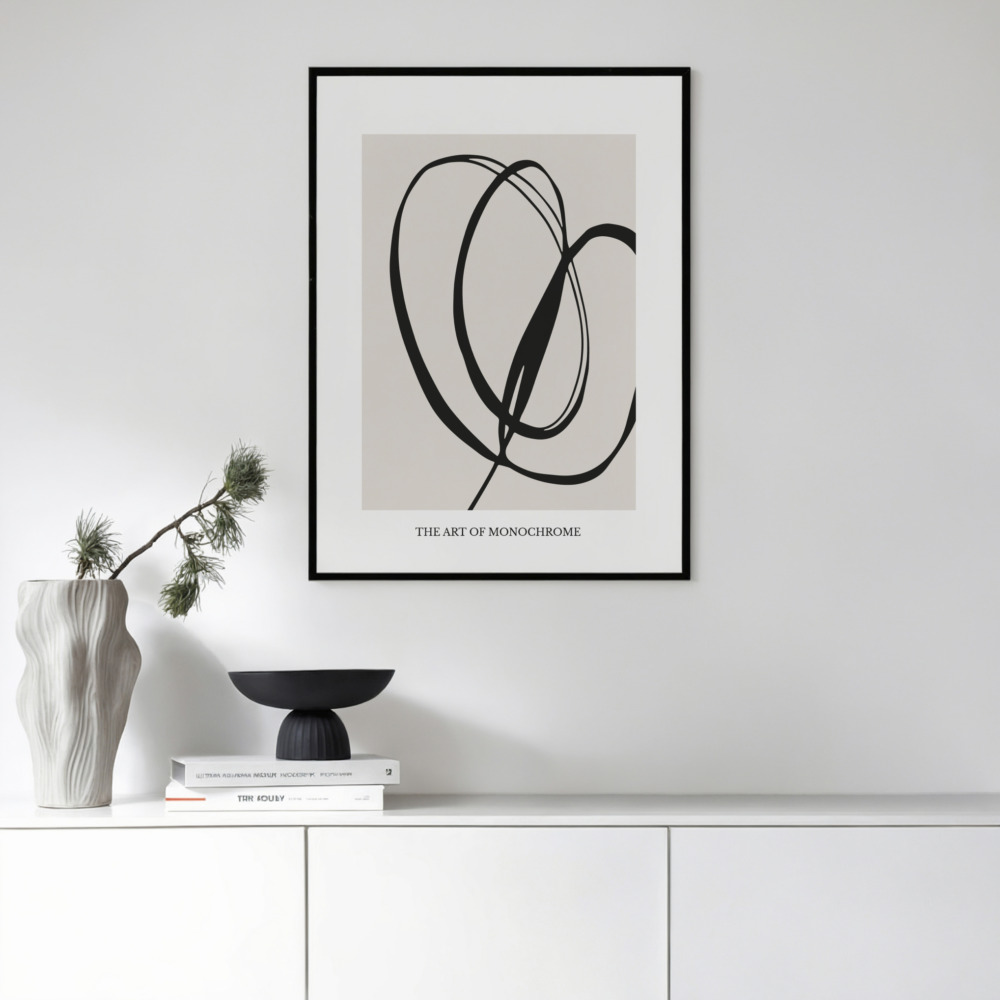
Black and white art isn’t boring—it’s strategic. Monochrome prints eliminate color distraction while providing visual interest through form, texture, and composition. This allows your brain to process the artwork quickly without getting caught in color analysis loops that fragment attention.
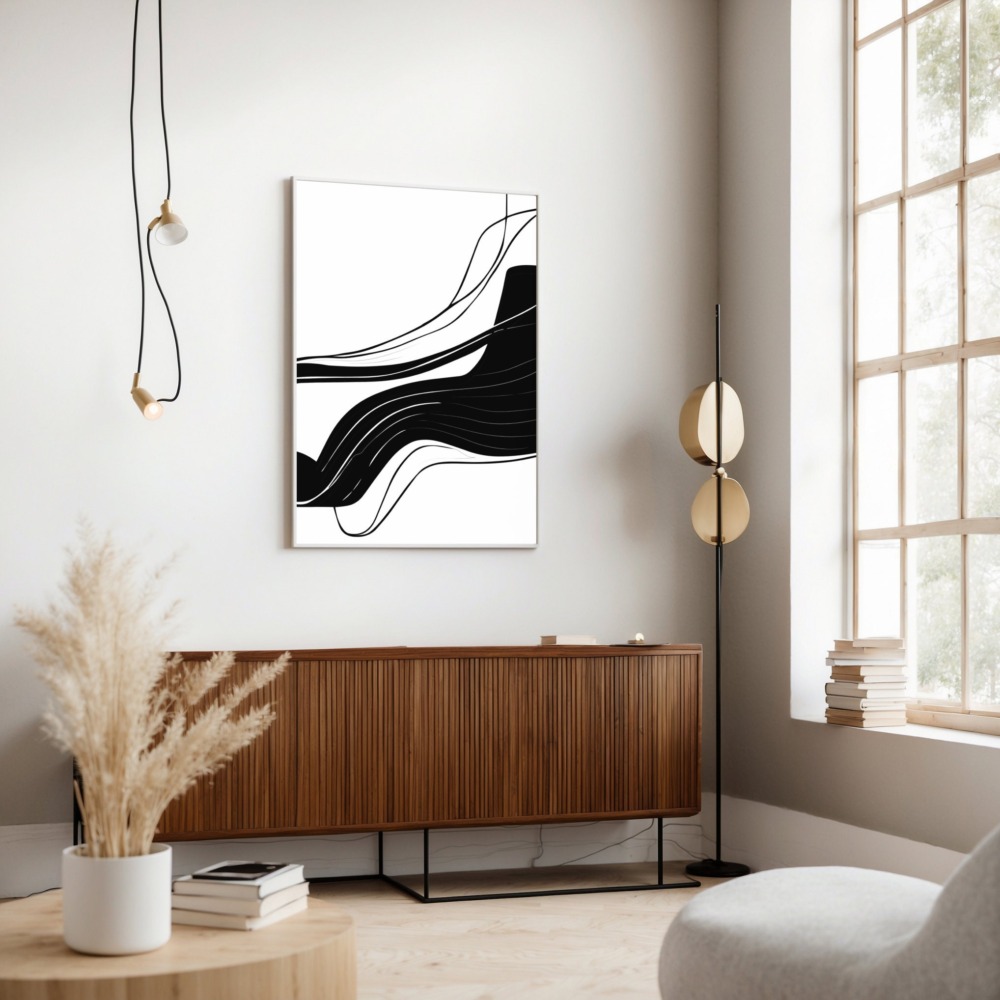
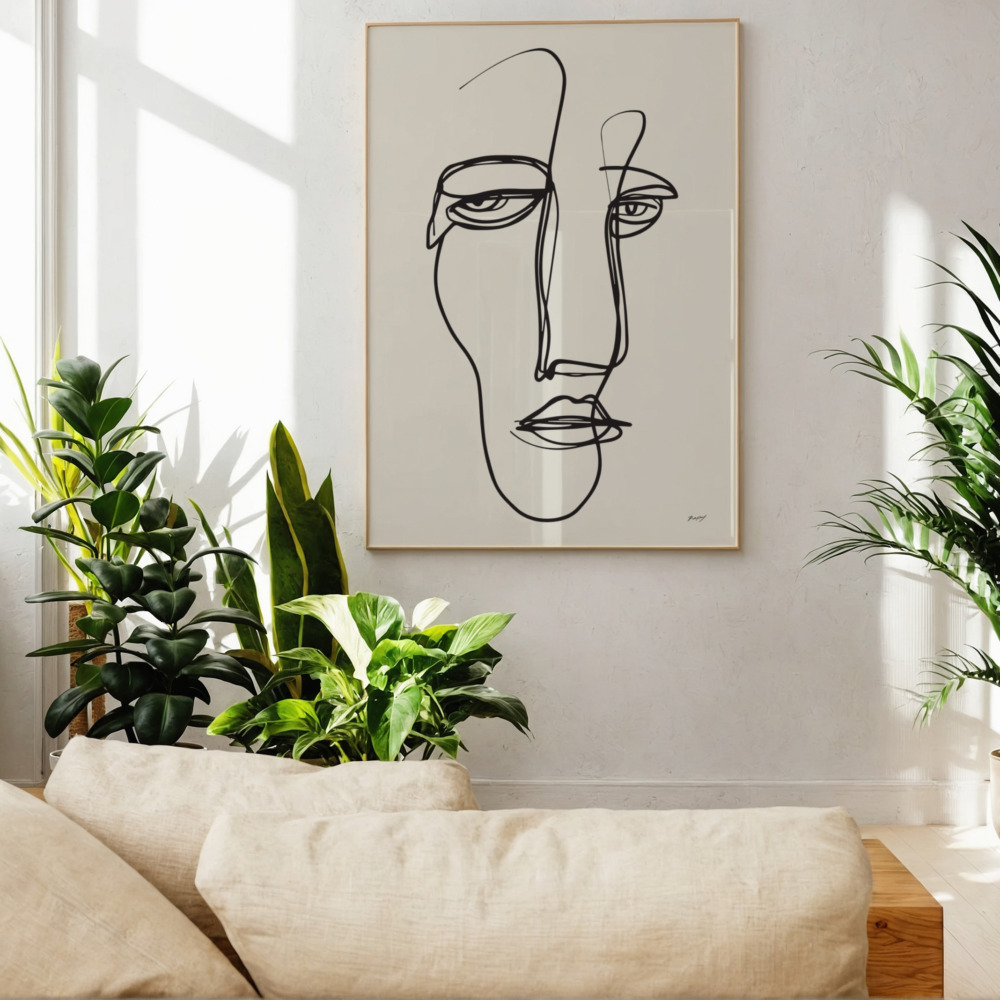
Line art specifically enhances linear thinking—perfect for tasks requiring sequential processing like coding, writing, or financial analysis. When you shop black and white line art prints, you’re choosing artwork that supports rather than competes with your cognitive processes. The clean lines create visual rhythm that actually synchronizes with focused brainwave patterns.
The 60-inch rule trumps everything else: your primary workspace art should be positioned 60 inches from your seated eye level for optimal peripheral processing. Too close and it becomes distracting, too far and it provides no cognitive benefit. Most people hang art too high, creating neck strain and visual disconnection.
Scale matters more than subject matter. A single 16×20 inch print has more visual impact than three 8x10s, and your brain processes it more efficiently. Multiple small pieces create scanning patterns that fragment focus, while one well-proportioned piece provides stable visual anchoring. For desks against walls, aim for art that’s 2/3 the width of your desk surface.
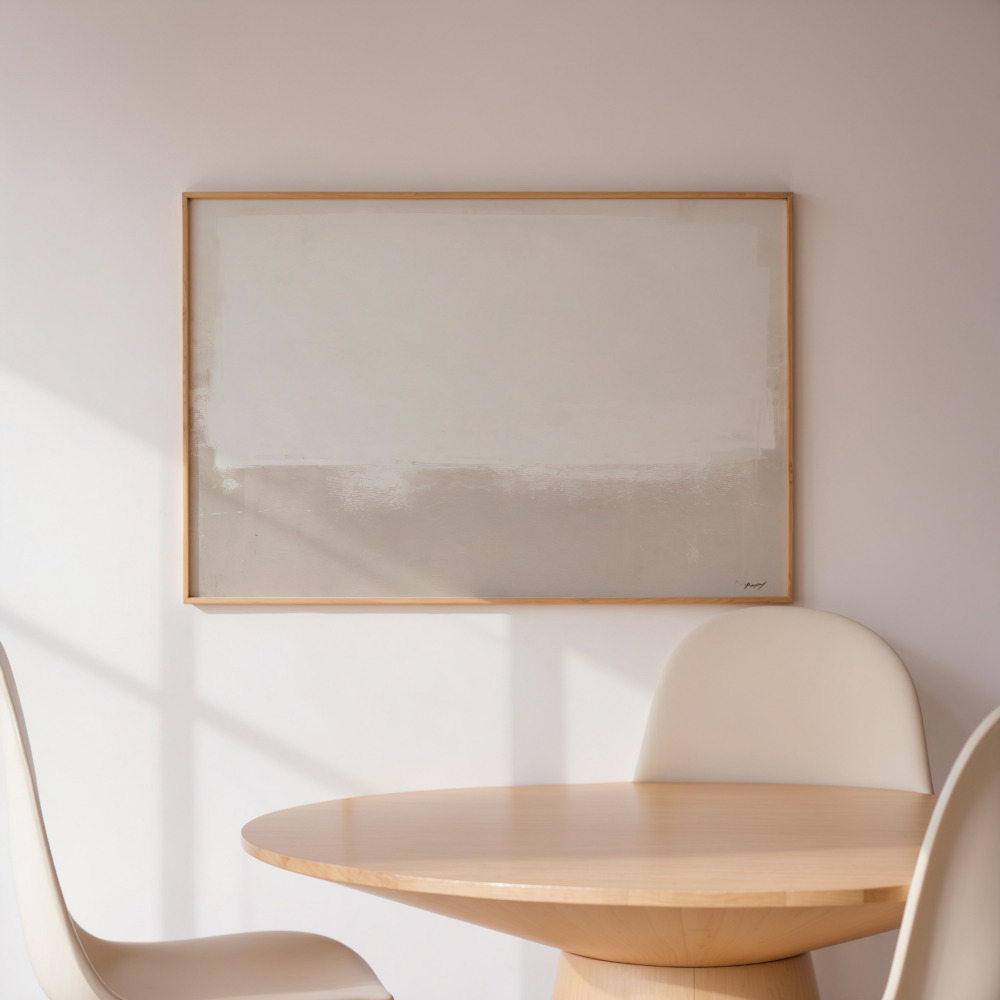
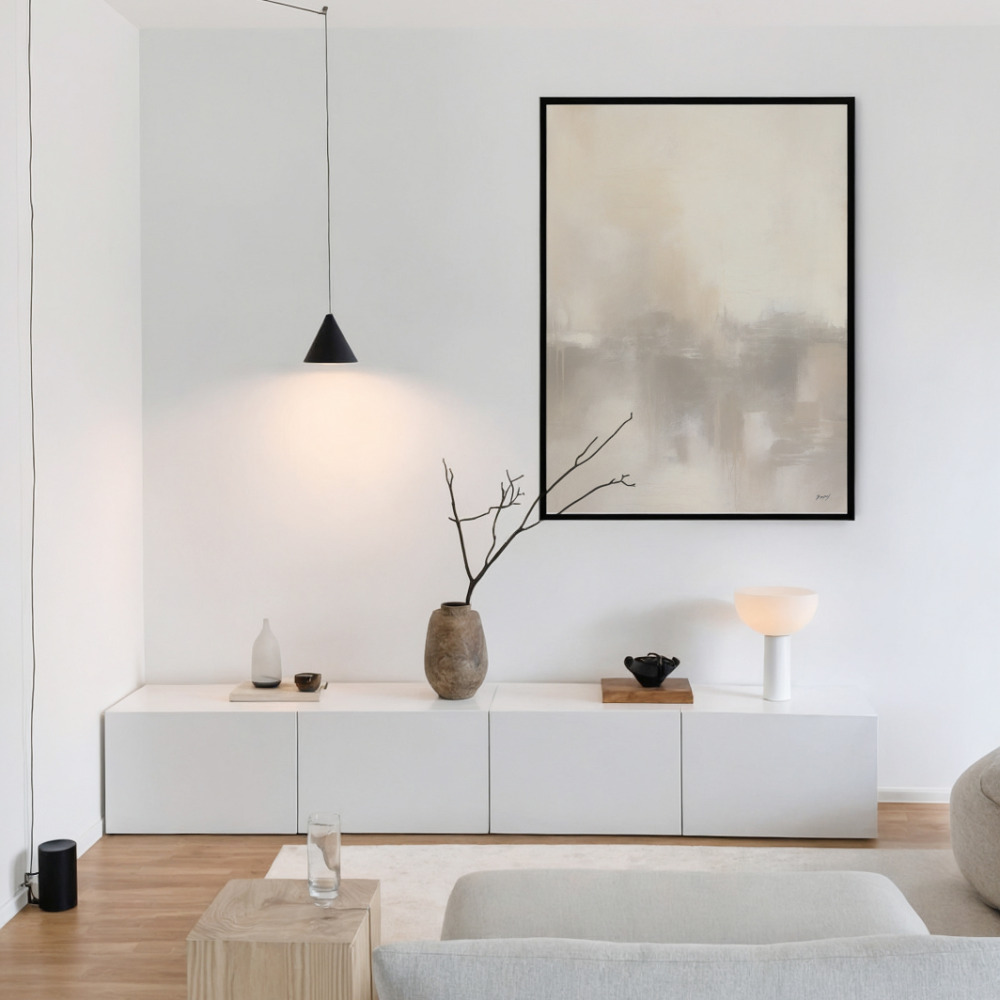
Japandi aesthetics aren’t just Instagram trends—they’re productivity powerhouses. The combination of Japanese minimalism and Scandinavian functionality creates visual environments that reduce cortisol levels while maintaining alertness. Clean lines, natural materials, and intentional negative space give your brain permission to focus deeply.
When you browse our japandi art collection, you’re looking at artwork designed around the concept of ‘ma’—meaningful emptiness that allows thoughts to flow without visual obstruction. This isn’t about sterile environments, but rather intentional simplicity that supports complex thinking. Silhouettes work similarly, providing visual interest through form while eliminating detail overload that can fragment attention.
Biophilic design isn’t just trendy—it’s neurologically necessary. After staring at screens, your eyes need organic shapes and natural patterns to reset focus mechanisms and reduce accommodation fatigue. Botanical prints provide this relief while maintaining the sophisticated aesthetic your home office demands.
The key is choosing stylized rather than photorealistic nature imagery. Abstract botanical forms give you the cognitive benefits of natural patterns without the detailed complexity that can become distracting during deep work sessions. Nordic botanical styles strike the perfect balance, offering organic shapes rendered in clean, minimalist compositions that support rather than compete with productivity.
Creative work benefits from art positioned in your direct sightline during thinking breaks—this stimulates right-brain processing and encourages innovative connections. Analytical work performs better with art slightly outside your primary focus zone, providing subliminal visual stability without conscious distraction.
If you switch between task types, explore our silhouette art collection for versatile pieces that support both logical and creative thinking modes. Silhouettes provide enough visual interest to stimulate creativity while maintaining the simplicity needed for analytical focus. The key is creating a visual environment that adapts to your cognitive needs rather than fighting against them.
You’ve invested in the perfect desk, ergonomic chair, and high-end monitor. Don’t let random wall art undermine everything else. Choose prints specifically designed to enhance focus, reduce eye strain, and support the way your brain actually works in a home office environment.