Limited Time: 20% Off All Prints
Free worldwide shipping on orders over $69
Delivery 4-12 business days
Home / Trending Art Styles / The Art of Monochrome: Achieving Interior Harmony and Mental Clarity
Choosing a Black and White Painting is one of the most sophisticated ways to anchor a room, as it relies on the purity of contrast rather than the noise of color. At Print Studio, we believe that monochrome art isn’t just about what is missing, but what is highlighted through simplicity. In the world of modern interior design, where we are often overwhelmed by trends and saturated palettes, the decision to strip back to the essentials of light and dark can be a transformative act. It is a choice that prioritizes form over flash and substance over style, creating a space that feels both grounded and incredibly intentional.
The resonance of monochrome art lies in its ability to introduce balance and focus into our most lived-in spaces. Whether you are decorating a sprawling living area or a compact home office, the interplay between black and white offers a visual equilibrium that color often disrupts. In this deep dive, we will explore the psychological and aesthetic power of the monochrome palette, how it interacts with different architectural styles, and how you can use it to create a home that feels like a sanctuary of clarity.
To understand the impact of monochrome art, we must first look at the fundamentals of human perception. Our eyes are naturally drawn to contrast. When color is removed from the equation, the brain is forced to process the image through its most basic components: light, shadow, shape, and line. This “sharpening” of attention is why a black and white image often feels more dramatic or “real” than a color photograph; it bypasses the emotional bias we have toward certain colors and speaks directly to our sense of structure.
In interior design, this clarity is an invaluable tool. A room filled with varied colors can sometimes feel fragmented, with different elements competing for the viewer’s attention. By introducing a piece of original art prints in a monochrome palette, you provide the eye with a “palate cleanser.” It is a visual signal to slow down and look closer. This simplicity isn’t an absence of information; it is a refinement of it. It allows the viewer to appreciate the texture of a brushstroke or the curve of a minimalist line without the distraction of a vibrant red or a cooling blue.
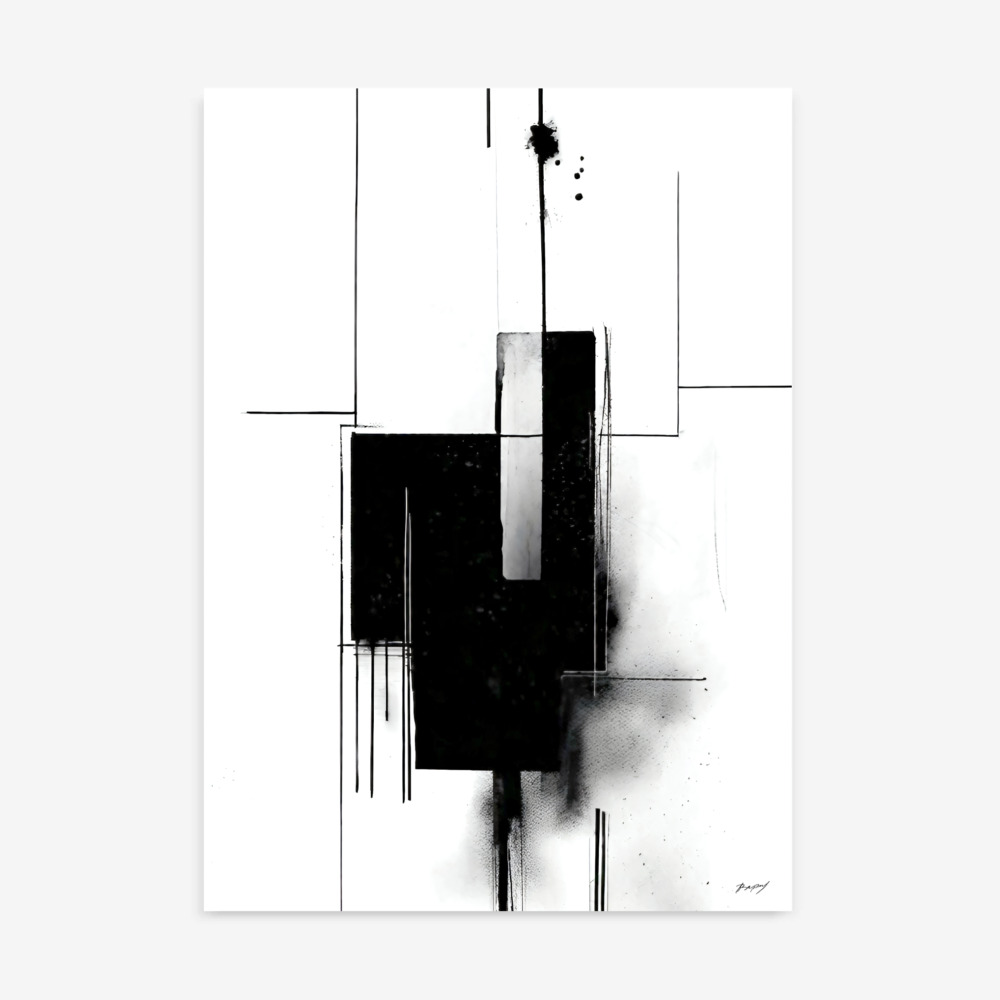
The concept of balance is central to a well-designed home. Without it, a room can feel either too heavy and oppressive or too light and unanchored. Black and white art offers a natural visual equilibrium because it represents the two extremes of the light spectrum. This “Yin and Yang” effect creates a structural framework on a wall that color simply cannot match.
When you hang a high-contrast piece, you are effectively “weighting” the wall. The dark elements provide gravity, while the white elements provide “breathing room” or negative space. This makes contrast feel grounding rather than chaotic. In a room with many soft textures—like linen sofas, wool rugs, or velvet curtains—a sharp, monochrome piece adds a necessary “bite” or definition. It creates a boundary that helps the other elements in the room feel more organized and purposeful.
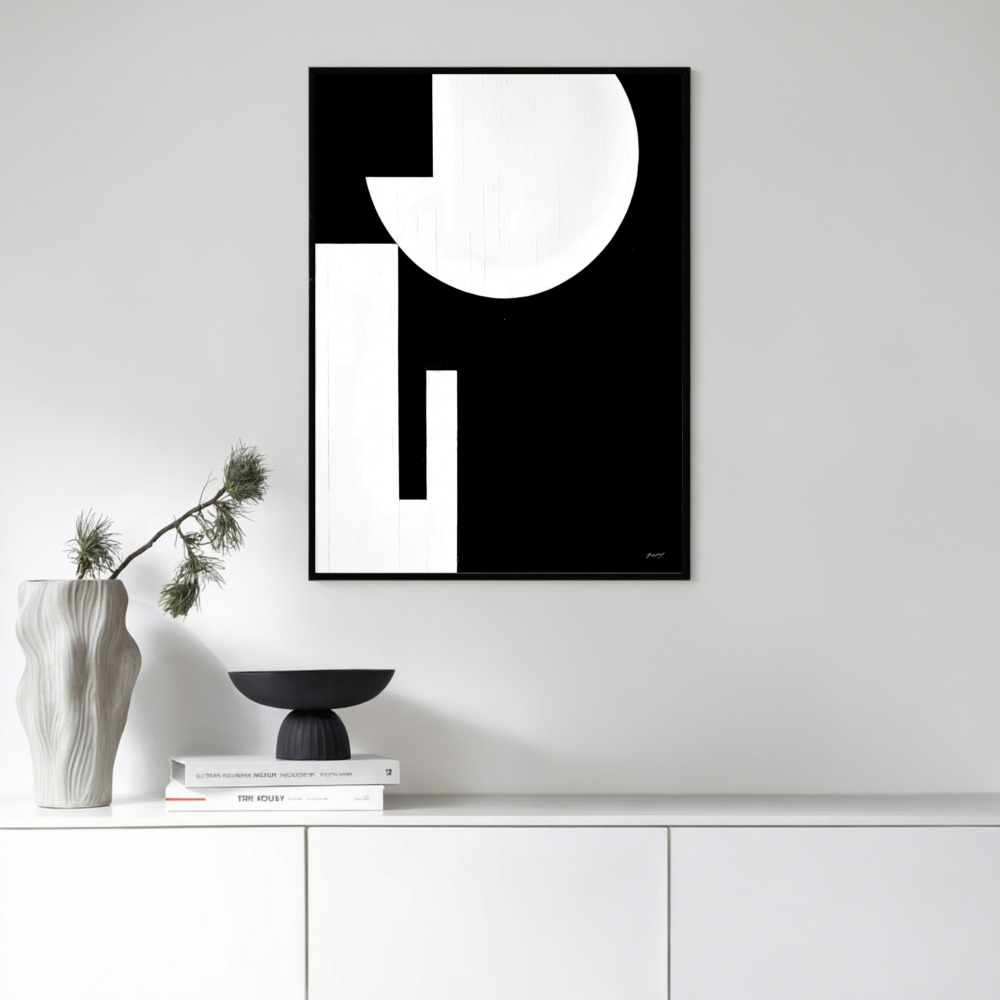
In our current era of “digital overload,” our brains are constantly scanning for information. Color is a high-energy stimulus that requires significant cognitive processing. By contrast, a monochrome environment lowers the “visual volume” of a room. This reduction in visual noise is why designers often turn to neutral wall art when they want to create a space for concentration or deep relaxation.
Monochrome art directs the eye with incredible precision. Without the “bleeding” effect of different colors, the composition of a Black and White Painting becomes a roadmap for the eye. You follow the path of a single ink stroke or the intersection of two geometric shapes. This linear focus is psychologically soothing. It mirrors the way we think when we are at our most productive: one thought following another, without the static of unnecessary distraction. For those who find it hard to unwind or focus, the inclusion of monochrome art can be a silent but powerful support system.
A common misconception is that a lack of color equates to a lack of emotion. On the contrary, some of the most emotionally resonant works in art history—from the photography of Ansel Adams to the ink sketches of Picasso—rely entirely on the grayscale. There is a “quiet confidence” in monochrome art. It doesn’t need to shout for attention; it trusts the strength of its form to move the viewer.
Subtle emotion is conveyed through line, texture, and the relationship between objects. A soft, blurred charcoal abstract can feel incredibly intimate and romantic, while a sharp, geometric ink print can feel energetic and bold. Because these pieces are “open” to interpretation, they allow the viewer to project their own mood onto the canvas. This makes them a “living” part of your decor that evolves with your own emotional state throughout the day.
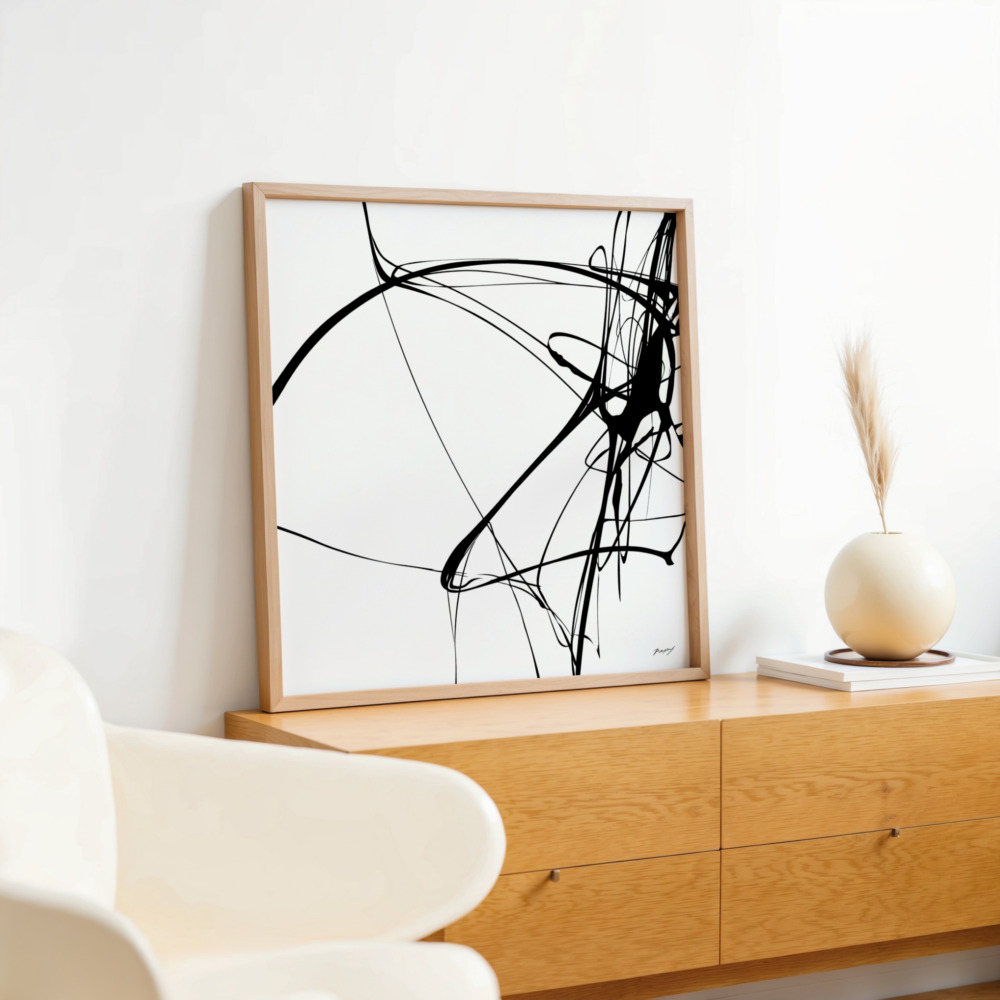
Modern and minimalist design movements have long championed the black and white palette. In these styles, the goal is often to highlight the “bones” of a building—the light, the materials, and the space. Monochrome art is the perfect partner for this philosophy because it respects the architecture. It doesn’t hide a wall; it enhances it.
In a minimalist space, a large-scale piece acts as a visual anchor. In a room where furniture is kept to a minimum and colors are strictly controlled, a piece of modern wall art provides the necessary focal point that prevents the room from feeling “empty.” It adds a layer of sophistication that tells the viewer the room is minimal by choice, not by accident. Furthermore, the versatility of black and white means it can bridge the gap between different modern sub-styles, from the “warm minimalism” of Japandi to the “industrial edge” of a converted loft.
The application of monochrome art changes depending on the function of the room. Here is how to use it effectively across your home:
The living room is typically the social hub of the home, filled with diverse textures and objects. A monochrome piece here serves as a “unifier.” It can balance a colorful gallery wall or stand alone above a fireplace to create a strong, sophisticated focal point. If your living room has a lot of natural wood or greenery, black and white art provides a modern contrast that keeps the space from feeling too “rustic.”
The bedroom should be a sanctuary of rest. Here, we suggest Black & White Abstract art prints with soft, flowing lines or blurred edges. These restful compositions mimic the slow movement of shadows at dusk, signaling to the brain that it is time to decompress. Visual simplicity in the bedroom is the key to mental relaxation.
Focus is the priority in a workspace. A minimalist painting with a clear, strong composition can help maintain mental clarity. Avoid “busy” patterns here; instead, look for pieces with significant negative space. This provides your eyes with a place to rest during a long day of screen work, helping to reduce eye strain and cognitive fatigue.
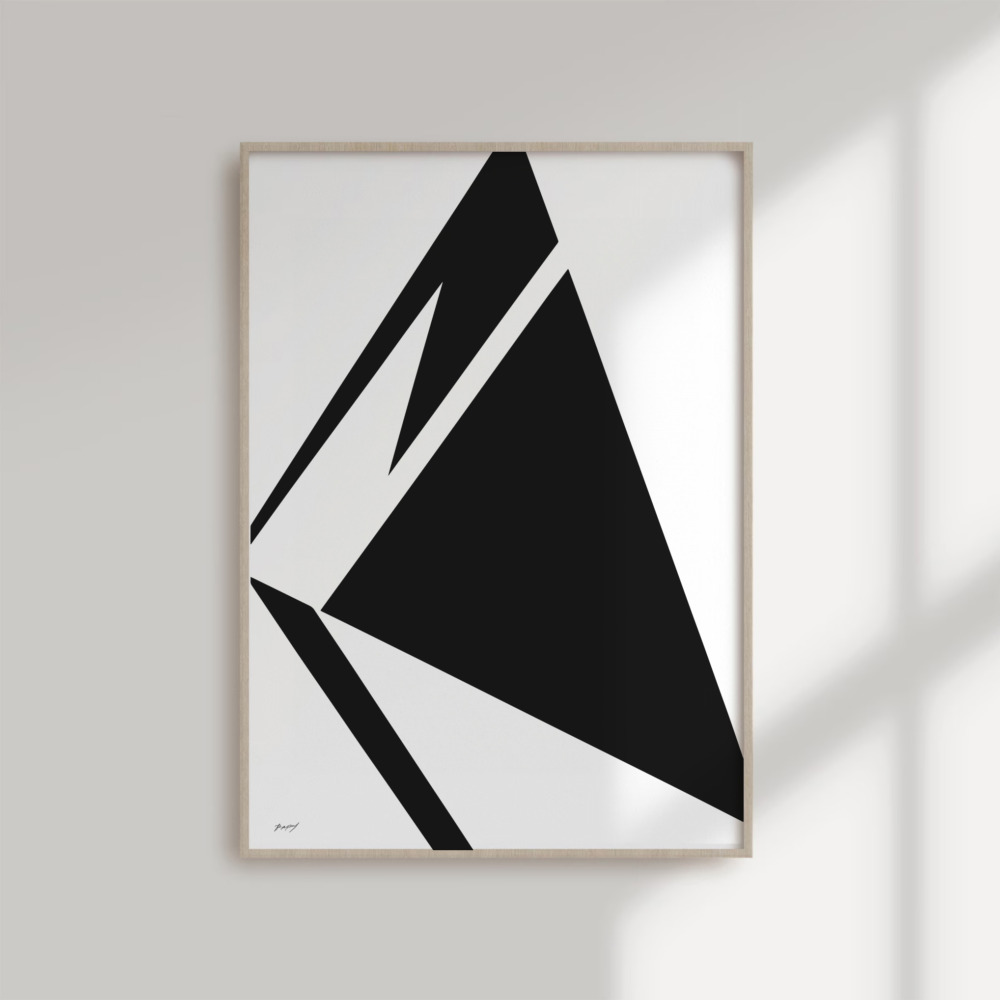
When color is removed, texture and line become the primary storytellers. This is why texture matters so much in a Black and White artwork. A flat, digitally printed black square has a very different energy than a textured, layered ink wash where the paper’s grain is visible.
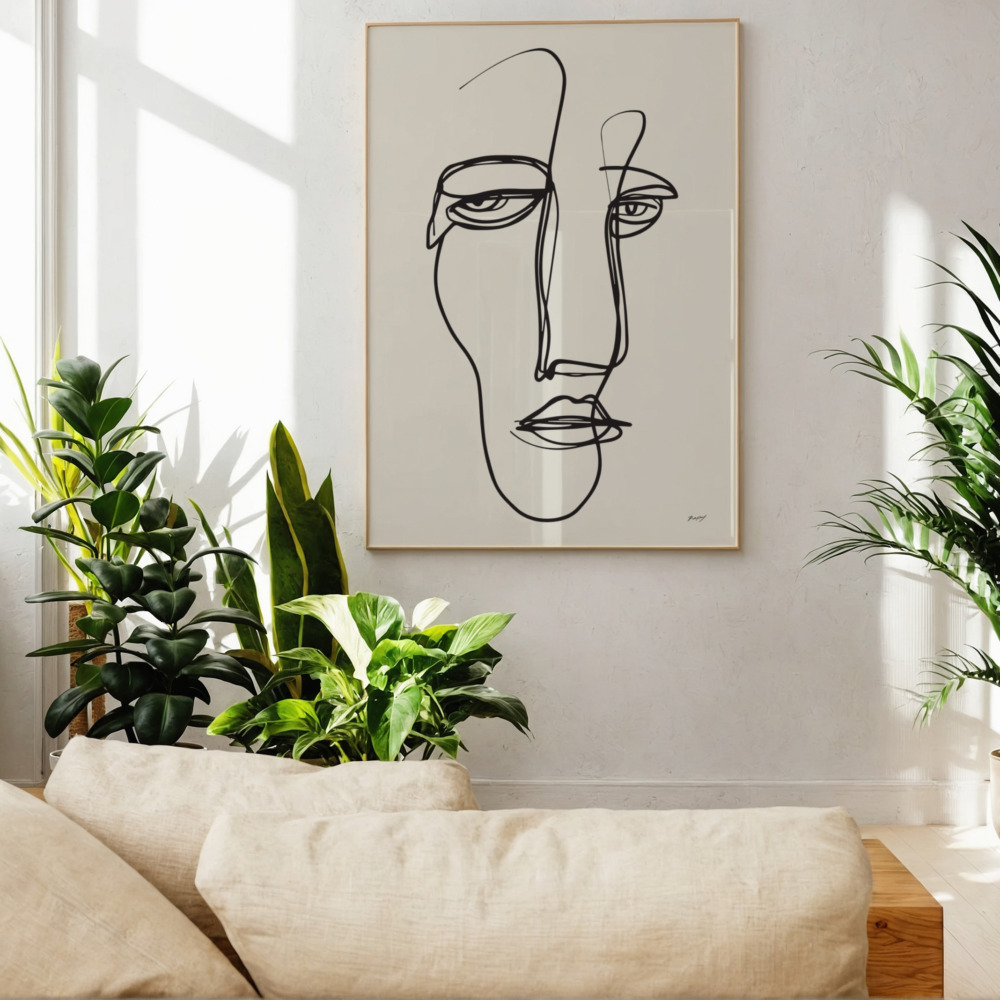
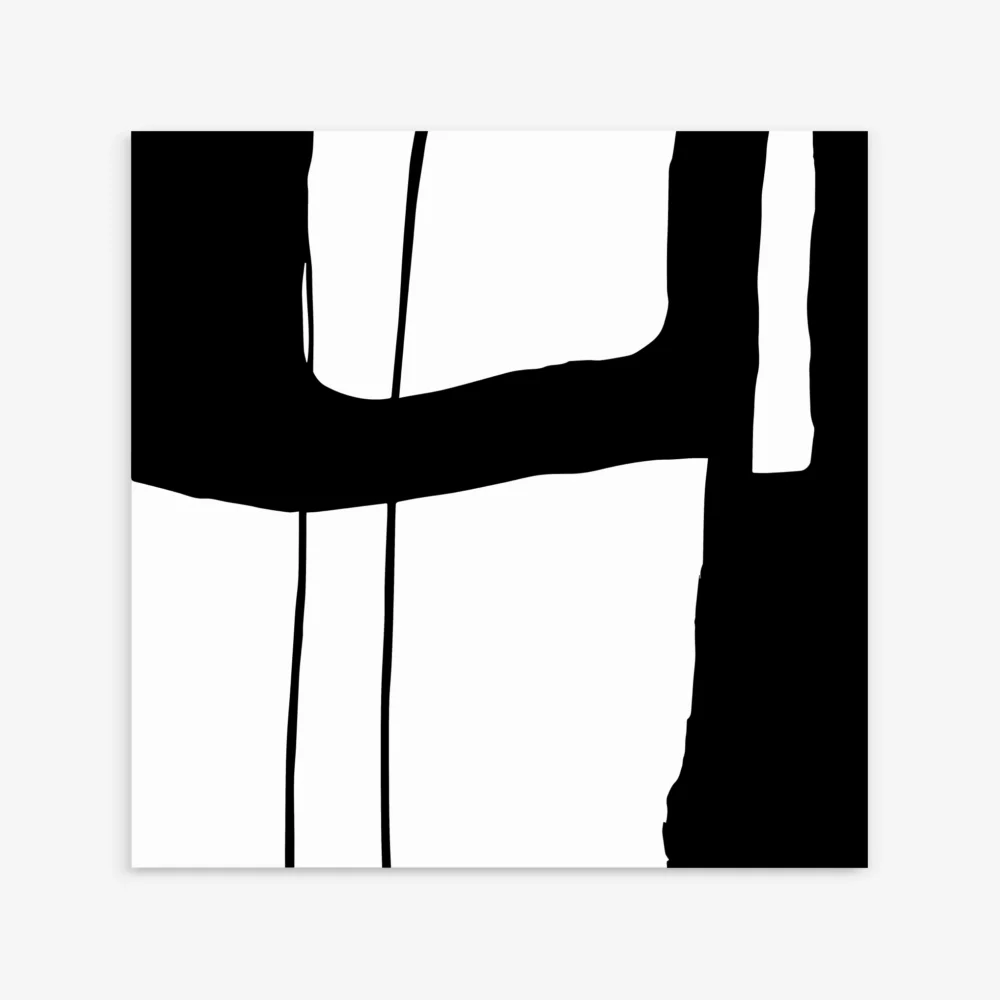
Line art is currently seeing a massive resurgence in the world of minimalist art. A single, continuous black line on a white background captures a sense of movement and “lightness” that is incredibly refreshing. On the other end of the spectrum, bold abstract forms—large blocks of deep black—create a sense of power and permanence.
Negative space is perhaps the most important element in monochrome composition. In black and white art, the “empty” white areas are not just background; they are active participants in the design. They provide the “air” that allows the black forms to exist. Mastering the balance of these two elements is what separates a good piece of art from a great one.
How you present your monochrome art is just as important as the art itself.
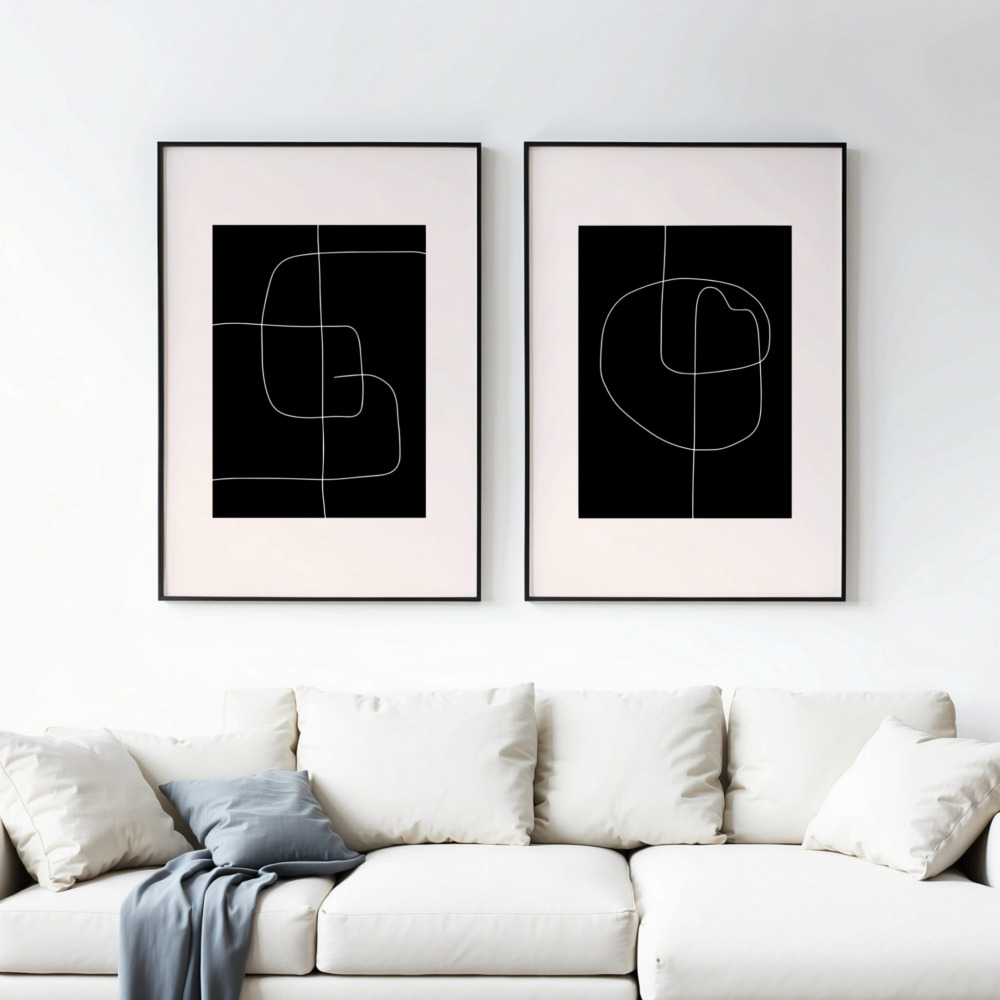
Thin Black Frames: This is the “classic modern” choice. It provides a sharp border that makes the art feel like a window into another world.
Natural Wood Frames: If you want to soften the “starkness” of a black and white print, an oak or ash frame adds a touch of organic warmth. This is a favorite in Scandinavian and Organic Modern interiors.
White Frames: A white frame on a white wall creates a “floating” effect, where the black lines of the art seem to exist directly on the wall itself.
Don’t be afraid to go big. A small black and white print on a large wall can sometimes look like a “lost” speck. Because the palette is neutral, a large-scale piece won’t overwhelm the room the way a large red or yellow piece might. Aim for eye-level placement—roughly 57 to 60 inches from the center of the piece to the floor—to ensure visual harmony with the rest of your furniture.
Despite its popularity, some still hesitate to embrace the monochrome look. Let’s address the most common myths:
“It’s too stark or boring.”
Boredom comes from a lack of composition, not a lack of color. A well-composed black and white piece is infinitely more interesting than a poorly composed colorful one. The “starkness” is actually a form of sophistication; it is a refusal to use color as a crutch.
“It feels cold or unfinished.”
This usually happens when the art is “flat” or lacks texture. By choosing pieces with visible brushstrokes, ink bleeds, or natural paper textures, you introduce a human element that feels incredibly warm and “finished.” Additionally, pairing the art with “warm” materials like wood, wool, and brass in the room will ensure the space feels cozy and curated.
Trends in interior design move in cycles. One year we are obsessed with “Millennial Pink,” the next with “Forest Green.” While there is nothing wrong with following trends, they often require a total overhaul of your decor every few years.
Black and white art is “trend-proof.” It has been a staple of the most beautiful homes for centuries and will continue to be for centuries to come. It offers long-term visual comfort. Most importantly, it is incredibly easy to restyle. If you decide to change your cushions, rugs, or wall color, your Black and White Painting will almost certainly still look perfect. It is a “safe” investment that pays off in lifelong style and serenity.
In a world that is constantly trying to grab our attention with bright lights and loud colors, choosing a Black and White Art is a radical act of intentionality. it is a “less is more” approach that rewards the viewer with balance, focus, and a sense of enduring calm. By stripping away the non-essentials, we find the truth of the form and the beauty of the line.
At Print Studio, we believe that art should be a reflection of the peace you want to feel in your own home. Our curated collections of modern wall art are designed to help you find that perfect equilibrium. Whether you are drawn to the fluid movement of an abstract ink wash or the sharp precision of a minimalist line drawing, we invite you to explore the power of monochrome. Trust your eye, embrace the contrast, and allow your home to become a space of focus and beauty.
Explore our curated collections today and find the piece that brings balance to your world.