There’s something undeniably magnetic about black and white geometric art prints. Perhaps it’s the stark contrast, the mathematical precision, or the way these pieces command attention without shouting. In a world saturated with color and visual noise, geometric art prints in monochrome have become the quiet rebellion of thoughtful interior design. They’re sophisticated without being pretentious, bold without being overwhelming, and timeless without feeling dated.
The appeal of black white geometric prints extends far beyond mere aesthetics. These pieces represent a visual language that speaks to our innate desire for order, balance, and harmony. From the iconic Bauhaus movement of the early 20th century to today’s minimalist interiors, geometric patterns in monochrome have consistently proven their staying power. But what makes these prints so universally compelling, and why do they work in virtually every interior style imaginable?
The Psychology Behind Geometric Patterns
Our brains are hardwired to recognize and appreciate geometric patterns. This isn’t just about aesthetics—it’s neuroscience. Research shows that viewing symmetrical patterns activates the same reward centers in our brains that respond to faces and beautiful landscapes. Minimalist geometric art taps into this primal response while offering something more refined and intentional.
Black and white geometric compositions eliminate the variable of color, forcing us to focus purely on form, line, and negative space. This reduction to essential elements creates a meditative quality that can actually reduce visual stress in our environments. In an era where we’re constantly bombarded with stimuli, these prints offer a visual respite—a place for the eye to rest while still engaging with purposeful design.
The Bauhaus Legacy in Modern Geometric Art
You can’t discuss geometric art prints without acknowledging the Bauhaus school’s profound influence. Founded in Germany in 1919, Bauhaus revolutionized how we think about the relationship between art, craft, and industry. The movement’s pioneers—Josef Albers, Wassily Kandinsky, Paul Klee—experimented relentlessly with geometric forms, creating a visual vocabulary that still resonates today.
Bauhaus geometric principles emphasized function, simplicity, and the beauty of basic shapes. Circles, triangles, squares, and lines weren’t just decorative elements—they were fundamental building blocks of visual communication. This philosophy stripped away ornamentation in favor of honest, direct expression. The monochromatic palette amplified this approach, proving that you didn’t need a rainbow of colors to create impactful art.
What makes Bauhaus-inspired geometric prints particularly relevant today is their democratic nature. The movement believed good design should be accessible to everyone, not just the wealthy elite. This ethos translates beautifully to contemporary art prints, making museum-quality aesthetic experiences available for everyday spaces and budgets.
Why Black and White Works Everywhere
The versatility of black white geometric prints is unmatched. These pieces function as visual chameleons, adapting to their surroundings while maintaining their distinct character. In a Scandinavian-inspired space with blonde woods and white walls, they add necessary contrast and definition. In an industrial loft with exposed brick and concrete, they echo the raw, honest materials. In a maximalist interior bursting with color, they provide grounding and visual breathing room.
This adaptability stems from their neutral palette. Black and white aren’t competing with your sofa, curtains, or accent pillows. They’re not dictating a color scheme—they’re enhancing whatever scheme you’ve chosen. This makes them incredibly practical for renters or anyone who likes to refresh their decor regularly. Your geometric prints will work just as well with your current teal accent wall as they will when you repaint it sage green next year.
Furthermore, monochrome geometric patterns possess an architectural quality that complements the structural elements of any room. They can emphasize ceiling height, balance asymmetrical layouts, or create focal points in otherwise neutral spaces. They’re not just decoration—they’re spatial tools.
Modern Minimalism Meets Geometric Precision
The minimalist movement and geometric art are natural companions. Both celebrate the concept of ‘less is more,’ finding beauty in restraint and intentionality. Minimalist geometric prints strip away everything except what’s absolutely essential, creating compositions that feel both complete and open-ended.
This pairing works particularly well in contemporary homes where clean lines and uncluttered spaces are prioritized. A single large geometric print can anchor an entire room, providing visual interest without creating chaos. Alternatively, a carefully curated gallery wall of smaller geometric pieces can build complexity while maintaining coherence—each piece distinct yet part of a harmonious whole.
The relationship between minimalist interiors and geometric art goes deeper than style matching. Both approaches reflect a philosophical shift toward mindful living. In the same way minimalism encourages us to question what we truly need, geometric art invites us to appreciate fundamental forms and relationships. It’s about finding sufficiency rather than excess.
Choosing the Right Geometric Prints for Your Space
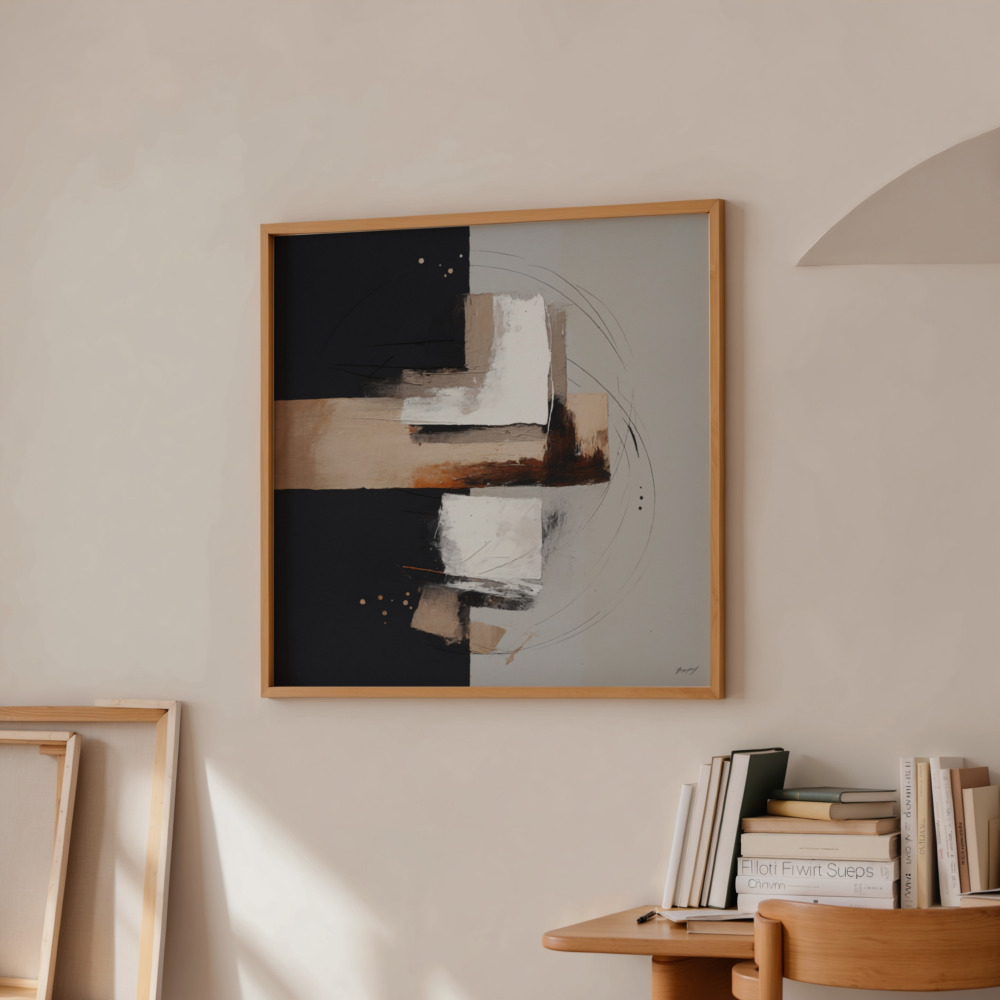
Not all geometric prints are created equal, and selecting the right pieces requires some consideration. Start by assessing your space’s existing characteristics. Rooms with strong architectural features—exposed beams, interesting moldings, dramatic windows—can handle bold, complex geometric patterns. These prints will dialogue with the architecture rather than compete with it.
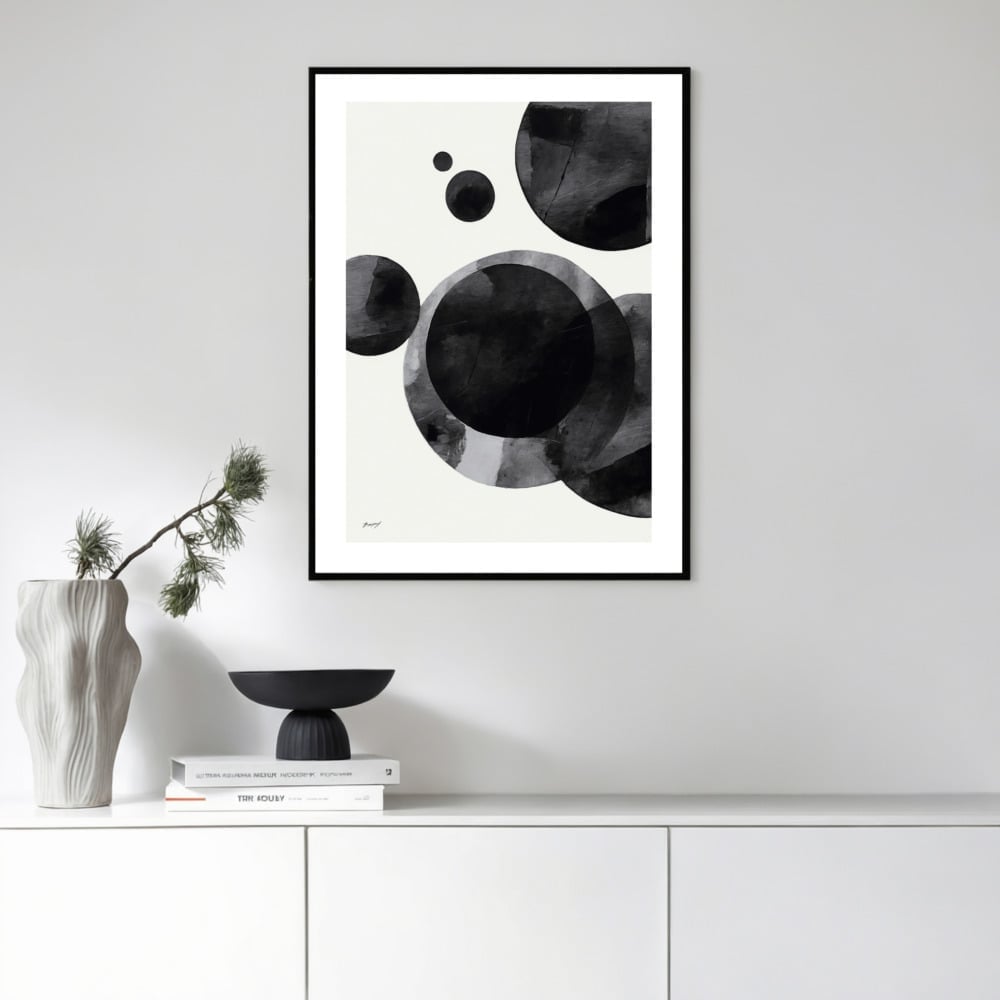
In smaller spaces or rooms with simpler architecture, consider geometric prints with more negative space. Compositions that breathe give the eye places to rest and can actually make a room feel larger. Think circles floating in white space, or simple line work that suggests form without overwhelming it.
Scale matters enormously. A common mistake is choosing prints that are too small for the wall space. As a general rule, artwork should take up roughly two-thirds to three-quarters of the available wall width. For geometric prints specifically, larger scales allow the patterns to make their full impact. A tiny geometric print from across the room might just look like a confusing jumble, while the same pattern at proper scale becomes a striking focal point.
Mixing Geometric Patterns Without Creating Chaos
One geometric print is striking; multiple geometric prints can be spectacular—or spectacularly awful. The difference lies in understanding how to mix patterns without creating visual discord. The key is finding common threads while maintaining variety.
Consider varying the scale of patterns. Pair a large-scale geometric with smaller, more intricate designs. This creates hierarchy and prevents competition. You might also vary the density—balance a complex, busy pattern with something more open and minimal. The monochrome palette gives you flexibility here because you’re not managing color relationships on top of pattern relationships.
Another approach is to choose prints that share geometric elements but arrange them differently. Perhaps one print features circles in a grid, while another shows circles in organic clusters. The repeated shape creates unity; the different arrangements create interest. This technique builds sophisticated visual conversations between pieces.
The Commercial Appeal: Why Designers Love These Prints
Interior designers and commercial spaces have long relied on black white geometric prints for good reason. These pieces photograph beautifully, making them perfect for spaces that will appear in marketing materials or social media. Their timeless quality means they won’t look dated in photos taken years apart—crucial for commercial spaces that need longevity in their design investments.
Restaurants, hotels, office spaces, and retail environments favor geometric prints because they appeal to broad audiences without pandering to anyone specifically. They’re sophisticated enough for upscale establishments but approachable enough for casual settings. They convey professionalism and attention to detail without being cold or corporate.
And when black stands alone, without the white, the deep end is our black wall art collection.
For residential designers working with clients who struggle to articulate their style preferences, geometric prints offer a safe yet impactful starting point. They’re unlikely to provoke strong negative reactions, yet they’re far from boring. They can bridge generational gaps in shared spaces, appealing equally to younger minimalist sensibilities and older classic tastes.
Caring for Your Geometric Art Prints
The stark contrast of black and white means these prints show dust more readily than their colorful counterparts, but proper care keeps them looking sharp. For framed prints behind glass, regular dusting of the frame and occasional glass cleaning with a microfiber cloth maintains their crisp appearance.
Placement matters for longevity. Direct sunlight can fade even quality prints over time, so position them away from windows where harsh UV rays hit for extended periods. If a sunny wall is your only option, consider UV-protective glass in your framing—the investment protects your prints for years.
Quality matters from the start. Prints on archival paper with archival inks will maintain their sharp contrast far longer than budget alternatives. The difference might not be apparent initially, but after a few years, quality prints retain their deep blacks and crisp whites while lesser prints can yellow or fade into muddy grays.
The Investment Case for Timeless Art
Trend-driven decor can feel stale within months, requiring constant updates to maintain a fresh look. Black and white geometric art prints represent a different approach—an investment in timeless design that transcends fleeting trends. These prints looked relevant in the 1920s, the 1960s, the 1990s, and they’ll look equally appropriate in the decades to come.
This longevity makes them surprisingly economical. Rather than replacing trendy artwork every few seasons, quality geometric prints serve as permanent anchors in your design scheme. You can update paint colors, furniture, and accessories around them without the prints ever feeling out of place. They’re the visual equivalent of a perfectly tailored black blazer—classic, versatile, always appropriate.
Beyond economics, there’s psychological value in living with artwork that doesn’t demand constant change. These prints create visual stability that can be remarkably grounding in our fast-paced, constantly changing world. They’re the steady presence in your environment that remains constant even as everything else shifts.
Black and white geometric art prints aren’t just a design choice—they’re a design philosophy. They represent the belief that simplicity and precision can be more powerful than complexity and ornamentation. They prove that constraints can liberate rather than limit creativity. Whether you’re drawn to the Bauhaus legacy, minimalist aesthetics, or simply appreciate the striking contrast of monochrome patterns, these prints offer something rare in contemporary design: enduring relevance that never apologizes for its clarity.