Limited Time: 20% Off All Prints
Free worldwide shipping on orders over $69
Delivery 4-12 business days
Home / Trending Art Styles / Why Black and White Silhouette Art Never Goes Out of Style
There’s something magnetic about the stark contrast of black against white. No gradients, no middle ground—just pure, unapologetic visual drama. Silhouette art in black and white has captivated audiences for centuries, from Victorian profile portraits to today’s sleek minimalist galleries. This enduring appeal isn’t accidental; it’s rooted in how our eyes process information and how simplicity creates emotional impact.
When you strip away color, texture, and detail, what remains is essence. The human form reduced to its most recognizable shape. A woman’s profile captured in a single flowing line. A figure frozen mid-motion, telling an entire story through posture alone. This is the power of black silhouette prints—they don’t just decorate walls; they command attention and spark imagination.
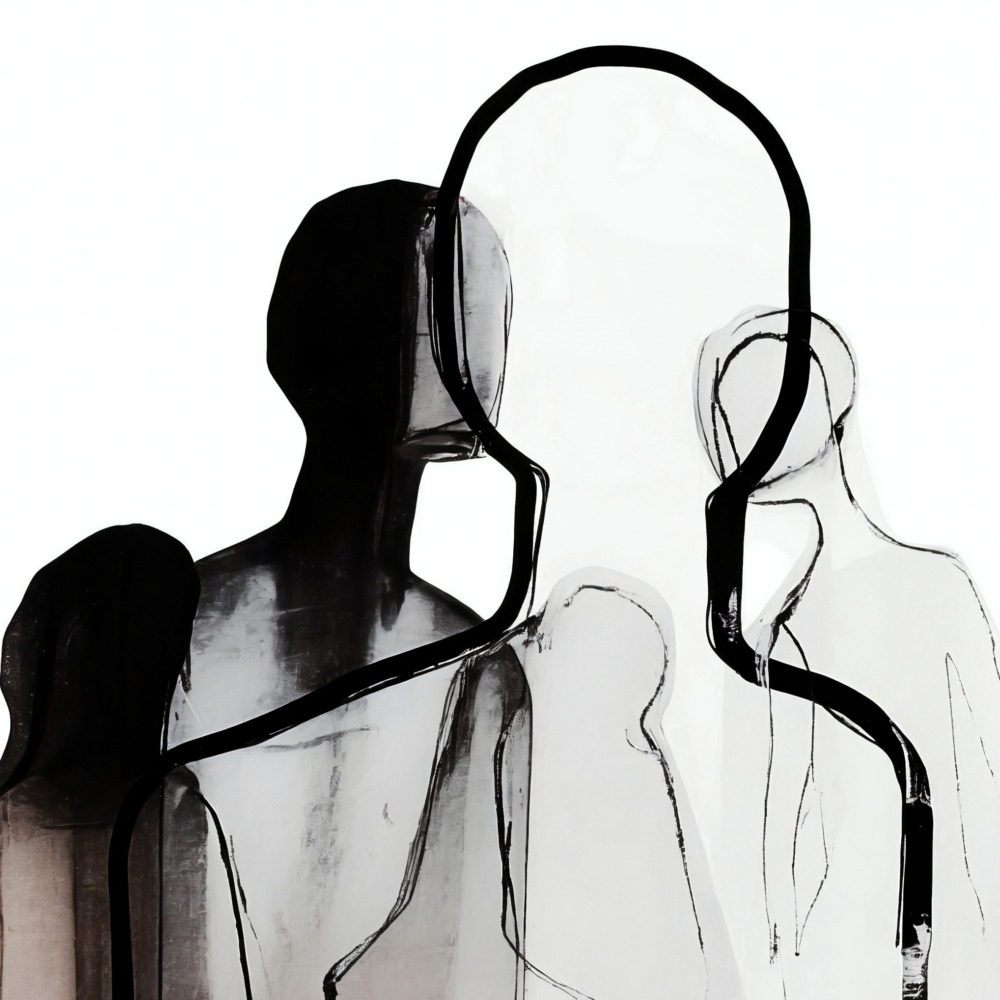
Our brains are wired to recognize human forms instantly, even with minimal information. This cognitive shortcut explains why minimalist silhouette art feels both immediate and timeless. When viewing a silhouette, your mind fills in the missing details, creating a personal connection to the image. You’re not just seeing the artist’s vision—you’re completing it with your own experiences and emotions.
The absence of facial features in woman silhouette art actually enhances its universal appeal. Without specific characteristics, the figure becomes everyone and no one simultaneously. This ambiguity allows viewers to project their own narratives onto the artwork. Is she contemplative? Confident? In motion or at rest? The answer changes depending on who’s looking and when.
Black and white silhouette art also taps into our love of negative space. The interplay between figure and background creates visual tension that colored or detailed images can’t replicate. Your eye constantly moves between the solid black form and the empty white space, finding new relationships and meanings with each glance. This dynamic quality keeps the artwork from becoming visual wallpaper—it remains engaging no matter how long it hangs in your space.
Before photography made portraiture accessible, silhouettes were the affordable way to capture a likeness. Skilled artists would cut profiles from black paper in minutes, creating instant keepsakes. These weren’t considered lesser art—they were prized possessions, carefully framed and displayed. The term ‘silhouette’ itself comes from Étienne de Silhouette, an 18th-century French finance minister whose economic policies were considered cheap, lending his name to this economical art form.
What started as a practical solution evolved into an art movement. Artists pushed beyond simple profiles, experimenting with full-body poses, group compositions, and narrative scenes. They discovered that reducing complex subjects to pure shape created powerful visual statements. This legacy continues in modern silhouette prints, which honor that historical foundation while embracing contemporary aesthetics.
Today’s digital tools have revolutionized silhouette creation, but the fundamental principle remains unchanged: contrast creates clarity. Modern artists can achieve precision that would have amazed their historical counterparts, yet the most effective pieces still rely on that same bold simplicity. The best contemporary black silhouette prints feel both cutting-edge and timeless, bridging centuries of artistic tradition.
Walk through any design-focused gallery or browse online art marketplaces, and you’ll notice a pattern: woman silhouette art appears everywhere. This isn’t just trend-following—there are solid design reasons behind this prevalence. The female form offers graceful curves and elegant lines that translate beautifully into silhouette format. A simple profile can suggest movement, emotion, and narrative with minimal elements.
The versatility of woman silhouettes makes them adaptable to virtually any interior style. A dancing figure brings energy to a modern loft. A contemplative profile adds sophistication to a minimalist bedroom. Abstract feminine shapes create talking points in professional spaces. This adaptability explains why designers consistently specify black and white figure art for projects across residential and commercial sectors.
There’s also a cultural moment at play. Contemporary audiences increasingly appreciate art that celebrates the human form without objectification. Silhouettes accomplish this beautifully—they’re clearly figurative yet abstract enough to emphasize strength, movement, and presence over specific physical attributes. This makes woman silhouette art feel both classic and refreshingly modern.
The placement and presentation of minimalist silhouette art dramatically affects its impact. In living rooms, large-scale silhouettes work best as focal points above sofas or mantels. The bold contrast draws the eye immediately, anchoring the room’s visual hierarchy. Pair a single oversized piece with minimal surrounding decor to maximize its dramatic effect, or create a gallery wall with multiple smaller silhouettes in complementary frames.
Bedrooms benefit from quieter, more contemplative silhouette compositions. A woman’s profile gazing toward the window creates a sense of morning possibility. Abstract figure pairs suggest intimacy without being literal. The key in private spaces is choosing pieces that evoke the emotional tone you want to wake up to and fall asleep with. Black and white silhouette art’s neutral palette won’t compete with changing bedding or seasonal textiles, making it a smart long-term design investment.
In offices and workspaces, silhouette art projects professionalism while maintaining personality. Unlike colorful abstracts or representational art that might distract, black silhouette prints provide visual interest without demanding attention. They’re conversation starters during video calls and in-person meetings, yet subtle enough not to overwhelm. Consider pieces that suggest motion or forward movement—these subliminally reinforce productivity and progress.
Hallways and transitional spaces are perfect for silhouette sequences. A series of figures in progressive motion creates a cinematic effect as you move through the space. Alternatively, varied poses at consistent scale establish rhythm and flow. These often-overlooked areas become intentional design moments when treated with the same consideration as primary rooms.
The simplicity of black and white silhouette art means framing choices significantly influence the overall effect. Thick black frames echo the artwork’s boldness, creating a cohesive, high-contrast statement. This approach works particularly well with modern and industrial interiors where strong lines are already part of the design language.
White or natural wood frames offer softer contrast, letting the silhouette itself take center stage. This treatment suits Scandinavian-inspired spaces and rooms where you want the art to integrate rather than dominate. The frame becomes nearly invisible, focusing all attention on the figure within.
Matting deserves careful consideration with minimalist silhouette pieces. Generous white matting amplifies the negative space concept, creating breathing room around the figure. This spaciousness enhances the minimalist aesthetic and works beautifully in smaller spaces where you want to avoid visual clutter. Conversely, minimal or no matting creates immediacy and intensity, making the silhouette feel closer and more present.
Consider floating frames for a contemporary twist. These allow the print to appear suspended within the frame, adding subtle dimensionality to two-dimensional art. This technique particularly suits modern silhouette prints with clean edges and geometric compositions.
While black silhouette prints make stunning standalone statements, they also play well with other art forms. Their neutral palette means they won’t clash with colored pieces, making them excellent bridge elements in eclectic galleries. Try pairing silhouettes with abstract watercolors—the precision of the silhouette contrasts beautifully with loose, fluid brushwork.
Line art and silhouettes share similar minimalist DNA, making them natural companions. A wall combining detailed line drawings with solid silhouettes creates textural variety while maintaining stylistic cohesion. Both emphasize shape and form over color, so the combination feels intentional rather than random.
Photography and silhouettes can coexist when you’re thoughtful about scale and subject matter. Black and white photographs with silhouette-heavy compositions obviously align, but even color photography can work if the silhouettes are substantial enough to hold their own. The key is ensuring each piece has adequate visual weight—tiny silhouettes will get lost next to large, detailed photographs.
As maximalism makes headlines, you might expect minimalist silhouette art to fade into the background. Instead, it’s thriving precisely because of this contrast. In increasingly busy visual environments—both physical and digital—the clarity of black and white silhouette art offers relief. It’s the visual equivalent of a quiet moment in a noisy day.
Technology is expanding what’s possible in silhouette creation without abandoning the form’s fundamental simplicity. Digital artists are experimenting with subtle texture overlays, imperceptible gradients, and layered transparencies that add depth while maintaining the essential silhouette character. These innovations keep the medium feeling fresh and relevant to contemporary audiences.
Sustainability-conscious consumers appreciate that classic silhouette art doesn’t go out of style, reducing the pressure to constantly update decor. Unlike trendy colors or specific design movements that date quickly, black and white silhouettes remain perpetually current. This longevity aligns with values around mindful consumption and intentional design choices.
The versatility of woman silhouette art and minimalist silhouette designs means they’ll continue appearing across residential, commercial, and hospitality spaces. As interior design increasingly embraces personalization over prescribed styles, the universal yet individual nature of silhouette art makes it an ideal choice. It provides the visual impact designers need while leaving room for personal interpretation and connection.
Whether you’re drawn to the historical elegance of profile portraits, the dynamic energy of motion captures, or the abstract beauty of geometric figures, black silhouette prints offer something rare in contemporary design: art that’s simultaneously bold and subtle, timeless and modern, universal and deeply personal. That’s not just good design—it’s enduring artistry.