Limited Time: 20% Off All Prints
Free worldwide shipping on orders over $69
Delivery 4-12 business days
Home / Trending Art Styles / Beyond the Canvas: Transforming Your Main Space with Sophisticated Abstract Styles
The living room is the heartbeat of the home. It is the space where we host friends, unwind after a taxing day, and express our personal aesthetic more than anywhere else. When it comes to decorating these central walls, few things possess the transformative power of a well-chosen painting. In recent years, the trend has shifted toward interpretive pieces that don’t just sit on the wall but actually change the energy of the environment. Finding the perfect abstract wall art for living room spaces is about more than just matching a color to your rug; it is about selecting a visual language that speaks to the mood you want to create. Whether you are looking to buy art prints online for the first time or are a seasoned collector, understanding the nuances of different abstract styles is the key to achieving a professional, curated look that feels both effortless and high-end.
Abstract art works so effectively in shared living spaces because it is inherently non-intrusive yet deeply engaging. Unlike a literal photograph or a realistic portrait, an abstract composition allows the viewer’s mind to wander. It provides a focal point that doesn’t dictate a specific narrative, making the room feel more expansive and intellectually stimulating. In this guide, we will explore five timeless abstract styles that have the ability to instantly elevate your living room from ordinary to extraordinary, focusing on mood, balance, and the subtle art of proportion.
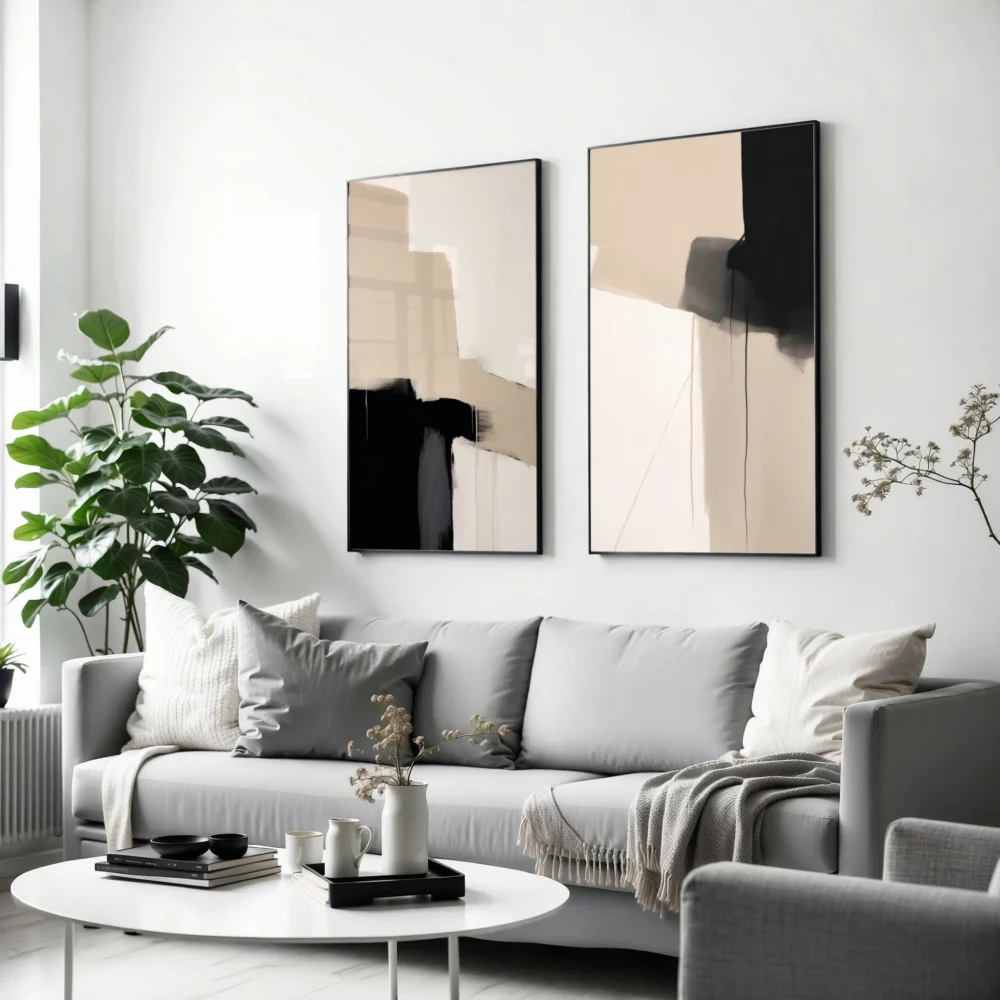
Minimalism is often misunderstood as “empty,” but in the world of interior design, it is one of the most powerful tools available. Minimalist artwork relies on clean compositions, a limited palette, and a deep respect for “negative space.” In a living room, this style acts as a visual palate cleanser. It removes the “noise” from the room, allowing your furniture, light fixtures, and architectural details to shine.
In modern life, we are constantly bombarded with information. A minimalist abstract piece offers a moment of silence. By using fewer elements—perhaps just two intersecting shapes or a single textured field of color—these pieces create a sense of calm without making the room feel barren. They provide a “structured” feel that grounds a space, making it feel organized and intentional.
This style is a staple for Modern, Scandinavian, and Japandi (a blend of Japanese and Scandinavian) living rooms. It pairs exceptionally well with neutral-colored sofas—think oatmeal, cream, or soft gray—and works beautifully in open-concept spaces where you want the decor to feel cohesive rather than fragmented.
Look for pieces that utilize soft beige, off-white, light gray, or muted black. These tones don’t fight with your existing decor; they enhance it. A monochrome minimalist print can add a touch of “gallery sophistication” to even the simplest apartment.
When it comes to minimalism, scale is your best friend. One large-format print placed centrally above the sofa often has a much more significant impact than a cluttered gallery wall of small prints. It creates a bold “statement of intent” that anchors the seating area. You can explore a variety of these understated pieces in our minimalist art prints collection.
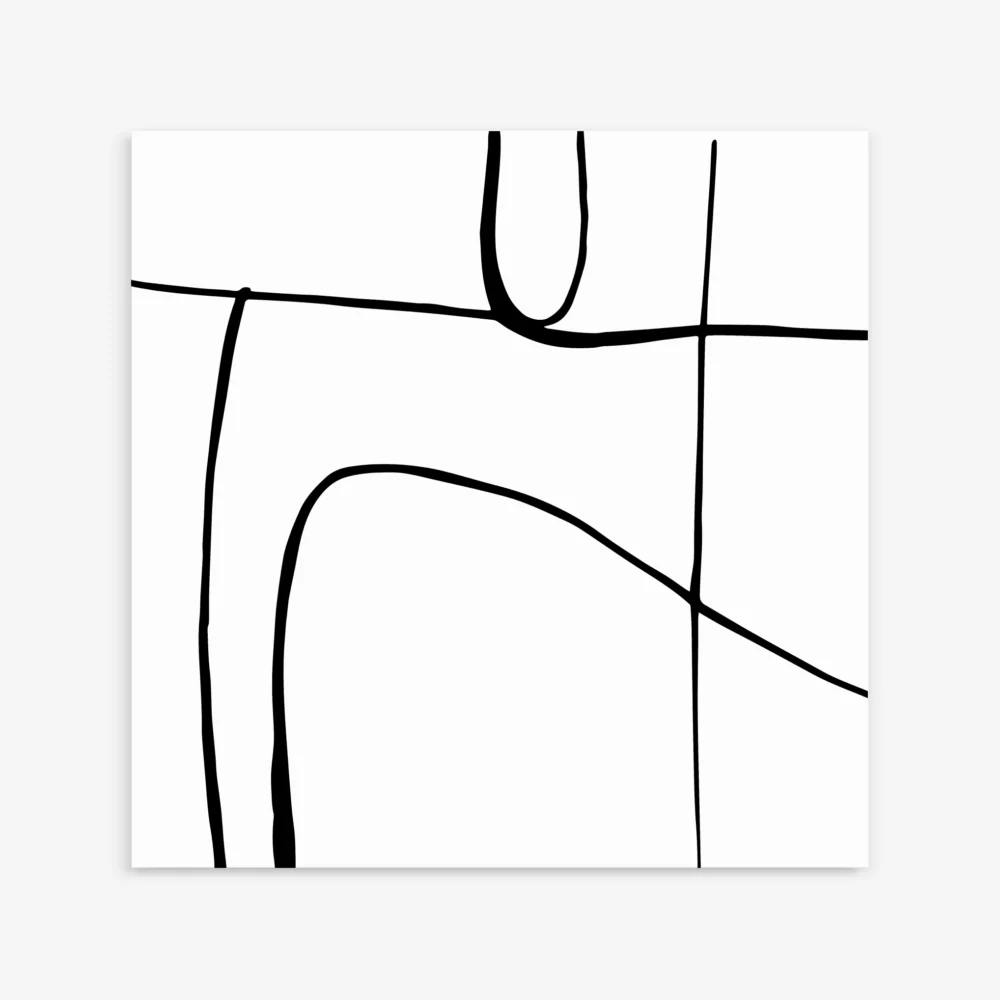
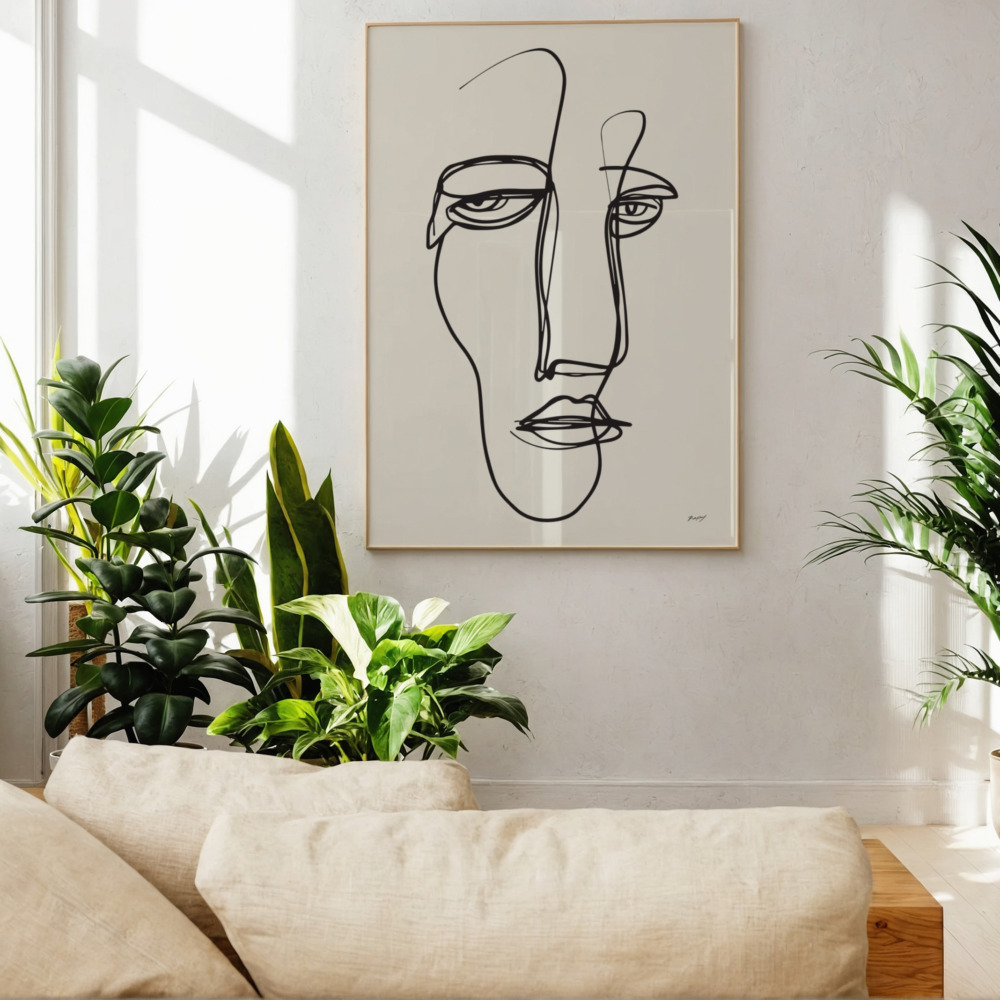
If you find solid blocks of color too heavy, line art is the perfect alternative. This style is characterized by fluid, continuous lines that often depict silhouettes, botanical shapes, or purely rhythmic gestures. It is one of the most “airy” styles of modern wall art, making it ideal for those who want their walls to feel light and dynamic.
Line art adds movement to a room. The eye naturally follows the path of the line, which can make a static wall feel much more interesting. Because there is so much “white space” around the lines, the artwork never feels loud or overbearing. It’s the visual equivalent of a gentle breeze—it adds a layer of sophistication and “hand-drawn” warmth without demanding total attention.
Abstract line art is perfect for small to medium-sized living rooms where a heavy painting might feel like it’s “closing in” on the space. It is also the go-to choice for neutral or “all-white” interiors that need a touch of character but want to remain serene.
The classic choice is black on white, but don’t overlook soft charcoal on warm taupe or even gold-leaf lines on a cream background. These subtle variations can tie into your metal accents (like coffee table legs or lamp bases) perfectly.
To lean into the modern, soft aesthetic, pair your line art with light wood frames, such as oak or ash. This creates a soft border that feels organic and high-end. Check out our latest abstract line art for inspiration on how a single line can redefine your space.
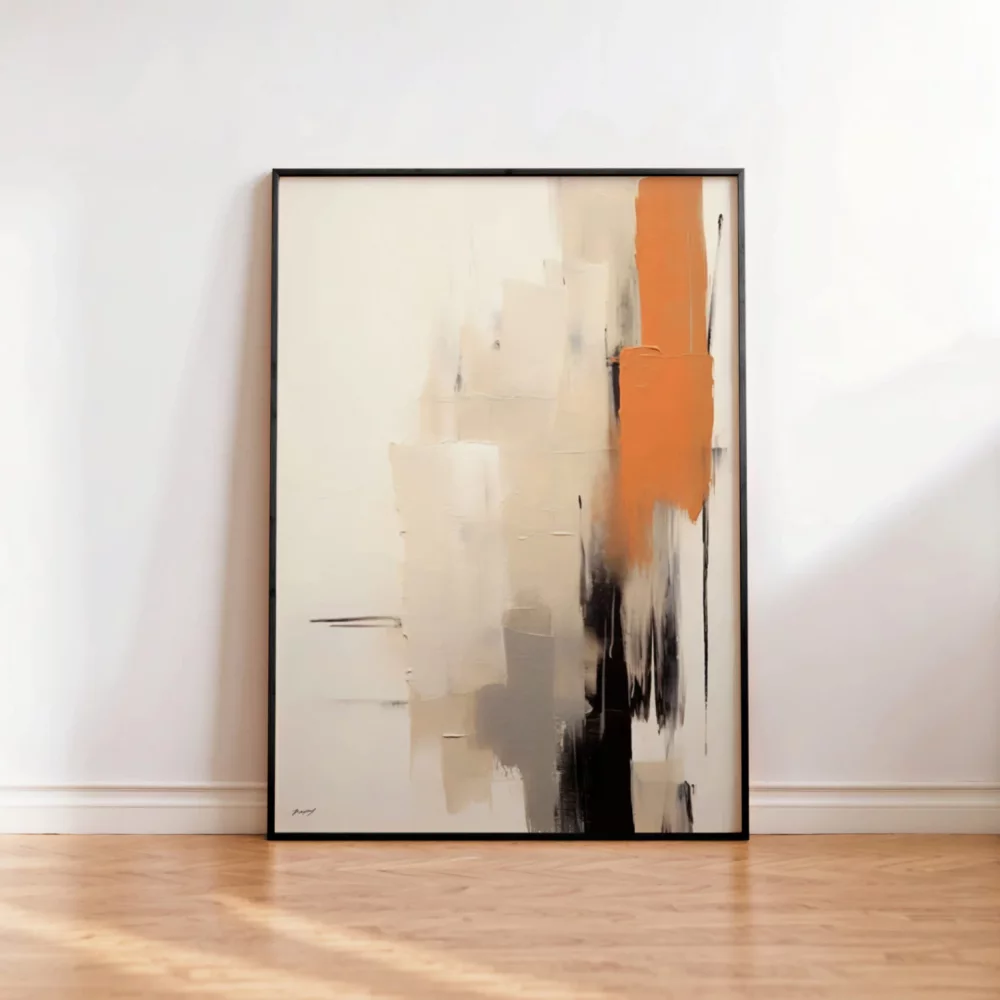
As we spend more time indoors, the desire to bring the “outside in” has become a dominant force in home decor. This has led to the massive popularity of earth tone artwork. These pieces use a palette derived directly from the natural world—the colors of clay, stone, moss, and sun-baked soil.
Earth tones are psychologically grounding. They feel warm, inviting, and inherently “safe.” In a living room, an earth-tone abstract piece creates a “lived-in” atmosphere. It takes away the clinical edge that some modern homes can have and replaces it with a sense of relaxed comfort. It is the visual equivalent of a warm linen blanket.
This style is tailor-made for “Modern Organic” or “Boho-Chic” living rooms. If your space features natural materials like wood, stone, linen, or jute, this art will look like it was made specifically for your home. It’s also a great way to add warmth to a room that doesn’t get a lot of natural sunlight.
Think in terms of “terroir”: clay, sand, terracotta, olive green, burnt orange, and warm chocolate brown. These colors have a natural harmony that is hard to get wrong.
For a professionally designed look, try to match one or two tones from the artwork with your soft furnishings. If the painting has a streak of terracotta, bring in a few terracotta-colored cushions or a textured throw. This creates “visual echoes” throughout the room, making the entire design feel cohesive. You can find many earth tone paintings in our shop that fit this organic vibe perfectly.
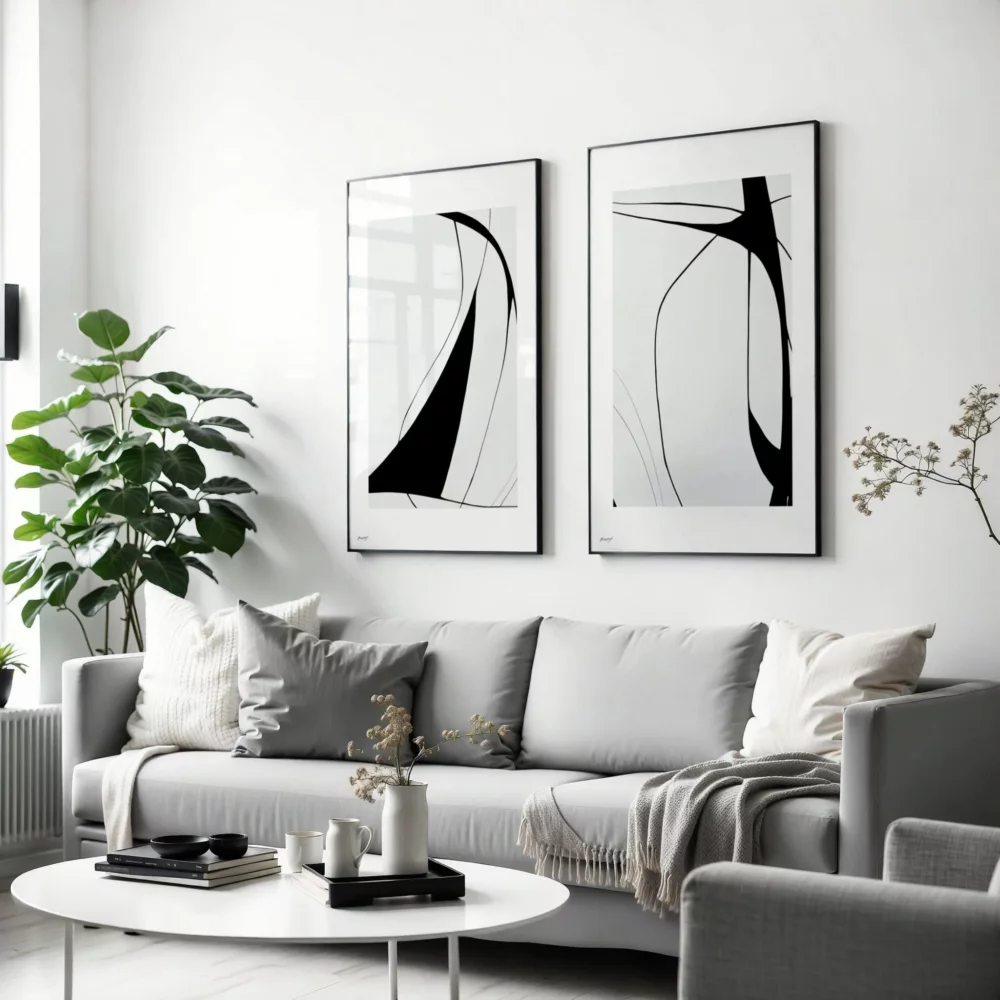
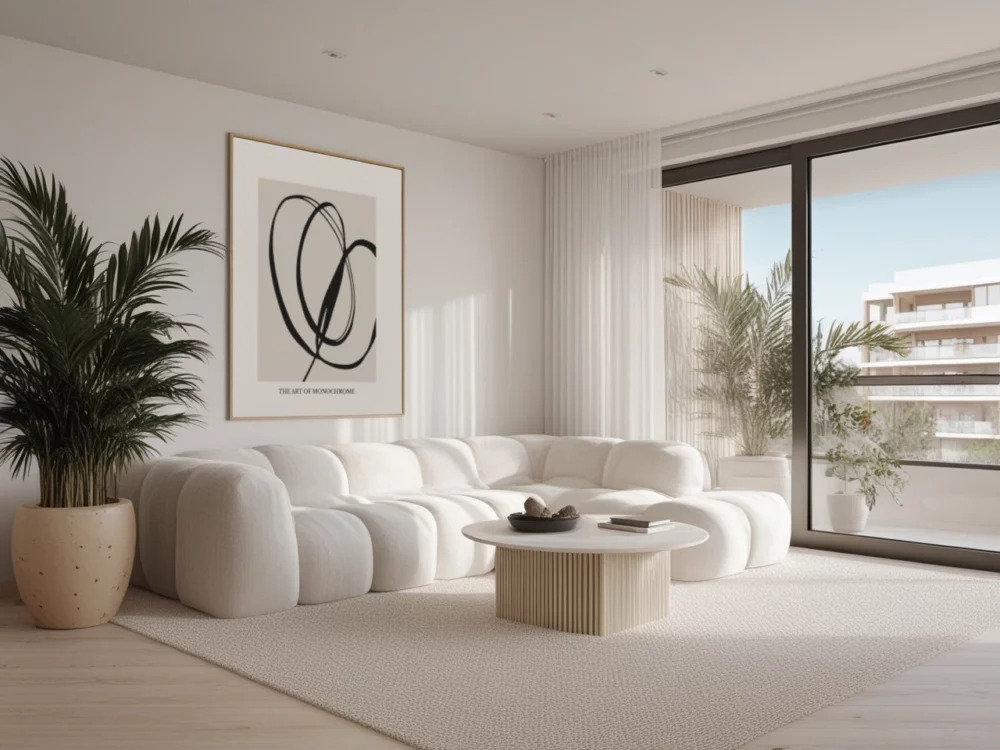
There is something undeniably sharp and sophisticated about a monochrome palette. Black and white abstract art is the ultimate “power move” in interior design. It is a style that never goes out of fashion and works across almost every imaginable architectural setting.
Monochrome art is all about contrast and form. By removing the “distraction” of color, you focus purely on the composition, the texture, and the emotion of the piece. It adds a layer of “architectural sharpness” to a room. A black and white piece can make a room feel more tailored and expensive, much like a well-fitted tuxedo.
This is the ideal choice for strictly modern, monochrome, or minimalist living rooms. It is also highly effective in homes with strong architectural lines, such as industrial lofts with exposed brick or modern apartments with floor-to-ceiling glass.
While it sounds simple, the variations are endless: pure stark black, soft charcoals, “inky” navies that look black, and off-white or cream backgrounds. The “warmth” or “coolness” of the white you choose can drastically change the feel of the piece.
Use the power of contrast to your advantage. If you have a light-colored wall, a dark, heavy black-and-white piece will look incredibly striking. Conversely, a light, airy monochrome piece on a dark “accent wall” (like navy or charcoal) can create a high-contrast, museum-like effect. Browse our black and white art prints to see the range of possibilities.
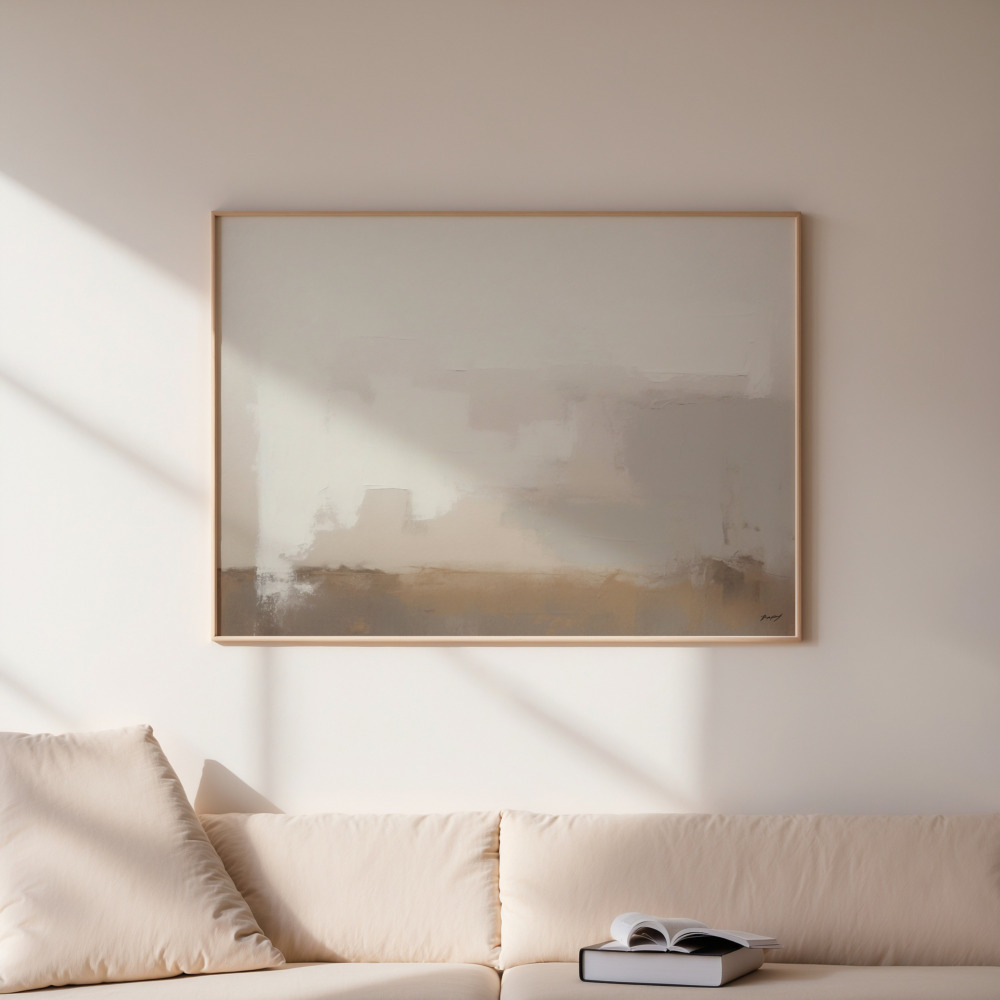
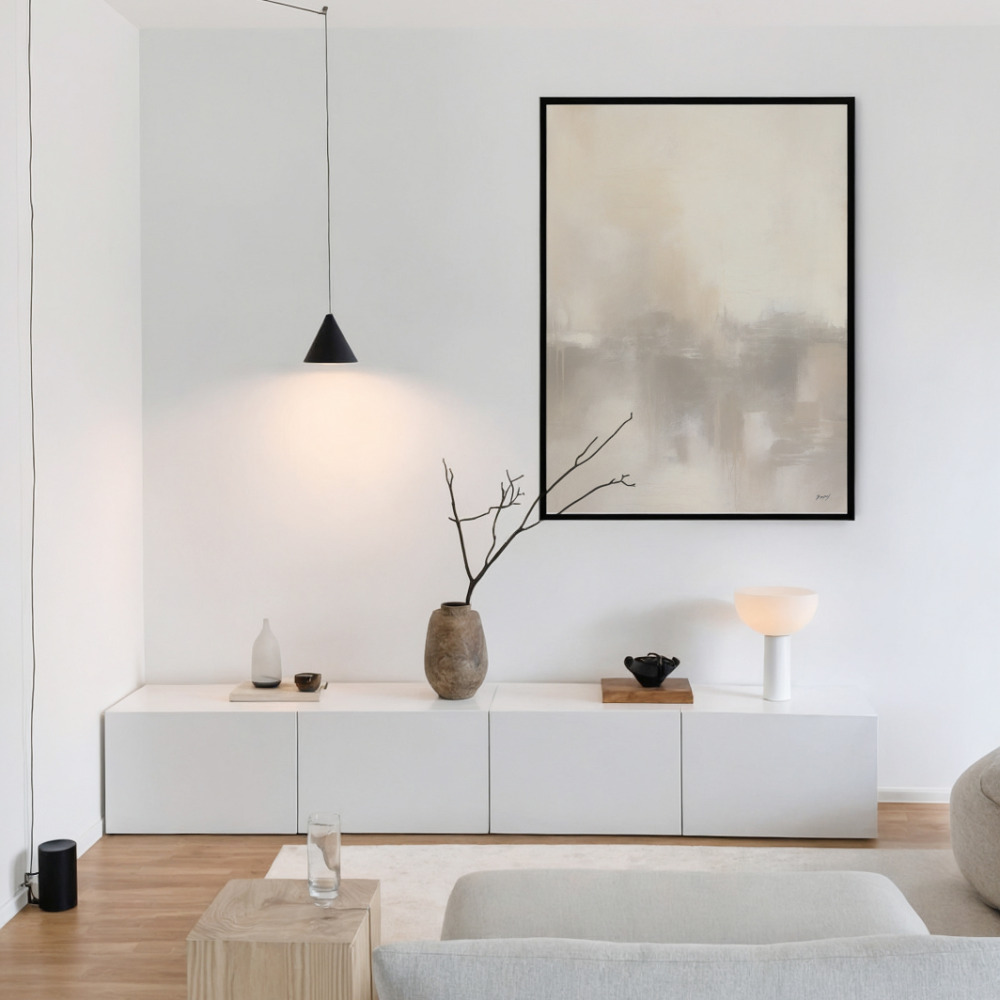
Not all abstract art is about shapes and lines; some is about atmosphere. Landscape-inspired abstracts evoke the feeling of a place—a foggy morning, a distant horizon, or a mountain range—without being realistic. This is often referred to as “Atmospheric Abstraction.”
These pieces bring a sense of nature and the outdoors into the home without the “literalness” of traditional landscape painting. They create a sense of depth and “visual flow” on the wall. They are particularly good at making a small room feel larger because they often have a “horizon line” that draws the eye across the canvas, mimicking the way we look at the actual world.
This style is perfect for calm, airy living rooms and homes that want a subtle, sophisticated connection to nature. It is a favorite for those who find geometric abstracts too “cold” but find realistic art too “traditional.”
Look for muted blues, foggy greens, soft pinks, and hazy grays. These “watery” colors are inherently soothing and promote a sense of well-being and rest.
Horizontal (Landscape) formats work exceptionally well above sofas because they mimic the horizontal line of the furniture. This creates a balanced, harmonious look that feels grounded. To see how these atmospheric pieces can change your room’s vibe, check out our abstract landscape art collection.
With so many unique art prints available, the choice can feel overwhelming. However, by asking yourself a few key questions, you can narrow down the perfect style for your space.
How do you use your living room? If it’s a high-energy space where you entertain guests and play music, you might want something with movement and contrast, like black and white abstracts or bold lines. If it’s a quiet sanctuary where you read and meditate, minimalist or earth-tone pieces might be more appropriate.
The physical dimensions of your room dictate the “weight” of the art you can handle. A massive, dark, textured painting in a tiny apartment might feel oppressive. In that case, abstract line art or soft landscape-inspired pieces would be better. For large walls, don’t be afraid to go big—a large piece of affordable art prints can actually make a room feel more organized than a collection of small ones.
Art is something you have to live with every day. While a neon, high-contrast “splatter” painting might look cool in a gallery, it can become visually exhausting in a living room. When in doubt, choose a piece that feels calm and balanced. You want a painting that you can grow with, not one that you get tired of after six months.
Once you have chosen your style, the final step is the “hang.” Even the most beautiful modern wall art will look poorly chosen if it is hung incorrectly.
The Eye-Level Rule: A universal mistake is hanging art too high. The center of the piece should be at eye level—roughly 57 to 60 inches from the floor.
The Sofa Rule: If you are hanging art above a sofa, ensure it is centered to the sofa (not necessarily the wall) and hung about 6 to 10 inches above the top of the cushions.
The Lighting Factor: Abstract art, especially textured pieces, comes alive under the right light. If possible, use a dedicated picture light or a recessed ceiling spotlight to highlight the colors and “depth” of the print.
Abstract art doesn’t need to be loud or confusing to make an impact. In fact, the most effective pieces of abstract wall art for living room decor are often the ones that feel like they have always been there. They shouldn’t scream for attention; instead, they should invite it.
By focusing on the mood, balance, and proportion of the five styles we’ve discussed—Minimalist, Line Art, Earth Tone, Black and White, and Landscape-Inspired—you can transform your living room into a curated sanctuary. Whether you are leaning toward the “Wabi Sabi” beauty of earthy textures or the sharp precision of monochrome lines, remember that the best piece of art is the one that makes you feel “at home” the moment you walk through the door.
At Print Studio, we believe that art should be accessible, beautiful, and a true reflection of your personality. We invite you to explore our full range of curated prints and find the piece that will instantly elevate your living room today.