Limited Time: 20% Off All Prints
Free worldwide shipping on orders over $69
Delivery 4-12 business days
Home / Trending Art Styles / Seeking Serenity: Why Understated Art Transforms the Modern Living Room
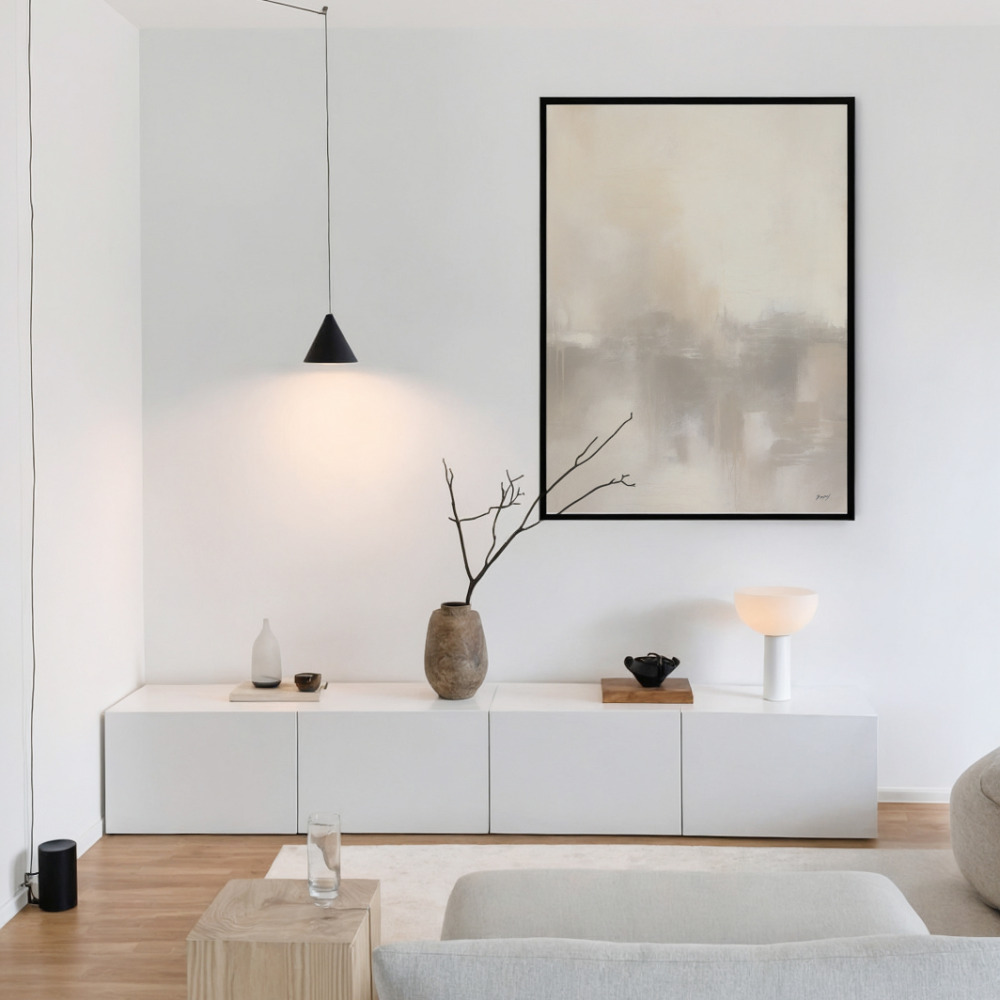
In the chaotic pulse of the twenty-first century, our homes have transitioned from mere shelters into vital sanctuaries. As the world outside grows louder, the interior design world has collectively leaned into the philosophy of “less but better.” This movement towards intentionality and reduction is perhaps most visible in our choice of wall decor. By incorporating Minimalist Paintings into your home, you aren’t just decorating a wall; you are inviting a sense of visual silence into your daily life. When you buy art prints online, the goal is often to find that elusive balance where a piece of art can hold a room’s attention without demanding a shout.
The living room is the stage where our lives unfold—it is where we host, where we rest, and where we seek clarity after a long day. Styling this space with a “less is more” mindset requires more than just leaving walls empty; it requires selecting pieces that resonate with purpose. In this guide, we will explore the profound impact of simplified aesthetics, how to choose the right scale for your space, and why a restrained composition is often the most powerful tool in a designer’s arsenal.
At its heart, minimalism is the art of stripping away the non-essential until only the core remains. It is a tradition rooted in mid-twentieth-century movements where artists like Frank Stella and Agnes Martin sought to move away from the emotional volatility of abstract expressionism toward something more geometric, objective, and quiet.
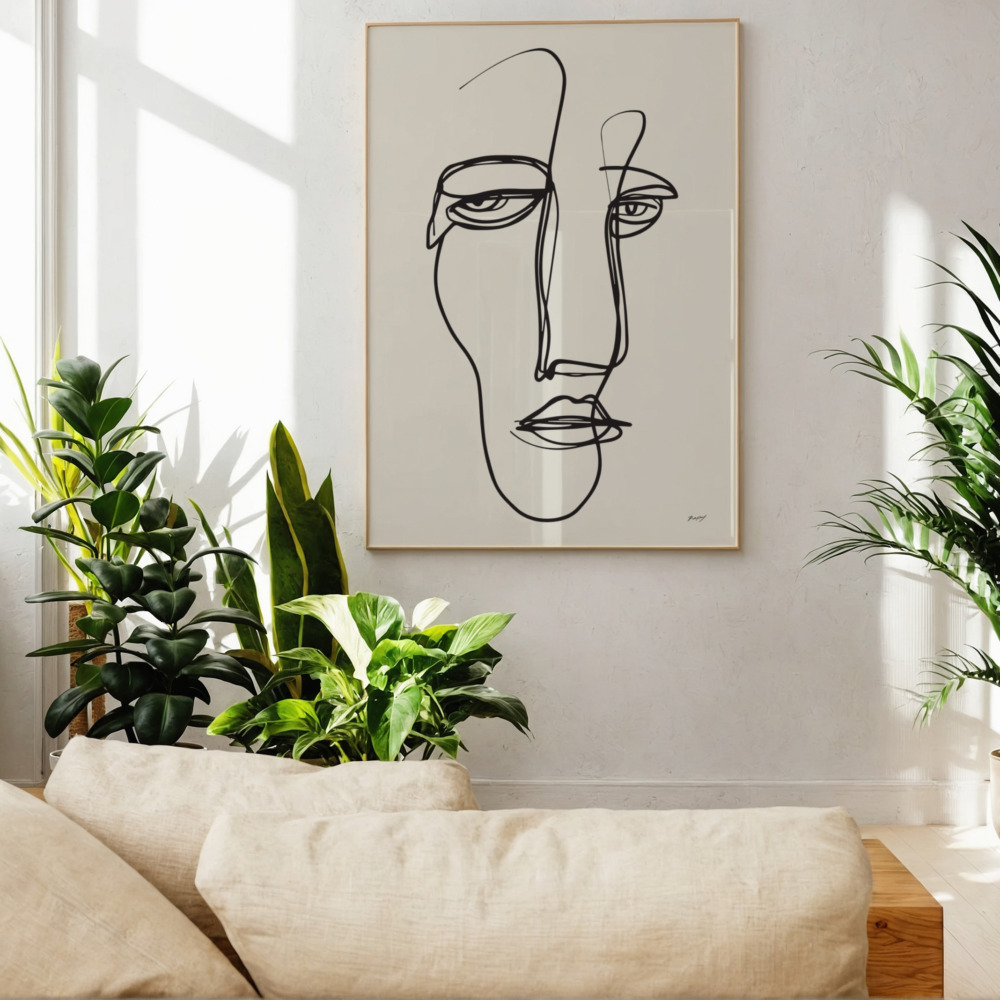
What truly defines this style is the deliberate use of negative space. In many unique art prints, the empty areas of the canvas are just as important as the lines or colors present. Negative space isn’t “blank” space; it is “breathing” space. It allows the viewer’s eye to rest rather than frantically darting between complex details. Furthermore, the simplicity of form—often seen in single-line drawings or basic geometric shapes—creates a universal language that doesn’t overwhelm the senses. While contemporary artwork can often be loud and provocative, the minimalist approach favors a steady, grounding presence.
The living room is a multi-functional hub. In any given week, it might serve as a home office, a cinema, a playroom, or a cocktail lounge. Because of this high-traffic, high-energy usage, the visual background of the room should provide a counter-balance.
A busy, hyper-colored mural might look fantastic in a magazine, but living with it every day can contribute to “visual fatigue.” On the other hand, minimalist wall art works as a silent partner to your furniture and architecture. It enhances the room’s features rather than competing with them. If you have a beautiful velvet sofa or a striking architectural fireplace, a subtle canvas acts as a supportive backdrop that allows those features to shine. It creates a “soft” focal point—something that catches the eye and provides a sense of order without causing a distraction during a conversation or a moment of rest.
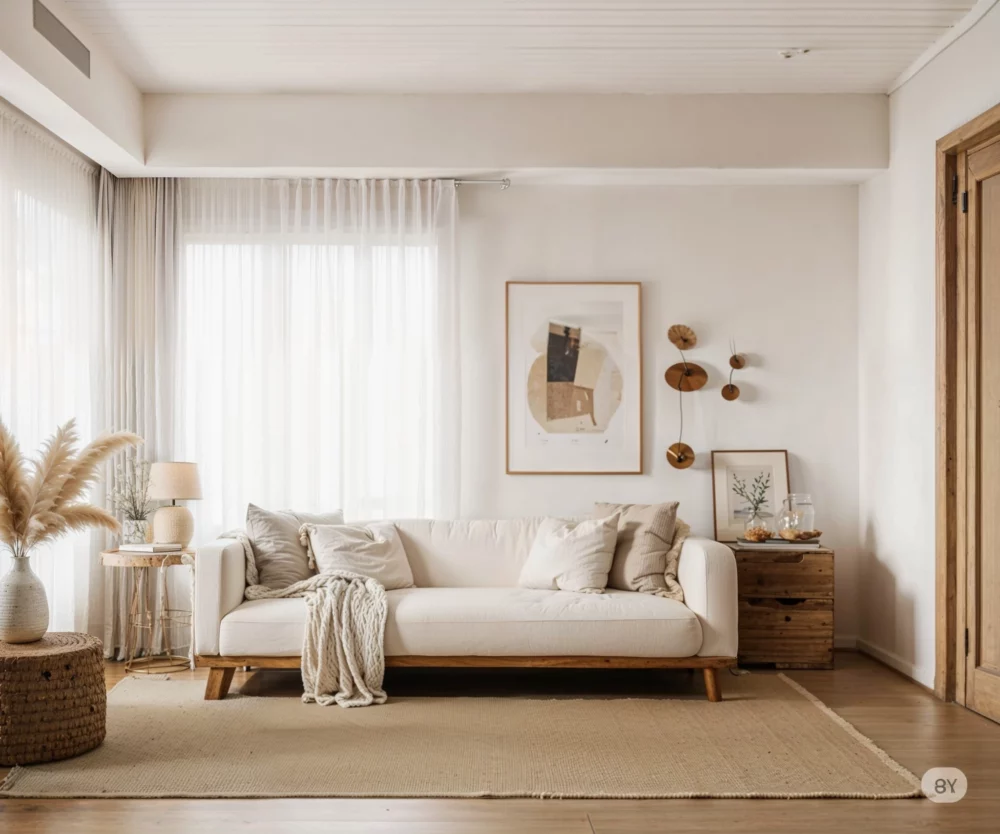
Selecting art for the most public room in your home is a deeply personal process. The key is to match the “mood” of the artwork to the lifestyle you lead.
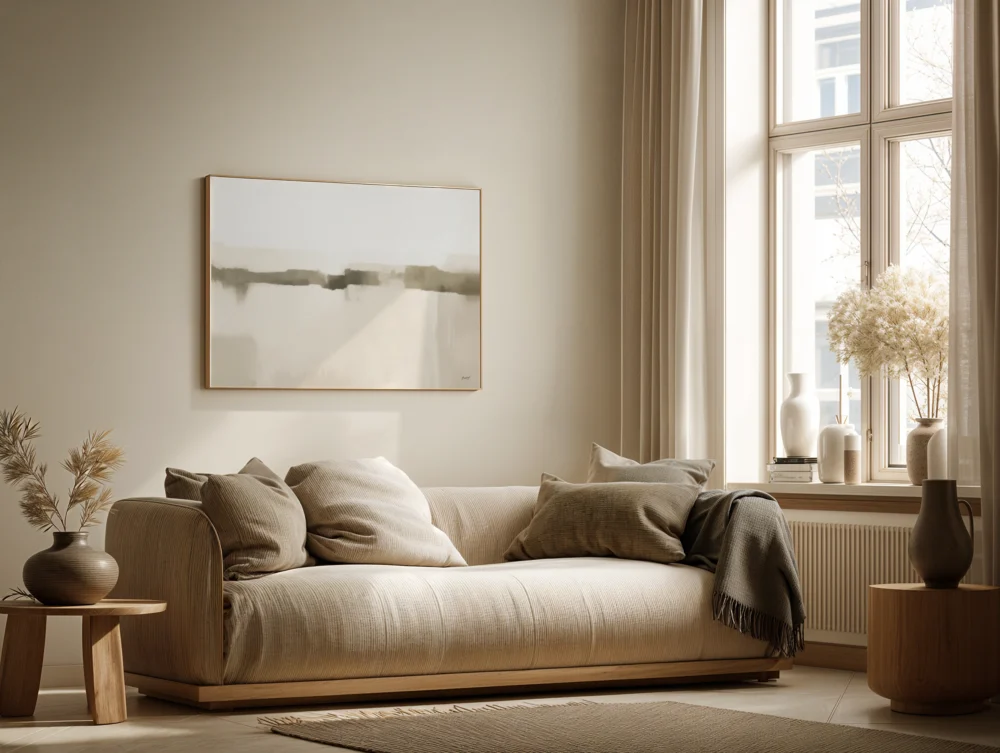
If your goal is a room that feels like a spa-like retreat, look toward earth tone artwork. These palettes—comprised of ochre, clay, sand, and moss green—bring an organic warmth to a room. They bridge the gap between the artificial environment of our homes and the raw beauty of the natural world. If you prefer an atmosphere of crisp, modern elegance, high-contrast monochrome pieces offer a sophisticated “gallery” feel that never goes out of style.
Minimalism isn’t just about flat lines. Many Abstract art prints utilize subtle textures—like the suggestion of canvas grain or layered brushstrokes—to add depth without adding complexity. Subject matter often trends toward botanical silhouettes, soft gradients, or “continuous line” art. These subjects are inherently soothing because they mimic the flowing, non-linear shapes found in nature.
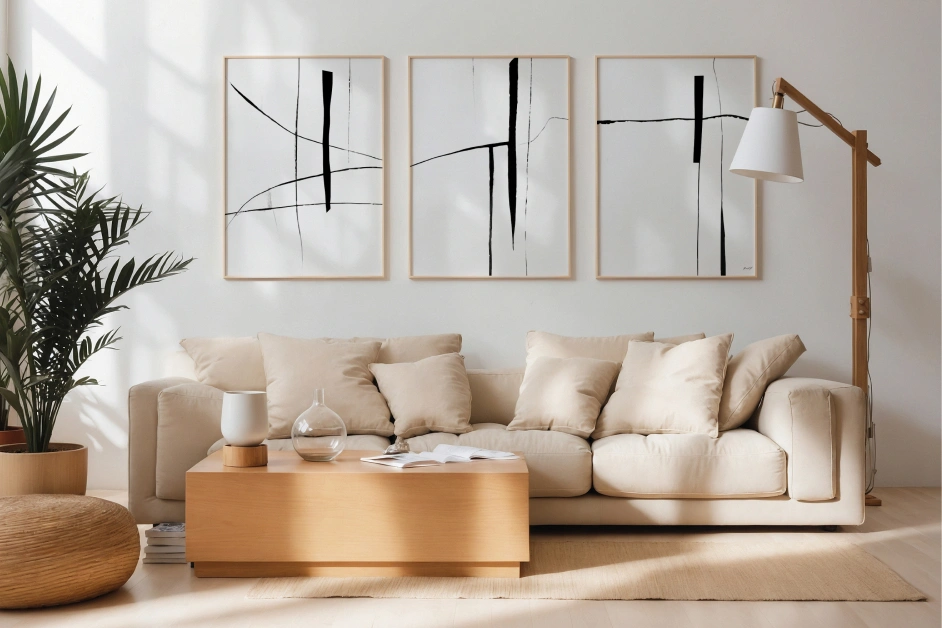
One of the most frequent errors in interior design isn’t the style of the art, but its proportions. In a living room, scale is everything.
If you have a large sofa, a single, oversized painting can act as a stunning anchor for the entire wall. A large work of art creates a “hero” moment in the room, making the space feel more curated and expensive. As a general rule, your living room wall art should span roughly two-thirds to three-quarters of the width of the furniture below it.
For those who find a single large piece too imposing, a triptych (a set of three) or a pair of smaller prints can work wonders. This approach introduces a sense of rhythm and sequence. Explore our collection of living room wall art to see how sets can be used to fill vertical spaces or long hallways that lead into the main seating area.
Art should always be hung at eye level—roughly 57 to 60 inches from the center of the piece to the floor. When hanging art above a console or sofa, leave about 6 to 10 inches of “breathing room” between the bottom of the frame and the top of the furniture to ensure the two elements feel connected but not crowded.
Minimalist art thrives on harmony. To make your chosen prints truly sing, you must consider the relationship between the canvas and the wall it sits on.
A white-on-white or beige-on-beige aesthetic is the pinnacle of modern “quiet luxury.” By choosing art that closely matches your wall color, you create a textural effect where the art feels like a part of the architecture itself. This is where earth tone artwork shines, as the subtle shifts in brown and cream create a layered, cozy atmosphere.
If you want the art to pop, contrast is your friend. However, in a minimalist setting, contrast should be clean. A black line drawing on a white wall provides a sharp, graphic look that feels intentional and organized. To tie the room together, coordinate the colors in your art with your textiles. A single thread of terracotta in a painting can be mirrored in a throw blanket or a ceramic vase, creating a cohesive visual thread that makes the room feel professionally styled.
The frame is the “punctuation mark” at the end of your artistic statement. It can either reinforce the minimalism of the piece or completely distract from it.
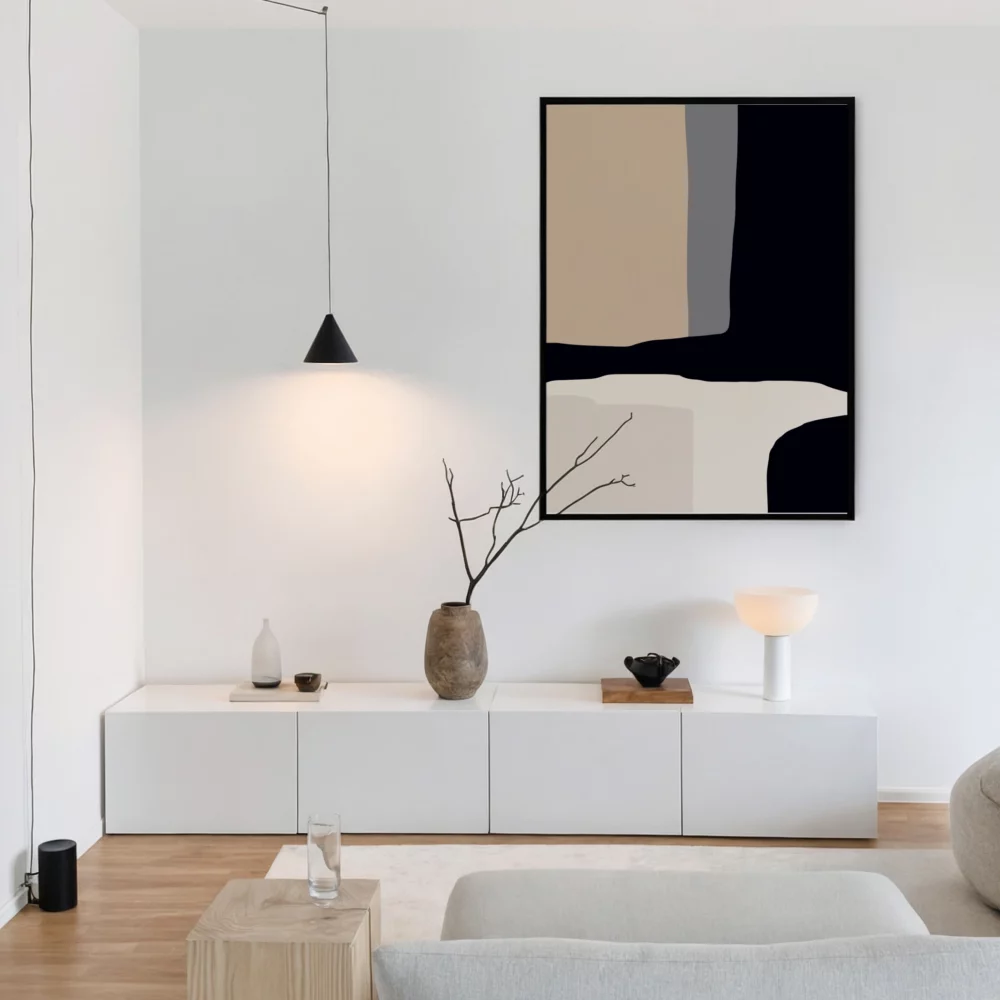
Thin Black Frames: These are the standard for modern interiors. They provide a crisp, “defined” border that acts like a window frame, drawing the eye directly into the art.
Natural Wood Frames: For rooms that feel a bit cold or “clinical,” oak or ash frames add much-needed organic warmth. They pair beautifully with Scandinavian-inspired furniture and indoor plants.
Canvas vs. Framed Prints: A frameless canvas offers a more “raw” and contemporary look, as the art bleeds directly onto the wall. A framed print under glass, however, feels more traditional and polished, adding a layer of reflection that can make a small room feel slightly brighter.
Once the art is on the wall, the styling of the surrounding space is what determines its impact. The most successful minimalist rooms are those that allow the art to “breathe.”
Limit Clutter: If you have a beautiful piece of art above a console, don’t clutter the surface with dozens of small ornaments. Choose one or two high-quality items—a tall vase or a stack of linen-bound books—to complement the art without competing for attention.
Use Strategic Lighting: Minimalism relies on the play of light and shadow. A dedicated picture light or a recessed ceiling spotlight can turn a simple print into a dramatic focal point at night.
The “One-In, One-Out” Rule: If you decide to add a new piece of contemporary artwork to your gallery, consider if the room has become too busy. Minimalism is a constant practice of editing.
Even with the best intentions, it is easy to miss the mark. Here are the pitfalls to watch out for:
Choosing Art That Is Too Small: A tiny print on a vast wall doesn’t look minimalist; it looks like an afterthought. If you are unsure, always err on the side of a larger scale.
Mixing Too Many Styles: While eclectic decor has its place, a minimalist living room works best when there is a unifying theme—either in color, framing, or subject matter.
Over-decorating: The hardest part of minimalism is knowing when to stop. If the room feels “full,” you have likely gone too far. Leave some walls blank. Blank space is a luxury.
Investing in Minimalist Paintings is a savvy move for the modern homeowner. Unlike trends that rely on specific “color of the year” fads or complex patterns that can become dated, the beauty of a simple line or a soft gradient is timeless.
Because these pieces are so adaptable, they can migrate throughout your home as your life changes. A print that started in your living room might move to your bedroom five years later and look completely fresh in the new context. They are also incredibly easy to restyle with new pillows or rugs, providing a “visual anchor” that remains constant even as your furniture evolves. Most importantly, minimalism provides long-term visual comfort. It creates a home that doesn’t demand your energy, but rather, gives it back to you.
Mastering the “less is more” aesthetic in your living room is about more than just a design trend—it is a commitment to a calmer, more intentional way of living. By selecting artwork that emphasizes space, form, and subtle color, you transform your main living area into a place of genuine respite.
At Print Studio, we believe that every wall is an opportunity to find balance. Our curated selection of Minimalist Paintings is designed to help you build a home that reflects your desire for peace and sophistication. Whether you are drawn to the rugged beauty of earth tone artwork or the sharp precision of monochromatic line art, we invite you to explore our collections and find the piece that speaks to your soul. Remember: in a world that never stops talking, your home should be the place that knows how to be quiet.
Ready to simplify your space? Browse our full collection of art prints today and find the perfect balance for your home