In a world saturated with visual noise, there’s something profoundly calming about the simplicity of a single line. Minimalist line art has become the antidote to cluttered walls and overstimulated minds, offering a sophisticated aesthetic that speaks volumes through restraint. From high-end galleries to modern apartments, black and white line art prints have captured the attention of designers and homeowners who understand that sometimes, less really is more.
The beauty of minimalist line drawing lies in its ability to distract the eye while engaging the mind. Unlike complex, color-saturated artwork that demands constant attention, line art provides visual breathing room. It’s the decorative equivalent of a perfectly timed pause in conversation—understated, intentional, and surprisingly powerful. This art form strips away everything non-essential, leaving only the pure essence of form and movement captured in deliberate strokes.
The Psychology Behind Minimalist Line Art
Our brains are wired to seek patterns and complete incomplete images—a phenomenon psychologists call the ‘closure principle.’ Minimalist line art exploits this beautifully. When you look at a face rendered in continuous line art, your brain fills in the missing details, creating a more engaging viewing experience than a photorealistic portrait ever could. This interactive quality transforms passive wall decoration into an active mental exercise.
Studies in environmental psychology reveal that minimalist spaces reduce cortisol levels and improve focus. The clean lines and uncluttered aesthetic of line art prints contribute to this calming effect. Unlike busy patterns or highly saturated colors that can overstimulate, the simplicity of black lines on white backgrounds creates visual rest areas that help our minds reset throughout the day.
This psychological impact extends beyond mere aesthetics. In workspaces, minimalist line drawings have been shown to enhance concentration without the distraction of complex imagery. In bedrooms, they provide visual interest without the stimulation that might interfere with sleep. The versatility of this art form makes it uniquely suited to modern living, where spaces often serve multiple functions.
The Art of the Single Line Drawing
Single line drawing represents the ultimate test of an artist’s skill—creating a recognizable image without lifting pen from paper. This technique, also known as continuous line art, dates back to ancient times but found new expression through artists like Pablo Picasso, who famously created his one-line animal drawings in the 1940s. Today, this approach has been democratized and refined, appearing everywhere from tattoo parlors to corporate lobbies.
What makes single line drawing so compelling is its economy of means. Every curve, angle, and intersection must work harder when you can’t add supplementary lines or shading. The artist must envision the entire composition before beginning, choosing an optimal path that captures form, emotion, and movement in one fluid gesture. This planning creates artwork that feels both spontaneous and intentional—a difficult balance to achieve.
The technical challenge translates into visual intrigue. Viewers often trace the line with their eyes, following its journey across the page. This creates a temporal dimension absent in traditional drawing—you’re not just seeing the finished product but experiencing the sequence of its creation. It’s drawing as performance, frozen in time.
Continuous Line Art in Modern Interior Design
Interior designers have embraced continuous line art as a solution to one of decorating’s perennial challenges: adding personality without overwhelming a space. The technique works particularly well in minimalist and Scandinavian interiors, where the philosophy of ‘lagom’—just the right amount—reigns supreme. A single well-placed line art print can serve as a room’s focal point without competing with furniture or architectural features.
The monochromatic nature of most line art makes it exceptionally versatile. Unlike colored artwork that must coordinate with existing palettes, black and white line drawings complement virtually any color scheme. This flexibility proves invaluable during room refreshes or seasonal decor changes. The artwork remains constant while everything around it evolves, providing visual continuity without creative constraint.
Layering multiple line art pieces in gallery walls creates sophisticated compositions that maintain minimalist principles through repetition and rhythm. The key lies in varying subject matter while maintaining stylistic consistency—mixing figure studies with botanical drawings, for instance, or combining portrait line work with architectural sketches. This approach builds visual interest through theme rather than chaos.
Subject Matter: What Works Best in Line Art
Not all subjects translate equally well to minimalist line treatment. The most successful line art prints typically feature subjects with recognizable silhouettes and distinct characteristics. The human figure remains the most popular choice, particularly faces in profile or three-quarter view, where a single line can capture the essence of expression through minimal detail. The curve of a cheek, the slope of a nose, the arch of an eyebrow—these become deeply expressive when reduced to their linear essence. For a bolder take on the same idea, our guide to silhouette art shows how a single dark form can anchor a whole wall.
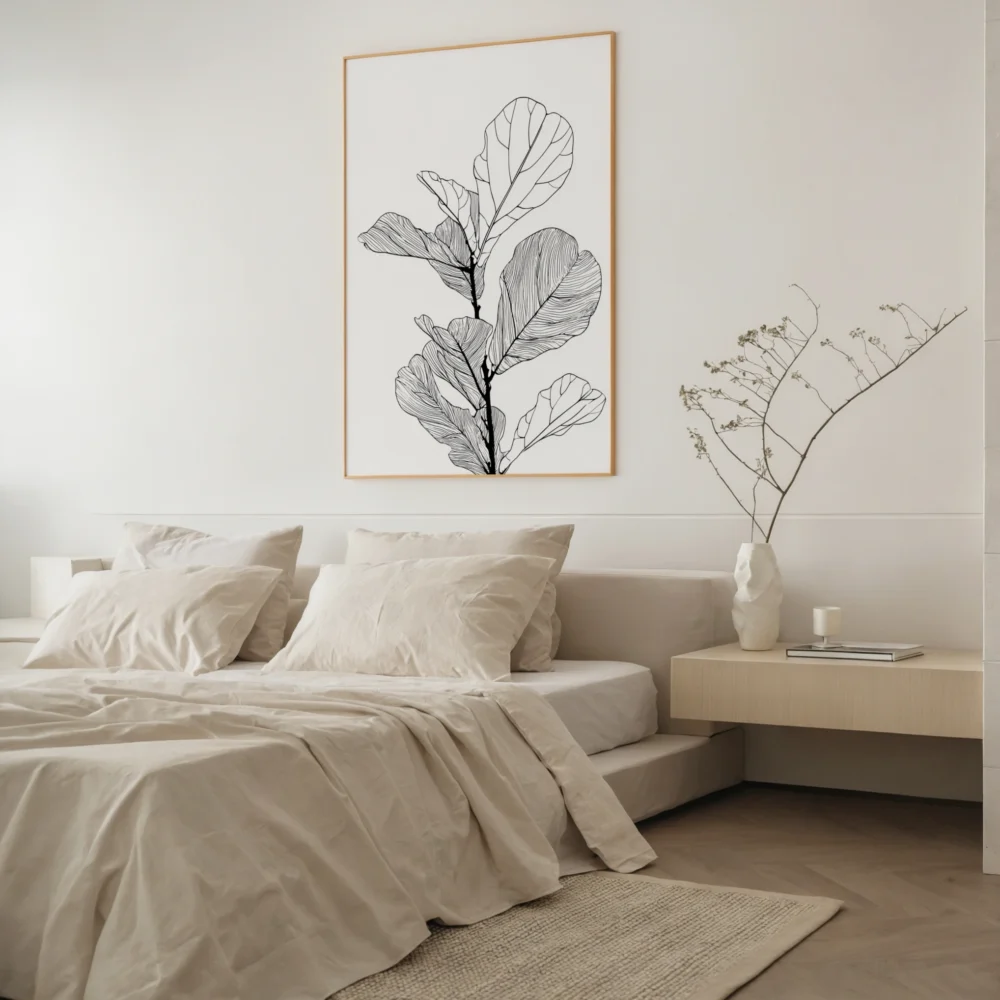
Botanical subjects work exceptionally well in continuous line art. Plants possess natural linear qualities—stems, leaves, petals—that lend themselves to this treatment. A fiddle leaf fig, monstera, or simple vase of flowers becomes an elegant study in form when rendered in unbroken line. These pieces bring organic elements into modern spaces without the maintenance demands of actual plants.
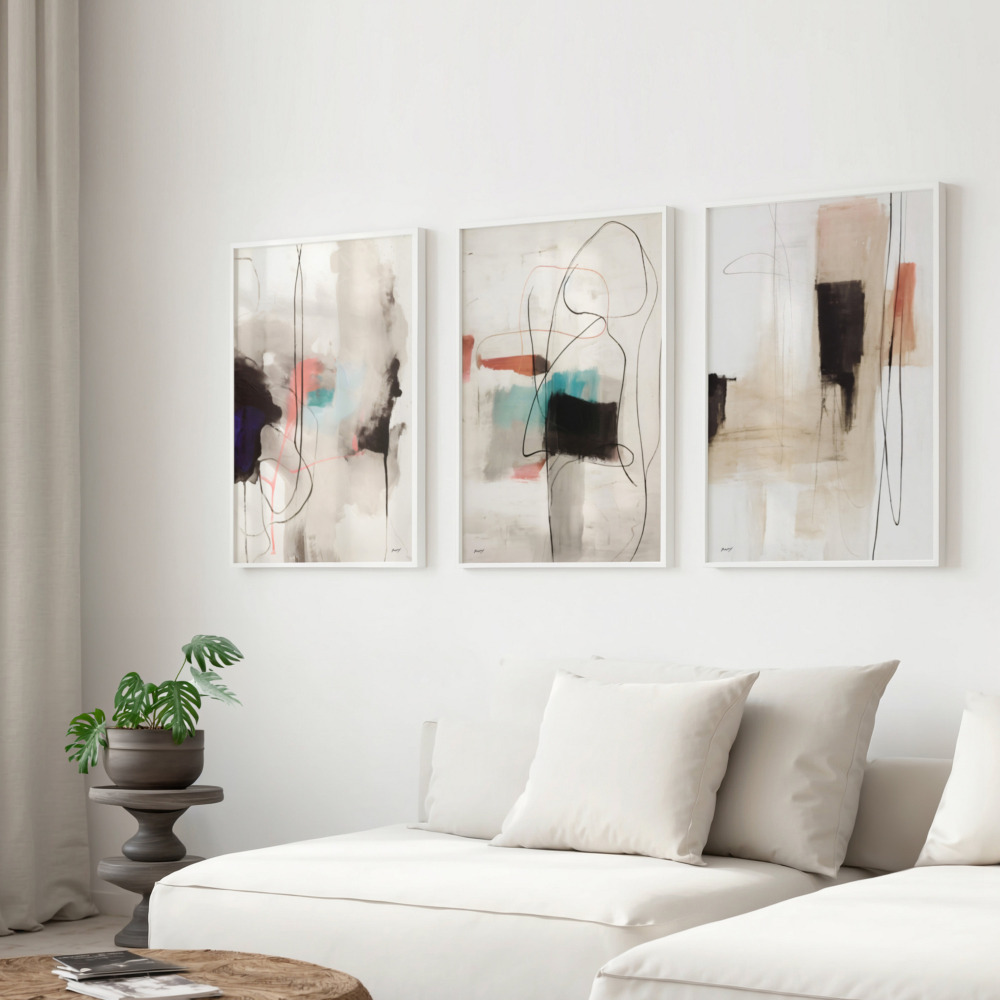
Abstract forms and geometric shapes offer another successful avenue for minimalist line drawing. These pieces lean into art’s conceptual potential, creating visual puzzles and optical interest through intersecting lines and negative space. While less immediately recognizable than figurative work, abstract line art provides maximum flexibility for interpretation, allowing viewers to project their own meanings onto the composition.
Creating Gallery-Worthy Walls with Line Art Prints
Curating a collection of line art prints requires restraint and intention—ironically, the same principles that define the art form itself. Start by establishing a cohesive thread: similar line weights, consistent subject matter categories, or unified framing choices. The goal isn’t perfect matching but harmonious conversation between pieces.
Scale matters enormously in line art display. While a large, colorful painting might overwhelm a small room, a generously sized minimalist line drawing provides presence without weight. The abundance of negative space in most line art means even large prints maintain an airy quality. Conversely, small line drawings can feel lost on expansive walls—group them in clusters or choose oversized frames with wide mats to increase their visual footprint.
Framing choices significantly impact how line art reads in a space. Black frames create sharp contrast and contemporary edge, while natural wood frames soften the look and add warmth. White or light wood frames practically disappear, allowing the artwork itself to float on the wall. Consider the mat width carefully—generous white matting enhances the minimalist aesthetic and draws the eye into the composition, while edge-to-edge framing creates bold, graphic impact.
The full collection behind these ideas now has a home of its own: silhouette art, from black figures to the painterly figurative branch.
The Staying Power of Minimalist Aesthetics
Design trends come and go with dizzying speed, but minimalism’s recurring popularity suggests something deeper than fashion. In uncertain times, people gravitate toward simplicity and order. The timeless quality of minimalist line art means these pieces won’t look dated in five years, making them smart investments for both emotional and financial reasons.
The accessibility of line art also contributes to its endurance. While appreciation for abstract expressionism or photorealism might require art historical knowledge, the appeal of a beautifully executed line drawing is immediately apparent. This democratic quality makes line art suitable for diverse audiences and settings, from boutique hotels to family homes.
Looking forward, the integration of technology and traditional techniques promises exciting evolution in line art. Digital tools allow artists to achieve precision impossible with physical media, while maintaining the organic feel of hand-drawn work. This hybrid approach expands creative possibilities while preserving the essential character that makes line art compelling.
Bringing Minimalist Line Art Into Your Space
Whether you’re furnishing your first apartment or refreshing a long-established home, minimalist line art prints offer an accessible entry point into art collecting. Start with pieces that resonate emotionally rather than those chosen purely for decorative coordination. The beauty of line art’s versatility means your authentic choices will likely work aesthetically anyway.
Consider the specific atmosphere you want to create in each room. Figurative line drawings of faces or bodies bring human warmth to social spaces like living rooms and dining areas. Botanical line art suits bedrooms and bathrooms where organic elements promote relaxation. Abstract linear compositions work well in offices and creative spaces where they stimulate without distracting. Delicate botanical pieces like these fill our floral line art collection.
Remember that minimalist doesn’t mean boring or cold. The right line art piece adds personality, sophistication, and visual interest while maintaining the clarity and calm that makes minimalist spaces so appealing. In an increasingly complex world, these simple lines offer something rare: beauty that doesn’t demand, art that doesn’t exhaust, and decoration that actually decorates rather than overwhelms.