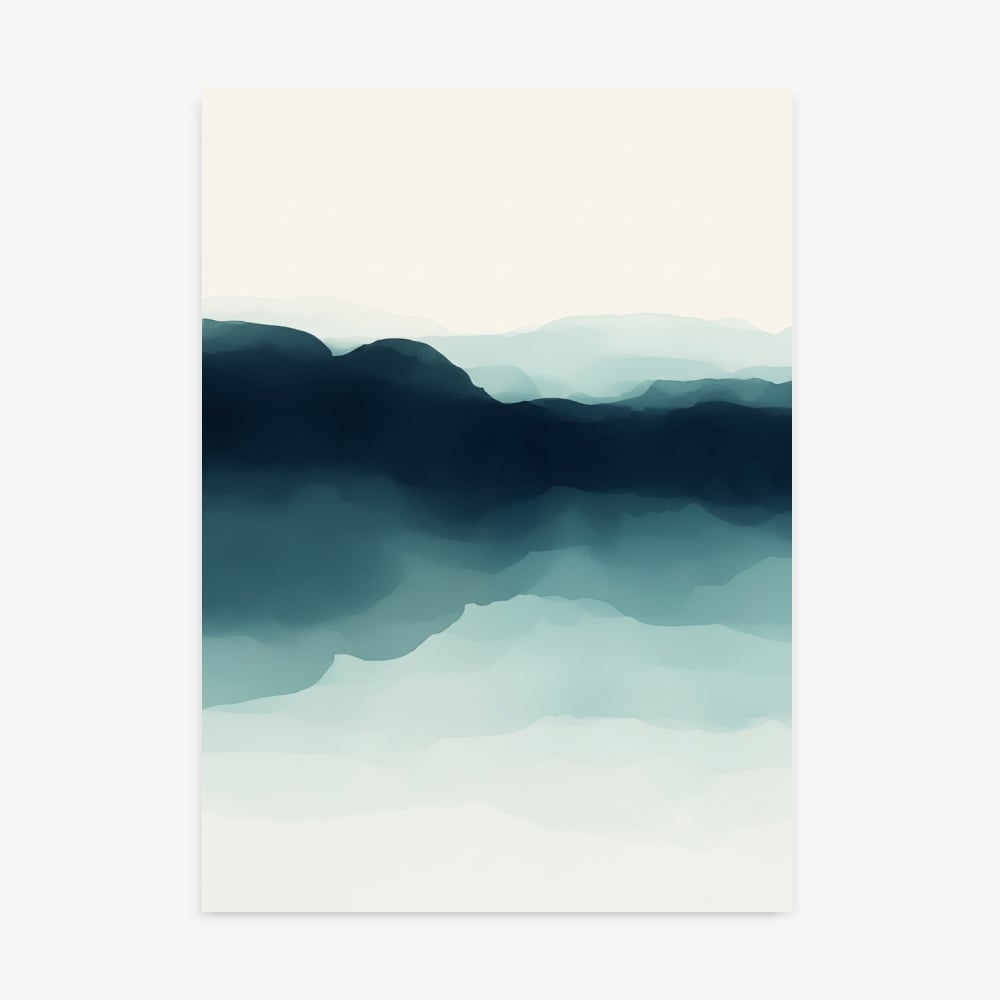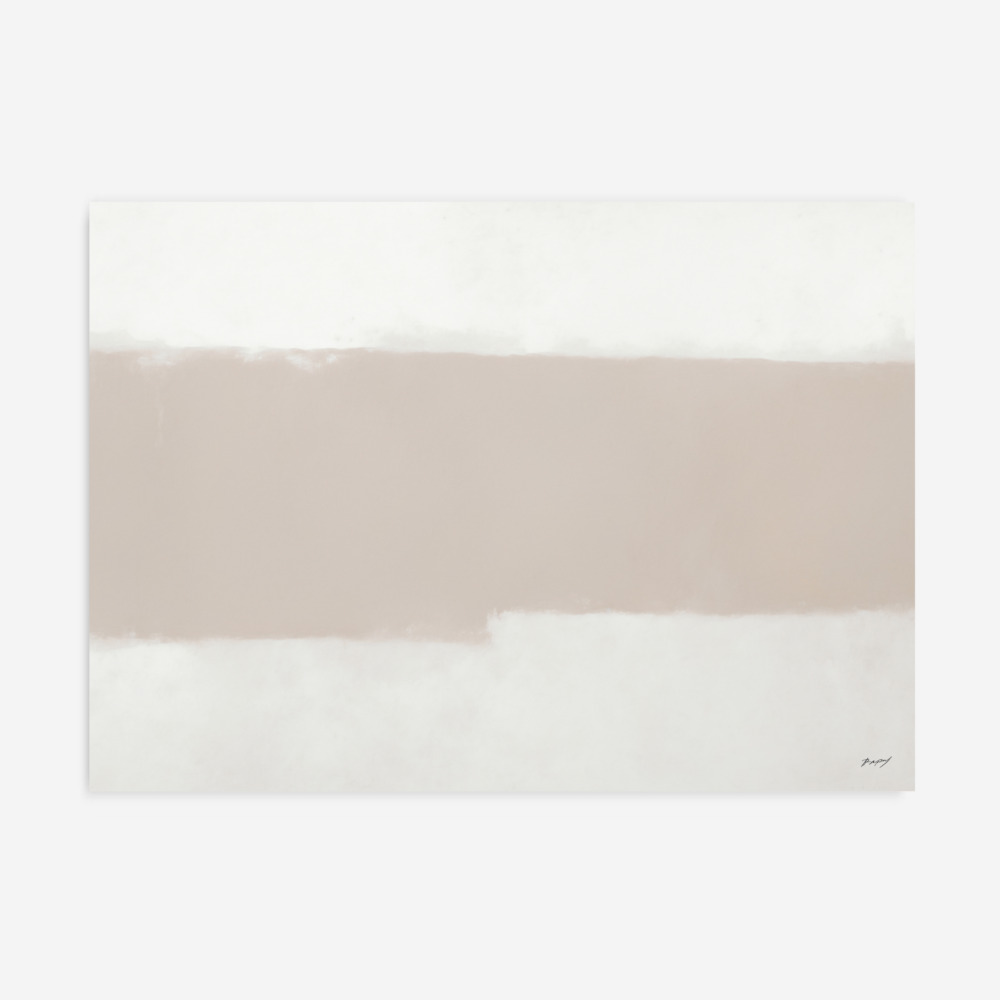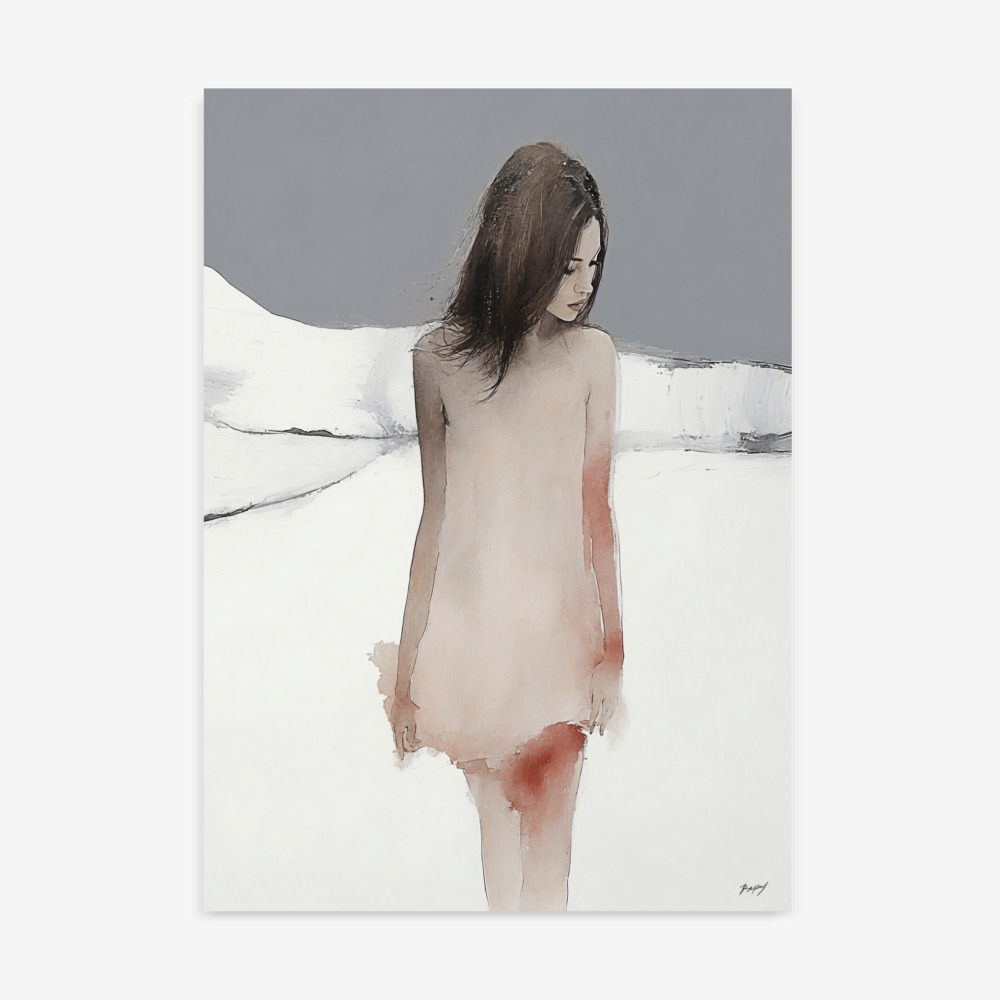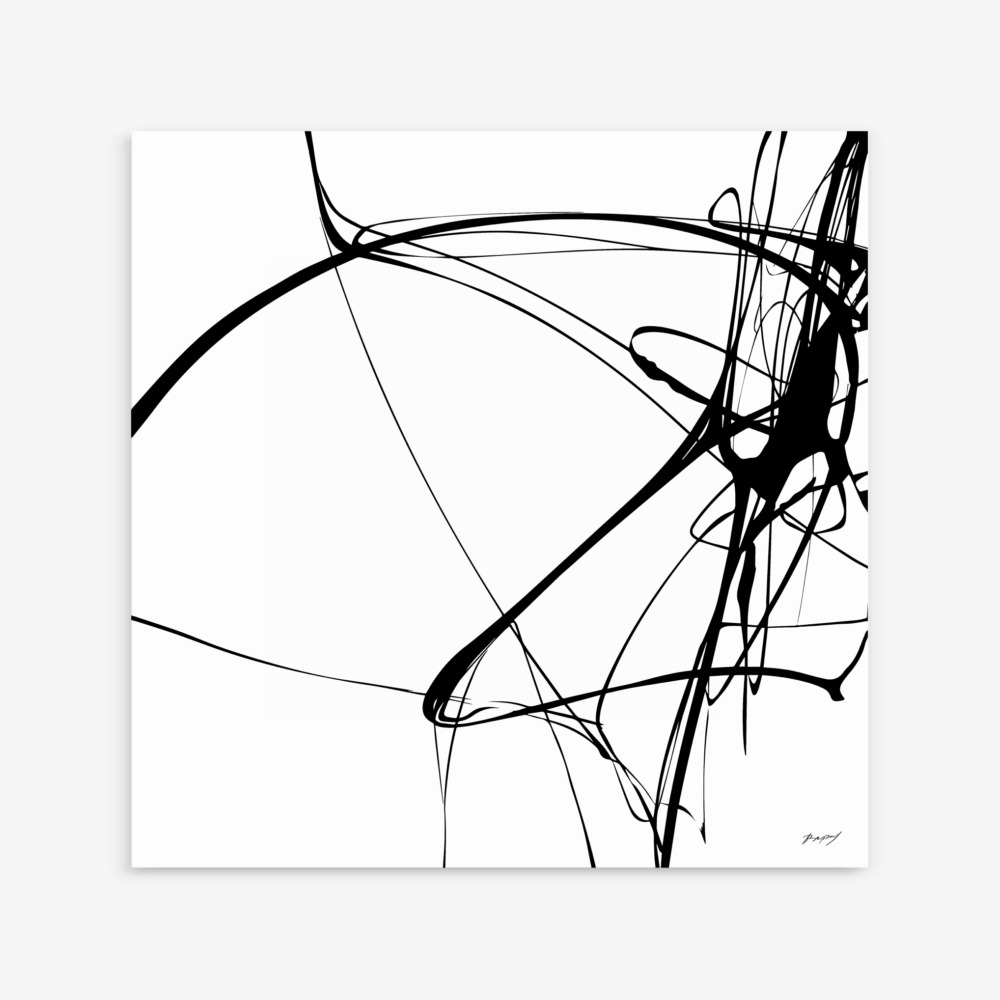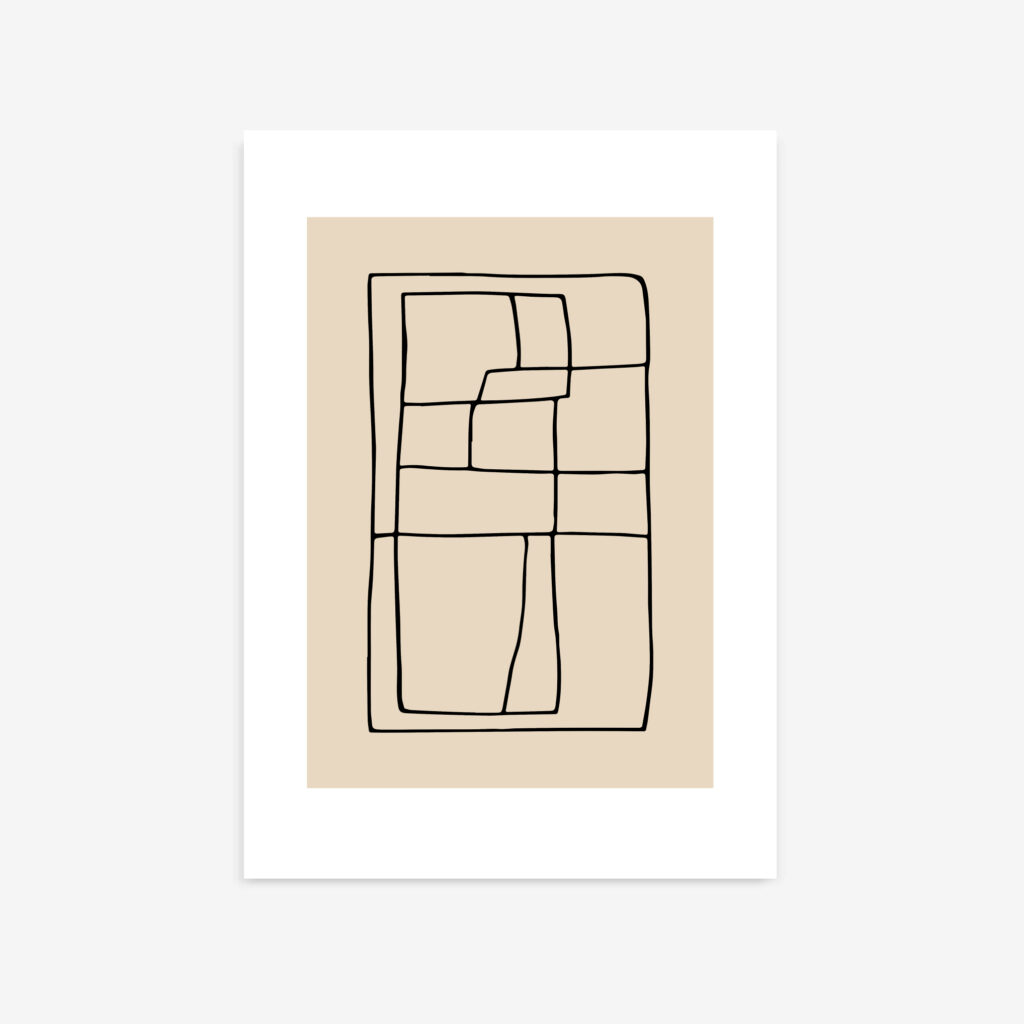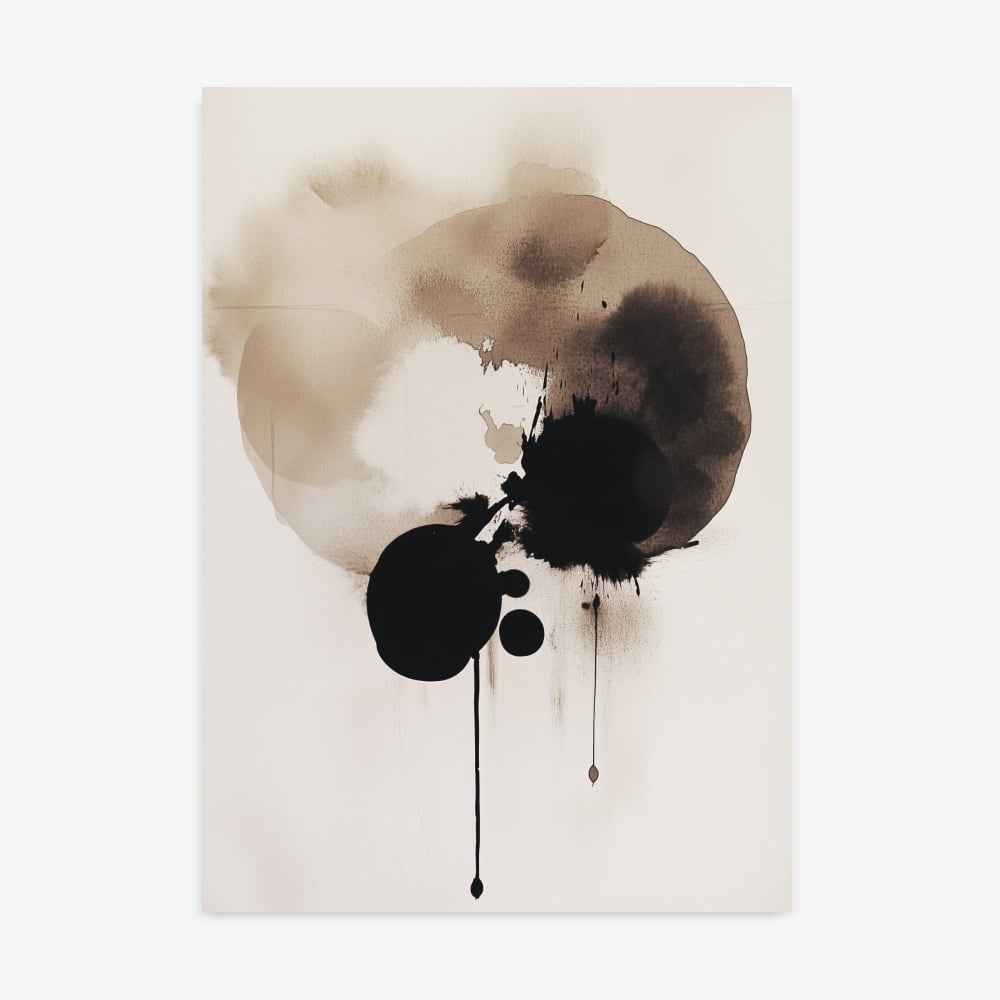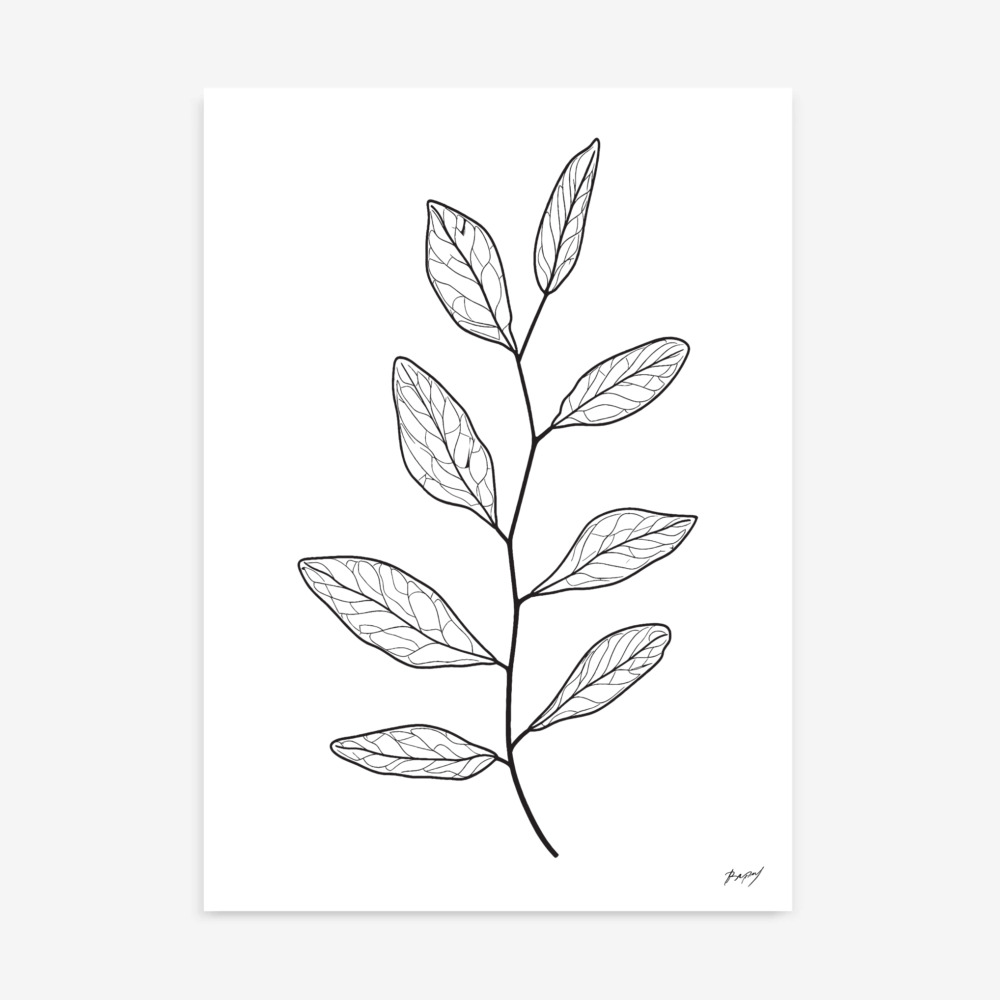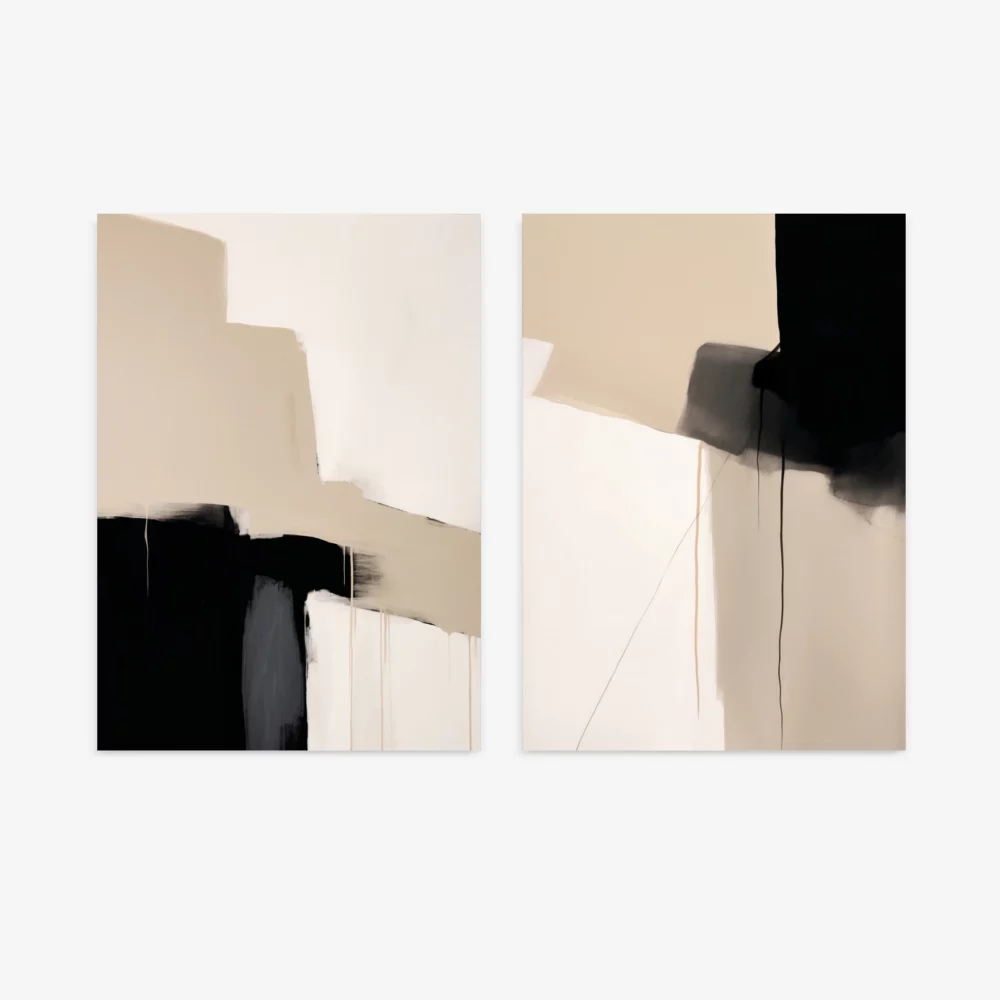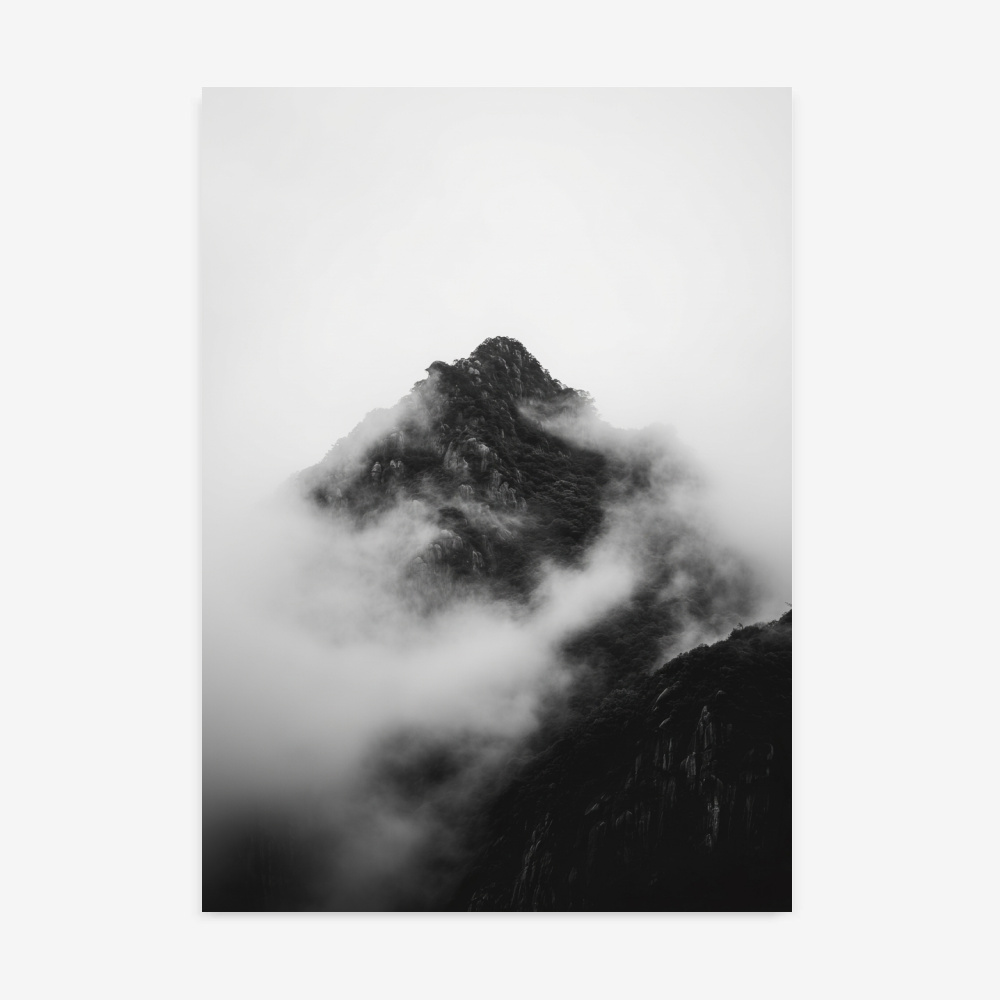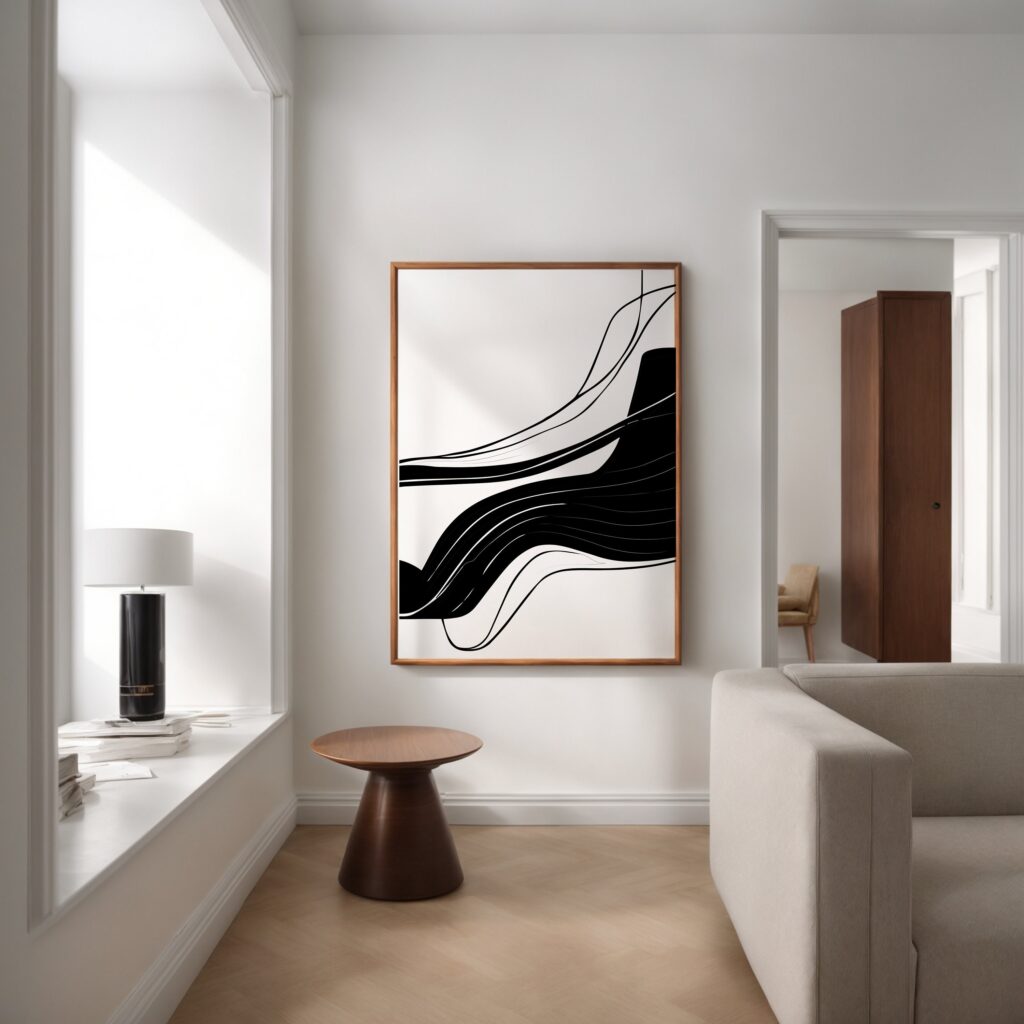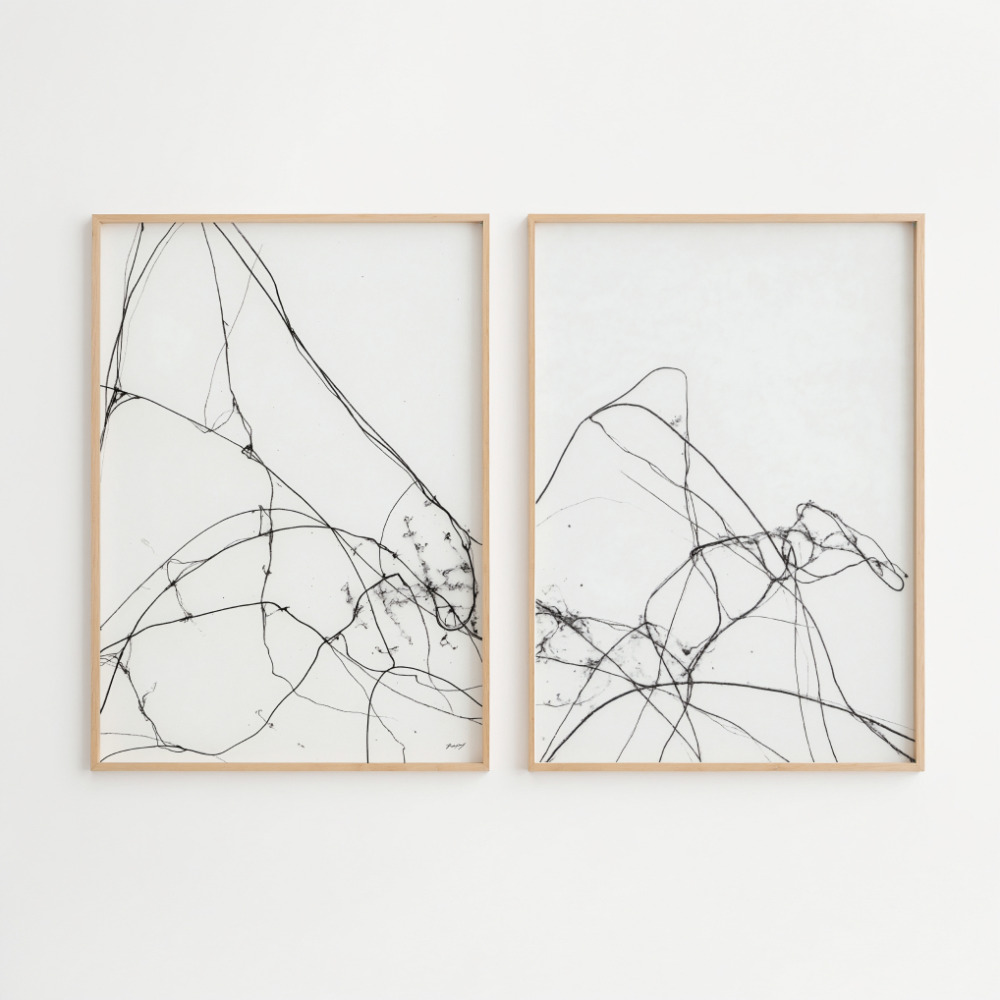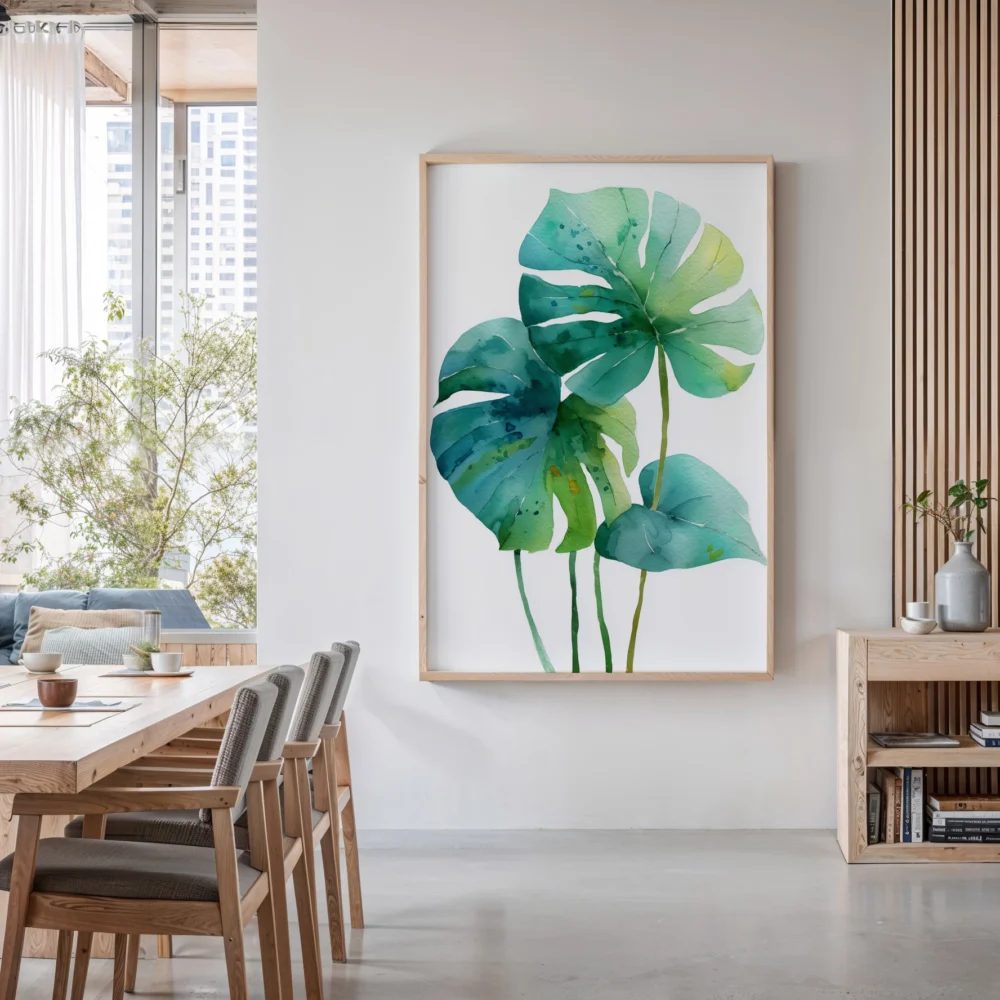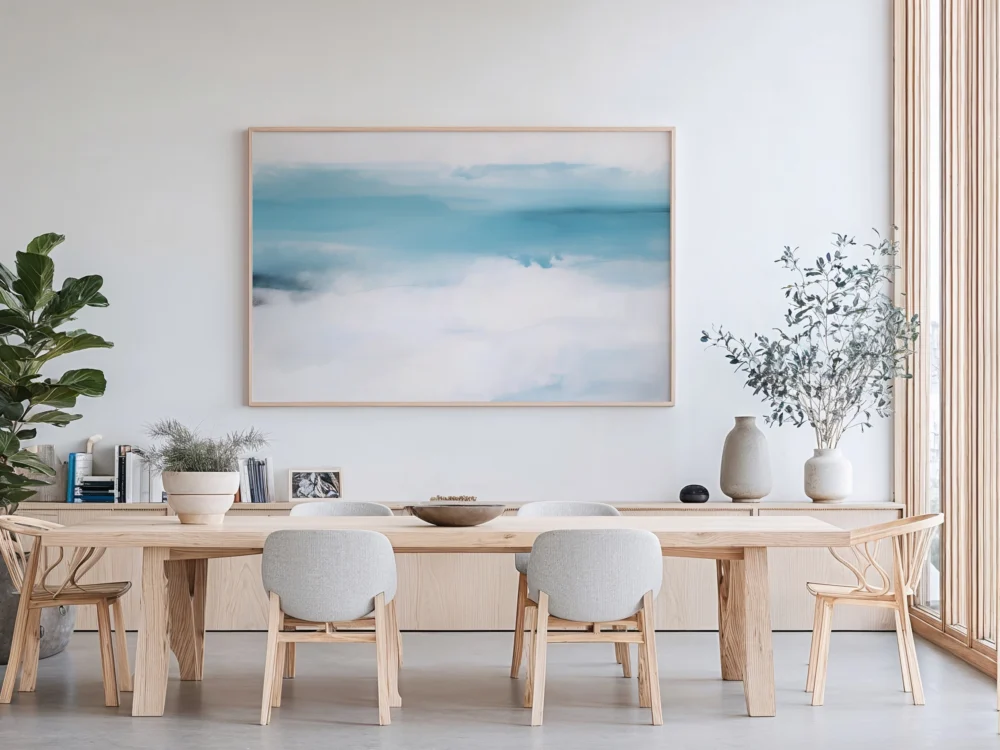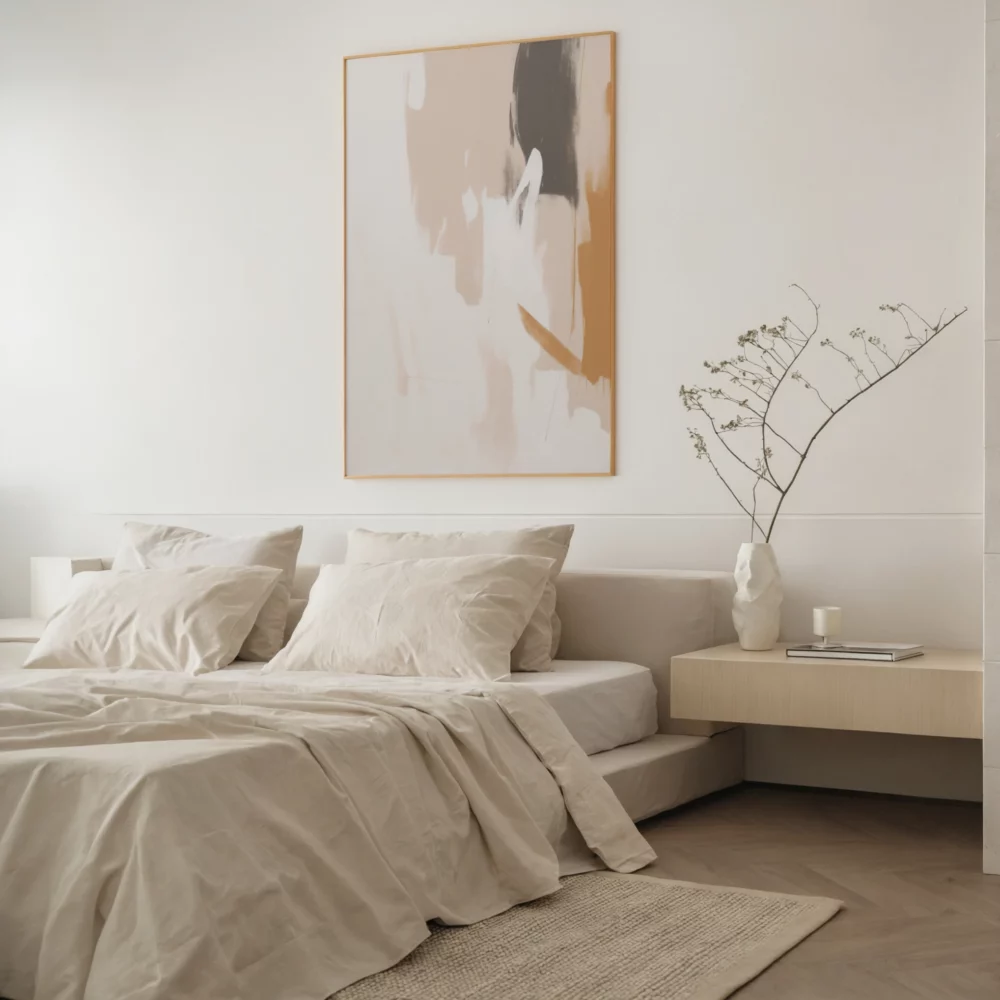
To create a calm Japandi bedroom, combine a soft neutral palette, a low wooden bed, natural textiles, clear surfaces, warm layered lighting and one or two pieces of quiet wall art. Japandi blends Scandinavian comfort with Japanese restraint, so the goal is a room that feels warm and lived in but never cluttered. Every object should be useful, beautiful or both, and the empty space around it matters as much as the object itself.
Japandi bedroom at a glance
- Palette: warm white, oat, sand, greige, clay and soft charcoal, with low contrast.
- Furniture: low platform bed, simple nightstands, closed storage and clean lines.
- Materials: oak, ash, walnut, bamboo, linen, cotton, wool, paper and stone.
- Lighting: warm white bulbs, paper or linen shades, lamps at low height.
- Wall art: one calm piece above the bed, such as an ink wash landscape, a soft abstract or a simple botanical.
What is Japandi style?
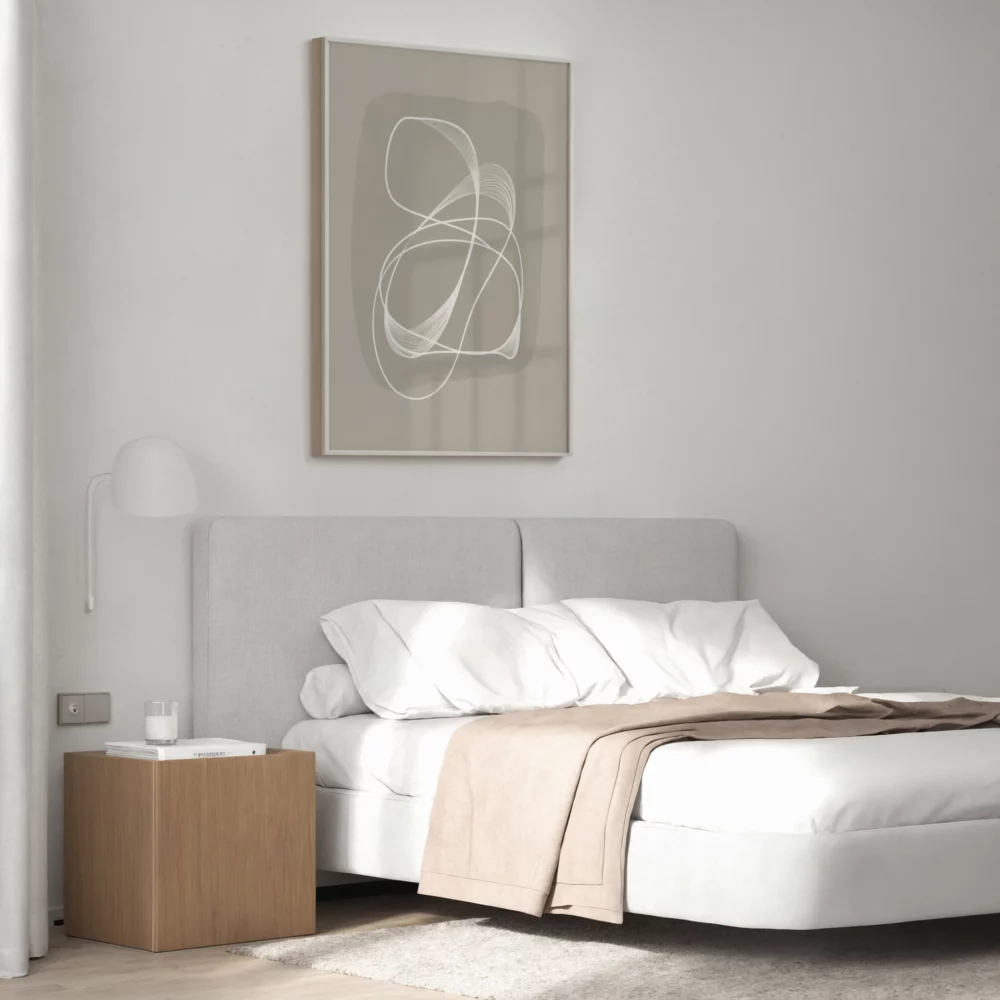
Japandi is a blend of Japanese and Scandinavian design. From Scandinavia it takes hygge: comfort, pale wood, soft textiles and a focus on light and coziness. From Japan it takes wabi-sabi, the appreciation of imperfection and natural materials, along with a strong sense of order, craftsmanship and empty space. Together they create interiors that are minimal but warm, calm but never sterile.
The bedroom is the most natural place for Japandi, because rest is exactly what the style is designed for. For the art side of the style, see our guide to Japandi wall art.
1. Start with a soft neutral palette
Choose two or three base colors and keep them close in tone. Warm white or oat for the walls, sand or greige for textiles, and a deeper accent such as clay, olive, charcoal or walnut for contrast. Japandi bedrooms keep contrast low, which is what makes them feel so restful. If you want color, choose muted, earthy shades rather than bright ones. For more on building a warm palette, read our guide to neutral home decor.
2. Choose low, simple furniture
The platform bed
A low wooden platform bed is the heart of a Japandi bedroom. Sitting closer to the floor creates a grounded, relaxed feeling and leaves more empty wall above, which makes the room feel taller and calmer. Look for solid wood with a natural or oiled finish and a simple headboard, or none at all.
Functional storage
Clutter is the enemy of calm. Choose closed storage such as wardrobes with plain fronts, chests and under bed drawers so everyday items are hidden. Nightstands should be small and simple, with room for a lamp, a book and little else.
3. Layer natural materials and textures
Because the palette is quiet, texture does the work. Mix light and dark woods, rattan, bamboo and stone. On the bed, layer linen sheets, a cotton or wool throw and a textured cushion or two. A jute or wool rug softens the floor, and paper shades, ceramic lamps or a stoneware vase add handmade character. Slight imperfections, such as a rough glaze or visible wood grain, are part of the look.
4. Keep decor intentional and minimal
Clear surfaces are essential. Leave the dresser and nightstands mostly empty and choose a few objects with meaning: a handmade vase, a small tray, a stack of books. Every item should have a purpose or a story. If something does neither, it can probably go.
5. Add Japandi wall art
Art is where a Japandi bedroom gets its soul. The right piece adds warmth and personality without breaking the calm.
What makes art Japandi?
- Muted, natural colors: beige, stone, charcoal, rust, olive and soft black.
- Simple forms: ink wash landscapes, brushstrokes, organic shapes, circles and quiet botanicals.
- Negative space: generous empty areas that let the image breathe.
- Visible texture: the feeling of brush, paper or ink.
Size and placement
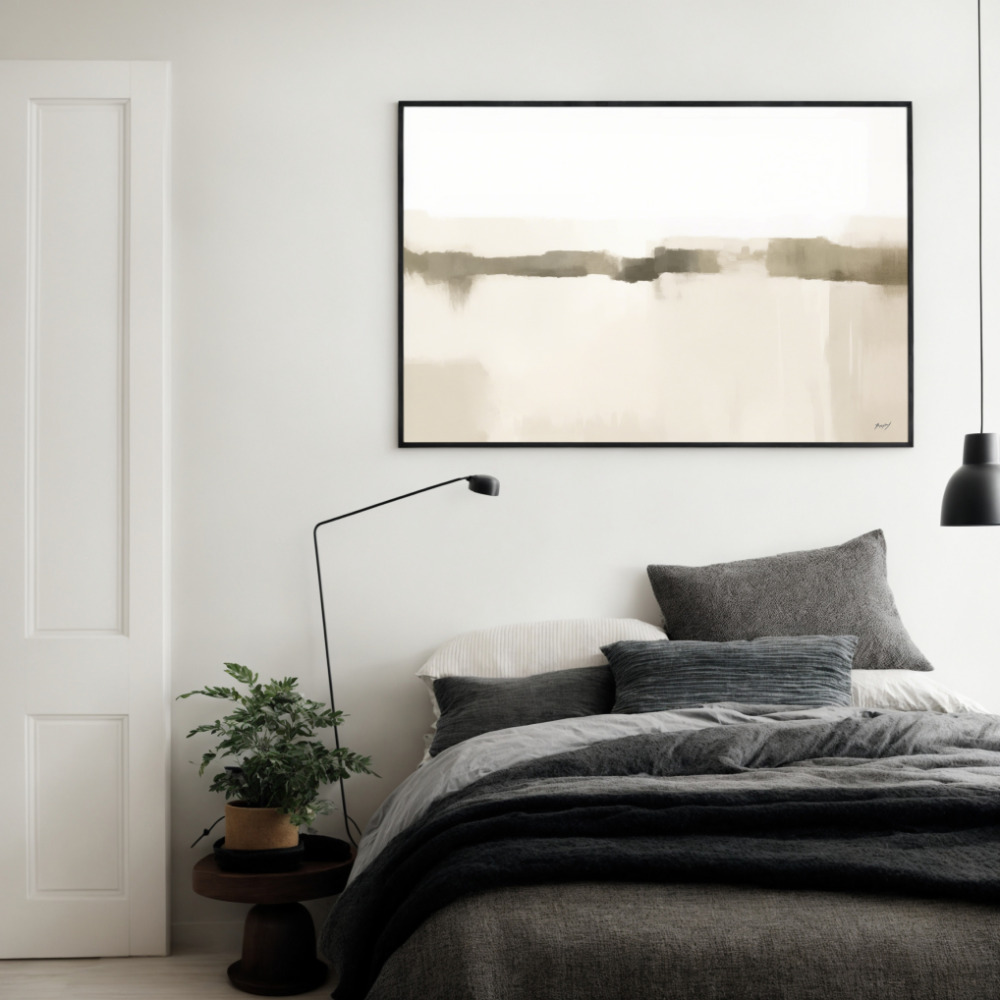
Above the bed, choose one print about two thirds the width of the bed, or a pair of matching prints. Leave 15 to 25 cm between the headboard and the bottom of the frame. Slim frames in natural oak, walnut or black suit the style; rolled canvas offers a softer, frameless option. Browse our Japandi art prints or bedroom art prints to find the right piece.
6. Use soft, layered lighting
Lighting changes everything in a minimal room. Use warm white bulbs (2700K is ideal), and place light low: bedside lamps, a floor lamp in a corner, or a paper lantern pendant. Avoid harsh overhead lighting at night. Dimmers help the room shift from daytime calm to evening rest.
7. Balance the room with negative space
Empty space is a design element in Japandi, not something to fill. Leave walls partly bare, keep paths around the bed clear, and allow one statement piece, perhaps the bed, a lamp or the art, to stand out. Balance does not mean symmetry; an asymmetric arrangement of a lamp, a plant and a print can feel more natural.
Bring nature inside
A single plant adds life and softens the clean lines. Good choices for bedrooms include a snake plant, a small olive tree, a fiddle leaf fig or a branch in a vase. Keep it to one or two so the room stays simple. Natural light matters too: use sheer linen curtains or paper blinds to diffuse daylight.
Textiles: layering without chaos
Bedding is the largest surface in the room, so it sets the mood. Start with stonewashed linen or organic cotton sheets in white, oat or sand. Add a duvet cover in a slightly deeper tone, then one textured layer: a waffle or wool throw folded at the foot of the bed. Keep cushions to two or three in related colors. Curtains in sheer or medium weight linen soften the light without blocking it, and a wool or jute rug beside the bed adds warmth underfoot. The rule is texture over pattern: subtle weaves, slubs and natural creases rather than prints.
Storage that disappears
Japandi bedrooms look calm because everyday life is hidden. Built in wardrobes with flat, handleless fronts blend into the walls. Under bed drawers hold spare bedding. A wooden bench at the foot of the bed can store blankets inside and give you somewhere to sit. On nightstands, a small lidded box or ceramic dish catches jewelry, chargers and glasses so surfaces stay clear. If you have open shelving, limit it to a few books and one or two objects per shelf.
A Japandi bedroom checklist
- Two or three warm neutral base colors with low contrast.
- A low wooden bed and simple nightstands.
- Linen or cotton bedding with one textured throw.
- Closed storage for everyday items.
- One calm piece of wall art, or a matching pair, above the bed.
- Warm white, low level lighting with a paper or linen shade.
- One or two plants and plenty of empty space.
Common mistakes to avoid
- Choosing cold, grey tones instead of warm neutrals.
- Too many decorative objects on surfaces.
- Glossy finishes and synthetic fabrics.
- Small art lost on a large wall above the bed.
- Bright, cool overhead lighting.
- Copying a showroom so closely that the room has no personal story.
Frequently asked questions
What is a Japandi bedroom?
A Japandi bedroom blends Scandinavian comfort with Japanese minimalism: warm neutrals, low wooden furniture, natural textiles, clear surfaces and calm, simple art.
What colors work in a Japandi bedroom?
Warm white, oat, sand, greige, clay, olive and soft charcoal. Keep contrast low and choose muted, earthy accents instead of bright colors.
What kind of bed suits Japandi style?
A low wooden platform bed with a simple headboard or none at all. Natural or oiled wood in oak, ash or walnut works best.
What wall art suits a Japandi bedroom?
Ink wash landscapes, soft abstracts, brushstroke art and simple botanicals in muted tones, with plenty of negative space.
What size art should go above a Japandi bed?
Choose art about two thirds the width of the bed, or a matching pair. Hang it 15 to 25 cm above the headboard.
How do I make a Japandi bedroom feel warm?
Use warm white bulbs, layer linen and wool, add wood and stone, and choose art with earthy tones such as clay, rust and sand.
What is the difference between Japandi and Scandinavian bedrooms?
Scandinavian bedrooms are lighter and cozier, with pale woods and soft whites. Japandi bedrooms are lower, more restrained and use deeper woods and earthier tones.
Can a small bedroom be Japandi?
Yes. Japandi suits small rooms well because it relies on low furniture, closed storage and empty space, which all make a room feel larger.
Japandi art prints from Print Studio
Browse our Japandi art prints and large wall art for the bedroom. Every design is by one artist and printed to order on 230gsm fine art matte paper or rolled canvas, in sizes from 30 x 20 cm to 150 x 100 cm. Prints start from $36, shipping is free over $69, and you save 25% on 2 prints or 30% on 3 or more.