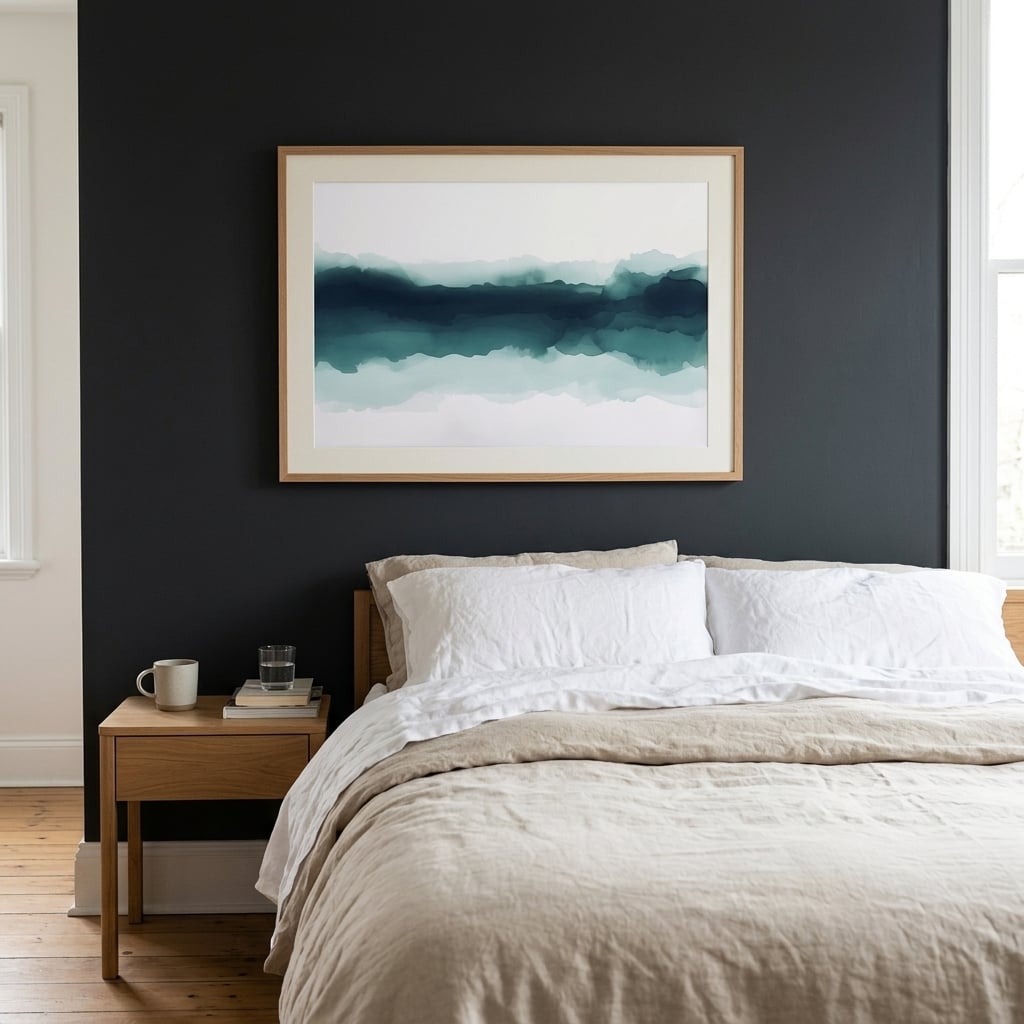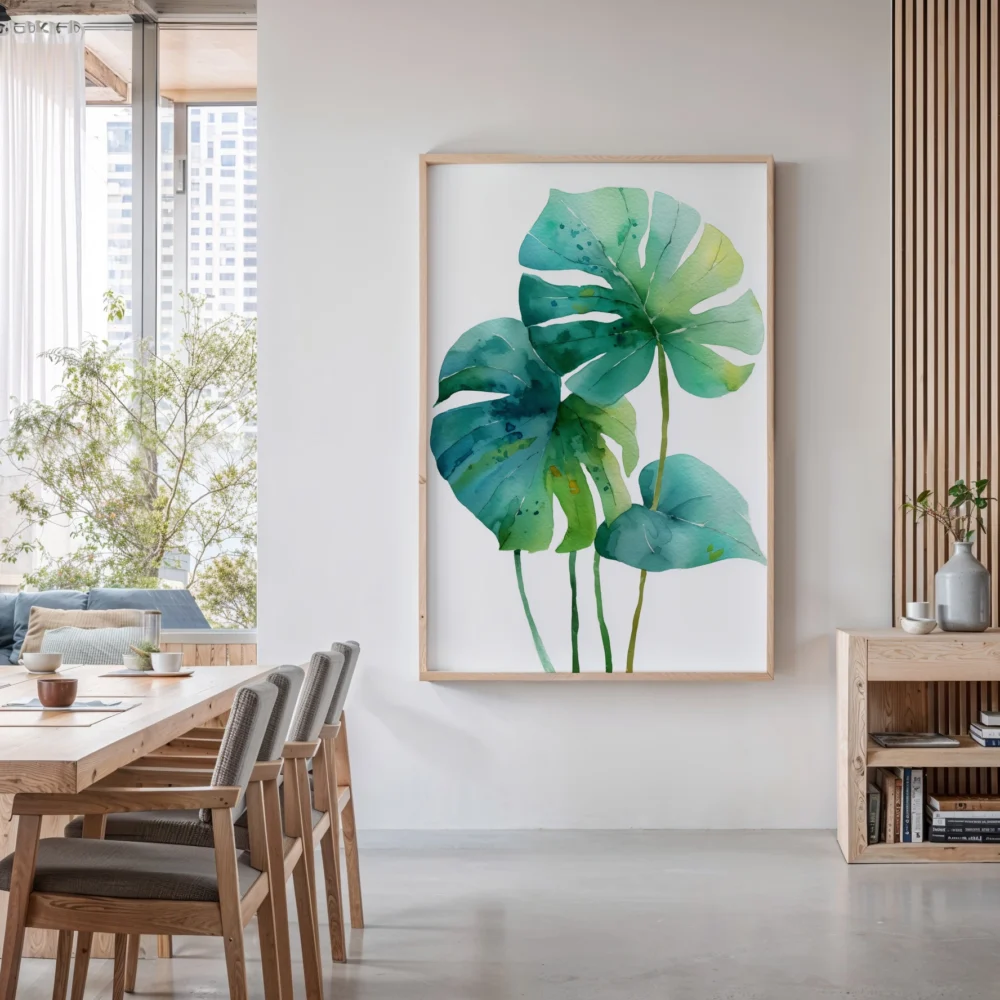
Botanical prints are so common on walls now that it is easy to dismiss them as a safe, slightly generic choice — the thing you buy when you cannot decide. But that reading gets the history exactly backward. Botanical art did not begin as decoration. It began as hard science, and that origin is precisely why it still works on a wall three centuries later, when so much other nature-themed art curdles into cliche within a season.
Before photography, the only way to record a plant accurately — for medicine, for exploration, for the sober business of cataloguing a newly mapped world — was to draw it, meticulously and truthfully. Botanical illustrators were technicians of observation, working alongside scientists, rendering every vein, stem, and seed with an accuracy a casual sketch could never reach. The results were beautiful, but the beauty was a byproduct. The job was truth. And that inheritance of disciplined, honest looking is what a good botanical print still carries.
Why accuracy reads as elegance
There is a quality to genuine botanical illustration that decorative floral art almost never achieves, and it comes directly from that scientific origin. The line is precise. The proportions are true. The structure of the plant — how a leaf actually joins a stem, how a form actually grows — is observed rather than invented. The eye registers that rightness even when the mind does not consciously analyze it. Accuracy reads, at a level below thought, as elegance.
This is why a real botanical study holds up on a wall where a generic flower print quickly tires. The generic version is decoration pretending at nature; the botanical study is nature recorded with discipline, and that discipline gives it a quiet authority. It is the same reason black and white botanical prints in particular feel so enduring — stripped of color, what remains is pure structure and line, the scientific bones of the thing, which is exactly the part that does not date.
The calm of the single specimen
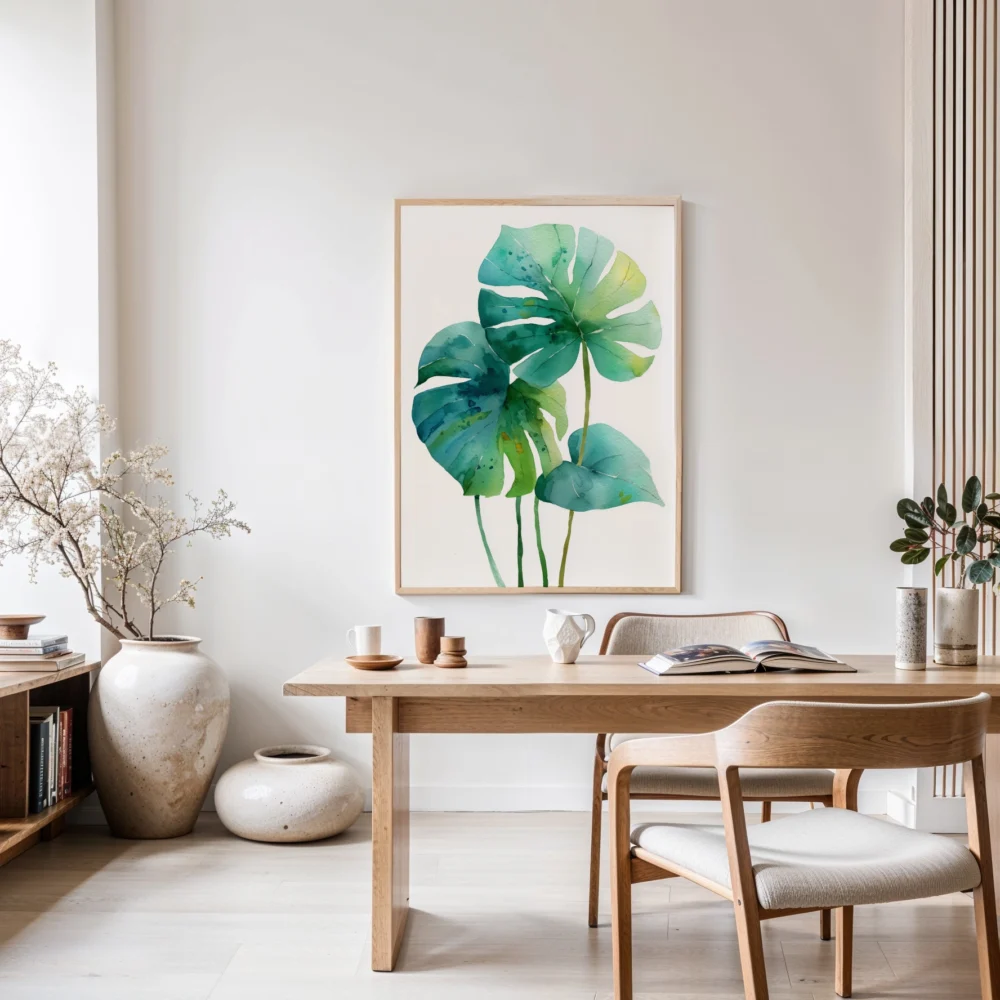
Traditional botanical illustration has a compositional habit worth borrowing: it isolates. A single specimen, rendered against plain ground, with room around it. This was originally practical — a scientist needed to see the plant clearly, unobstructed. But it produces a composition of remarkable calm. One form, precisely drawn, floating in open space. It is nature with all the visual noise removed, which is a large part of why it settles a room rather than busying it.
That isolation is why botanical art pairs so naturally with restrained, modern interiors despite its centuries-old roots. A single botanical form in black and white brings the life and organic softness of nature into a space without introducing clutter or fighting a minimal palette. It is the rare kind of art that reads as both classic and contemporary at once, which is why black and white botanical prints slot as easily into a spare Scandinavian room as into a traditional one.
The golden age of the plant hunters
To understand why botanical art carries such quiet authority, it helps to picture the world that produced it. In the seventeenth, eighteenth, and nineteenth centuries, as European ships reached new continents, they returned with plants no one at home had ever seen. Each new species had to be recorded, and recorded accurately, for science, for medicine, for the sheer thrill of cataloguing a suddenly larger world. Illustrators traveled with expeditions or worked from precious dried specimens, racing to capture forms that might wilt before the drawing was done.
These were not decorators. They were visual scientists, and their work was held to the exacting standard of truth — a flower drawn wrong was a scientific error, not merely an ugly picture. The discipline that standard imposed is precisely what gives antique-style botanical illustration its enduring quality. Every one of those careful studies carries the DNA of that rigorous looking, and a good modern botanical print inherits it — the sense that what you are looking at was observed with real care, not casually invented.
Why black and white intensifies the effect
Color is what most people expect from botanical art, but stripping it away often makes the work stronger, not weaker — and understanding why reveals what botanical art is really about. Remove the color from a plant study and what remains is pure structure: the architecture of a leaf, the geometry of a seed head, the elegant logic of how a stem branches. Color can be a distraction, a pretty surface that hides the underlying form. Black and white forces the structure forward.
This is why black and white botanical prints feel so clean and so modern despite their antique roots. They isolate exactly the part of the plant that does not date — its form — and present it with graphic clarity. A monochrome fern or leaf reads as both a centuries-old scientific study and a thoroughly contemporary graphic image at once, which is a rare and valuable duality. The absence of color is not a loss; it is a concentration, distilling the plant down to the structural beauty that was always the real subject.
Living with botanical art
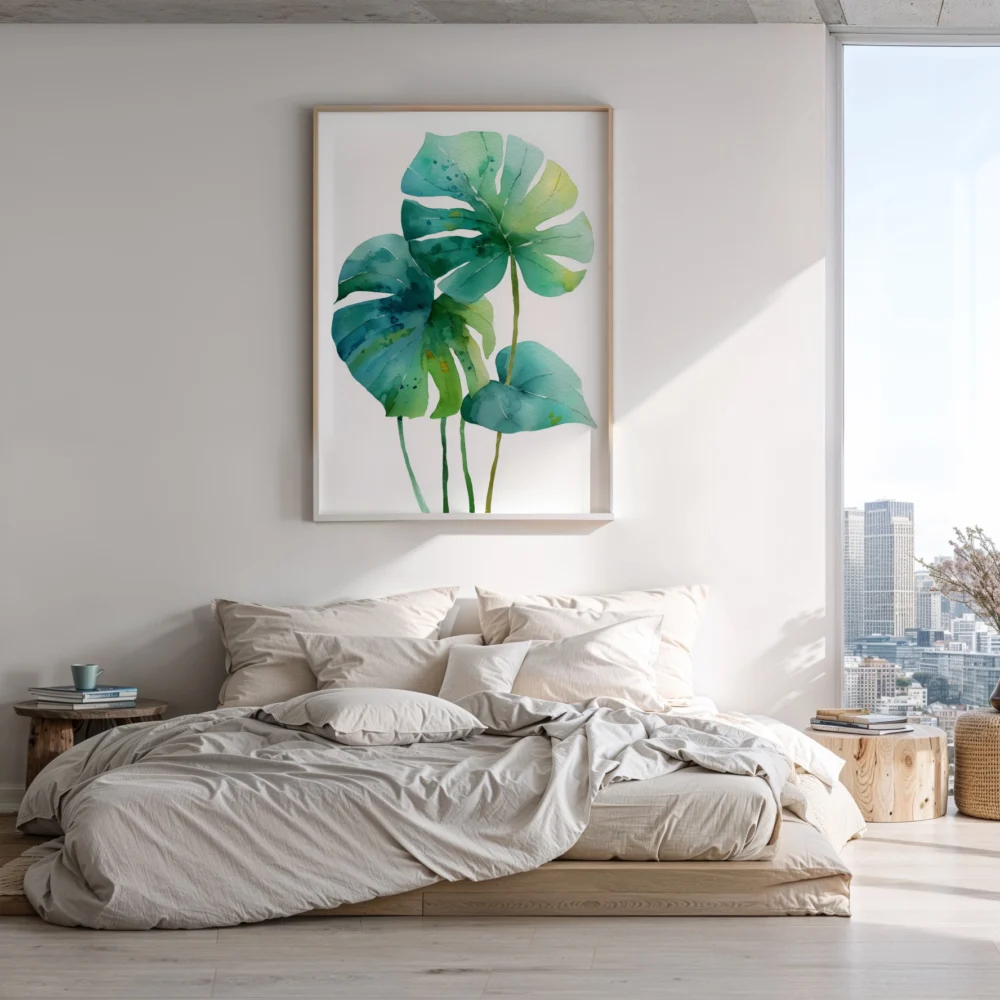
Botanical prints reward thoughtful placement more than most art, because their calm, structural quality suits particular rooms especially well. They bring a note of nature and life into spaces that need softening — a bathroom, a kitchen, a home office, a bedroom — without the fuss, the color demands, or the emotional weight of more expressive art. A single botanical study over a desk or beside a bed introduces the quiet presence of the natural world into exactly the places we most need calm.
They also group beautifully, in a way that echoes their origins in bound scientific volumes. A set of related botanical studies — three ferns, a series of leaves, a collection of seed heads — hung together as a grid or a row recreates the feeling of a naturalist’s cabinet or an old botanical folio, and carries real presence on a larger wall. Styling botanical wall art across a home is largely a matter of matching specimen and palette to each room’s mood, because the underlying form is so accommodating. Three hundred years on, these careful drawings of the natural world still do what they always did: bring the disciplined beauty of nature indoors, one honest study at a time.
Bringing nature in without the maintenance
There is a practical appeal underneath the aesthetic one. A botanical print offers the calming presence of plant life — and the research on why natural forms soothe us is substantial — without a single requirement to water, prune, or keep anything alive. For a wall in low light, or a home where houseplants go to die, a botanical print delivers the psychological benefit of greenery with none of the upkeep. Styling botanical wall art across different rooms is largely a matter of matching the specimen and the palette to the space, because the underlying form is so accommodating.
Three hundred years after those first meticulous plant studies were bound into scientific volumes, the same images work on a modern wall for the same reason they worked then: they are honest, disciplined observations of the natural world, and honesty in looking never goes out of style. The botanical print endures not because it is a safe decorating choice, but because it was never really decoration in the first place. It was truth, drawn carefully — and that is a far more durable thing to hang on a wall.