Abstract art has mystified viewers for over a century, with its seemingly random splashes of color, geometric shapes, and emotional intensity. Whether you’re drawn to minimalist line work or explosive color fields, understanding the different types of abstract art can transform how you experience and appreciate this revolutionary art form. This guide breaks down the major abstract art movements and painting styles that shaped modern visual culture.
What Makes Art Abstract?
Before diving into specific abstract art movements, it’s essential to understand what qualifies as abstract. Unlike representational art that depicts recognizable objects, people, or landscapes, abstract art emphasizes visual elements like color, form, line, and texture independent of visual references in the physical world. The level of abstraction exists on a spectrum—from semi-abstract works that distort recognizable subjects to pure abstraction that abandons representation entirely.
This artistic philosophy emerged in the early 20th century when artists began questioning the traditional purpose of art. Why should painting merely replicate what we can already see? This radical question sparked a revolution that continues to influence contemporary artists and collectors who seek monochrome abstract art prints and colorful compositions for their spaces.
Abstract Expressionism: The Movement That Changed Everything
Abstract Expressionism dominated the New York art scene in the 1940s and 1950s, establishing America as a center of artistic innovation. This movement encompassed two primary abstract painting styles: action painting and color field painting.
Action painting, exemplified by Jackson Pollock’s drip paintings, emphasized the physical act of creating art. Artists like Pollock, Willem de Kooning, and Franz Kline approached the canvas with aggressive, spontaneous gestures that captured raw emotion and movement. The paint itself became the subject—its texture, flow, and energy conveying meaning beyond any representational content.
Color field painting took a different approach within Abstract Expressionism. Mark Rothko, Barnett Newman, and Clyfford Still created large canvases with expansive areas of solid color. These works invited contemplative viewing, using color relationships to evoke emotional and spiritual responses. Rothko’s luminous rectangles of color seem to float and breathe, creating meditative spaces that viewers can enter psychologically.
Geometric Abstraction: Order From Chaos
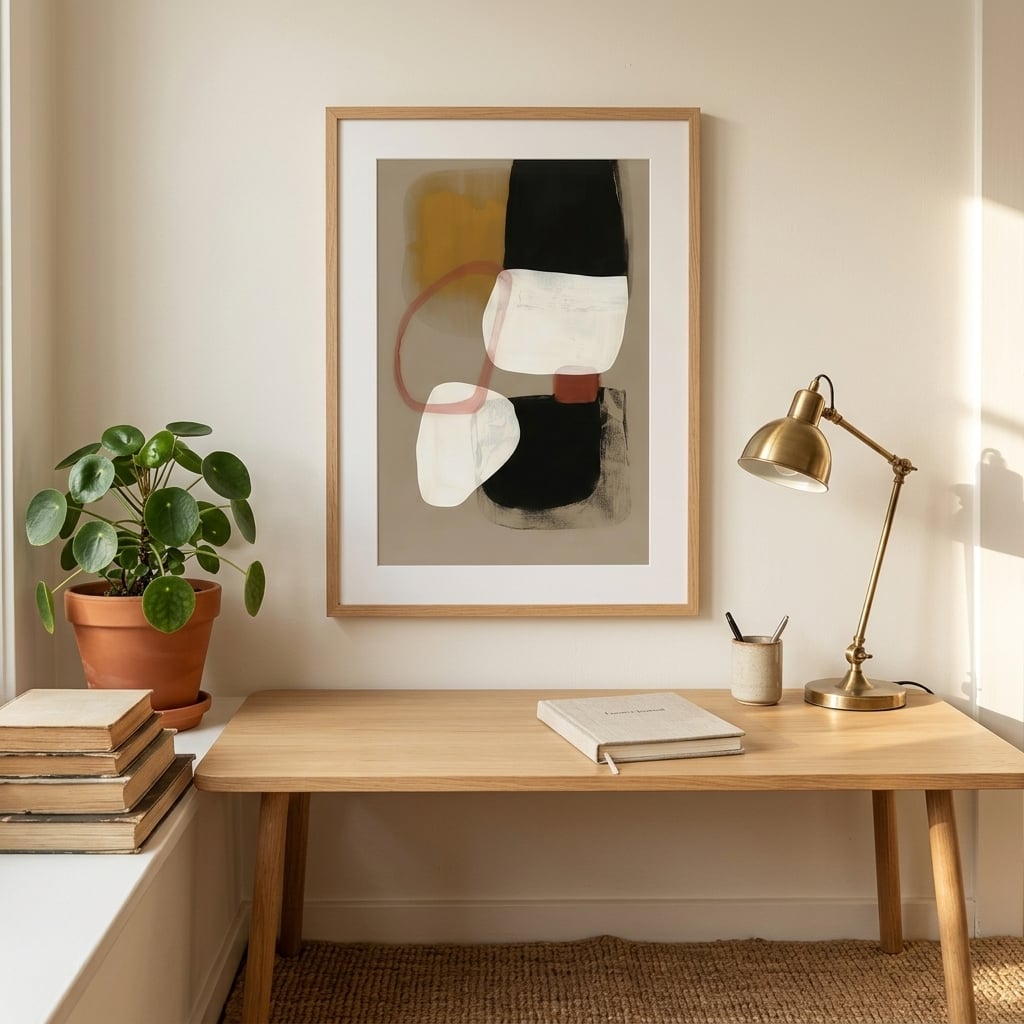
While Abstract Expressionism embraced spontaneity and emotion, geometric abstraction pursued precision, order, and mathematical harmony. This umbrella term covers several related movements that used geometric shapes as their primary visual language. If that clean, confident aesthetic appeals, our mid-century modern wall art draws on the same design language.
Suprematism, founded by Kazimir Malevich in Russia around 1915, reduced painting to fundamental geometric forms—squares, circles, crosses—in limited color palettes. Malevich’s iconic ‘Black Square’ represented the ultimate reduction, a void that paradoxically contained infinite possibility.
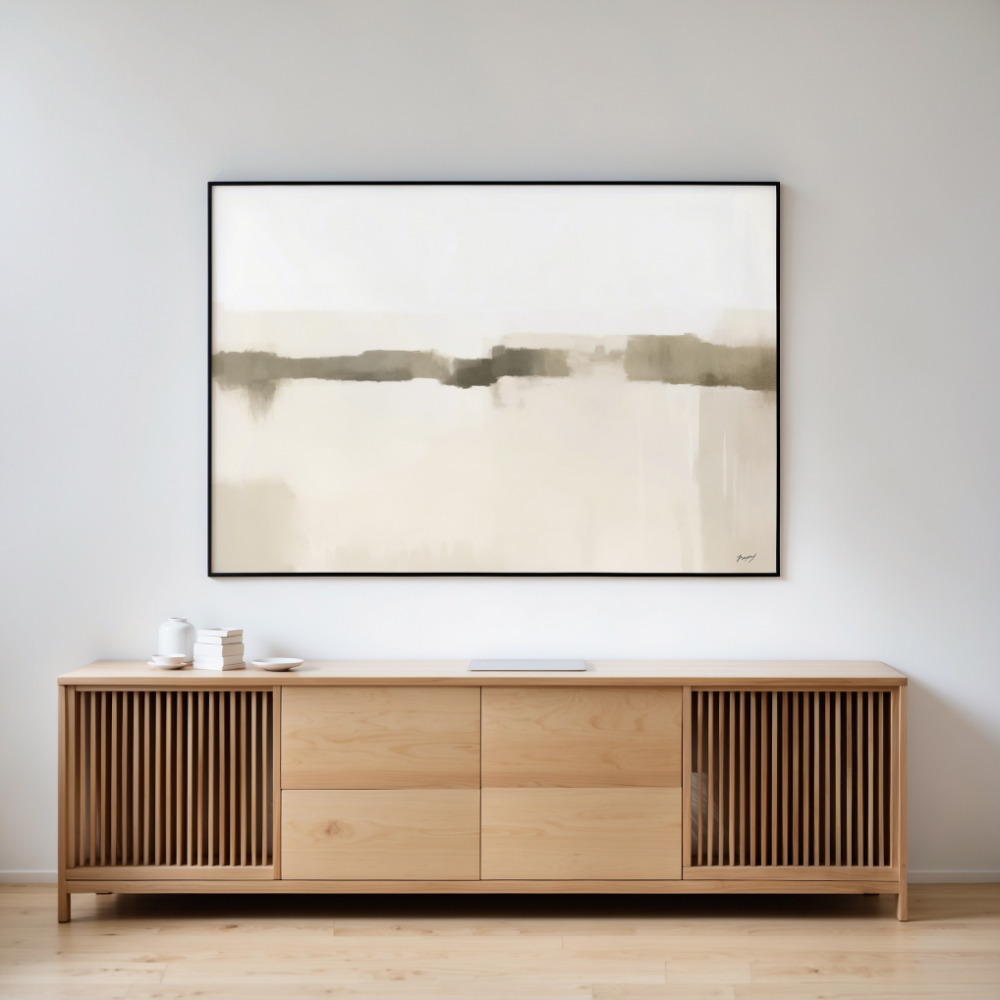
De Stijl, the Dutch movement led by Piet Mondrian and Theo van Doesburg, similarly emphasized geometric purity. Mondrian’s grid compositions using only primary colors, black, white, and gray sought universal visual harmony. This abstract painting style influenced architecture, design, and visual culture far beyond the canvas, proving that types of abstract art could reshape the built environment. Softer, tonal abstraction in this vein sits comfortably in our grey wall art collection.
Constructivism emerged in revolutionary Russia, combining geometric abstraction with utilitarian principles. Artists like Vladimir Tatlin and Alexander Rodchenko believed art should serve social purposes, creating abstract compositions that could be applied to propaganda, architecture, and industrial design.
Lyrical Abstraction and Abstract Landscape
Not all abstract art movements rejected nature entirely. Lyrical abstraction and abstract landscape painting maintained connections to the natural world while abandoning literal representation. This approach to abstract art journeys through emotion and form with a softer, more poetic sensibility than geometric styles.
Artists like Joan Mitchell, Helen Frankenthaler, and Richard Diebenkorn created works that evoke landscapes, weather, light, and atmosphere without depicting specific places. Frankenthaler’s soak-stain technique, where thinned paint soaked into unprimed canvas, created luminous fields of color that suggest sky, water, and earth in dreamlike abstraction.
This abstract painting style offers accessibility for viewers who find purely geometric or gestural abstraction challenging. The suggestive quality of abstract landscapes provides an entry point—viewers recognize the feeling of a horizon line, the glow of sunset, or the turbulence of storm clouds even without literal representation.
Minimalism: Less Is Radically More
Minimalism emerged in the late 1950s and 1960s as a reaction against the emotional intensity of Abstract Expressionism. Artists like Frank Stella, Agnes Martin, and Ellsworth Kelly stripped away gesture, symbolism, and personal expression to focus on essential forms, colors, and materials.
Stella’s famous declaration ‘What you see is what you see’ encapsulated minimalist philosophy. His black paintings and shaped canvases rejected illusion and metaphor, presenting themselves as objects rather than windows into emotional or spiritual realms. This radical simplicity challenged viewers to find meaning in formal relationships—how colors interact, how shapes occupy space, how surfaces reflect light.
Agnes Martin’s subtle grid paintings exemplify minimalist restraint. Her delicate graphite lines on pale backgrounds create meditative fields that reward sustained attention. Unlike the bold statements of geometric abstraction, minimalist abstract painting styles speak in whispers, requiring viewers to slow down and look carefully.
Neo-Expressionism and Contemporary Abstract Styles
The 1980s saw a resurgence of expressive, gestural painting after decades of minimalist and conceptual dominance. Neo-Expressionism brought back bold color, aggressive brushwork, and emotional content—though often with ironic or critical undertones absent from earlier abstract art movements.
Artists like Julian Schnabel, Anselm Kiefer, and Jean-Michel Basquiat combined abstract elements with figurative references, cultural symbols, and art historical citations. This postmodern approach to types of abstract art acknowledged that pure abstraction could never fully escape meaning, history, or representation.
Contemporary abstract painting continues to evolve, incorporating digital technologies, unconventional materials, and cross-cultural influences. Artists now freely mix geometric precision with organic forms, combine painting with photography or digital printing, and reference multiple art historical movements simultaneously. This pluralistic approach reflects our contemporary moment where all styles coexist and interact.
How to Choose Abstract Art for Your Space
Understanding these different abstract painting styles helps you make informed choices when selecting art for your home or office. Consider how each movement’s characteristics align with your aesthetic preferences and the mood you want to create.
Geometric abstraction works beautifully in modern, minimalist interiors where clean lines and order prevail. The structured compositions of suprematist or De Stijl-inspired works complement contemporary architecture and furniture.
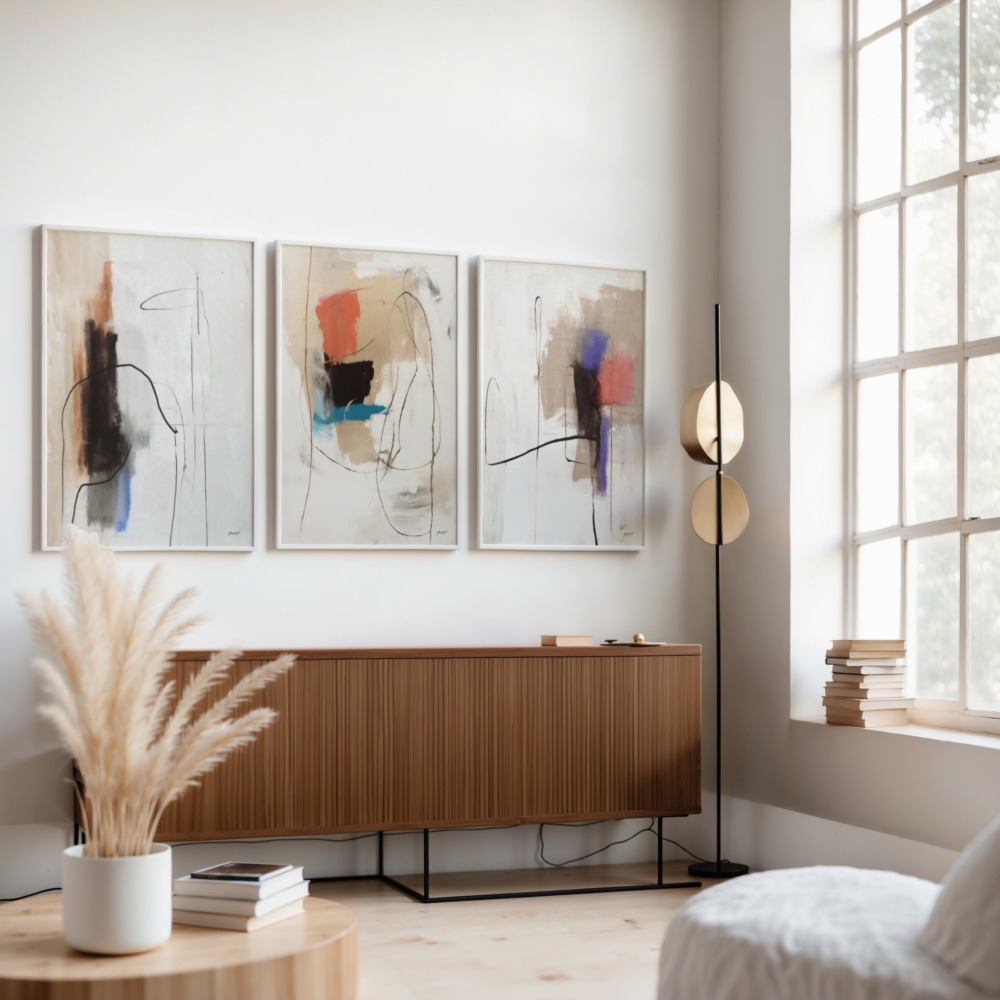
Abstract expressionist styles suit spaces where you want emotional impact and visual drama. The gestural energy of action painting or the contemplative depth of color field works can anchor a room and serve as conversation starters.
Lyrical abstraction and abstract landscapes offer versatility, working in both traditional and contemporary settings. Their suggestive quality makes them accessible while maintaining artistic sophistication.
Minimalist abstractions excel in spaces where you want calm, focused energy. Their restraint allows other design elements to shine while providing subtle visual interest.
The Enduring Power of Abstract Art
Abstract art movements revolutionized how we think about visual expression, proving that art could communicate through pure form, color, and gesture without depicting the visible world. Each style emerged from specific historical, cultural, and philosophical contexts, yet their visual languages remain relevant and powerful today.
Whether you’re drawn to the mathematical precision of geometric abstraction, the emotional intensity of abstract expressionism, or the poetic suggestiveness of lyrical abstraction, understanding these movements enriches your experience as a viewer and collector. The types of abstract art continue to expand as contemporary artists build on these foundational styles while pushing boundaries in new directions.
For those looking to bring these powerful abstract painting styles into their spaces, exploring curated collections of abstract art prints offers an accessible way to experience the visual innovation that defined modern art. The conversation between viewer and artwork that abstract art initiates remains as compelling today as when those first revolutionary artists abandoned representation over a century ago.
Abstract art doesn’t confuse—it invites. It asks us to see differently, to find meaning in form and color, to trust our emotional responses over our need for recognition. Once you understand the language these movements developed, the seemingly random becomes intentional, the chaotic reveals underlying order, and the unfamiliar becomes a gateway to new ways of seeing.