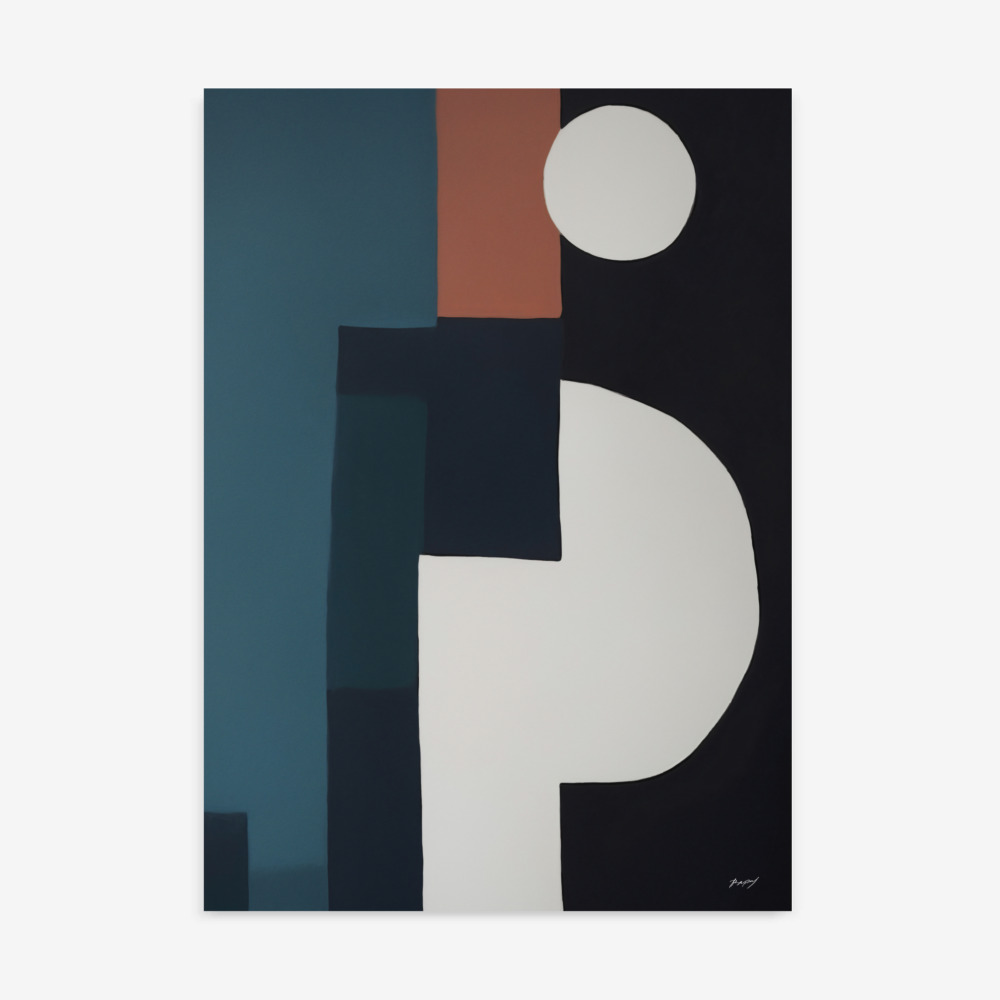
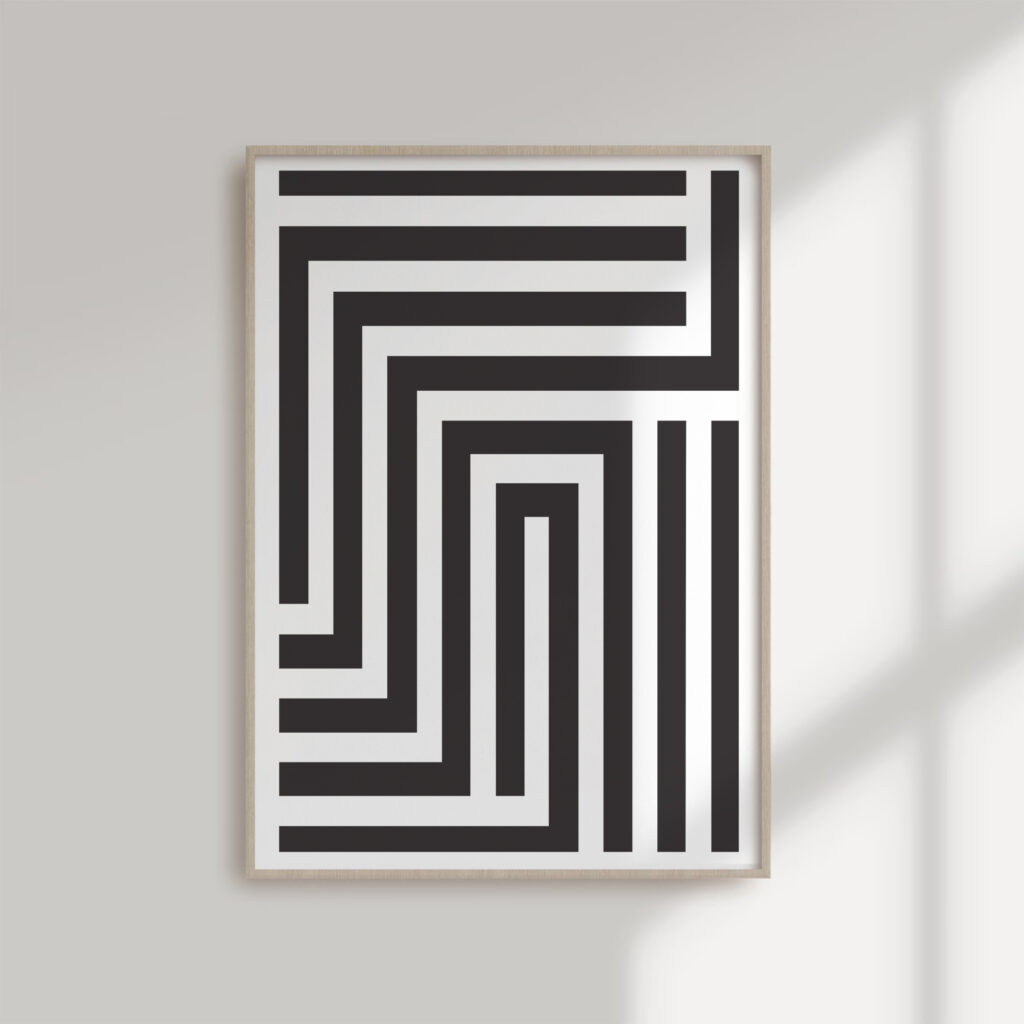
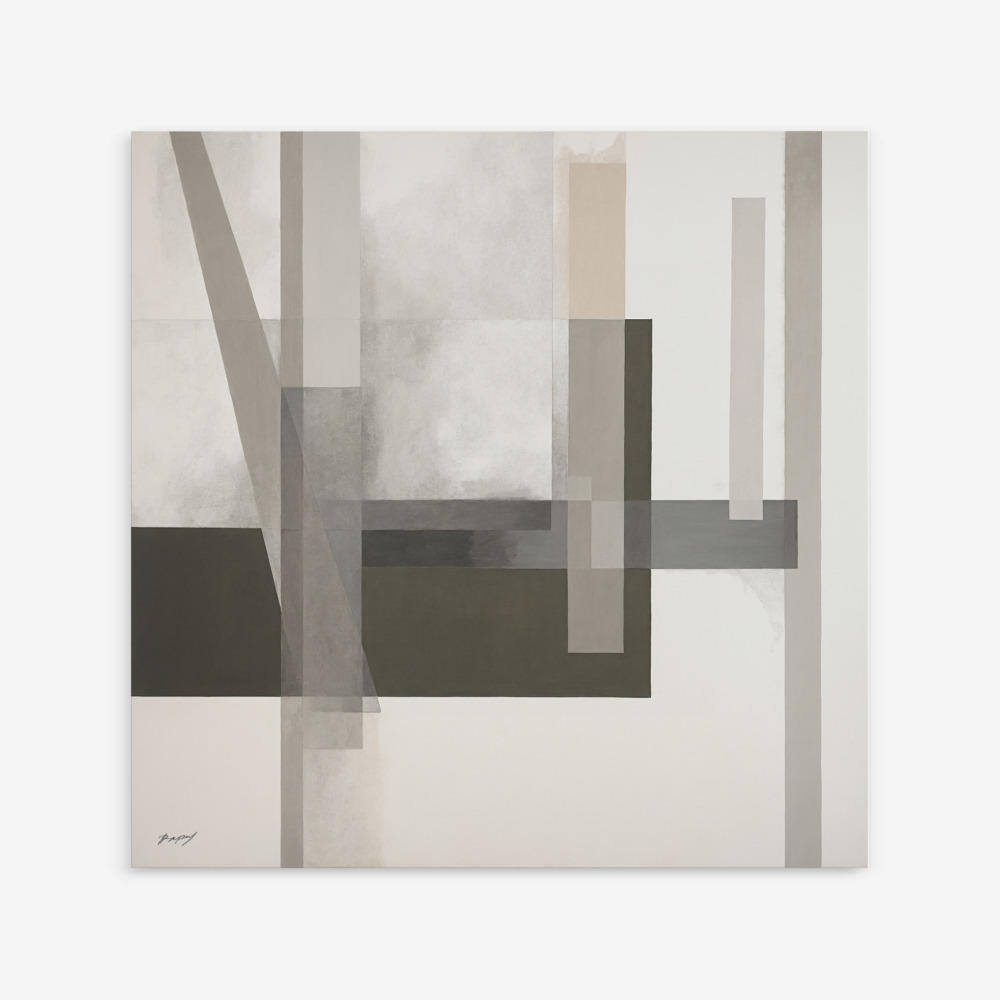
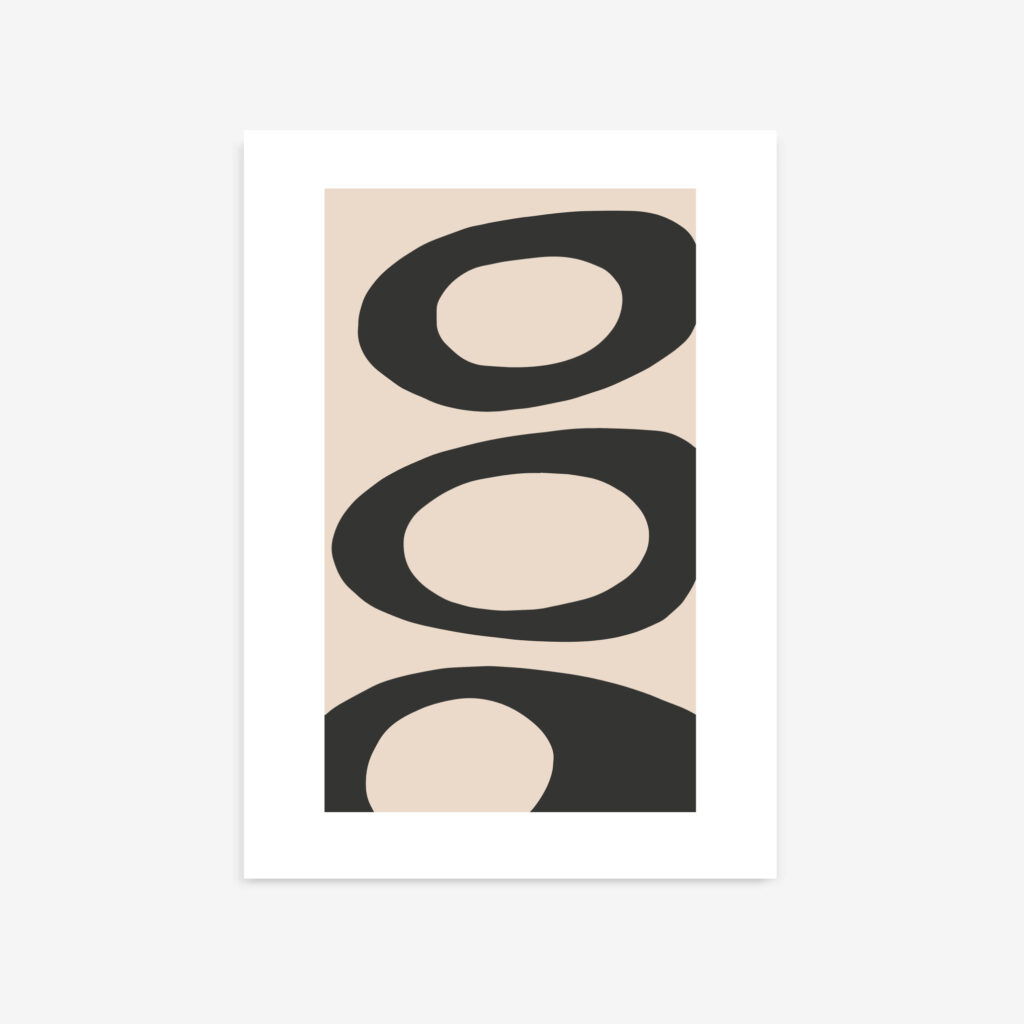
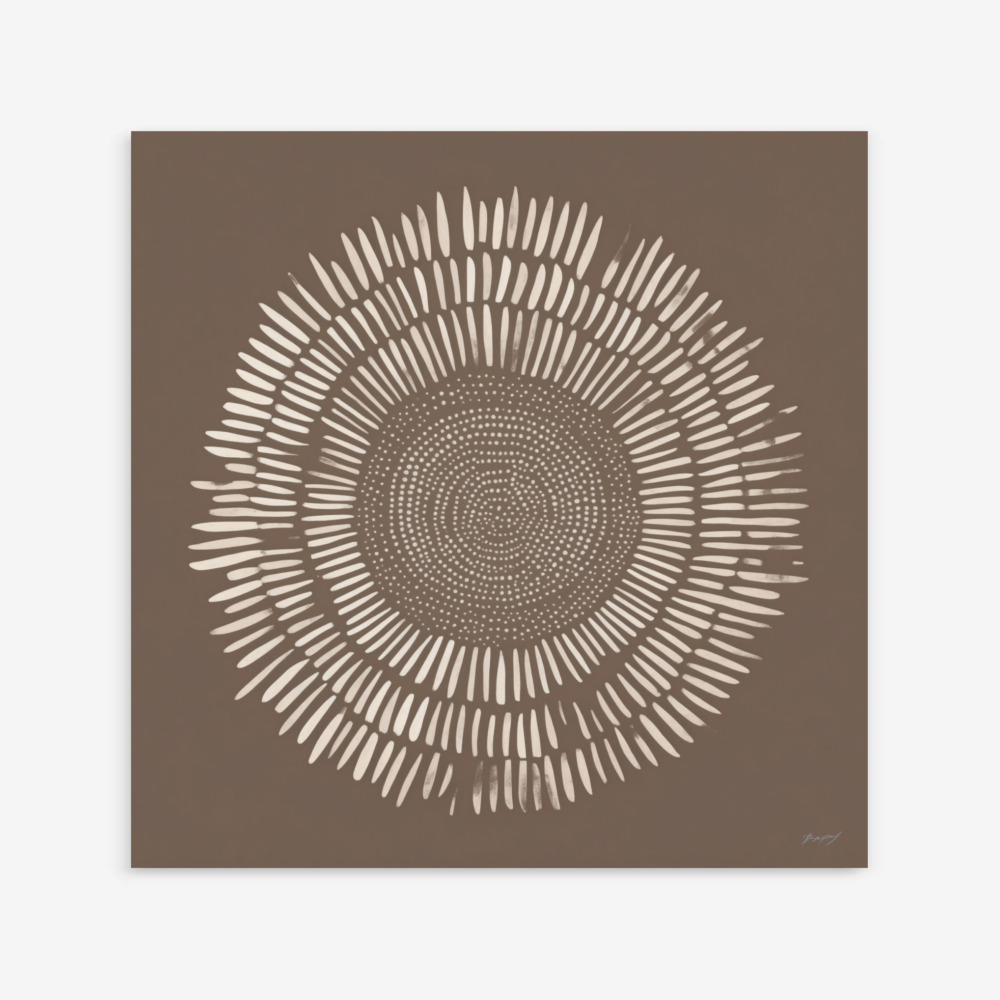
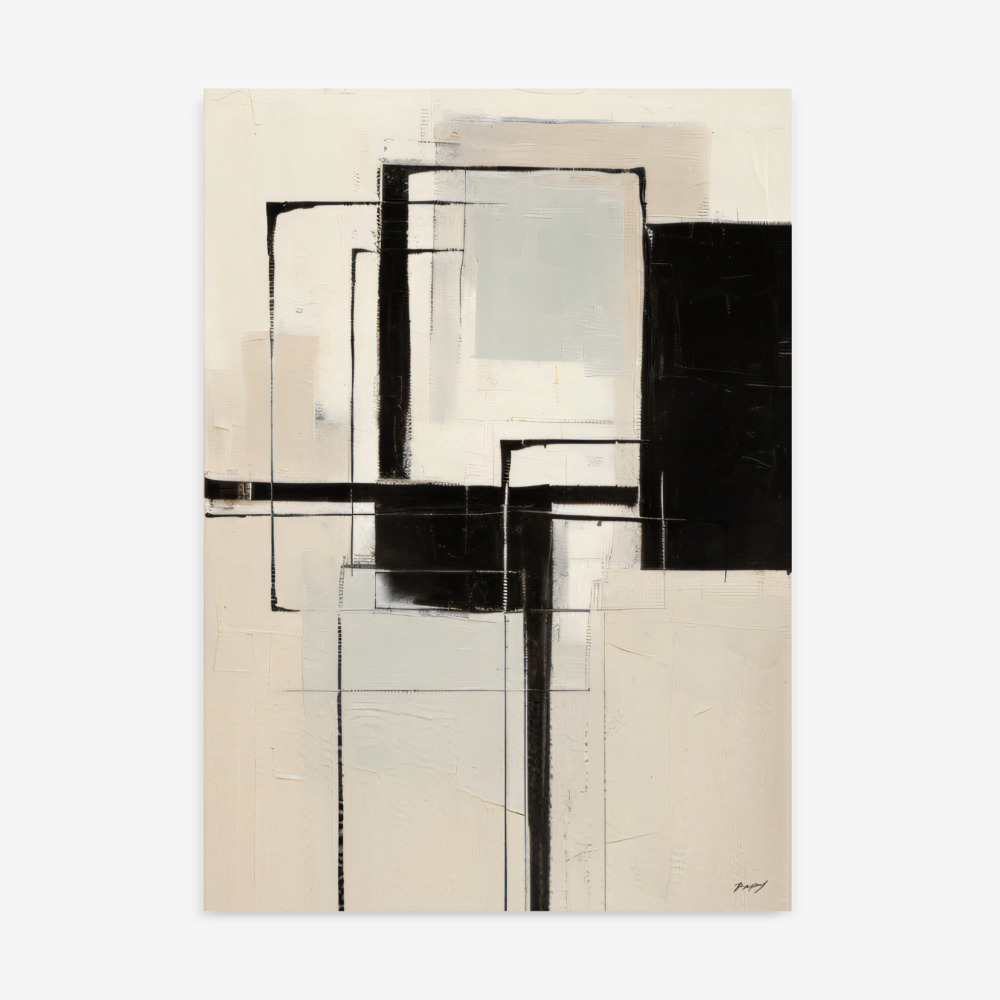
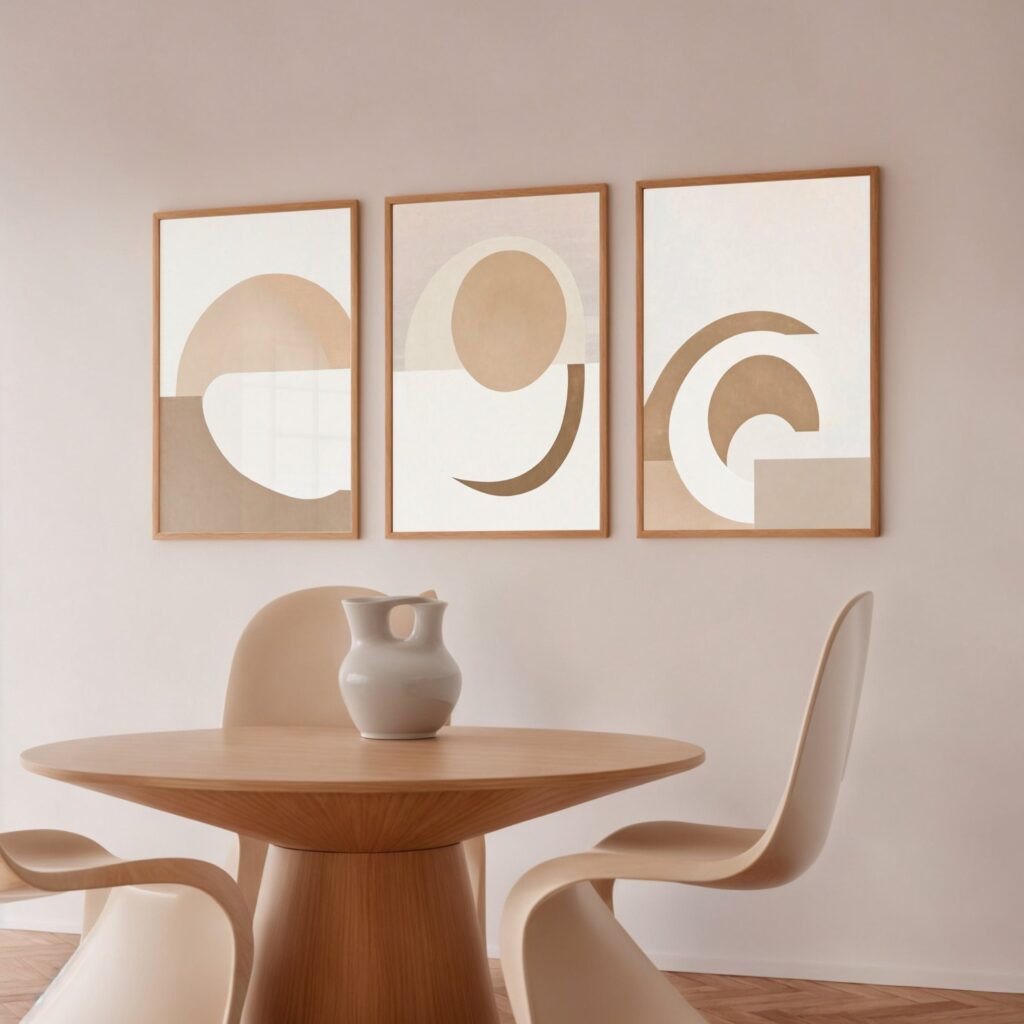
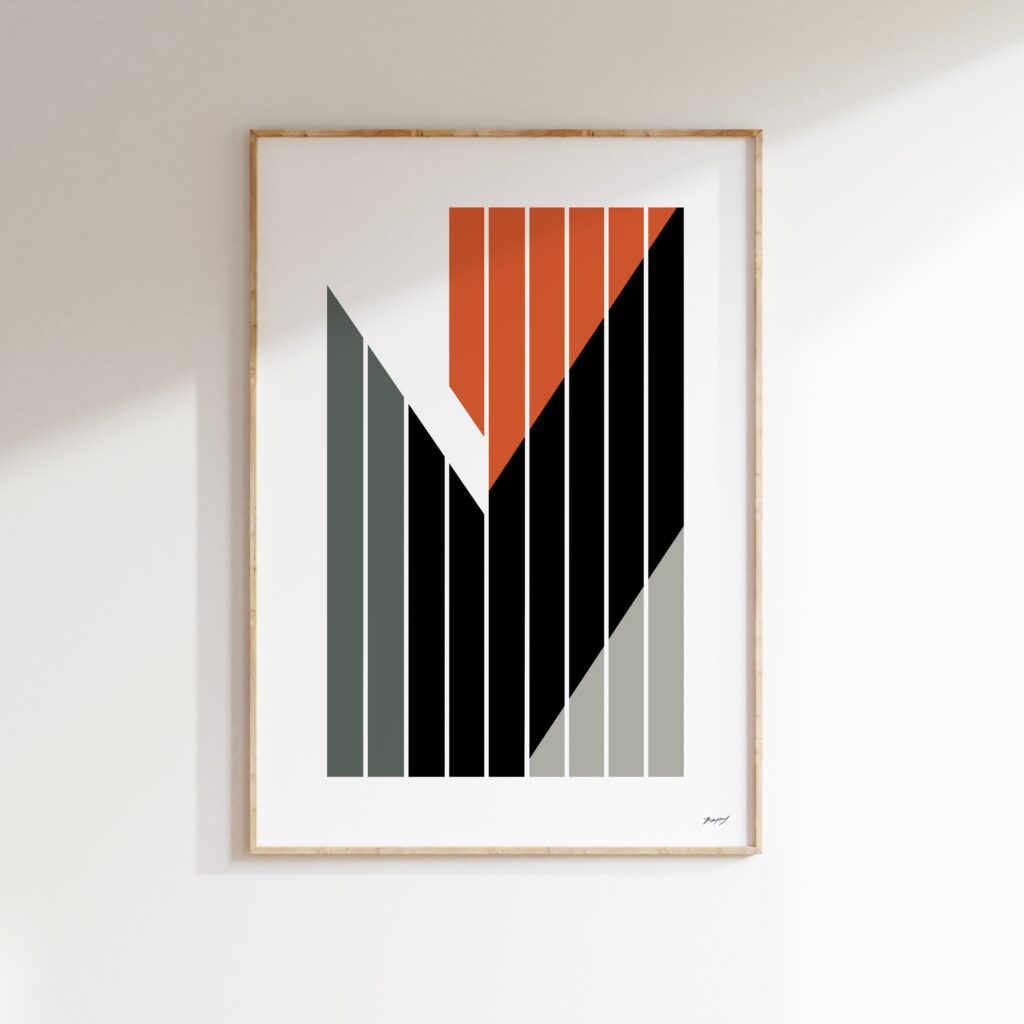
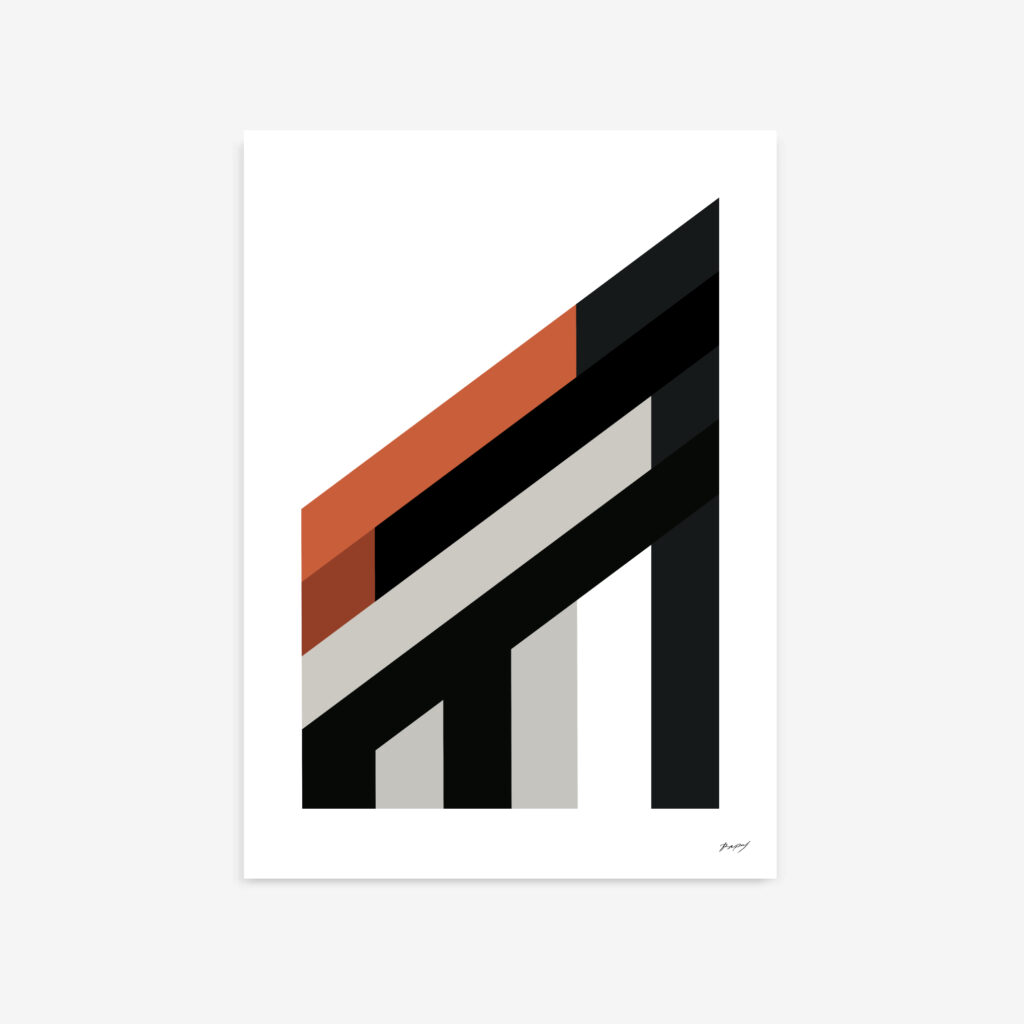
Geometric interior design uses clear shapes, such as circles, arches, grids, triangles and stripes, to give a room order and rhythm. Geometric art is the easiest way to bring that in, because it works with almost every interior style. It calms a busy boho room, adds structure to a soft Scandinavian one and echoes the shapes of mid-century furniture. The trick is matching the kind of geometry to the room: soft arches and muted colors for calm spaces, bold blocks and strong contrast for rooms that need a focal point.
Quick answers
- What is geometric interior design? A style that repeats simple shapes across art, rugs, tiles, furniture and lighting so the room feels organized and intentional.
- Main geometric art styles: Bauhaus, mid-century geometric, minimalist geometric, black and white geometric, color block, abstract shapes and op art.
- Which interior styles suit geometric art? All of them. Minimalist and Scandinavian are the natural match, mid-century is the classic one, and industrial and boho rooms use it as contrast.
- How big should it be? About two-thirds of the width of the furniture below it, with the center around 145 to 150 cm (57 to 60 in) from the floor.
- Safest choice if you’re unsure: a black and white geometric print. It adds structure without fighting your colors.
What is geometric interior design?
Geometric interior design is less a single style than a way of decorating. You pick a few clear shapes and let them repeat through the room: a round mirror and a round coffee table, an arched doorway and an arch print, a striped rug and a grid of frames. The repetition is what makes the room feel planned.
Geometric patterns in interior design show up in tiles, wallpaper, rugs, cushions and lighting, but wall art is where most people start. It is the easiest thing to change, it sits at eye level, and one print can set the shapes the rest of the room follows.
It is also not just for stark modern homes. Geometry ranges from hard-edged triangles and grids to soft arches and circles, and from black and white to warm terracotta and ochre. That range is why it fits almost any style.
Why geometric art works in almost any room
It gives a room structure. Straight lines, repeated shapes and balanced compositions read as order. In a room with lots going on, that order gives the eye a place to rest. In a very bare room, it gives the walls a purpose.
It is visually quiet. A landscape or portrait tells a story and asks you to read it. Geometric art works through shape, color and balance instead, so it adds interest without adding noise.
It echoes the architecture. Rooms are already full of geometry: rectangular windows and doors, straight walls and floors, arched hallways. Geometric art repeats those lines, so it feels connected to the room rather than stuck on the wall.
It doesn’t date quickly. Circles, squares and lines don’t go out of fashion the way trend colors and motifs do. A good geometric print keeps working when you repaint or swap the sofa.
Geometric art styles to know
“Geometric” covers a lot of ground. These are the styles you will see most, and where each one fits best.
| Geometric art style | What it looks like | Best with |
|---|---|---|
| Bauhaus | Circles, squares and triangles in primary colors or black, cream and red | Modern and mid-century rooms that can take a bold accent |
| Mid-century geometric | Arches, half circles and stacked shapes in mustard, olive, rust and teal | Mid-century furniture, wood tones, retro accents |
| Minimalist geometric | One or two simple shapes with lots of empty space, usually in neutrals | Minimalist, Scandinavian and Japandi rooms |
| Black and white geometric | High-contrast lines, grids and shapes with no color at all | Any palette, especially busy or colorful rooms |
| Color block | Large flat areas of color meeting in clean edges | Neutral rooms that need one strong focal point |
| Abstract shapes | Looser, hand-drawn or organic shapes rather than ruler-straight ones | Boho, earthy and eclectic rooms |
| Op art | Repeating patterns that seem to move or vibrate | Offices and statement walls, in small doses |
If you want strong primary colors and classic forms, look at our Bauhaus art prints. For softer, neutral pieces, try minimalist geometric wall art. For looser, freehand forms, see abstract shapes art, and for flat bold color, color block art.
How to pair geometric art with your interior style
Minimalist: the natural match
Minimalism and geometric art share the same ideas: clean lines, empty space and nothing extra. The art doesn’t add clutter. It reinforces the order that is already there.
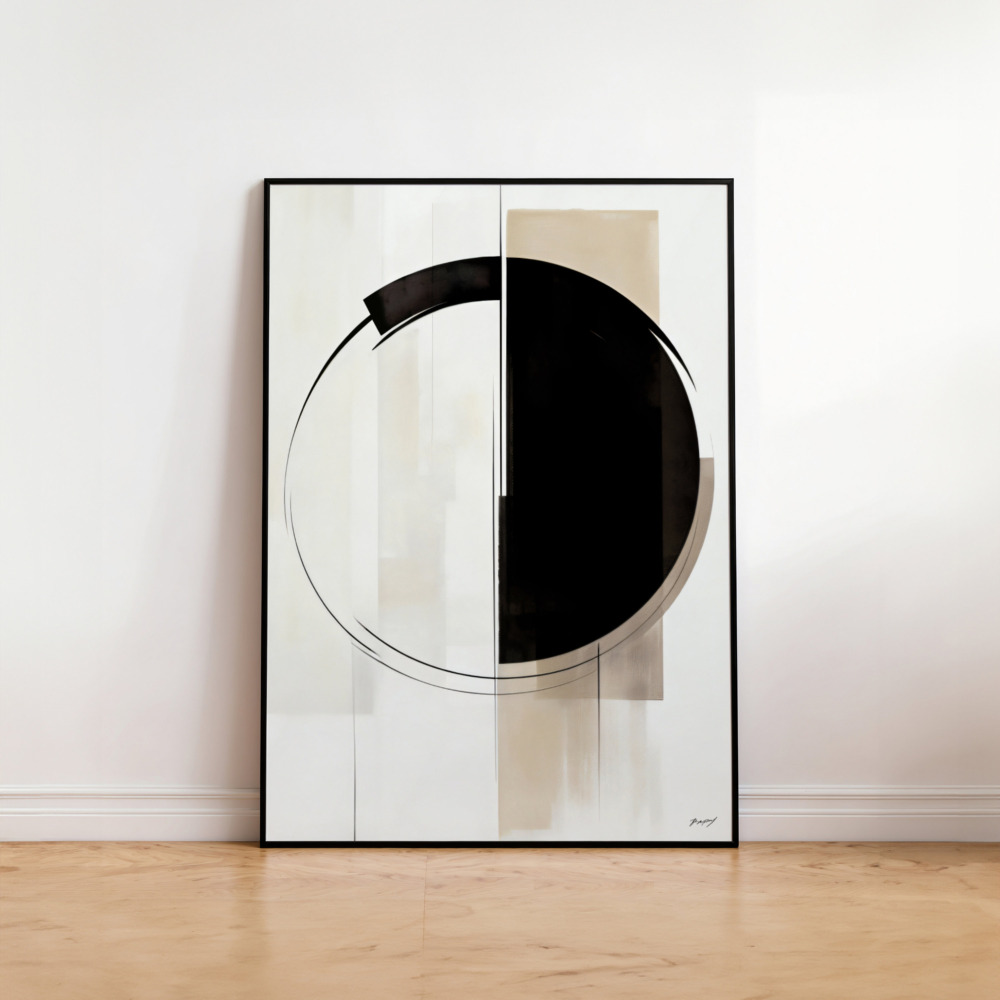
- Go for one large piece. A single big print with a black circle or two balanced rectangles can carry a whole living room wall.
- Keep the palette tight. Black, white, beige and grey suit the room. Black and white geometric prints are the most graphic choice.
- Repeat one shape. A pair of arch prints or a trio of line-based squares has a calm, steady rhythm that suits bedrooms and quiet offices.
We go deeper into this pairing in why geometric art prints suit minimalist interiors.
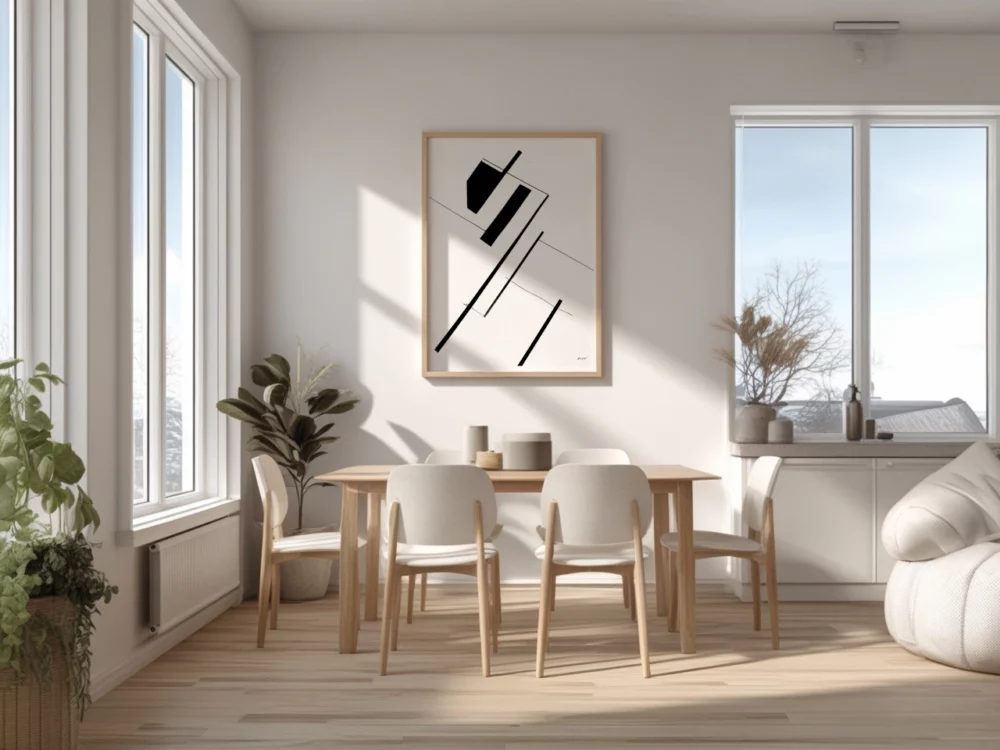
Scandinavian and Nordic: structure meets softness
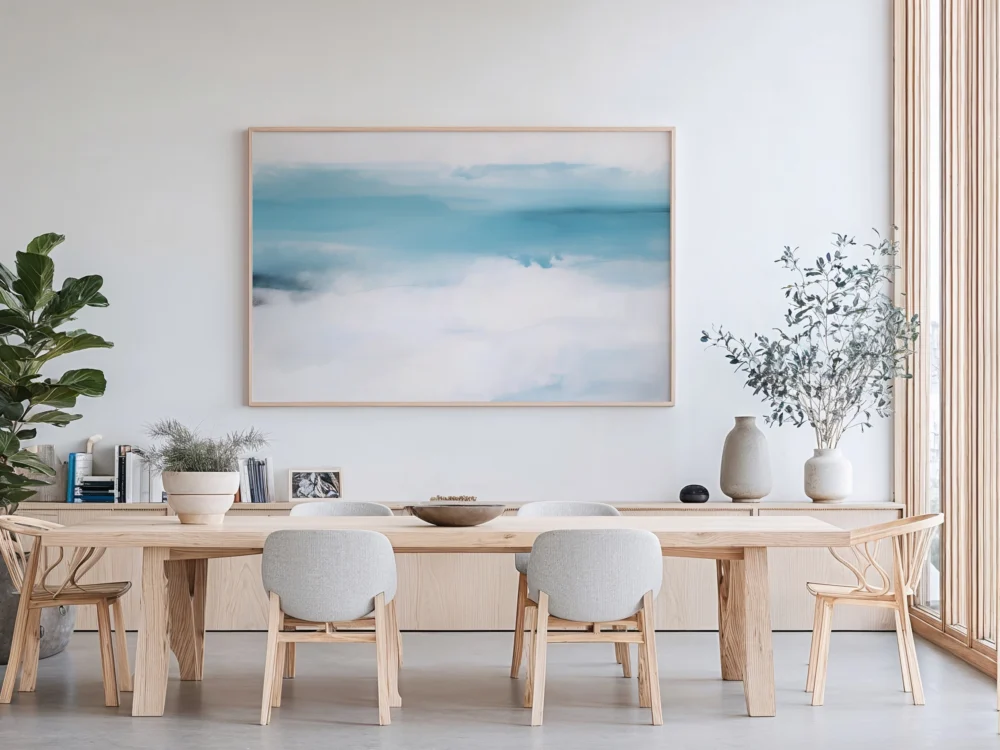
Nordic rooms are simple but warm: light wood, wool, linen, white walls and plenty of daylight. Geometric art adds the crisp, graphic note that stops all that softness from feeling too rustic. It follows the same “less is more” thinking, so it never looks out of place.
- Warm up the colors. Black and white works, but prints in dusty green, muted blue, ochre or soft terracotta feel more at home next to natural materials.
- Use one controlled color block. A neutral print with a single block of sage or dusty rose can tie in a cushion or a vase and add warmth to the whole room.
- Frame in light wood. Oak or birch frames connect the clean art to the natural materials around it.
- Play with texture. Hang a geometric print above a boucle sofa or a linen-covered bed. The contrast between sharp lines and soft fabric is the Scandinavian balance in a nutshell.
The shapes can echo the furniture, too: a straight line in a print repeats the leg of a chair or the edge of a floating shelf, and an arch mirrors the curved back of a wishbone chair. See our Scandinavian design guide for more on the style, and the Japandi wall art guide if your room leans toward the Japanese side of it.
Mid-century modern: a nod to the originals
Mid-century furniture is basically functional sculpture: curved plywood, tapered legs and strong silhouettes. Geometric art grew up alongside it, so the two look like they belong together.
- Echo the furniture. Curvy pieces call for circles, ovals and arches. More linear furniture suits strong lines and rectangles.
- Use the classic palette. Mustard, olive, burnt orange and teak tones, grounded with a little black, feel right in this style.
- Try a triptych. Three prints above a long, low credenza or sideboard is a very mid-century way to hang art.
Browse mid-century modern wall art for pieces in this spirit.
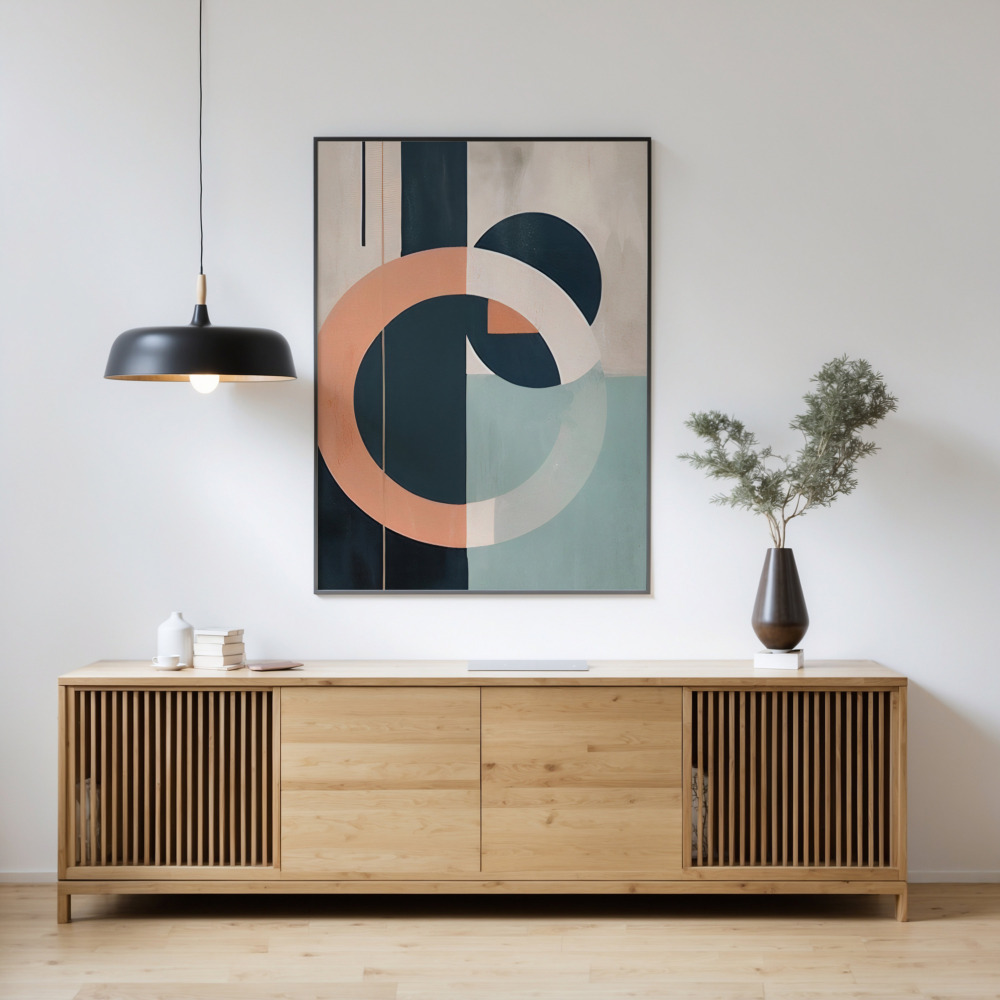
Industrial: clean lines against raw texture
Exposed brick, concrete, metal and reclaimed wood are rough and busy. A precise geometric print is the opposite, and that contrast is what makes the pairing work.
- Go big. Industrial spaces often have high ceilings and large walls, which suit an oversized print. A large black and white piece holds its own against brick.
- Choose a thin black frame. It echoes metal window frames and light fittings.
- Add one hit of color. Two or three solid color blocks can break up a room full of grey concrete and brown brick.
Boho and eclectic: a calm center
Boho rooms are layered with patterns, plants, textiles and travel finds. A simple geometric print might seem like an odd fit, but it is often the piece that stops the room tipping into chaos.
- Keep the shape simple and bold. A single large arch or sun shape cuts through the busy background.
- Pull a color from the room. Pick a print that shares one color with your rug or cushions so it looks deliberate.
- Lean toward softer forms. Hand-drawn or organic shapes feel more natural here than ruler-straight lines.
Traditional and transitional: an update, not a clash
Classic furniture can still take geometric art. Choose a classic palette, such as navy with gold or black with cream, and the print bridges old and new instead of fighting the room.
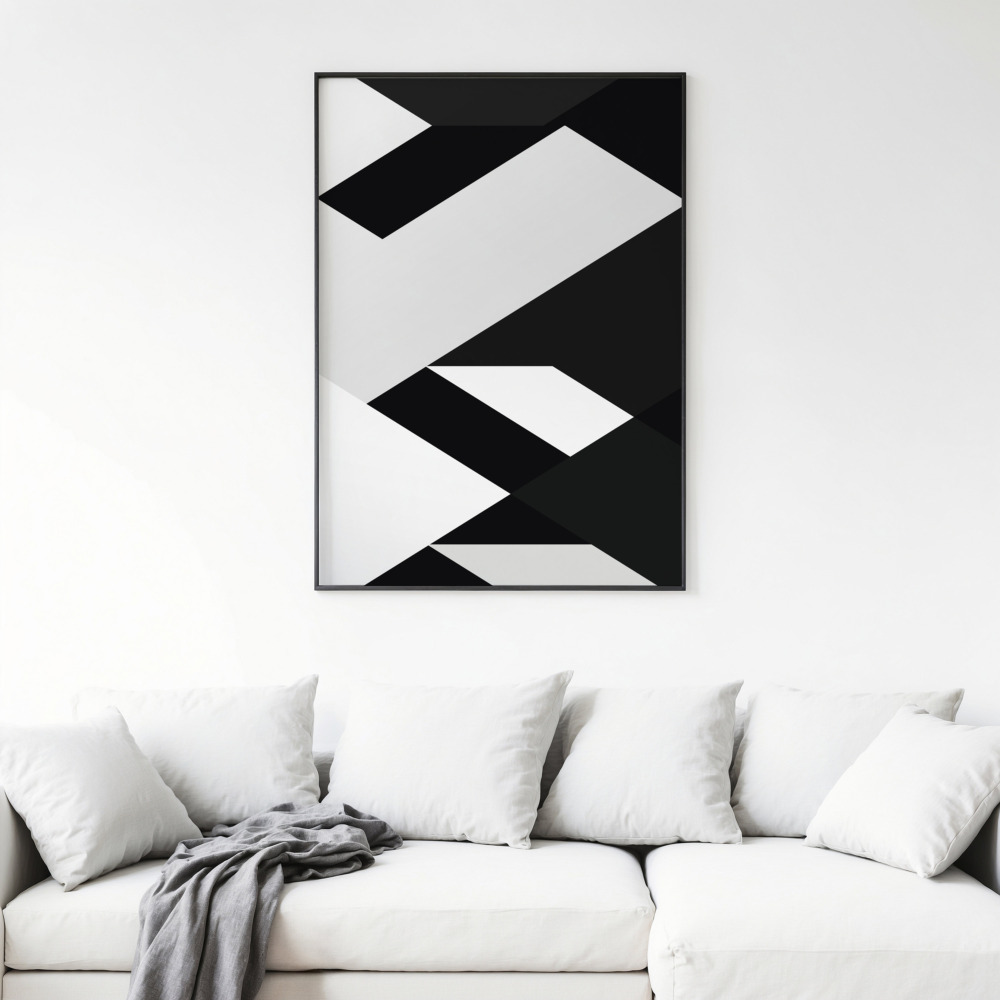
Black and white geometric art: the easiest choice
If you are unsure what will work, start with black and white. Without color, a geometric print is all shape, line and empty space, which is exactly what makes it so flexible. It doesn’t compete with your sofa or curtains, and it suits renters or anyone who changes their color scheme often. We explain why it goes with every palette in our guide to what colors go with black and white art.
Much of this look traces back to the Bauhaus school, founded in Germany in 1919. Teachers such as Josef Albers, Wassily Kandinsky and Paul Klee treated circles, squares, triangles and lines as the basic building blocks of design. The idea that good design should be simple and available to everyone still shapes geometric prints today.
A few tips for monochrome geometry:
- Bigger, bolder rooms with beams, molding or dramatic windows can take busier, more complex patterns.
- Smaller rooms look better with more empty space in the print, like a single circle on white or a few fine lines.
- Mix line weights. Thick lines look graphic and strong, thin lines look refined. Pairing the two adds depth.
See all our black and white geometric art prints and monochrome abstract art prints.
Choosing colors for geometric art
Monochrome is the most timeless and the easiest to live with.
Neutrals such as beige, grey, cream and soft earth tones add warmth while staying flexible. They also help connect rooms that have different color schemes.
Bold colors such as jewel tones or primaries make an instant statement. They work best in an otherwise neutral room, where the print becomes the focal point.
Soft pastels keep the order of geometry but feel gentler, which suits bedrooms and nurseries.
A simple rule: pull one color from something already in the room, like a rug, cushion or chair, and let the print repeat it.
Size and placement
The most common mistake is going too small. Geometric art needs enough size for the shapes to read from across the room.
| Where it goes | What to aim for |
|---|---|
| Above a sofa, bed or sideboard | About two-thirds of the furniture’s width, with 15 to 25 cm (6 to 10 in) of space above the furniture |
| A large empty wall | One oversized print, or a gallery wall of 3 to 6 prints that share a palette |
| Hallways and between windows | Vertical compositions, which draw the eye up and make ceilings feel higher |
| Narrow walls | Horizontal compositions, which make the wall feel wider |
| Any wall | Center the art (or the group) around 145 to 150 cm (57 to 60 in) from the floor |
Our prints come in sizes from 30 x 20 cm up to 150 x 100 cm. For exact measurements by wall and furniture, use the wall art size guide.
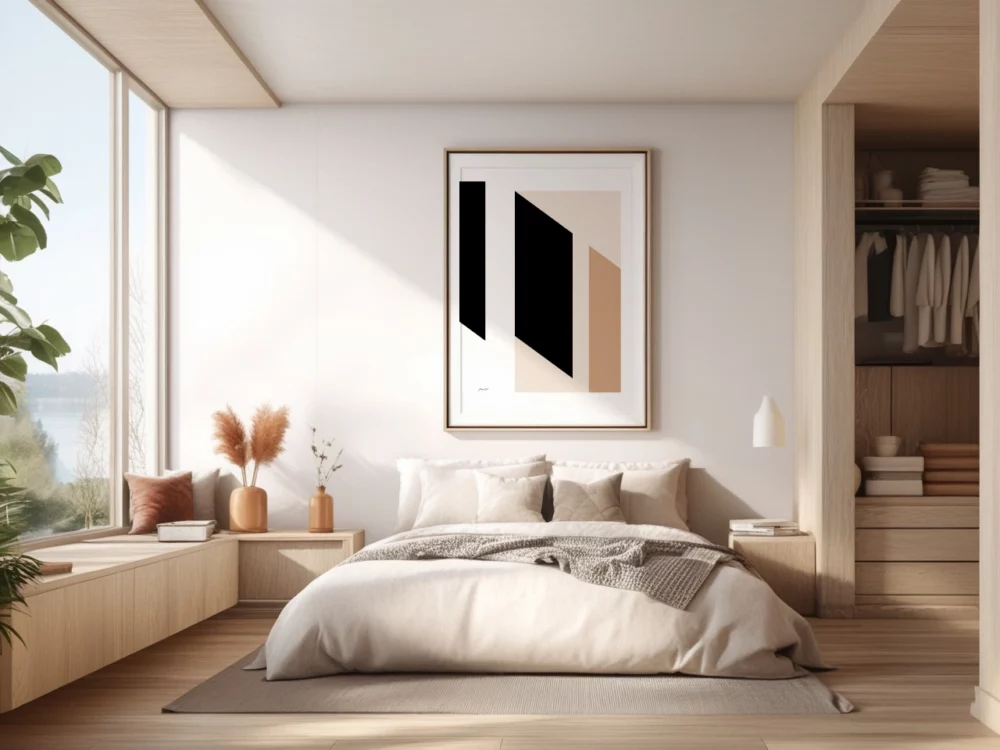
How to mix geometric prints
One geometric print is easy. Several can look great or messy, and the difference is a shared thread.
- Repeat one element. Keep either the color palette, the shape or the frame the same across every piece.
- Vary the complexity. Mix a busy pattern with a simple one so the eye has somewhere to rest.
- Vary the scale. Pair one large print with smaller ones to create a clear hierarchy.
- Use spacing on purpose. Even gaps feel calm and formal. Uneven gaps feel more relaxed and modern.
- Diptychs and triptychs. Two or three matching prints on a long wall create rhythm with almost no effort.
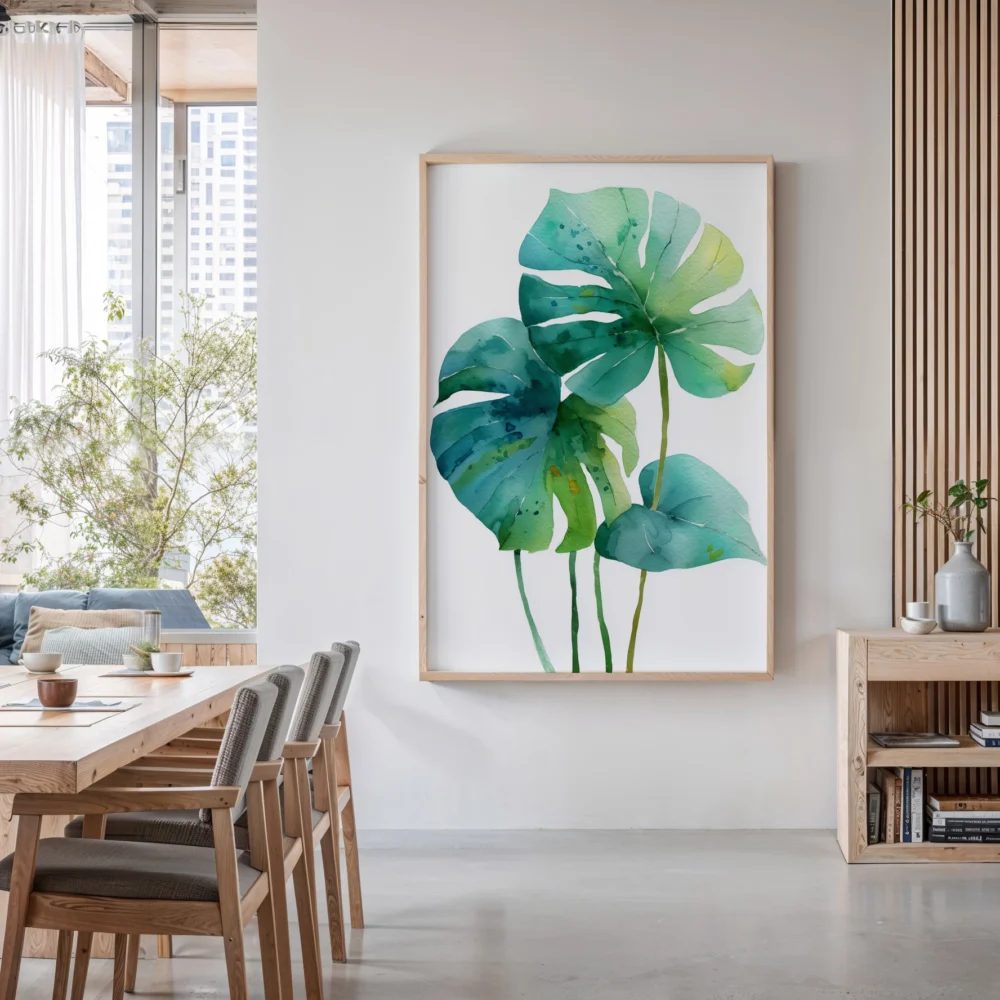
Geometric art also mixes well with other styles. A sharp geometric print next to a soft botanical or a continuous line drawing creates a nice tension between structure and softness. Keep the colors related and the frames consistent.
To plan a full wall before you buy, try our gallery wall designer, or start with a ready-made art print set.
Caring for geometric prints
Crisp lines and strong contrast show wear quickly, so a little care keeps them sharp. Hang prints away from strong direct sunlight, which fades any print over time. Dust frames and glass with a dry microfiber cloth. Paper prints are best framed behind glass. If you would rather skip the glass, canvas is an easy option. Our canvas vs paper guide explains the difference.
Frequently asked questions
What is geometric interior design?
It uses clear shapes such as circles, arches, grids, triangles and stripes as a theme across art, rugs, tiles, furniture and lighting. The shapes bring order and rhythm to a room.
What are the main geometric art styles?
Common ones are Bauhaus, mid-century geometric, minimalist geometric, black and white geometric, color block, abstract shapes and op art.
Which rooms look best with geometric art?
Living rooms, home offices and dining rooms with modern, mid-century or Scandinavian furniture. In bedrooms, softer geometry such as arches and muted colors feels calmer.
Does geometric art go with Scandinavian decor?
Yes. It shares the same simple, uncluttered approach. Choose muted or earthy colors and light wood frames so it sits well with natural materials.
Can you mix geometric and floral prints?
Yes, if they share a color palette. Let one style lead and use the other as an accent, and keep the frames the same.
Is geometric art still in style?
Yes. Simple shapes have been part of modern design for more than a hundred years, from the Bauhaus to mid-century modern to today’s minimalist and Japandi rooms, so geometric art rarely looks dated.
What size geometric print should I get?
Above furniture, aim for about two-thirds of its width. On an empty wall, choose one large print or a group of smaller ones that fill a similar area.
Is black and white geometric art a safe choice?
Yes. It has no colors to clash with your room, so it works with almost any palette and keeps working when you redecorate.
How do you hang several geometric prints together?
Keep one thing consistent, such as the palette, shape or frames, mix simple and busy designs, and for a calm look keep the gaps between frames even, around 5 to 8 cm (2 to 3 in).
What frames suit geometric art?
Thin black metal frames look sharp and suit modern and industrial rooms. Light wood frames feel warmer and suit Scandinavian and Japandi rooms. White frames let the art blend into a white wall.
Find your geometric art
Browse all our geometric art prints, all designed by one artist and printed to order on 230gsm fine art matte paper or rolled canvas, in sizes from 30 x 20 cm to 150 x 100 cm. Prints start from $36, shipping is free over $69, and you save 25% on 2 prints or 30% on 3 or more.