There’s something magnetic about a Japandi bedroom that makes you want to linger a little longer under the covers. It’s that rare design aesthetic that manages to feel both intentional and effortless, combining the hygge warmth of Scandinavian design with the wabi-sabi philosophy of Japanese minimalism. If you’ve been craving a bedroom that serves as a true sanctuary from our chaotic world, Japandi art prints and design principles offer the perfect starting point for creating a space that soothes rather than stimulates.
The beauty of japandi bedroom decor lies in its restraint. Unlike maximalist trends that come and go, this fusion style has staying power because it’s rooted in timeless philosophies about living well with less. It’s not about deprivation or sterility—quite the opposite. A minimalist bedroom japandi approach celebrates natural materials, functional beauty, and the kind of thoughtful curation that makes every element in your space earn its place.
The Foundation: Color Palettes That Breathe
Forget everything you think you know about neutral being boring. The japandi bedroom color story is where this aesthetic really shines, creating depth through subtlety. Your base should start with soft, muted tones that mimic nature: warm whites that lean slightly grey, gentle beiges with undertones of pink or green, and those perfectly imperfect off-whites that feel lived-in rather than clinical.
Furniture Selection: Form Follows Function
Japandi bedroom furniture walks a fine line between Scandinavian simplicity and Japanese craftsmanship. Look for low-profile platform beds with clean lines and visible wood grain—oak, ash, and walnut are ideal choices. The Japanese influence means furniture sits closer to the ground, creating a sense of grounding and connection to the earth that’s surprisingly comforting.
Your nightstands should be simple yet sculptural. Think rounded edges rather than sharp corners, and natural materials over painted finishes. A single drawer or open shelf is often enough—remember, this aesthetic thrives on restraint. Avoid anything with excessive ornamentation or hardware. The beauty should come from the material itself and the quality of construction.
When it comes to storage, embrace the Japanese principle of hidden organization. Built-in wardrobes with seamless doors maintain the room’s visual calm, while bedroom prints can add personality without creating clutter. Floating shelves in light wood can display a carefully edited selection of objects—perhaps a single ceramic vase, a small plant, or a meaningful sculpture.
Textiles: Layering Without Chaos
This is where the Scandinavian hygge influence really comes alive in japandi bedroom decor. Linen is your best friend here—its natural texture and slight imperfection embody the wabi-sabi appreciation for organic beauty. Choose bedding in natural fibers: linen, cotton, or even hemp in those same muted tones that define your color palette.
Layer thoughtfully with throws and cushions, but resist the temptation to go overboard. Two or three cushions maximum, and a single throw folded at the foot of the bed creates visual interest without the morning pillow avalanche. Textures should vary—perhaps smooth linen sheets with a chunky knit throw, or a waffle-weave blanket against crisp cotton.
Don’t forget your windows. Simple linen curtains in white or natural tones filter light beautifully while maintaining privacy. Avoid heavy drapes or anything too structured. The goal is to let natural light flood your space during the day while creating a cozy cocoon at night.
Wall Art: The Soul of Your Space
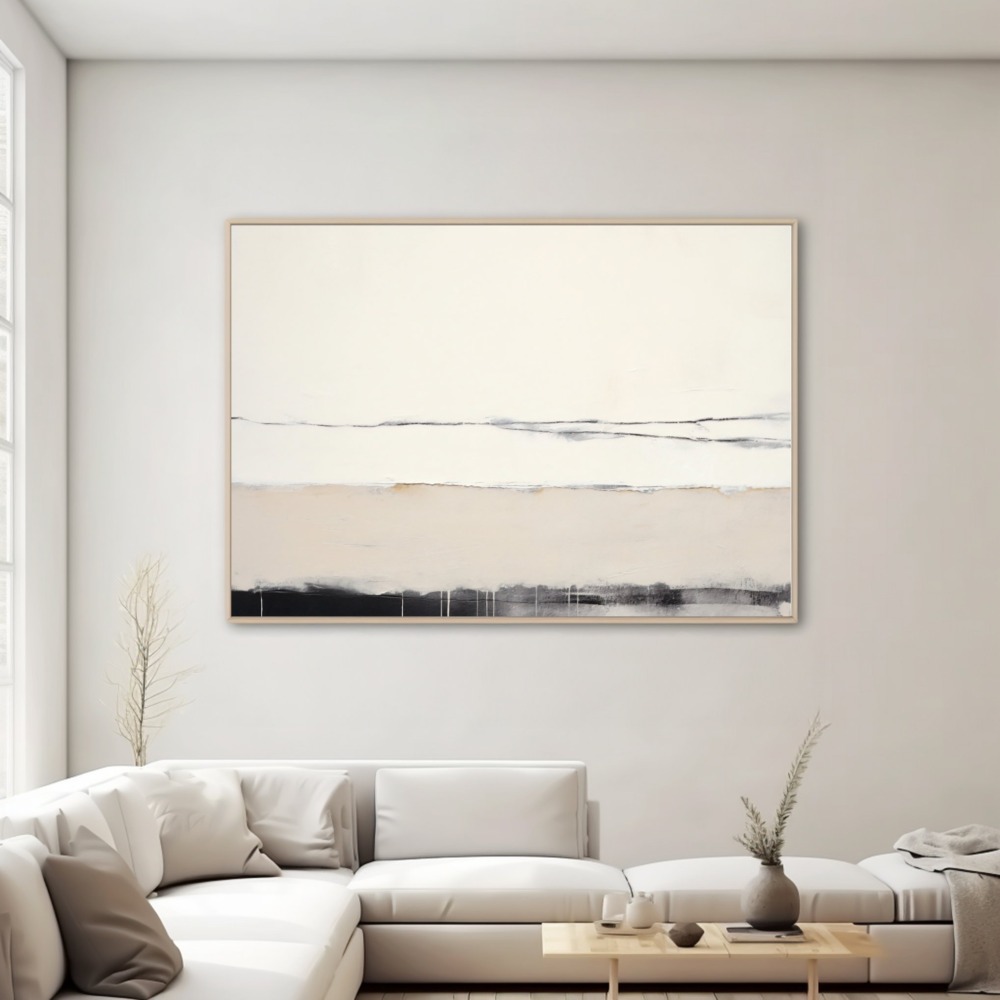
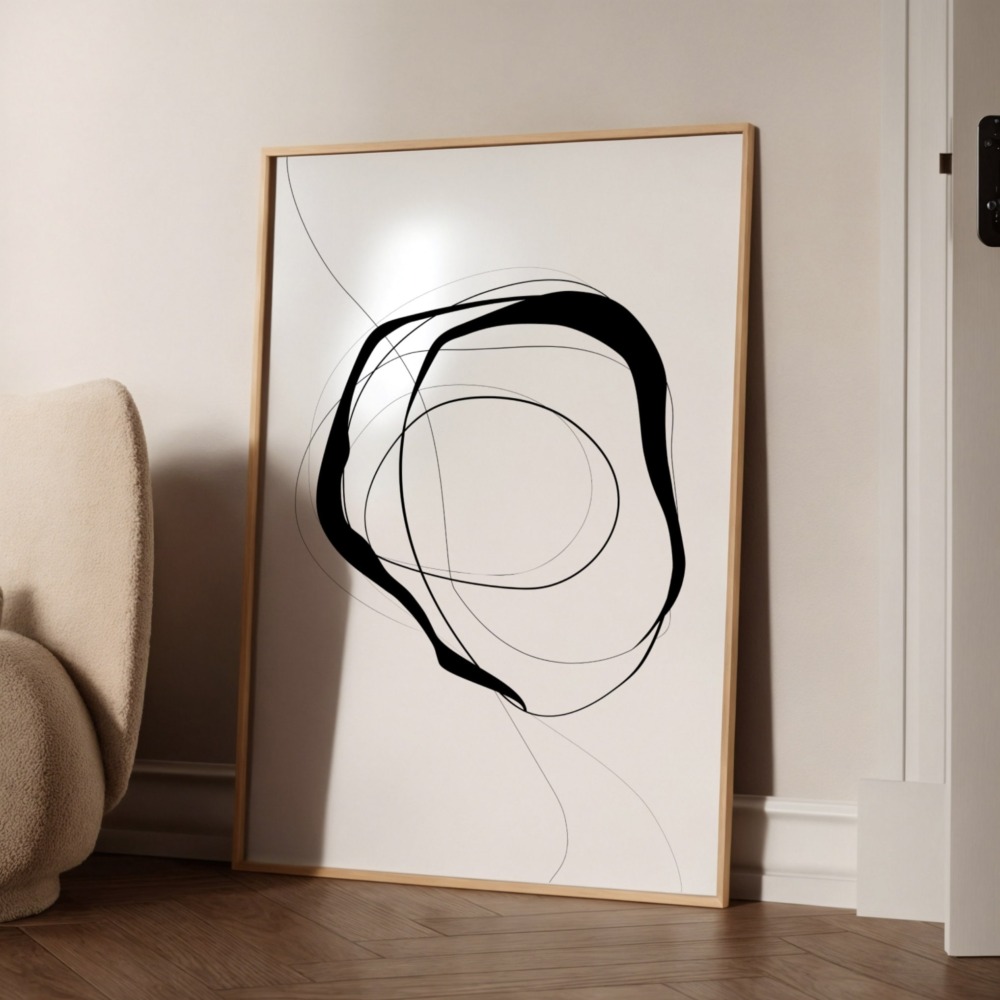
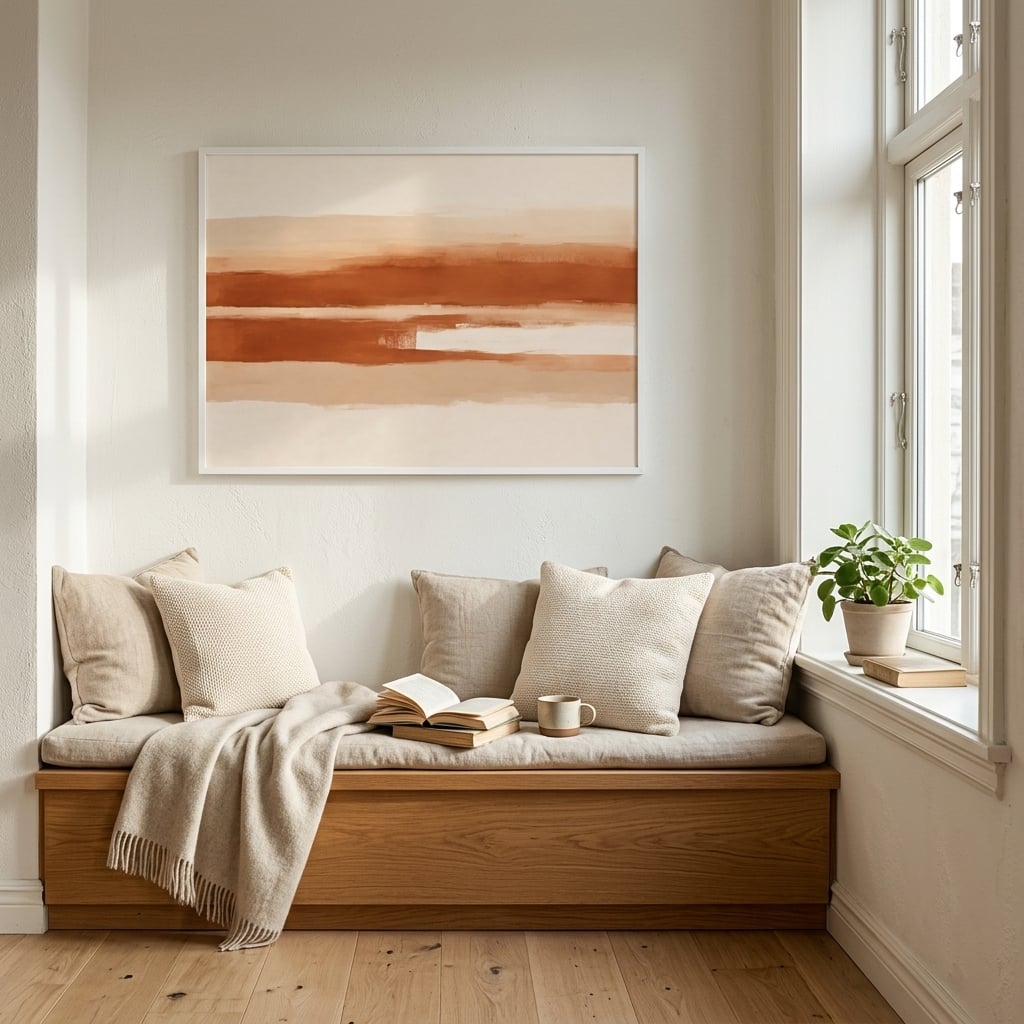
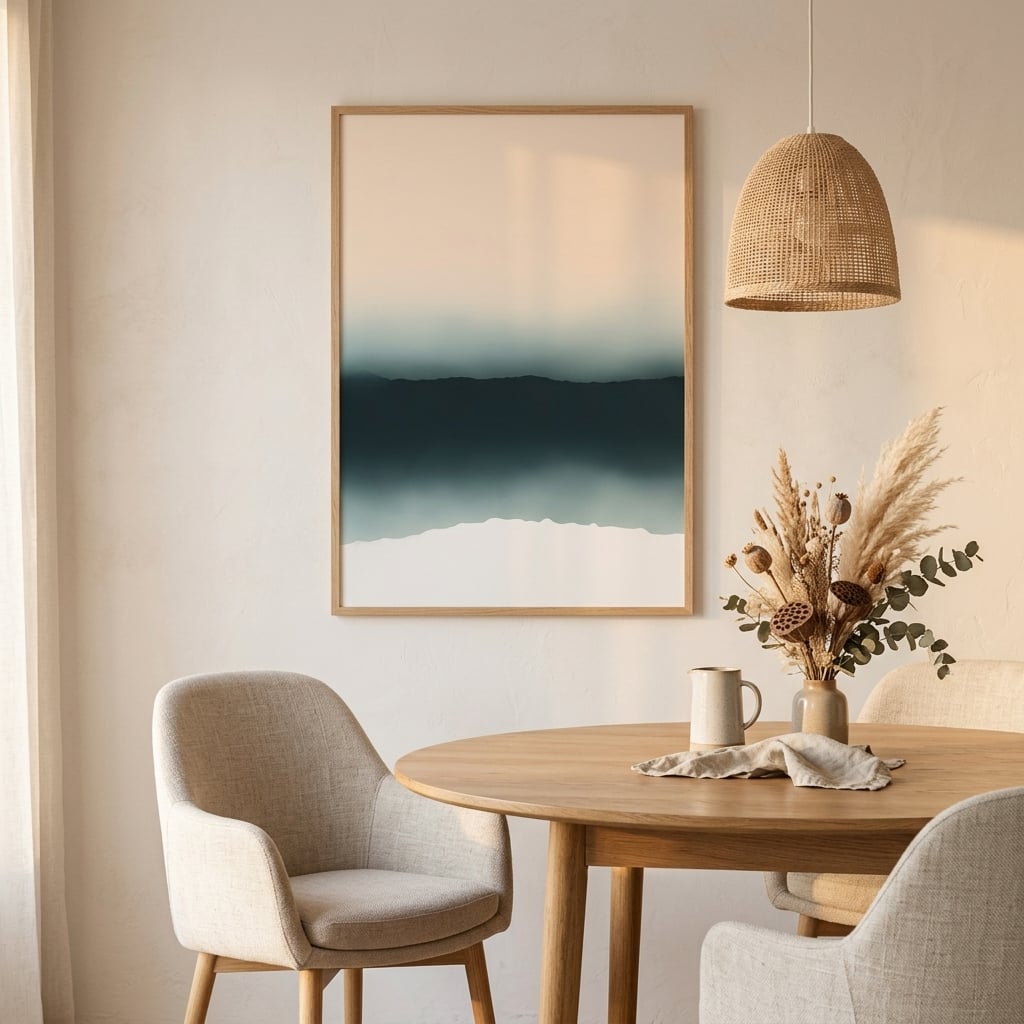
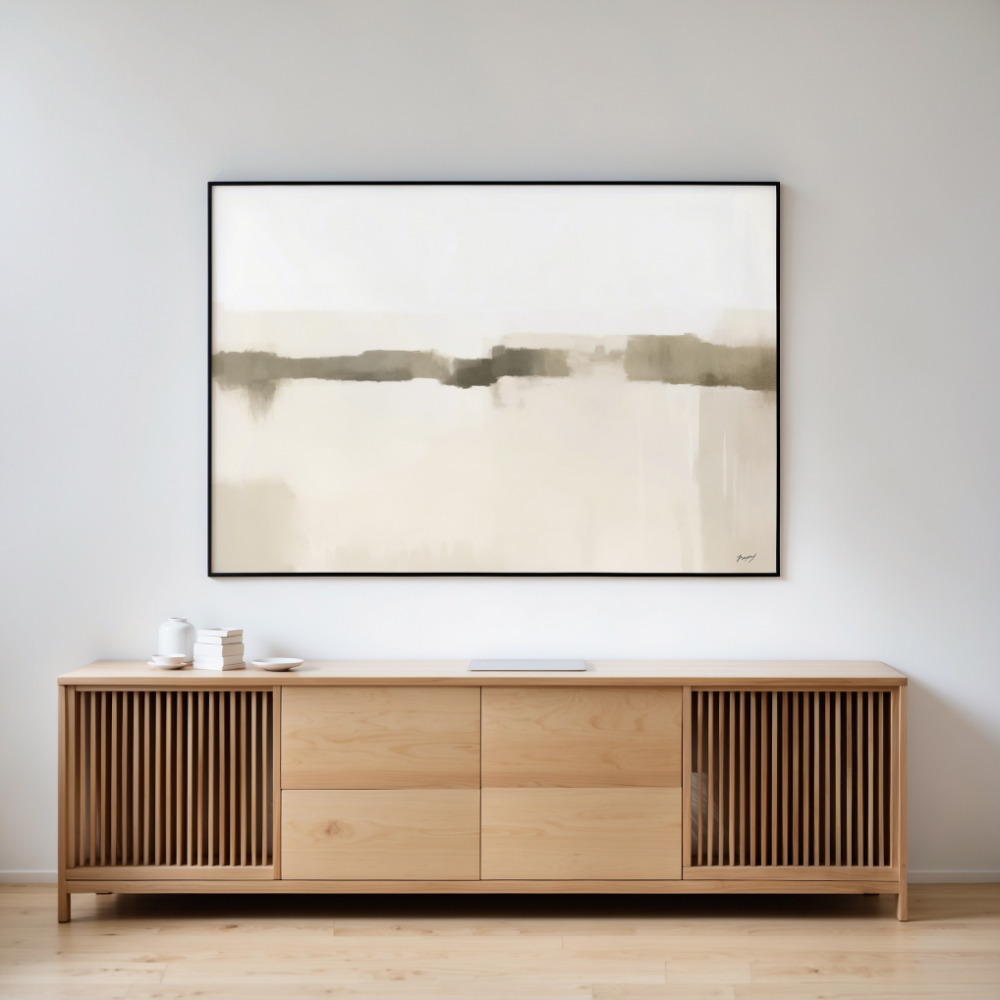
Japandi bedroom art is where you can inject personality while maintaining the aesthetic’s fundamental calm. The key is selectivity—one large statement piece often works better than a gallery wall. Abstract art with organic shapes in muted earth tones, minimalist line drawings, or nature-inspired prints all work beautifully in this context.
Consider artwork that incorporates both Japanese and Scandinavian sensibilities: simple compositions, natural subjects, and that characteristic restraint in color and form. Black and white photography of natural landscapes, subtle watercolors depicting mountains or forests, or abstract pieces that suggest rather than demand attention all fit perfectly.
For a deeper understanding of how to choose the right pieces, explore what is Japandi wall art to see how these design principles translate into visual art. The placement matters too—hang art at eye level when standing, and ensure there’s breathing room around each piece. In a minimalist bedroom japandi style, negative space is just as important as what you hang on the walls.
Lighting: Soft, Natural, Intentional
Harsh overhead lighting has no place in a Japandi bedroom. Instead, think about creating pools of light at different heights. Paper lanterns nod to Japanese tradition while providing soft, diffused light. Simple pendant lights with natural materials like wood, rattan, or rice paper fit perfectly.
Bedside lamps should be functional yet sculptural—ceramic bases in organic shapes, or wooden lamps with simple linen shades work well. Consider dimmable bulbs so you can adjust the ambiance throughout the day. Warm white bulbs (around 2700K) create that cozy atmosphere essential to both Scandinavian and Japanese design philosophies.
Don’t underestimate natural light. Keep window treatments minimal to maximize daylight hours. The interplay of natural light across natural materials throughout the day is one of the most beautiful aspects of japandi bedroom decor.
Plants: Bringing Nature Inside
Both Japanese and Scandinavian design traditions emphasize the connection between interior and exterior spaces. A few carefully chosen plants bring life and air-purifying benefits to your bedroom. Snake plants, pothos, or peace lilies thrive in bedroom conditions and require minimal maintenance.
Display plants in simple ceramic pots in neutral tones or natural terracotta. Avoid anything overly decorative or colorful. The plant itself should be the star, not its container. A single statement plant like a fiddle leaf fig or bird of paradise can anchor a corner, while smaller plants on a nightstand or dresser add organic touches.
Fresh flowers or branches also work beautifully—a single stem in a simple vase embodies the Japanese ikebana principle of finding beauty in simplicity.
Materials: Authentic and Tactile
The magic of a minimalist bedroom japandi lies in the quality and authenticity of materials. Wood is paramount—visible grain, natural finishes, and varying tones of blonde to medium woods dominate the palette. Avoid anything that looks overly processed or artificial.
Stone and ceramic add another layer of natural texture. A ceramic lamp, stone coasters, or a simple pottery piece on your nightstand introduces variety while maintaining the natural material story. Rattan and bamboo work in small doses—perhaps a basket for storage or a small stool.
Metal should be minimal and muted. Brushed brass, matte black, or natural steel in small doses—drawer pulls, lamp bases, or picture frames—add subtle contrast without disrupting the calm.
Storage Solutions That Disappear
A truly successful Japandi bedroom looks effortlessly uncluttered because everything has a home. Built-in storage is ideal, but if that’s not possible, choose furniture with hidden storage capabilities. Ottoman-style benches at the foot of the bed, beds with under-storage, or simple wooden boxes that slide under nightstands all keep clutter at bay.
Open storage should be minimal and curated. That floating shelf should display only your most beautiful or meaningful objects. The Japanese concept of ‘ma’—negative space—is crucial here. What you don’t display is as important as what you do.
Closet organization deserves attention too. Even if it’s behind closed doors, a well-organized closet contributes to the overall sense of calm. Use uniform hangers, organize by color or type, and keep only what you truly use and love.
The Finishing Touches
Japandi bedroom decor succeeds in the details. A beautiful alarm clock in wood and brass replaces your phone. A ceramic tray corrals nightstand essentials. A simple wool rug in natural tones adds warmth underfoot without overwhelming the space.
Scent plays a role too—natural soy candles in subtle fragrances like hinoki, sandalwood, or simple beeswax contribute to the sensory experience. Keep them in simple containers that complement your aesthetic.
The beauty of this approach is that every element serves a purpose while contributing to the overall atmosphere. Nothing is purely decorative, yet everything is beautiful. This is the essential paradox of Japandi design—it’s both highly functional and deeply aesthetic.
Creating Your Personal Sanctuary
The goal of a minimalist bedroom japandi isn’t to create a showroom but to design a deeply personal space that supports rest, reflection, and rejuvenation. While the aesthetic principles provide a framework, your bedroom should ultimately reflect what brings you peace.
Start by decluttering ruthlessly. Remove everything that doesn’t serve a clear purpose or bring you genuine joy. Then rebuild intentionally, choosing each element with care. Your Japandi art prints should speak to you personally, your textiles should feel good against your skin, and your furniture should support how you actually use your space.
Remember that Japandi design is forgiving of imperfection—in fact, it celebrates it through wabi-sabi. Your space doesn’t need to look like it stepped out of a magazine. It needs to feel like home, just a particularly calm and beautiful version of home where you can truly rest.
The beauty of this aesthetic is its sustainability, both literally and figuratively. By investing in quality pieces made from natural materials and choosing a timeless style over trends, you’re creating a bedroom that will serve you well for years to come. And by embracing the minimalist principles at its core, you’re choosing a more mindful relationship with your possessions and your space—and that might be the most valuable aspect of Japandi design.