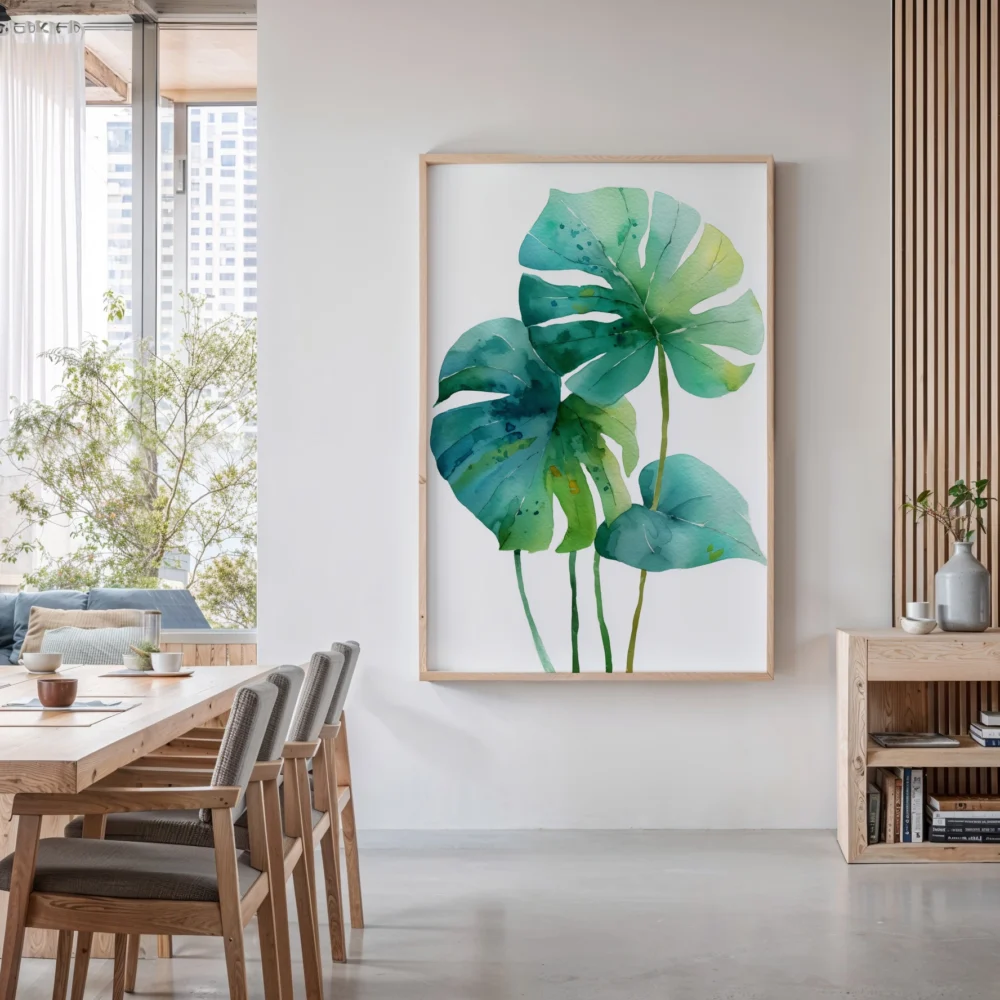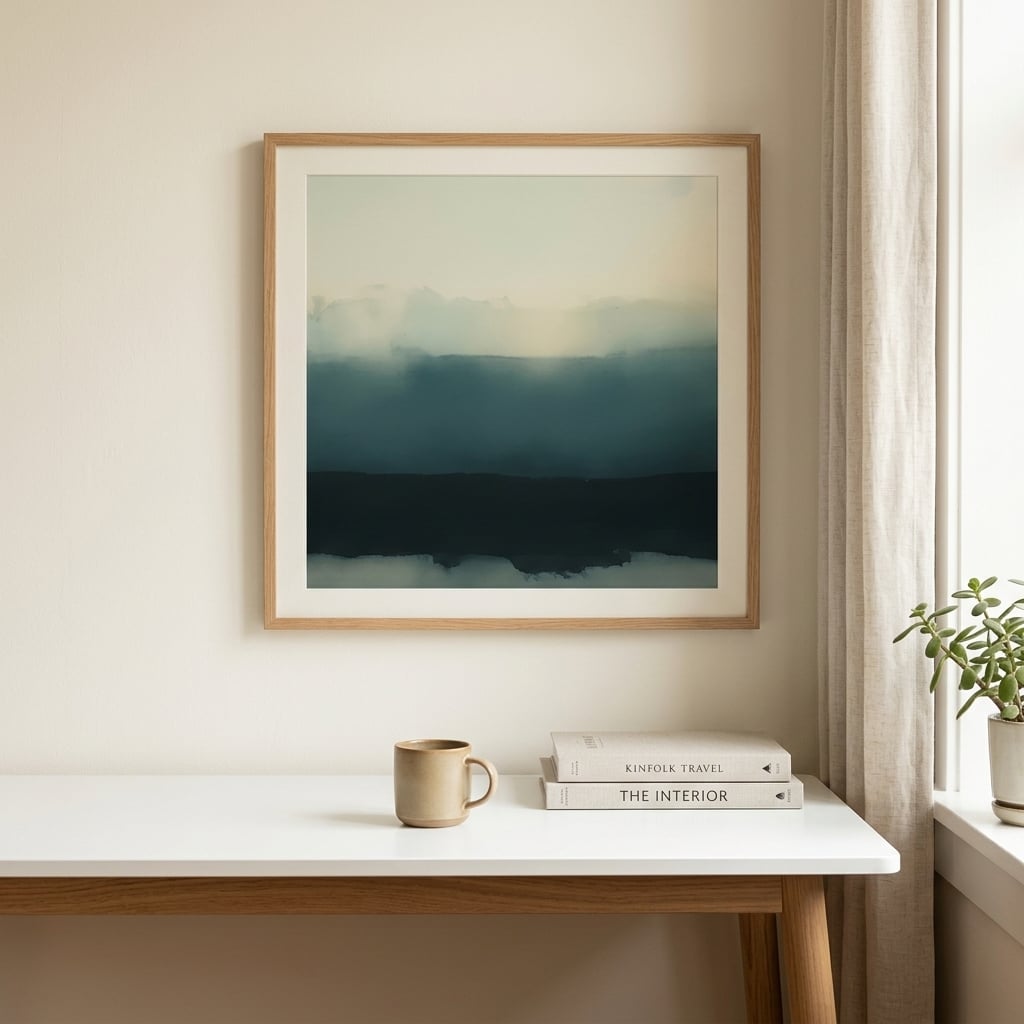
Somewhere along the way, “light and airy” became the only officially sanctioned goal of home decorating, and an entire register of feeling got locked out of the house: depth, intimacy, quiet drama, the pleasure of a room that holds you instead of merely brightening at you. Moody interiors bring that register back, and wall art is the lowest-risk door into them, because a dark print commits you to nothing a repaint cannot undo in an afternoon.
The fear, always, is the cave: that one dark decision leads to a room like the inside of a coat pocket. It does not have to. Caves happen for specific, avoidable reasons, and this guide walks through all of them: how dark art actually behaves on a wall, the light-balancing rules, a palette field guide, a fifteen-minute readiness test, and room-by-room application.
Jump to: What dark art does · Why caves happen · The three balancing rules · Choosing your dark · The 15-minute test · What counts as moody · Room by room · Dark art on dark walls · Quick answers
What Dark Art Actually Does to a Room
Here is the counterintuitive physics of it: deep tones recede. A wall carrying a large, dark piece appears to sit further away than it is, which means a well-placed moody print makes a room feel deeper, not smaller. The shrinkage everyone fears comes from clutter and poor light, not from darkness itself.
Dark art also concentrates attention the way a fireplace does. In a pale room, one deep piece becomes gravity: eyes go to it, furniture arranges itself toward it, and the whole space acquires a centre it never had. That is why a single item from our moody wall art collection often does more for a bland room than three cheerful ones, and why designers reach for darkness precisely when a room feels characterless.
Why Caves Happen (It Is Never the Art)
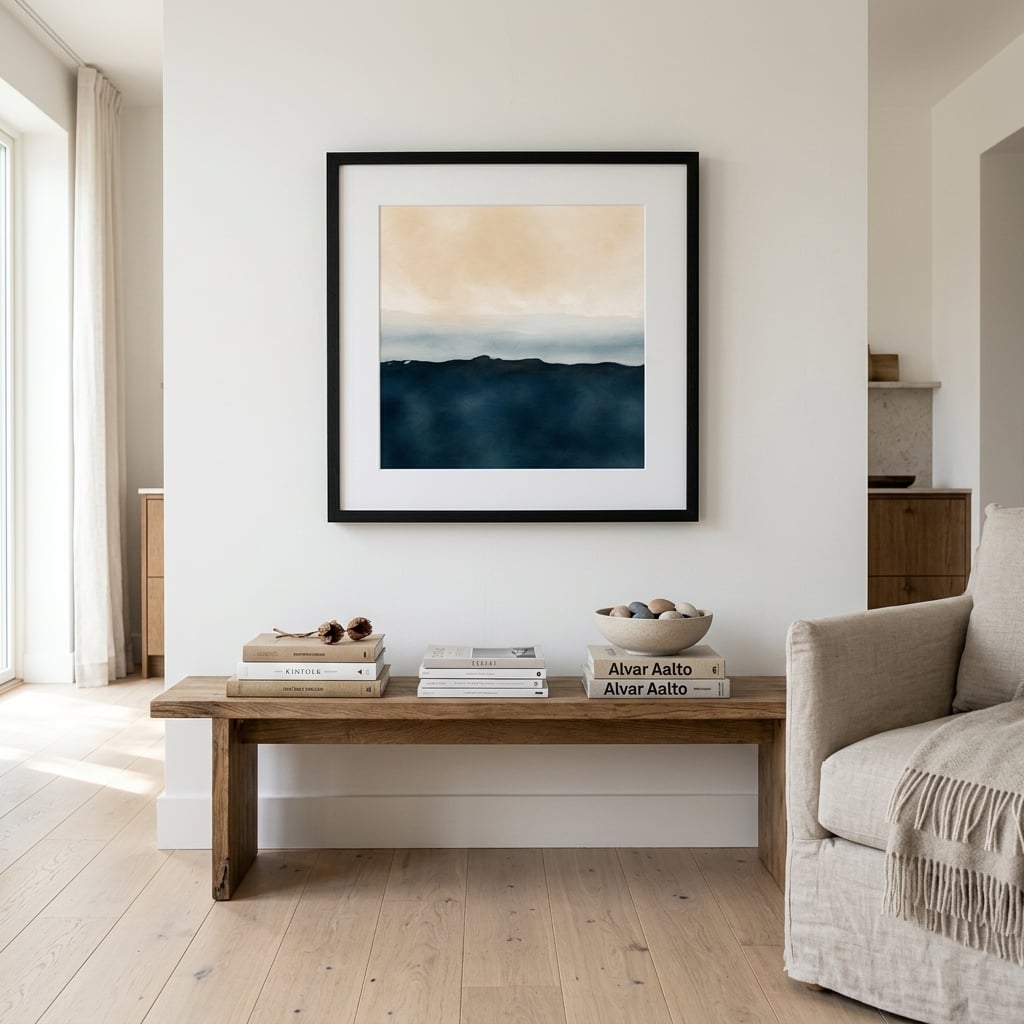
Autopsy any genuinely gloomy room and you find the same three causes. First, absorbed light with no return: dark surfaces everywhere and nothing reflective to bounce back what light exists. Second, undersized darkness: several small dark pieces scattered about read as shadows and stains, where one large piece would read as intention. Third, cool darkness in cold light: charcoal under blue-white bulbs is a morgue; the identical charcoal under warm lamplight is a members’ club.
Notice that none of these is the print’s fault. Darkness in a room is like bass in a song: the problem is never that there is bass, it is that the mix is wrong.
The Three Balancing Rules
Rule one: one big dark beats five small darks. Commit. A statement piece around 24×36 in (60×90 cm) or larger declares atmosphere; scattered small dark prints declare a lighting problem. If your budget allows one moody move, make it a size move.
Rule two: every dark piece needs a light answer. Within the same visual field, give the eye somewhere bright to rest: a pale wall, cream upholstery, a bone-white lampshade, a brass frame catching lamplight. The contrast is what makes the darkness read as rich. Our grey wall art pieces often play this bridging role, holding the middle ground between a deep print and a pale room.
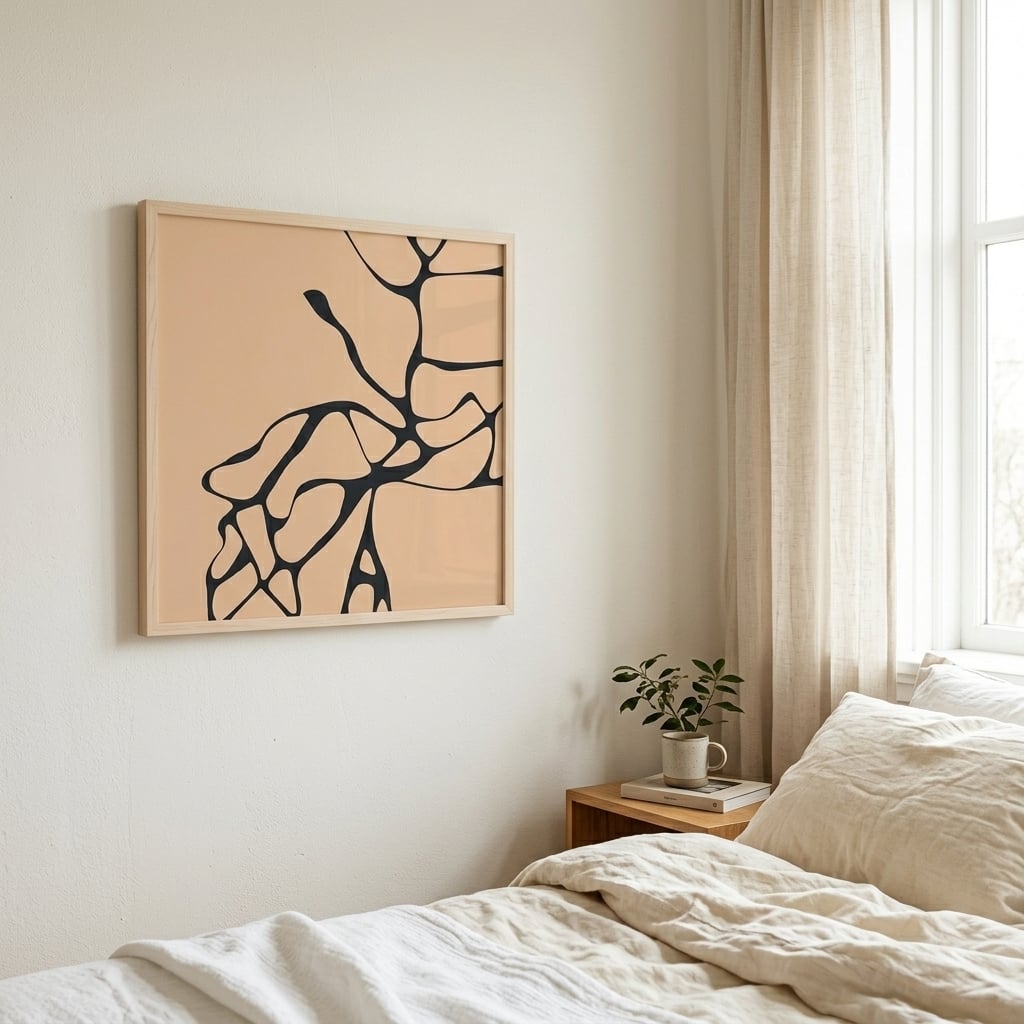
Rule three: warm the light, always. Bulbs at 2700 to 3000K, lamps at body height rather than ceiling floods, and if possible a light source near the art itself. Moody art is designed for the way candlelight and lamplight fall; it merely tolerates overhead LED.
Choosing Your Dark: A Short Field Guide
Ink and navy. The friendliest darkness, halfway to a night sky, and the easiest to live with long term. Deep blue pieces, like those in our dark blue collection, pair with almost every neutral and bring a maritime calm rather than a brood.
Charcoal and near-black. Maximum drama, maximum discipline. Best in compositions where contrast itself is the subject; keep frames slim and the surrounding wall generous.
Forest and bottle green. The organic dark: reads as nature after dusk rather than absence of light. Exceptional beside brass, leather and wood.
Oxblood, espresso and bruised plum. The warm darks, closest to firelight, and criminally underused. They make cream and camel rooms look expensive with almost no effort.
The 15-Minute Room Test
Before buying anything, run this. At the hour you actually use the room most, usually evening, switch off the overheads and turn on only the lamps. Hold the darkest object you own, a navy cushion, a charcoal coat, against the wall where art would go, and step back to sofa distance. If the dark object glows against its surroundings, the room is ready for moody art and will reward it. If it disappears into murk, the room needs a light answer first: one more lamp, one pale textile, one reflective surface. Fix the mix, then buy the bass.
What Counts as Moody Art
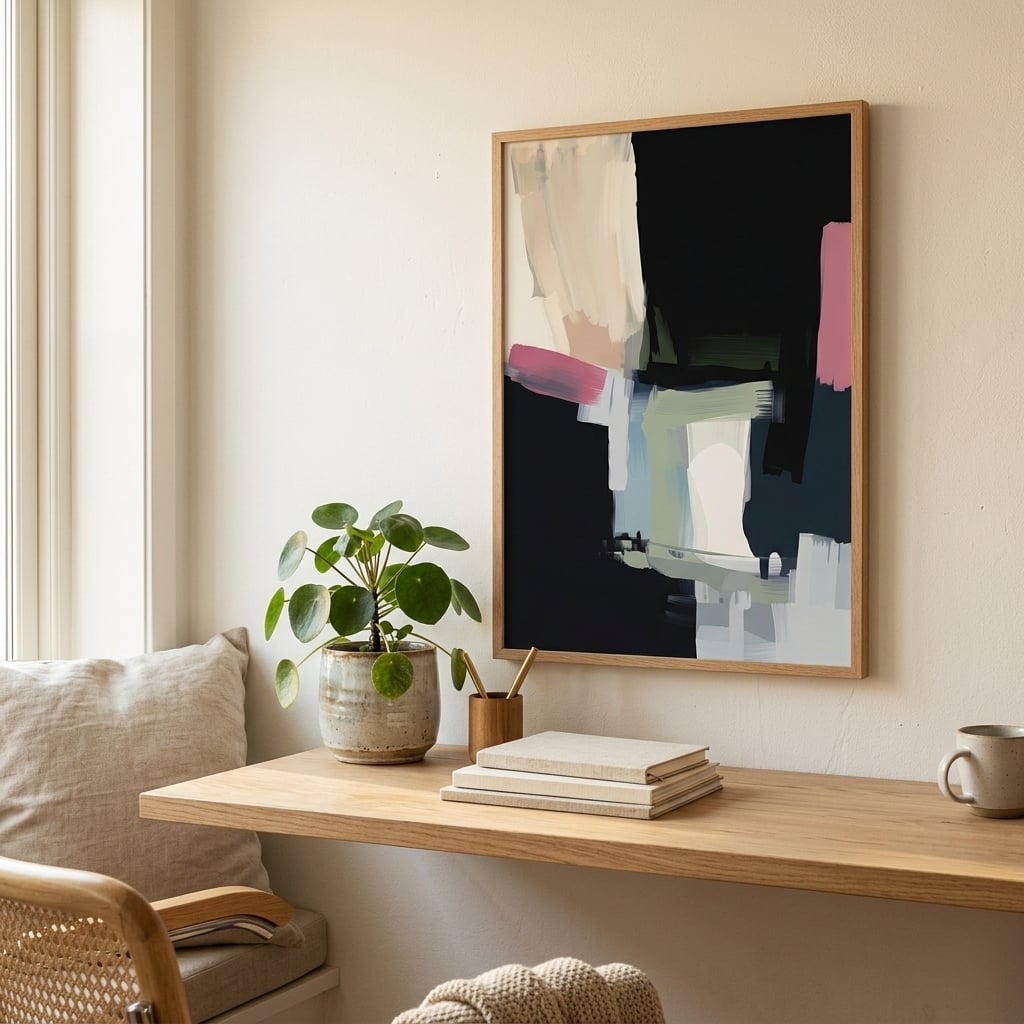
Darkness is the medium, not the message, and the subjects vary widely. Storm-light landscapes and night seascapes bring nature’s own drama. Deep abstracts, ink washes, smoke forms, shadowed colour fields, supply atmosphere without narrative. High-contrast monochrome work leans elegant rather than brooding. And dark florals, the genre’s showpiece, put something living against the darkness, which is the entire trick of chiaroscuro painting compressed into one print. What unites them all is tonal depth and restraint: a moody piece keeps most of its information in the shadows and makes you lean in for it. Delicate botanical pieces like these fill our floral line art collection.
Room by Room
Living room. The full treatment: one large moody statement over the sofa, warm lamps flanking, pale textiles answering. This is the room where rule one pays best.
Bedroom. Darkness belongs here more than anywhere; it is the one room whose entire job is winding down. A deep, quiet piece above the headboard, forest, ink or soft charcoal, lowers the room’s pulse. Avoid high-contrast graphic pieces where you sleep; drama and drowsiness argue.
Dining room. Candlelit dinners were the original moody interior. Dark art over the sideboard plus dimmable warm light equals restaurant-grade atmosphere at home prices.
Home office. One structured dark piece adds seriousness; a wall of them adds Monday. Ration accordingly. If the office doubles as a video-call backdrop, a deep piece behind you reads as considered and calm on camera, one of the few decor choices that genuinely photographs better than it costs.
Small rooms and halls. Yes, really. A powder room or small entry wrapped in depth becomes a jewel box; smallness turns into intimacy the moment it looks deliberate.
Dark Art on Dark Walls
The advanced move, and less risky than it looks. On a navy, forest or charcoal wall, a dark print with a slim brass or pale wood frame creates the tone-on-tone luxury that photographs so well: the art emerges from the wall like a memory rather than sitting on it like a poster. Two guardrails keep it working: the print should sit a register lighter or warmer than the wall so it separates, and the room needs its light answers doubled, more lamps, more reflective metal, more pale textile than the same art would need on white.
We went deeper on the pure aesthetics of shadow and atmosphere in an earlier piece on decorating with atmospheric expression; consider this guide the practical engineering to that article’s poetry.
Quick Answers
Will dark wall art make my small room look smaller?
Not if it is one committed piece with light answers around it. Deep tones recede, so a single large dark print can actually add perceived depth. What shrinks small rooms is scatter: many small dark objects and no focal point.
What frame works best for moody prints?
Slim black for the disciplined look, brass or aged gold for warmth, pale oak for a Scandinavian-noir contrast. Avoid heavy ornate frames; the art carries enough weight already.
Paper or canvas for dark artwork?
Both work, differently. Our 230gsm fine art paper renders deep tones velvety and matte, holding the difference between charcoal, ink and espresso without glare, which is everything for dark palettes. Canvas softens the drama into something warmer and more mural-like, ideal for bedrooms.
How do I start if I am nervous?
Buy one navy piece. Deep blue is darkness with training wheels: unmistakably moody, impossible to regret, and a reliable test of how much further your room wants to go.
Ready to give the room some gravity? The moody wall art collection gathers our darkest and most atmospheric originals, artist-made, printed to order, and built to reward warm light for around 75 years. Start with one large piece and let the room hold you for a change.