Modern abstract art usually says something about feeling, not about a subject. Instead of painting a person or a place, the artist uses color, line, shape, texture and composition to create a mood: calm, tension, energy, balance or quiet. The meaning is in how those choices make you feel and in what you bring to the piece, which is why two people can read the same abstract in different ways and both be right.
Quick answers
- What abstract art means: art that does not try to show the visible world, and speaks through color, line, shape and composition instead.
- What it is trying to say: usually a mood, an energy or an idea about order, movement or emotion, rather than a story.
- How to read it: notice your first reaction, then look at what creates it. Color, direction, edges, texture and empty space.
- Is there a right answer: no. The artist sets the mood, but your own experience completes the meaning.
- Is simple abstract art really art: yes. A few well placed marks take as many decisions as a full canvas, and the restraint is the point.

What does abstract art mean?
Abstract art is art that does not set out to depict recognizable objects. There is no face, vase or mountain to identify. Instead, the visual elements become the subject: a band of color, a sweeping line, a block of black against white. The word abstract simply means drawn away from the visible world.
A helpful way to think about it is music. You do not need lyrics to feel something when you hear a piece of music. The rhythm, harmony and tempo reach you directly. Abstract art works the same way with color and form. When you stop asking “what is this supposed to be?” and start asking “how does this make me feel?”, most abstract art becomes much easier to read.
That is also why abstract art can feel confusing at first. Our brains are built to find and name things. Abstract art politely refuses to give us anything to name, and asks us to respond instead.
Where abstract art came from
Abstraction grew out of big changes in the late 19th and early 20th centuries. Photography could now record the world accurately, so painters no longer needed to. Movements like Impressionism, Post-Impressionism, Fauvism and Expressionism were already loosening the link between a painting and what it showed, using color and brushwork to express light, mood and emotion rather than exact appearance.
Around 1910 a few artists took the final step. Wassily Kandinsky, often called one of the first fully abstract painters, believed color and form could move us the way music does. Kazimir Malevich reduced painting to simple geometric shapes, famously a black square on white. Piet Mondrian built his work from straight lines and primary colors to express balance and order. Hilma af Klint was painting abstract spiritual works even earlier, though her paintings were not widely shown until much later.
After the Second World War, Abstract Expressionists such as Jackson Pollock and Mark Rothko pushed abstraction toward raw emotion. Pollock’s drip paintings record movement and energy. Rothko’s large fields of color invite stillness and contemplation. Today’s abstract prints draw on all of these traditions, from crisp geometry to soft washes of color.
The visual language: how abstract art carries meaning
Without a subject to rely on, abstract art speaks through a small set of visual tools. Learning to notice them is the fastest way to understand what a piece is saying.
Color
Color is the most direct tool. Warm colors like red, orange and yellow tend to feel energetic, passionate or warm. Cool colors like blue, green and violet tend to feel calm, reflective or melancholic. Muted and earthy tones feel grounded and quiet. How colors sit together matters too: strong contrasts create tension and vibration, while close, related colors create harmony and flow.
Line
Straight lines suggest order and stability. Curved and flowing lines suggest movement and grace. Jagged or broken lines suggest tension or restlessness. Direction changes the mood as well. Horizontal lines feel calm and settled, vertical lines feel strong and upright, and diagonal lines feel dynamic, as if something is about to move.
Shape and form
Geometric shapes such as squares, circles and triangles feel rational, structured and controlled. Organic shapes with soft, irregular edges feel natural, intuitive and alive. When shapes touch, overlap or float apart, they create relationships: balance, conflict, closeness or distance.
Texture
Even in a flat print, texture comes through. Thick, layered brushwork feels physical and intense. Smooth, blended surfaces feel calm and refined. Dry, scratchy marks can feel raw and urgent.
Composition and empty space
Composition is how everything is arranged. A centered, balanced layout feels stable and peaceful. Elements pushed to the edge create tension. Repeated shapes create rhythm. Empty space is part of the composition too. In minimalist abstracts, the space around a single mark is often what gives it weight.

What simple abstract designs are really saying
The abstracts that confuse people most are often the simplest: one brushstroke, a single line across a pale background, two blocks of color. It is easy to think there is nothing there. In fact, simple designs are usually about one clear idea, delivered without distraction.
| What you see | What it often expresses |
|---|---|
| A single horizontal line on a pale ground | Calm, horizon, stillness, a sense of rest |
| One bold black brushstroke | Energy, decisiveness, the trace of a gesture |
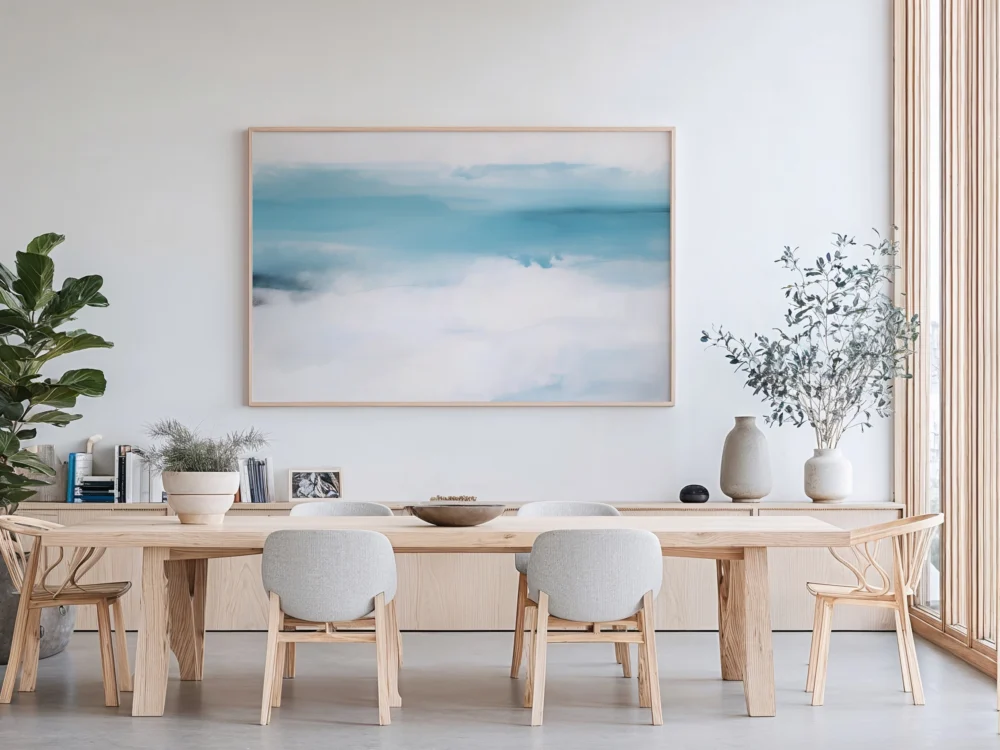
| Soft, blurred bands of color | Atmosphere, mood, contemplation |
| Clean geometric blocks | Order, balance, structure |
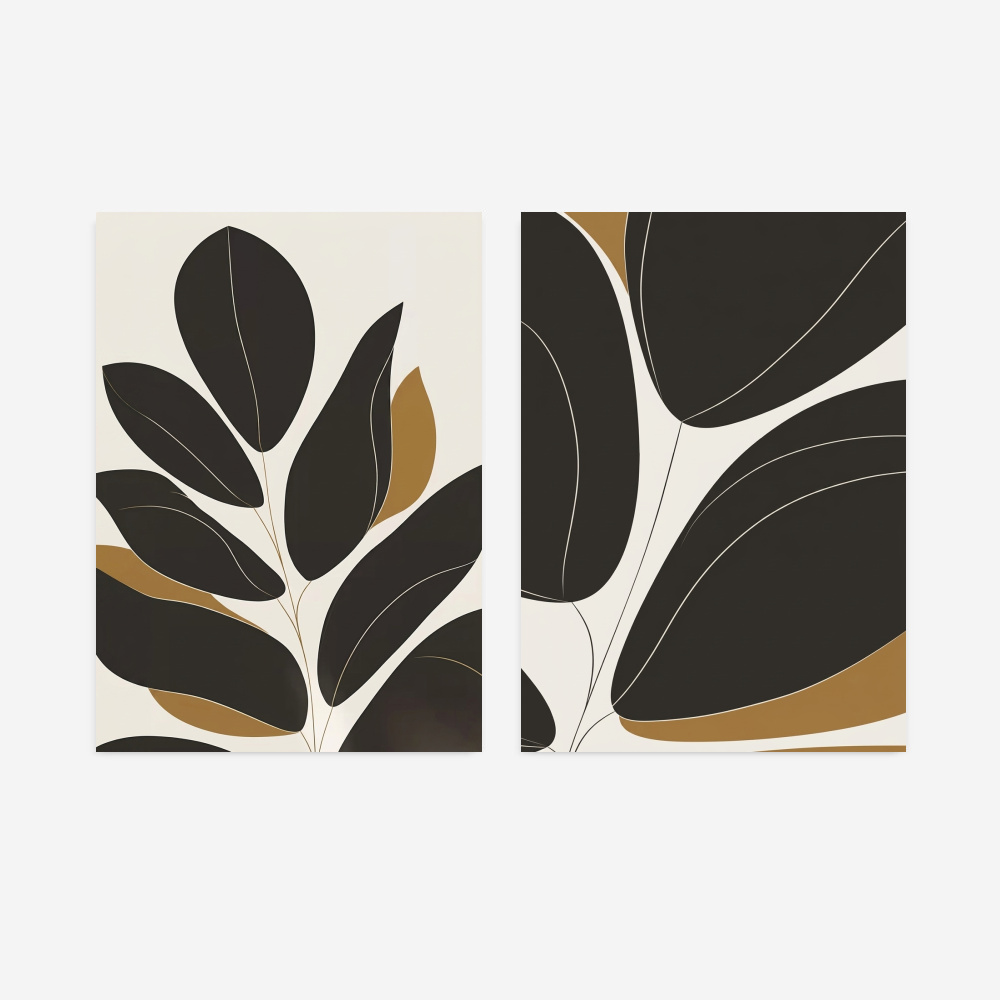
| Overlapping organic shapes | Connection, growth, intimacy |
| Large empty space with a small mark | Quiet, focus, breathing room |
None of these meanings are fixed rules. They are common responses that artists know how to use. A simple abstract works because every element left in it has a job, and nothing else gets in the way.
The main kinds of abstract art
Abstract art is not one style. Knowing the main families helps you know what to look for.
- Geometric abstraction: precise shapes, straight lines and flat color. It expresses order, clarity and balance. Think Mondrian, or a modern geometric art print.
- Gestural abstraction and Abstract Expressionism: sweeping brushstrokes and visible movement. It expresses energy, emotion and spontaneity. Explore abstract expressionist art for this look.
- Color field: large areas of color with subtle shifts. It invites calm, immersion and reflection, as in Rothko’s work.
- Lyrical abstraction: soft edges, flowing forms and gentle transitions. It feels poetic and dreamlike.
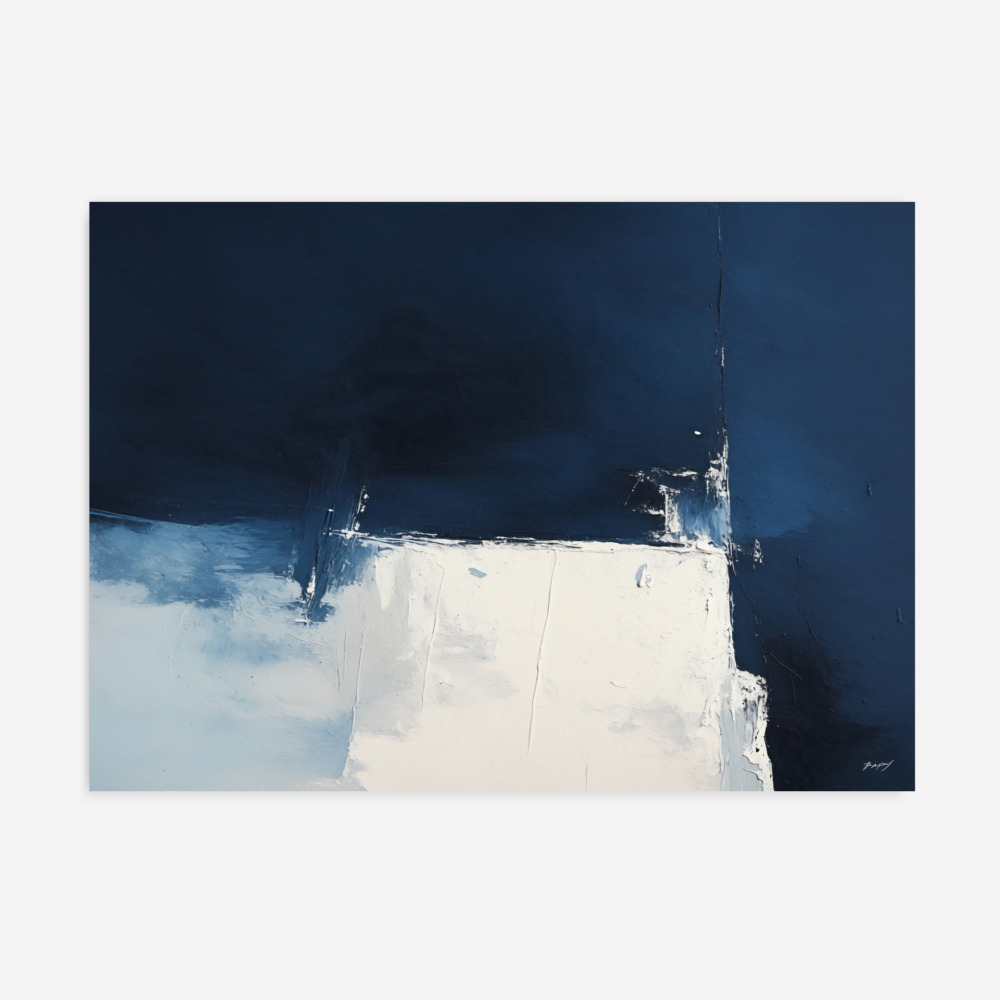
- Minimalist abstraction: very few elements and generous empty space. It expresses stillness and focus, and often works in black and white.
- Textural abstraction: layered surfaces and visible marks that invite a closer look.
For a deeper comparison of these styles, read abstract art styles explained.
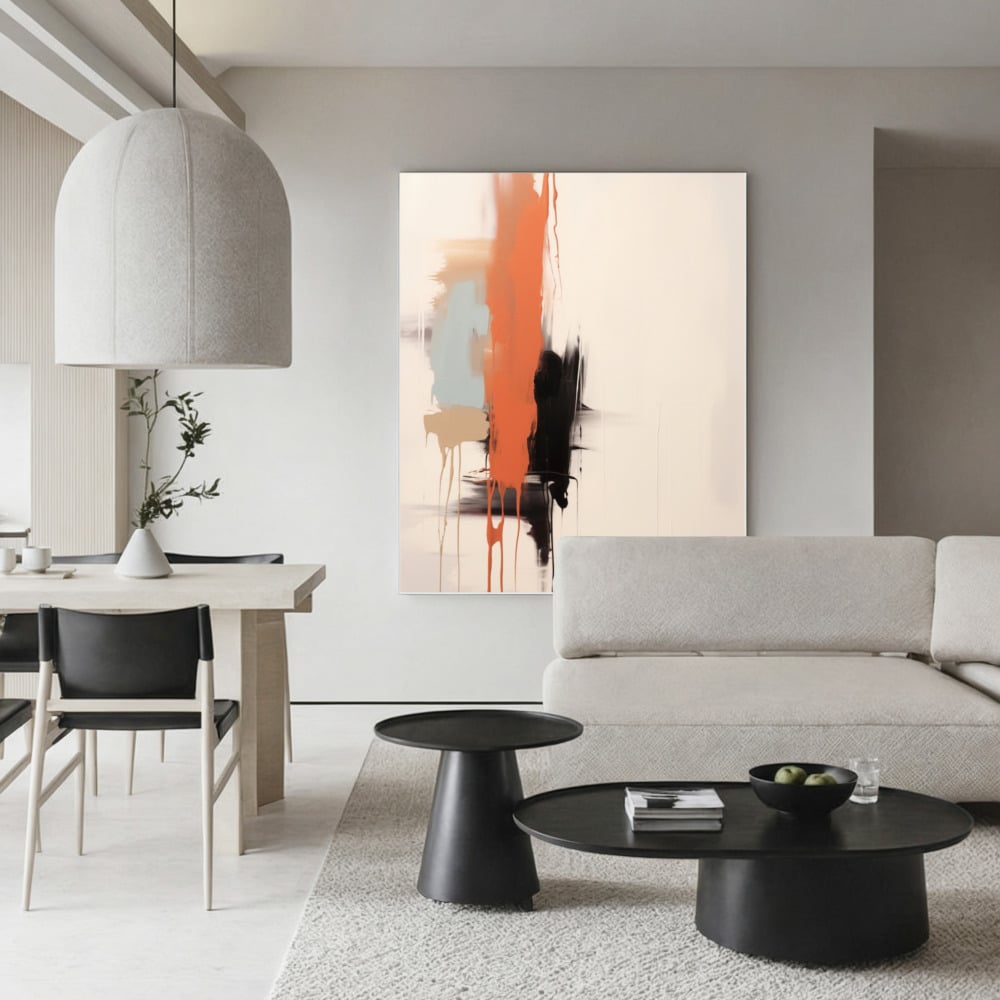
How to read an abstract artwork, step by step
- Look before you think. Give yourself a few seconds without trying to name anything.
- Notice your first reaction. Does the piece feel calm or restless, warm or cool, heavy or light? That reaction is the start of its meaning.
- Find the cause. Ask which colors, lines or shapes create that feeling. This is where you begin to see the artist’s choices.
- Follow your eye. Where do you look first, and where does your eye travel next? Composition guides that path on purpose.
- Let associations come. A blue and gray piece might remind you of the sea, a winter morning or a quiet mood. All of these are valid.
- Check the title or context. A title or artist statement can add a clue, but it should not replace your own reading.
- Come back to it. Abstract art changes as you do. A piece that felt chaotic one day can feel energizing a month later.
Why the meaning is personal
A painting of a mountain will always be a mountain. An abstract composition of blues and grays might mean the ocean to one person, sadness to another and early morning light to a third. That openness is intentional. The artist sets the mood and the structure, and the viewer completes the meaning with their own memories and feelings.
This is often what frustrates people who want a single correct answer, but it is also abstract art’s greatest strength. It does not ask you to know history, mythology or symbolism. It asks you to look and respond honestly, which makes it one of the most open and democratic kinds of art.
Common misconceptions about abstract art
“Anyone could make that.” Good abstract art depends on a strong sense of color, balance, tension and composition. Many abstract artists trained in realistic drawing before choosing to simplify. What looks effortless is usually the result of many careful decisions about what to leave out.
“It is meaningless or random.” Even work that looks spontaneous is shaped by choices about color, scale, direction and space. Randomness rarely produces something that feels balanced or moving.
“You need to be an expert to get it.” You do not. Your honest reaction is a valid way in. Knowledge adds depth, but it is not a requirement.
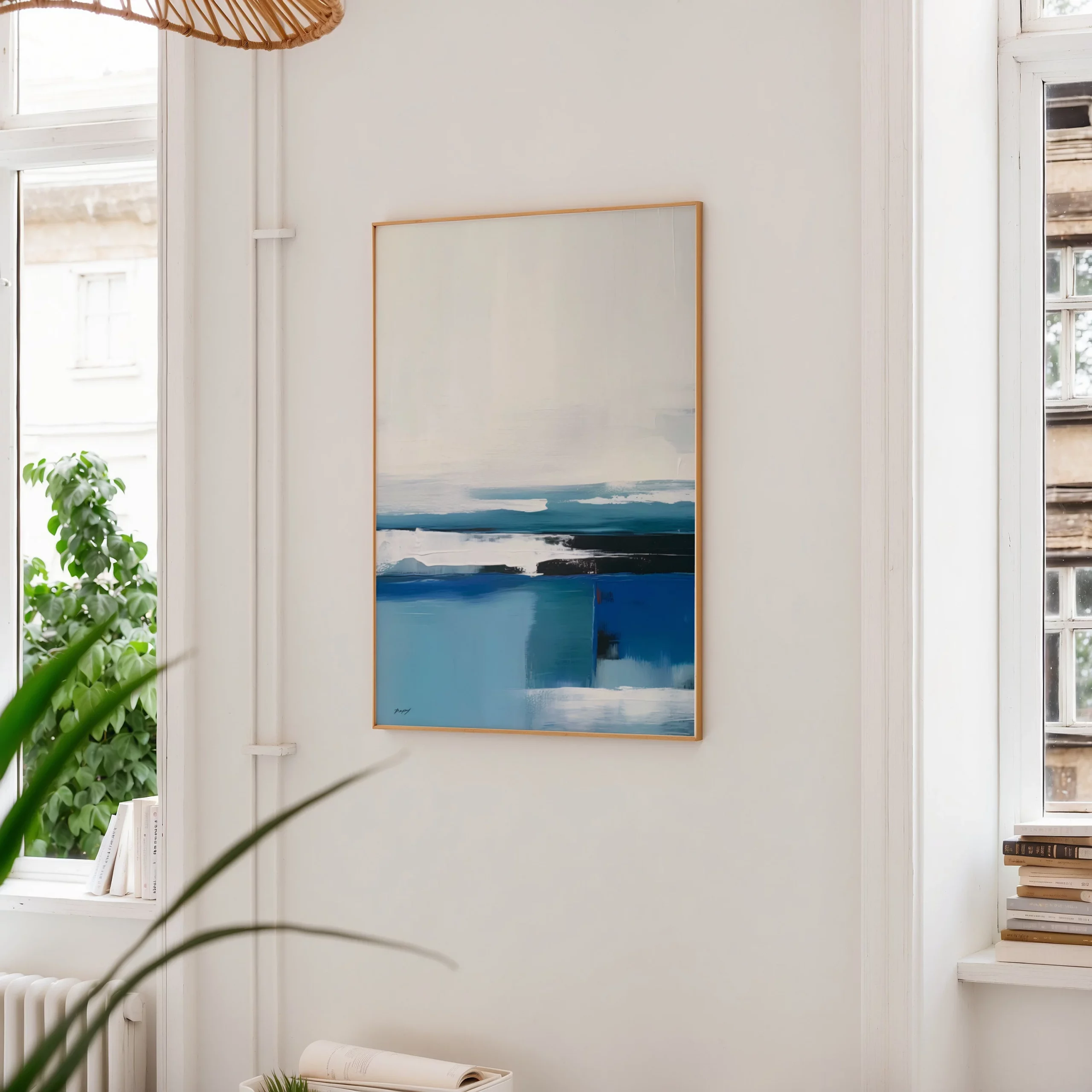
Living with abstract art: choosing a piece by its mood
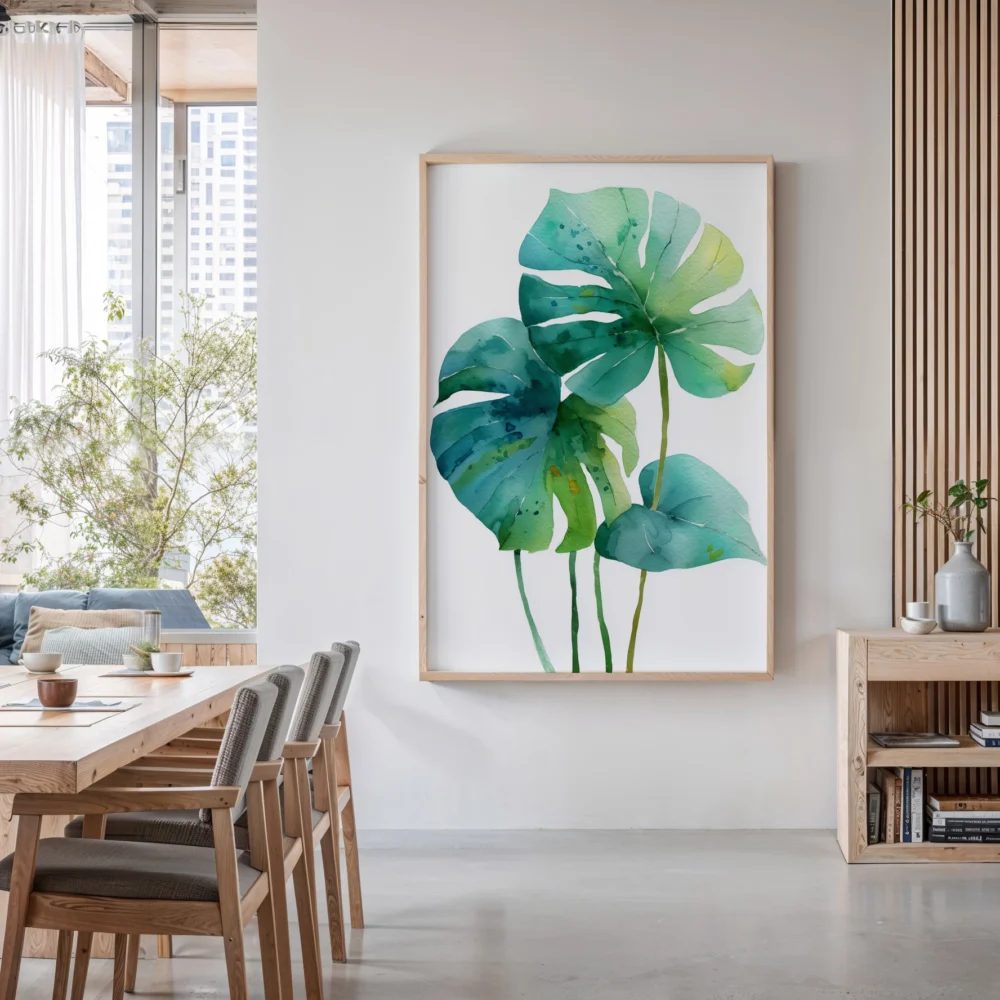
Understanding abstract art often comes most naturally when you live with it. Over time you notice how a piece changes the feel of a room and how it affects you on different days. When choosing an abstract for your home, start with the mood you want rather than the subject.
- For calm rooms like bedrooms and reading corners: soft color fields, horizon lines, misty landscapes and muted palettes. Blue abstract wall art is a reliable choice.
- For lively rooms like living and dining spaces: bold gestures, strong contrasts and warmer colors that start conversation.
- For focused spaces like a home office: balanced geometric or minimalist work that feels clear rather than busy.
- For a timeless look: black and white wall art, where removing color puts all the attention on line and form.
Size and placement matter too. One large abstract creates a strong focal point, while a pair or small group adds rhythm. For practical sizing and hanging tips, see our guide to abstract wall art for the living room.
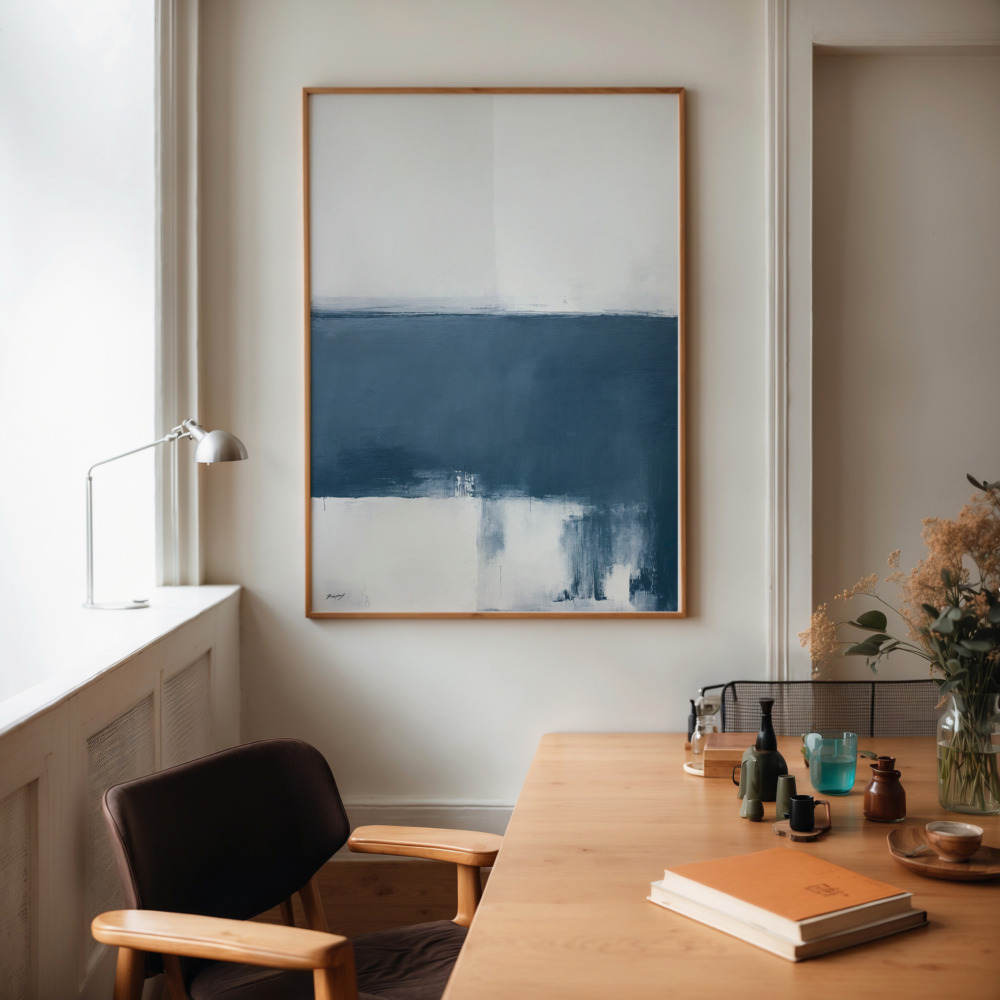
Frequently asked questions
What does abstract art mean in simple words?
It is art that does not show recognizable things. It uses color, line, shape and texture on their own to express a feeling or an idea.
What is modern abstract art trying to say?
Usually a mood or an energy rather than a story: calm, tension, movement, balance or emotion, carried by color, line and shape instead of a subject.
How do you understand abstract art?
Notice your first emotional reaction, then look at what creates it: the colors, the direction of the lines, the shapes and the empty space. There is no single right reading.
Is there a correct interpretation of an abstract painting?
No. The artist shapes the mood, but each viewer brings their own experience. Different readings can all be valid.
Is simple abstract art really art?
Yes. Reducing a piece to a few marks takes as many decisions as filling a canvas, and the simplicity is usually the point.
Why does abstract art make people feel emotions?
Color, line and composition affect us directly. Warm colors and sharp diagonals feel energetic, while cool colors, soft edges and horizontal lines feel calm.
Who invented abstract art?
No single person. Wassily Kandinsky, Kazimir Malevich, Piet Mondrian and Hilma af Klint were all early pioneers in the first decades of the 20th century.
What is the difference between abstract art and abstract expressionism?
Abstract art is the broad category of non-representational art. Abstract Expressionism is one movement within it, known for large gestural or color field paintings that focus on emotion.
How do I choose abstract art for my home?
Start with the mood you want in the room, pick colors that relate to what is already there, and choose a size that suits the wall and the furniture below it.
Explore abstract art prints
Browse the full abstract wall art collection to find a piece that speaks to you. Every design is by one artist and printed to order on 230gsm fine art matte paper or rolled canvas, in sizes from 30 x 20 cm to 150 x 100 cm. Prints start from $36, shipping is free over $69, and you save 25% on 2 prints or 30% on 3 or more.