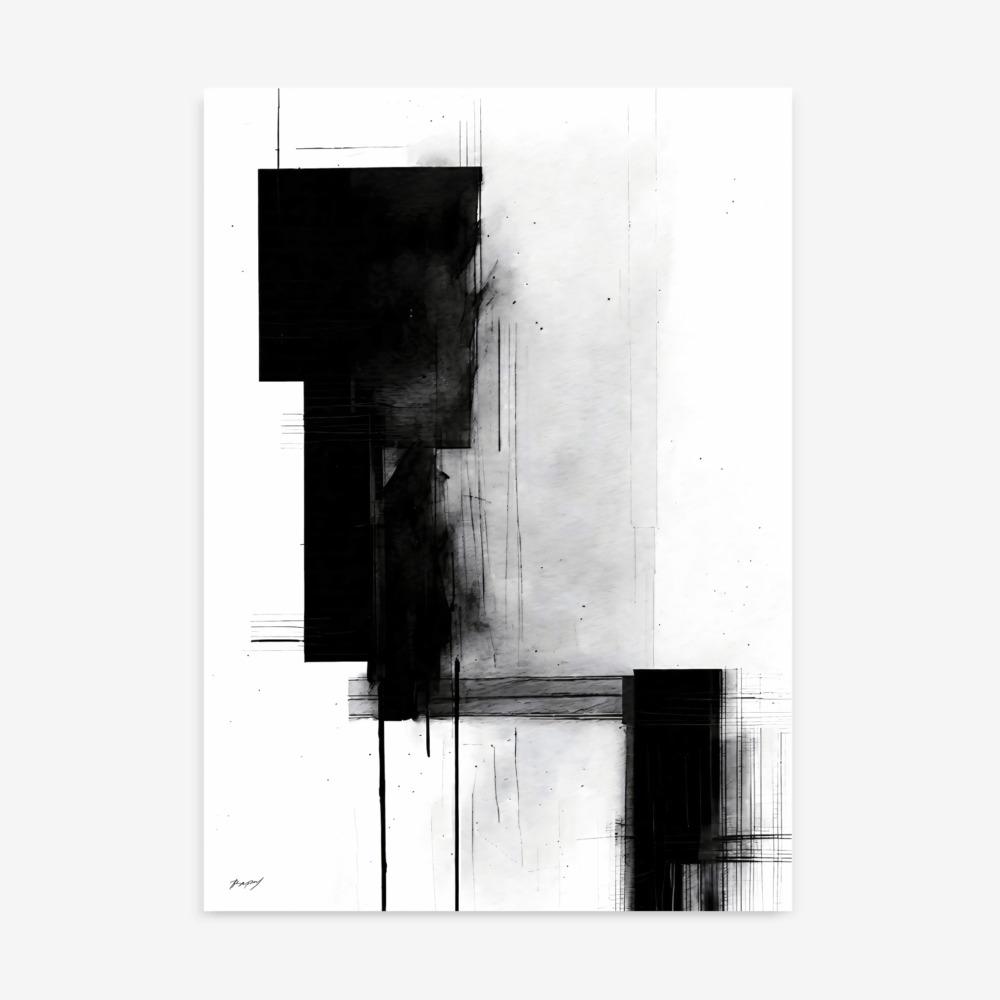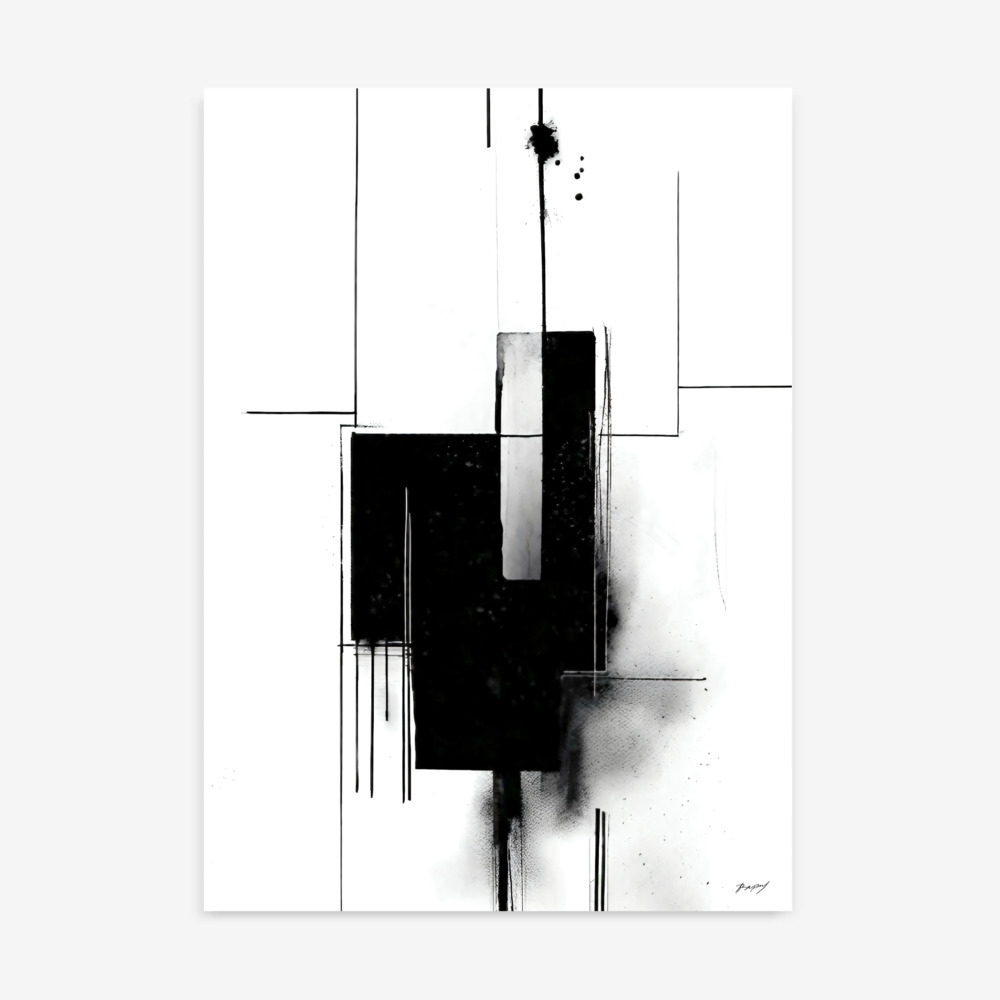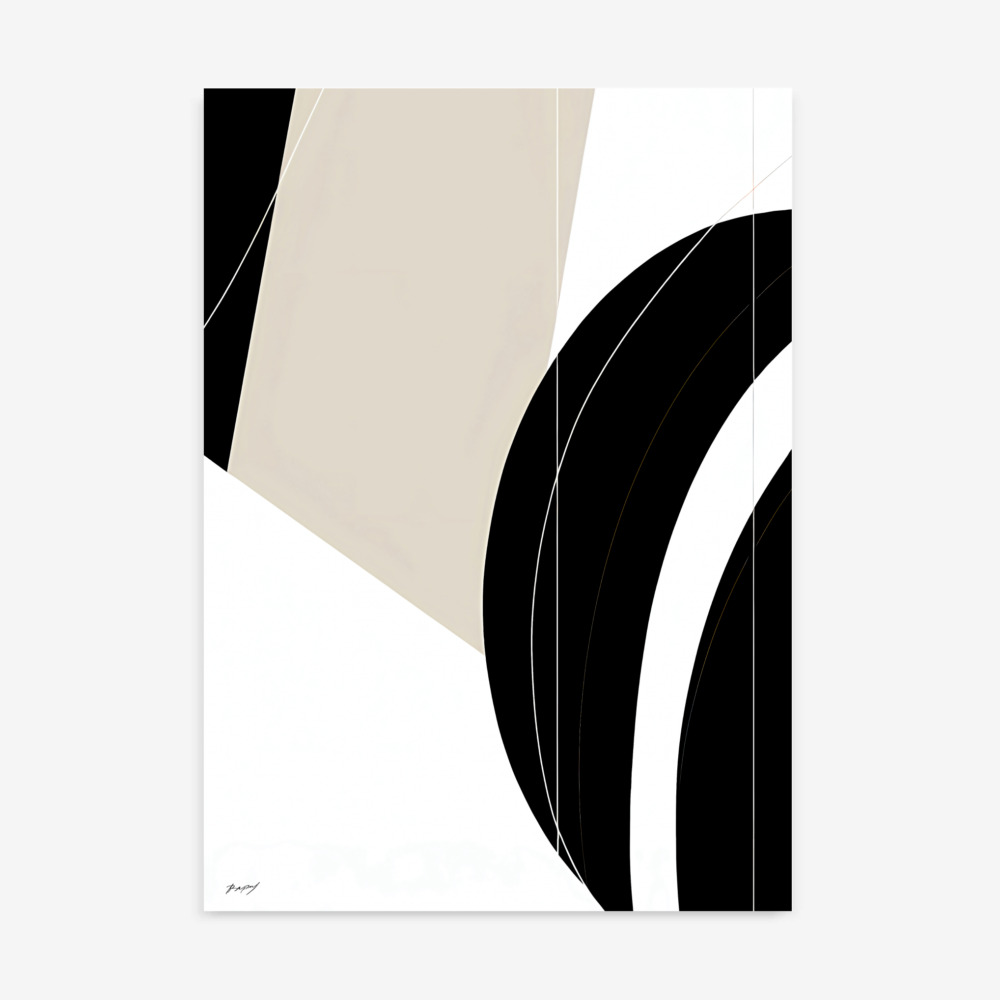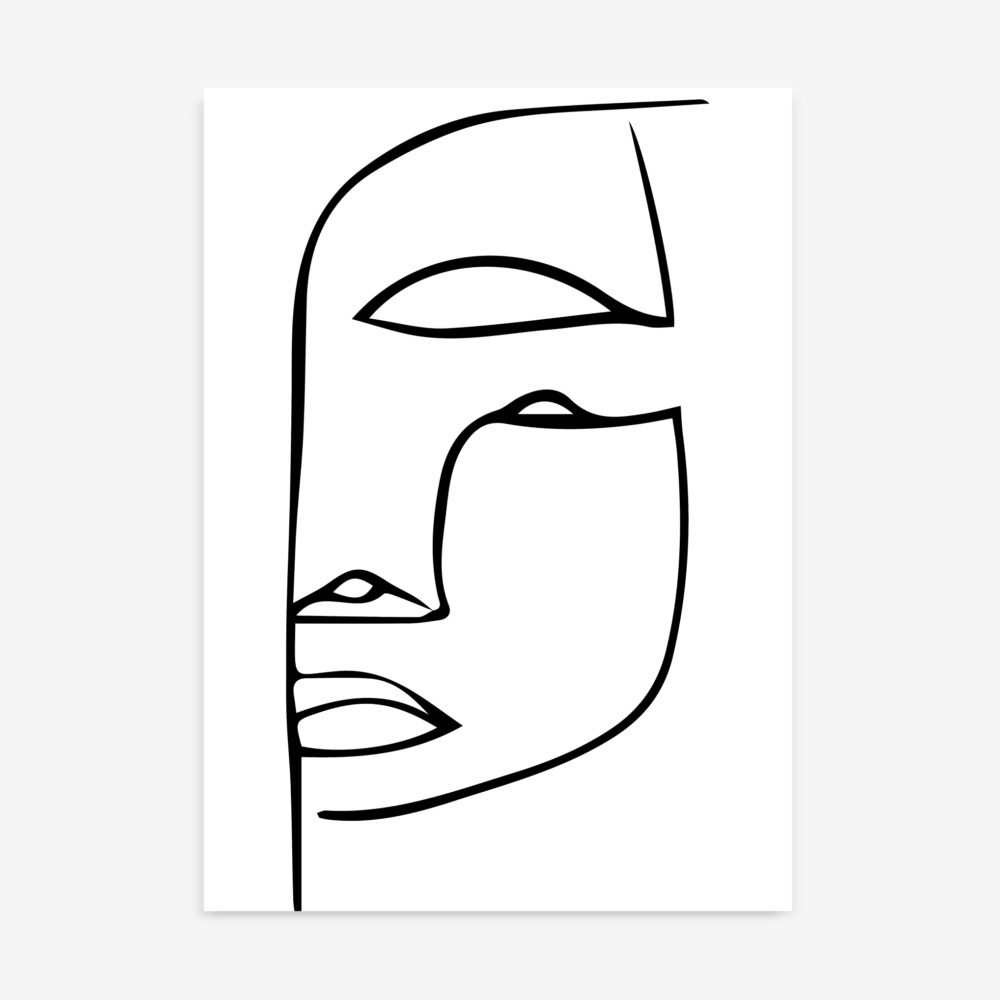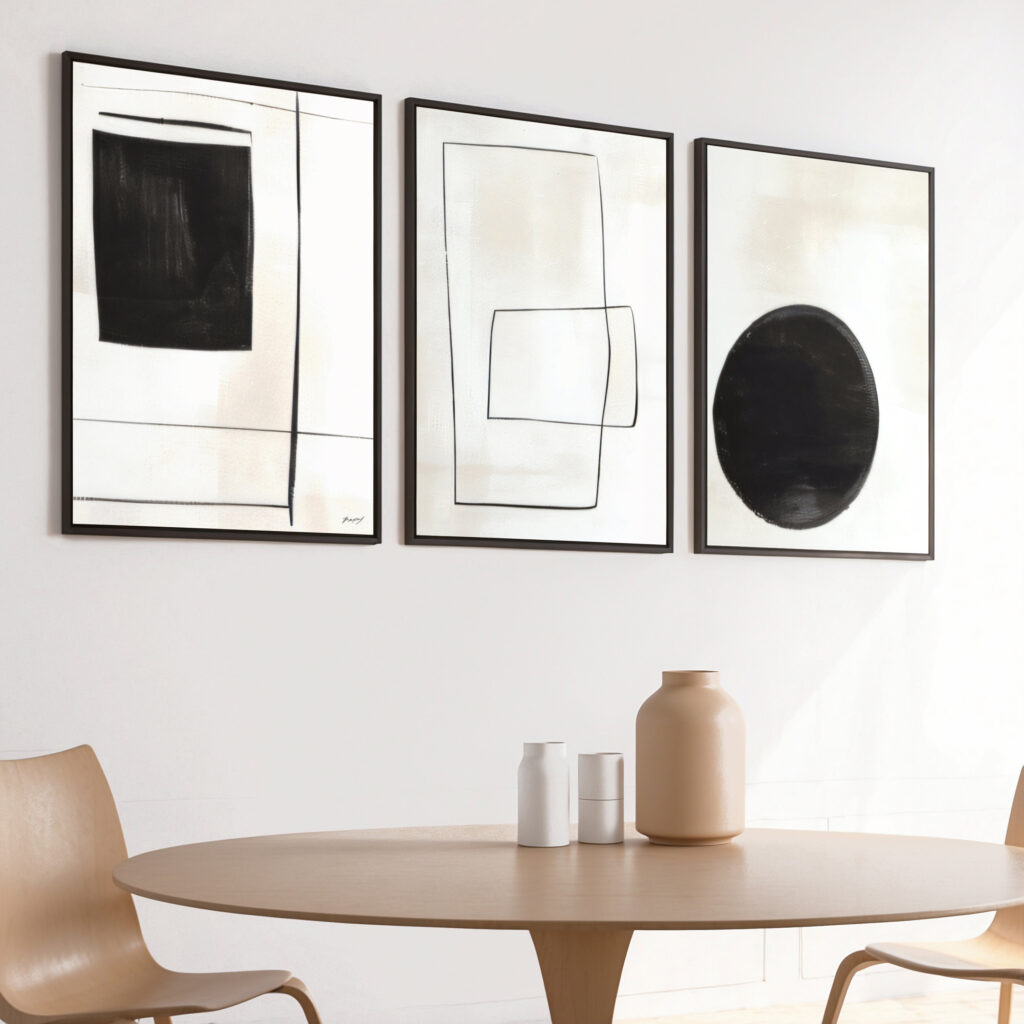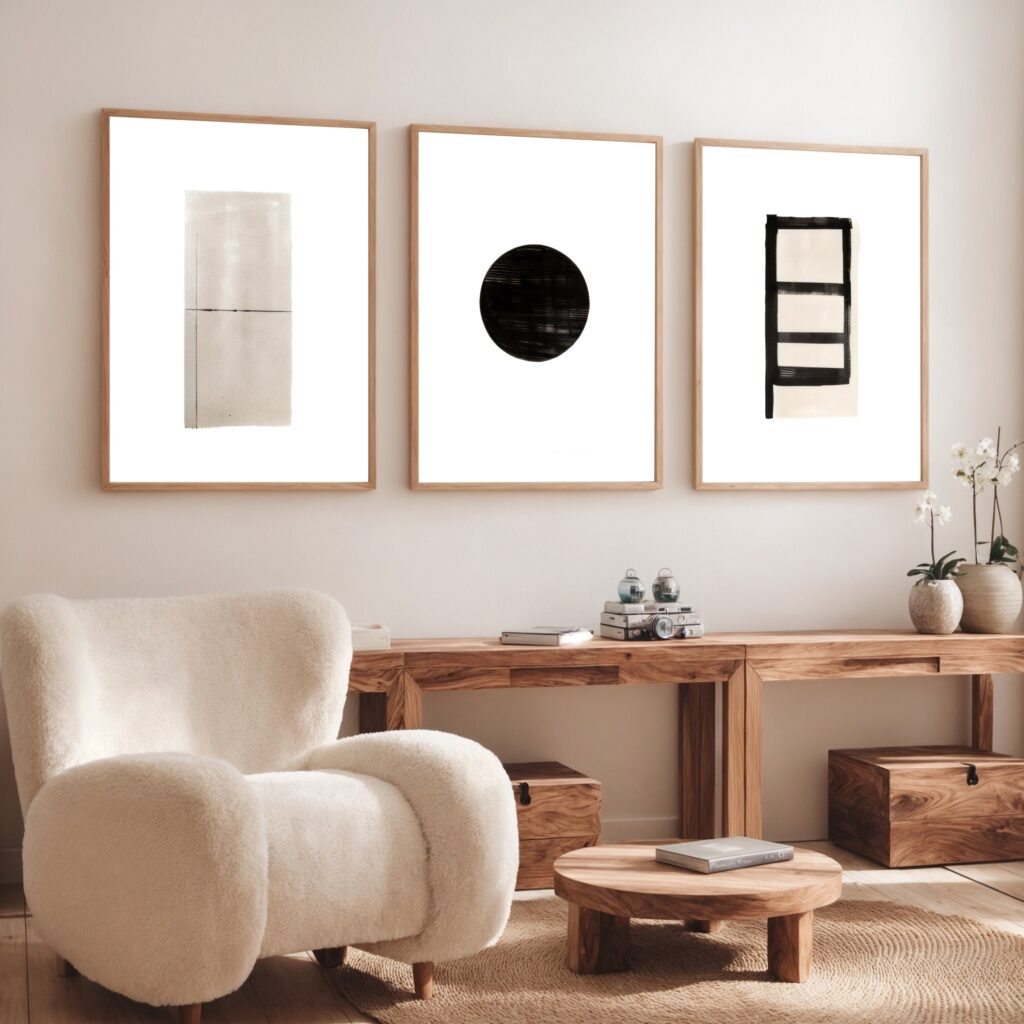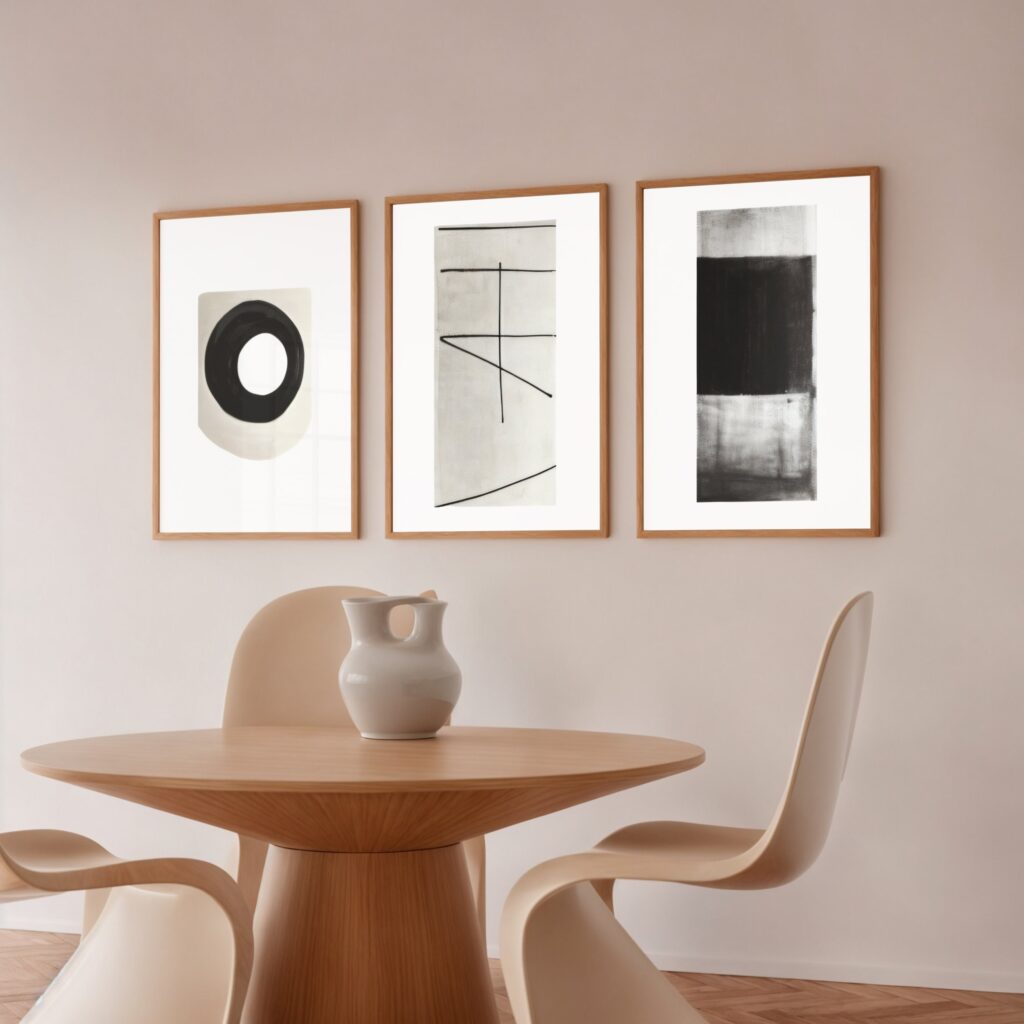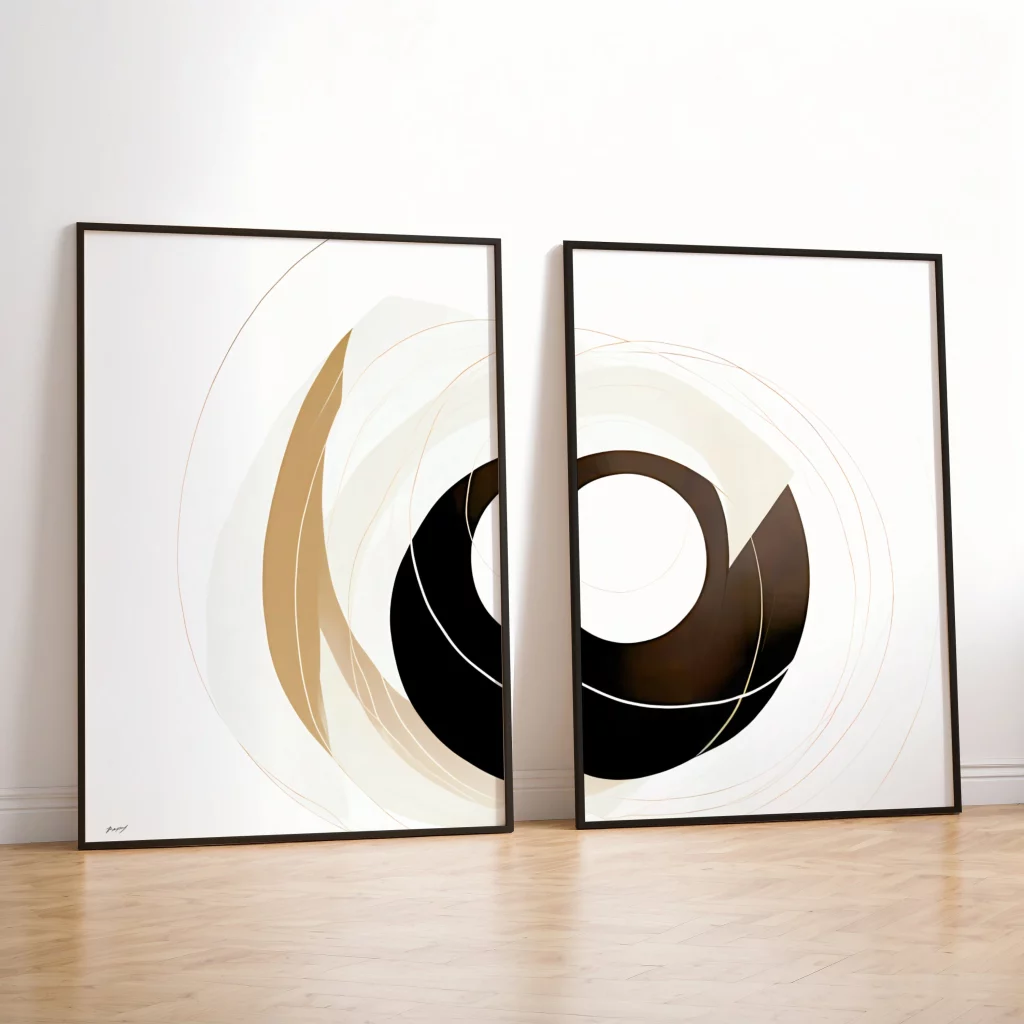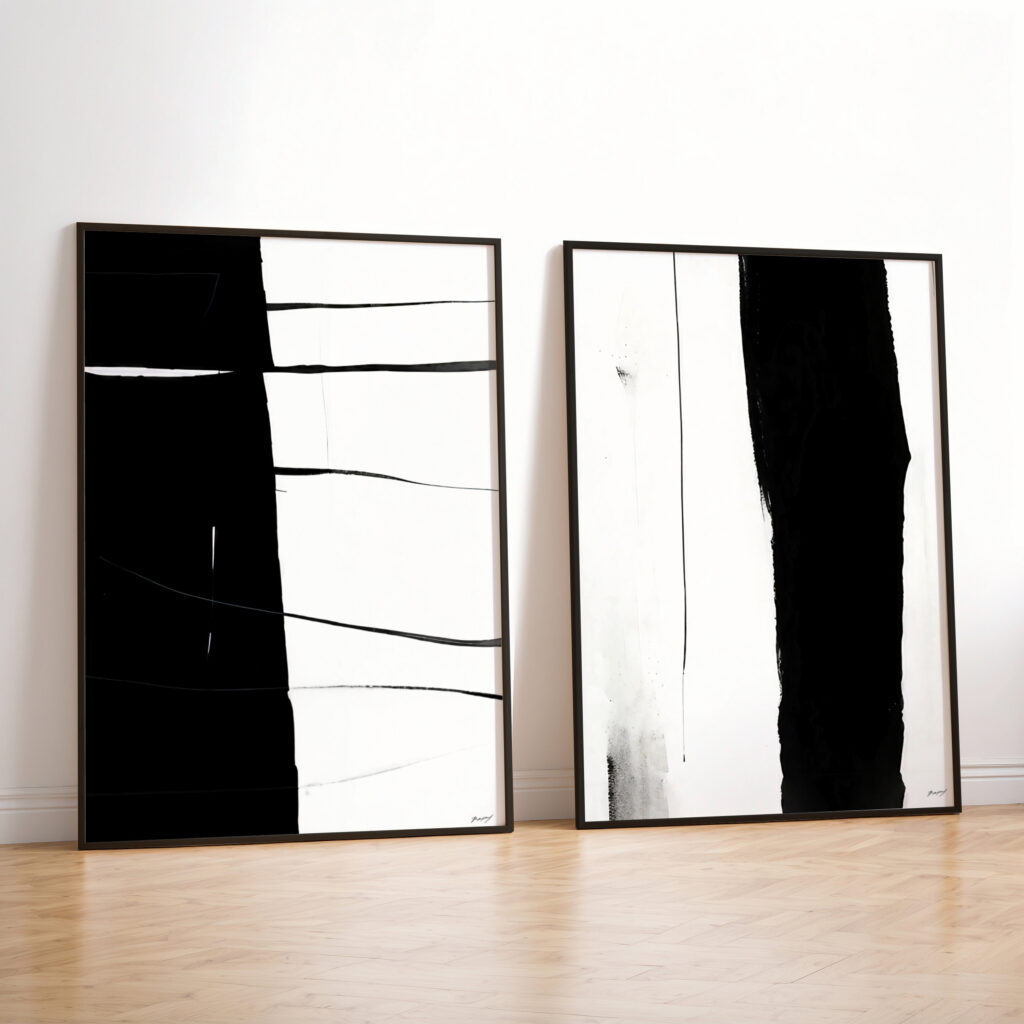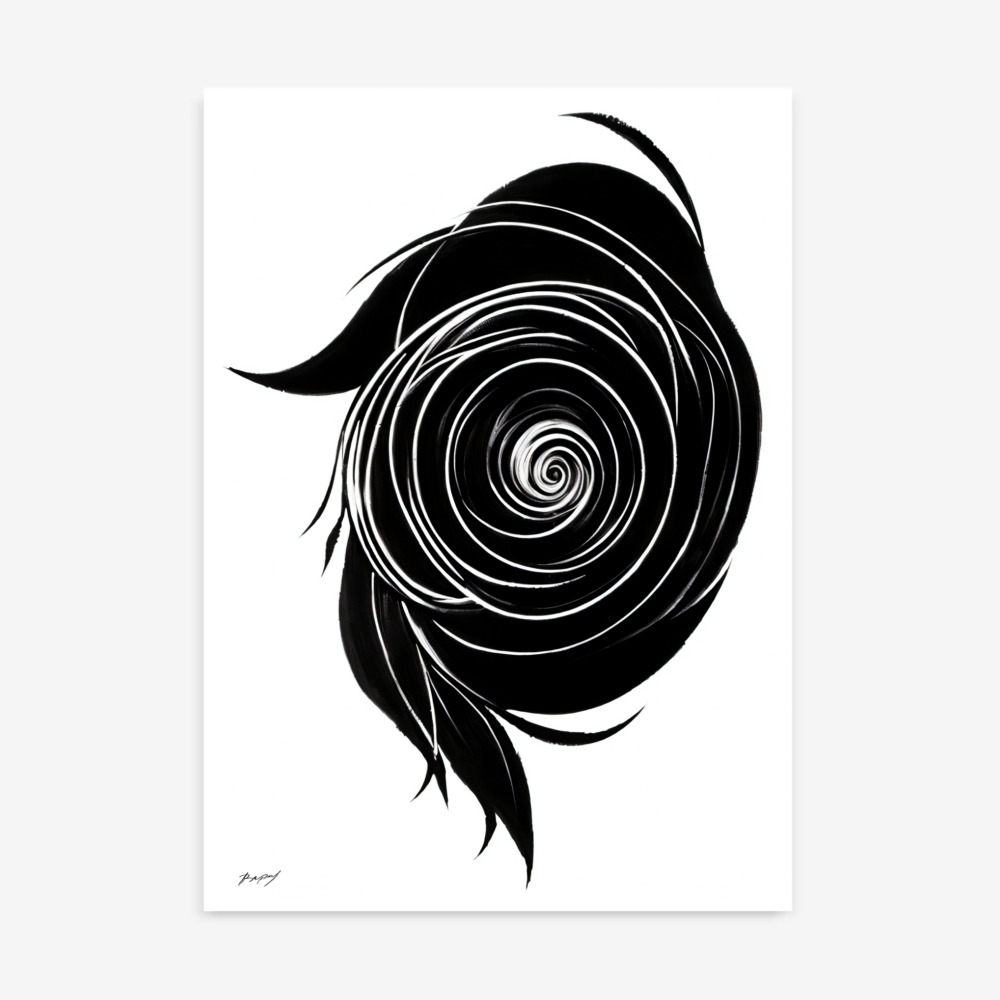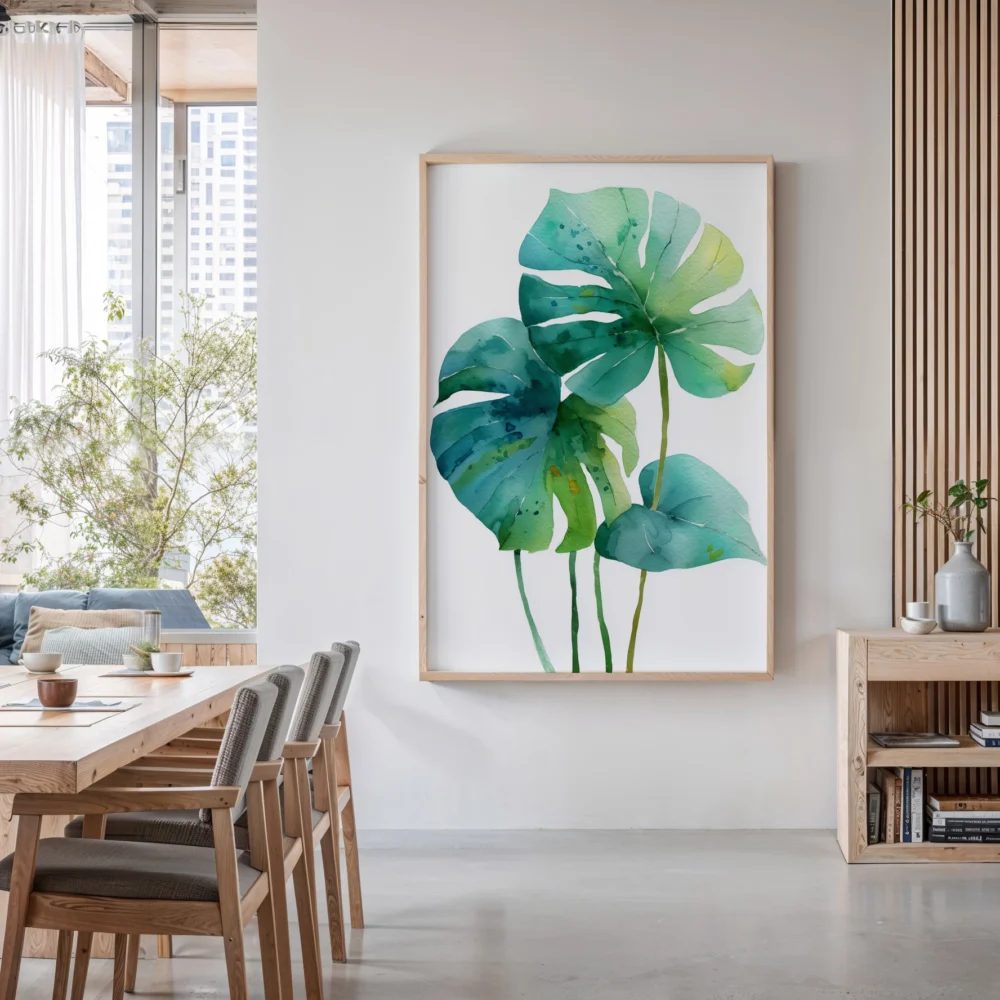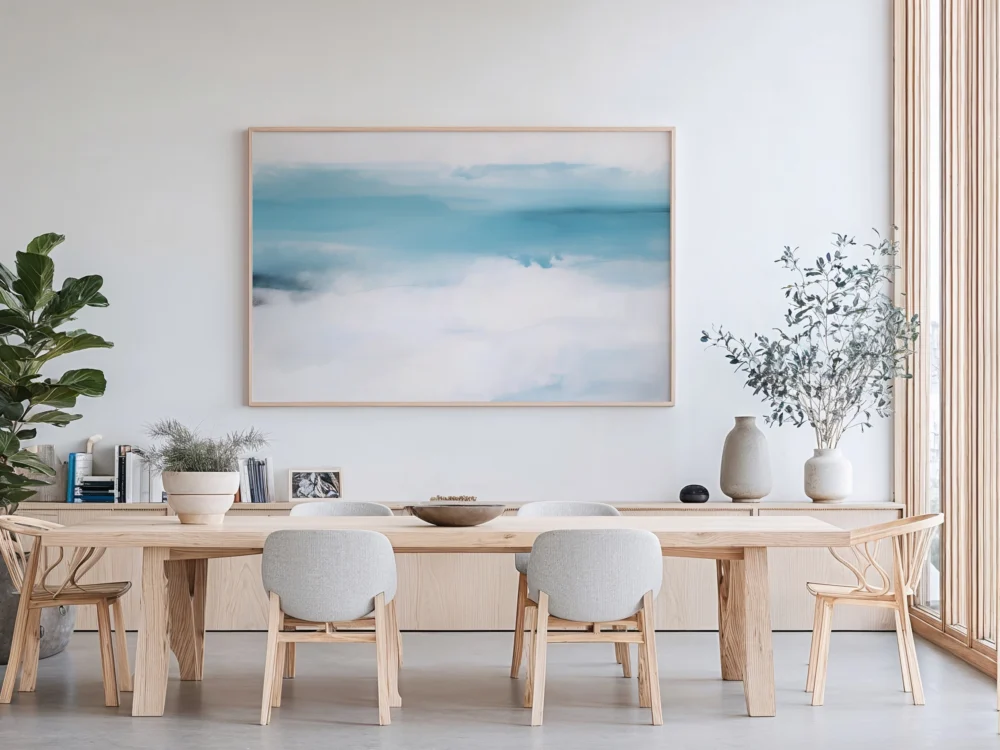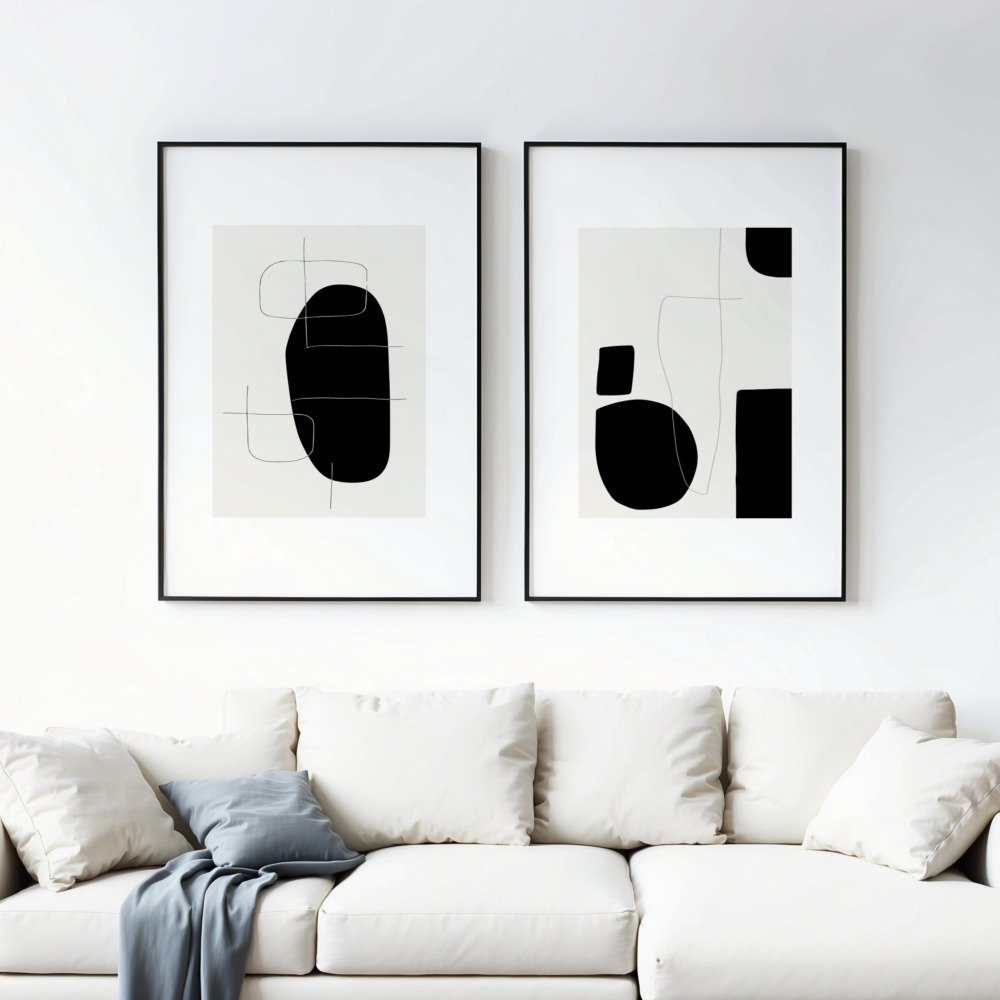
Black and white art goes with almost every color scheme because it has no hue of its own to clash with anything. Black gives a room an anchor and white keeps it light, so a monochrome print can sit beside warm neutrals, earthy tones, cool blues or bright accents and still look like it belongs. It also changes how a room feels: usually calmer, more focused and a little more polished.
Quick answers
- Are black and white complementary colors? Not in the color wheel sense. They are neutrals, not hues, but they are the strongest possible contrast, which is why they work with everything.
- What colors go with black and white art? All of them. Warm neutrals soften it, earthy tones make it feel modern, cool blues and greens make it moody, and bright colors look sharper next to it.
- What is a black and white color scheme called? A monochrome or achromatic scheme.
- Best rooms: living room, bedroom, home office, hallway and kitchen. It suits small spaces especially well.
- How to hang it: center the art about 145 to 150 cm (57 to 60 in) from the floor, and size it to roughly two-thirds of the furniture below.
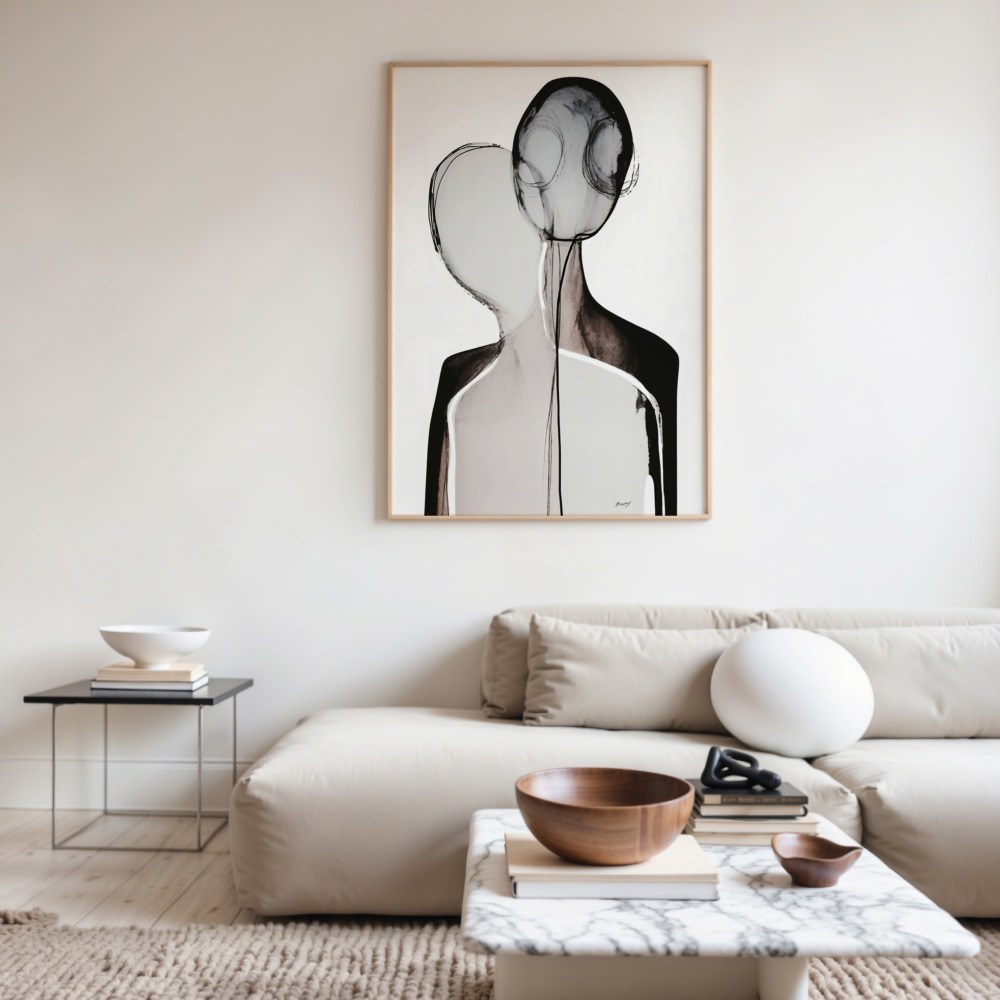
Why black and white works with any color
Most colors have a temperature and a mood. Red is warm and loud, blue is cool and calm, green leans natural. When you put two hues side by side, they either get along or they fight. Black and white skip that problem. They have no hue at all, so there is nothing to compete with the colors already in your room.
What they do have is contrast, and lots of it. Black is the darkest value you can put on a wall and white is the lightest. That contrast gives your eye a clear place to land, which is why a single black and white print can pull a whole wall together even when the furniture, rug and cushions are all different colors.
So when people ask whether black and white are complementary colors, the honest answer is no, not technically. Complementary colors are opposites on the color wheel, like blue and orange. Black and white sit outside the wheel. But in practice they behave like the most flexible partners you can find.
What colors go with black and white art?
| Your room’s palette | What black and white art does | Prints that work well |
|---|---|---|
| Warm neutrals (cream, beige, oatmeal, greige) | Adds definition so the room doesn’t look washed out | Soft line art, abstracts with a beige or off-white ground |
| Earthy tones (terracotta, rust, olive, wood) | Gives a rustic room a cleaner, modern edge | Bold brushstroke abstracts, botanical line drawings |
| Cool and moody (navy, slate, forest green) | Brings light into a dark room and adds drama | Misty landscapes, black and white photography |
| Bright accents (yellow, coral, cobalt, pink) | Calms the room down and makes the colors look intentional | Graphic geometric prints, simple shapes |
| All white or all grey | Stops the room feeling flat or clinical | High-contrast pieces with plenty of black |
With warm neutrals. A room full of cream and beige can start to look like one soft blur. A black and white print gives it edges. Look for pieces that aren’t pure stark white: an off-white or warm paper tone sits more naturally next to beige than bright white does.
With earthy tones. Terracotta, rust, leather and natural wood are warm and a little rustic. Black and white cuts through that and makes the room feel current. Bold black brushstrokes or simple botanical line drawings work especially well here. See our black and white botanical prints.
With cool, moody colors. Navy walls, slate grey or deep green can swallow light. A print with plenty of white in it brightens the wall, while the black ties it back to the dark tones. Misty landscapes and black and white photography suit this kind of room.
With bright colors. If you love a cobalt sofa or a mustard chair, black and white art is the thing that keeps it from looking chaotic. It gives the eye a rest between the brights and makes the color choices look deliberate rather than random.
How black and white art changes the mood of a room
Color affects how a space feels, and taking color away does too. Black and white art tends to have a few predictable effects.
- It calms things down. With no competing colors, there is less visual noise. That makes monochrome a good fit for bedrooms, reading corners and busy family rooms that need a quiet spot.
- It helps you focus. In a home office, a simple black and white piece in your line of sight gives your eyes somewhere to rest without pulling your attention the way a colorful painting can.
- It feels considered. Monochrome reads as confident and a bit more grown-up. It is one reason designers lean on it when they want a room to look finished.
- It adapts to you. Black and white art doesn’t push one emotion. An abstract can feel energetic on a good morning and calm in the evening, depending on the light and your mood.
Black on its own can feel heavy and white on its own can feel cold. Together they balance each other, which is why a print with both usually feels more comfortable than an all-black or all-white wall.
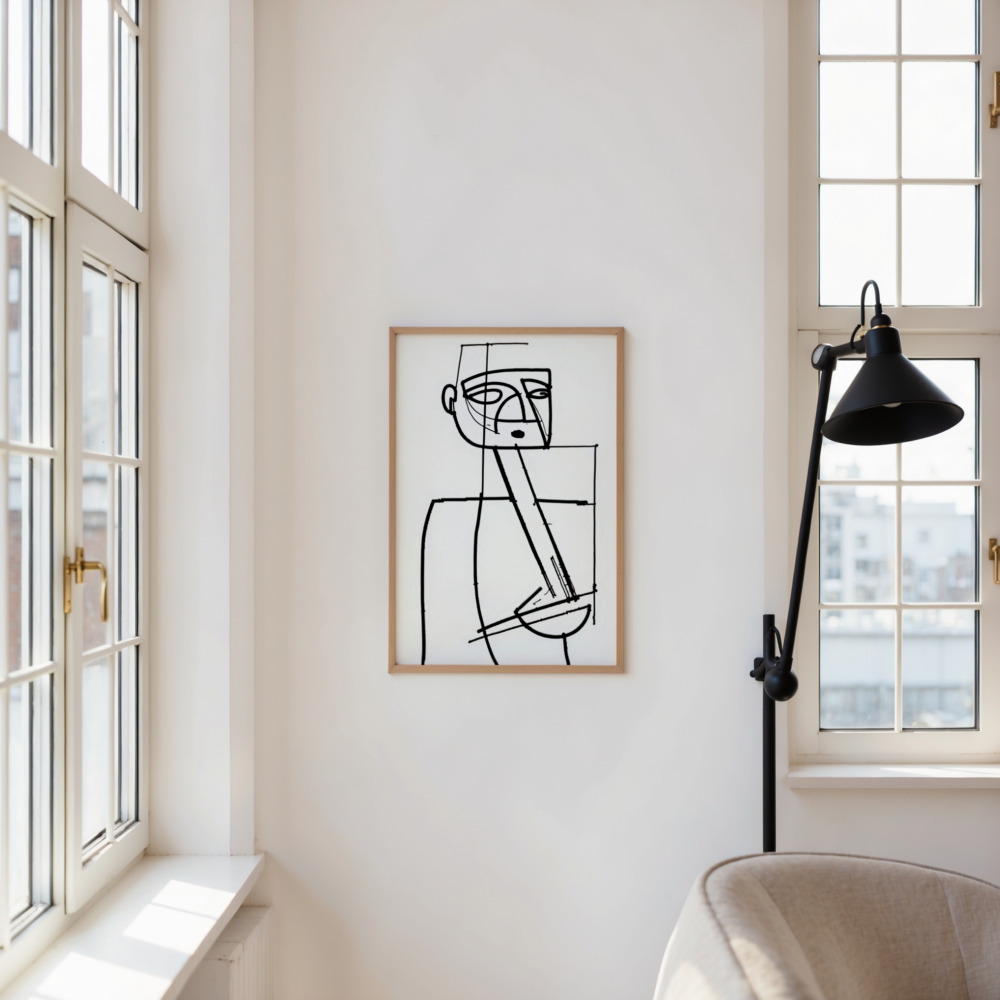
Types of black and white art
Abstract art. Brushstrokes, shapes and textures with no fixed subject. Easy to live with and very flexible. Large abstracts make strong focal points above a sofa or bed.
Line art. Faces, figures, leaves or objects drawn with a few clean lines, often a single continuous one. Light and airy, so it suits small rooms and minimalist spaces. Browse our black and white line art prints.
Photography. Landscapes, architecture, animals and city scenes. Black and white photos feel timeless and documentary, and they add depth to modern rooms.
Geometric prints. Circles, grids, stripes and blocks. Graphic and bold, they work well in modern and mid-century rooms. See black and white geometric art.
Botanical drawings. Leaves, branches and plants in ink. They bring nature in without adding color, which makes them easy to pair with green plants in the same room.
For a deeper look at each style and how they differ, read our guide to black and white art styles.
Black and white art for every interior style
Minimalist. Black and white is almost the default here. Choose one strong piece rather than many, and leave plenty of empty wall around it.
Scandinavian. Pale wood, white walls and soft textiles. Line art and simple botanicals add character without breaking the light, airy feel.
Japandi. Warmer and more organic. Look for ink wash or brushstroke pieces on an off-white ground. More ideas in our Japandi wall art guide.
Industrial. Brick, metal and concrete. Black and white photography of cities, bridges or machinery fits naturally.
Mid-century modern. Teak, curved furniture and accent colors like mustard and teal. Graphic geometric prints echo the shapes of the era.
Traditional and classic. Black and white portraits or landscapes in a slightly heavier frame bring a modern note to a classic room without feeling out of place.
Black and white art room by room
Living room. This is where a large statement piece or a pair of prints works best. Above the sofa, aim for art that covers about two-thirds of the sofa’s width. Find ideas in our black and white living room art.
Bedroom. Choose softer pieces: gentle line art, misty landscapes or quiet abstracts. Avoid anything too busy above the bed. See black and white bedroom art.
Home office. One calm piece in your line of sight helps you focus. Geometric or minimal abstract prints work well because they don’t tell a story your brain wants to follow.
Kitchen and dining area. Botanical drawings and food-free graphic prints keep things fresh. Black and white also stands up well to colorful dishes and open shelving.
Hallway and entryway. A narrow vertical print or a row of two or three small ones sets the tone the moment someone walks in.
Bathroom. Small prints, ideally under glass. Black and white suits tiled rooms because it works with any tile color.
Small spaces. White in the art reflects light and keeps a small room from feeling closed in. One medium piece usually looks better than several tiny ones.
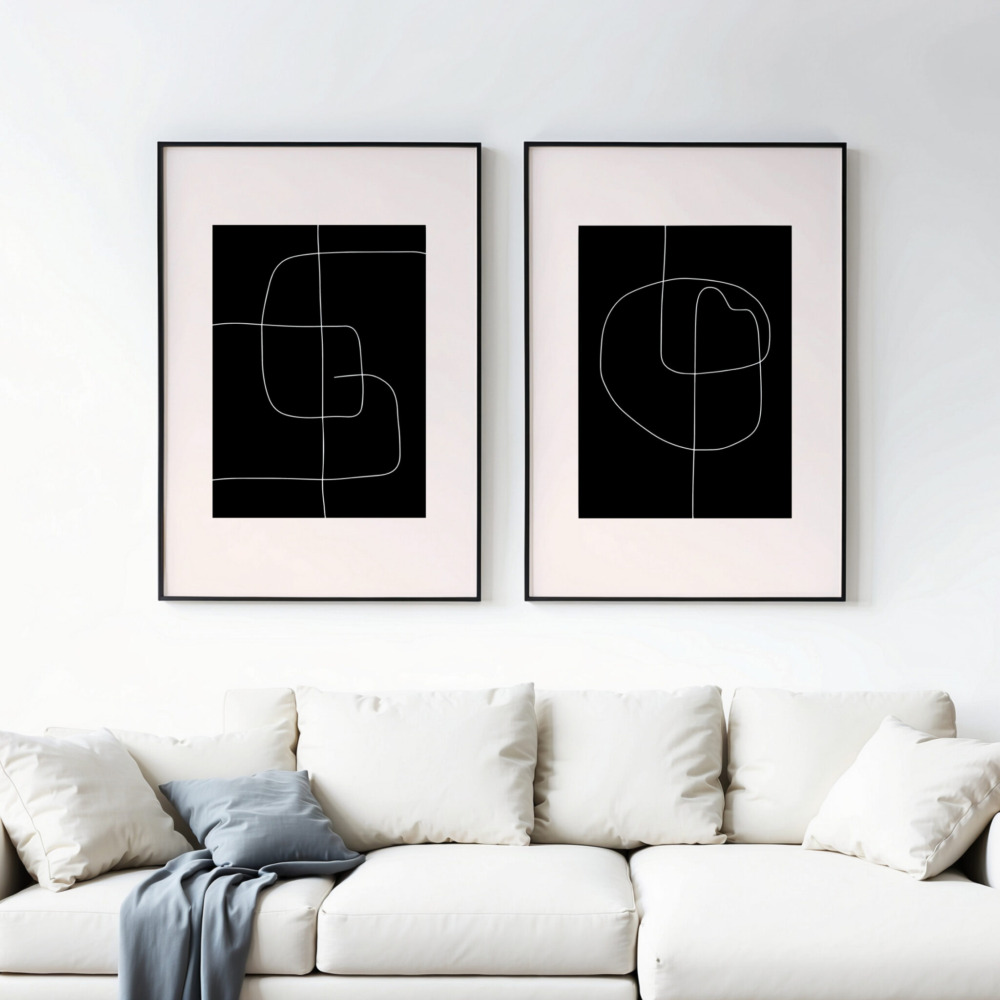
How to choose the right black and white print
Start with the room’s mood. Bold contrast and graphic shapes bring energy. Soft greys, fine lines and lots of white bring calm.
Balance black and white. A print that is mostly black feels heavy and dramatic, which suits large, bright rooms. A print that is mostly white feels light, which suits small or darker rooms.
Pick a subject you’ll still like in a year. Without color to lean on, the subject and composition carry the piece. Choose something that means something to you, whether that’s a landscape, a face or a simple shape.
Think about texture. Brushstrokes, ink bleeds and paper grain add depth that flat graphics don’t have. Rolled canvas adds a woven texture of its own. Our canvas vs paper guide explains the difference.
Mix carefully. You can combine photography, line art and abstracts on one wall, but keep one thing consistent: the frame color, the spacing or the general weight of the pieces.
What size black and white art should you choose?
| Wall | Rule of thumb | Typical size |
|---|---|---|
| Above a sofa or bed | About two-thirds of the furniture width | 100 x 70 cm to 150 x 100 cm, or a pair of 70 x 50 cm |
| Large empty wall | One oversized statement piece | 120 x 90 cm or 150 x 100 cm |
| Hallway or entryway | A narrow vertical print or a short row | 40 x 30 cm to 70 x 50 cm |
| Desk, shelf or bathroom | One small piece at eye level | 30 x 20 cm to 50 x 40 cm |
Hang art so its center sits about 145 to 150 cm (57 to 60 in) from the floor, and leave 15 to 25 cm between the top of a sofa or headboard and the bottom of the frame. For bigger walls, see our large black and white wall art, and for every measurement in one place, our wall art size guide.
Framing and hanging black and white art
Black frames make the piece look sharper and more graphic. They suit modern and industrial rooms.
White frames blend into a white wall and let the art float. They suit Scandinavian and minimalist rooms.
Natural wood frames add warmth and soften the contrast. They are the easiest choice for rooms with warm neutrals or earthy tones.
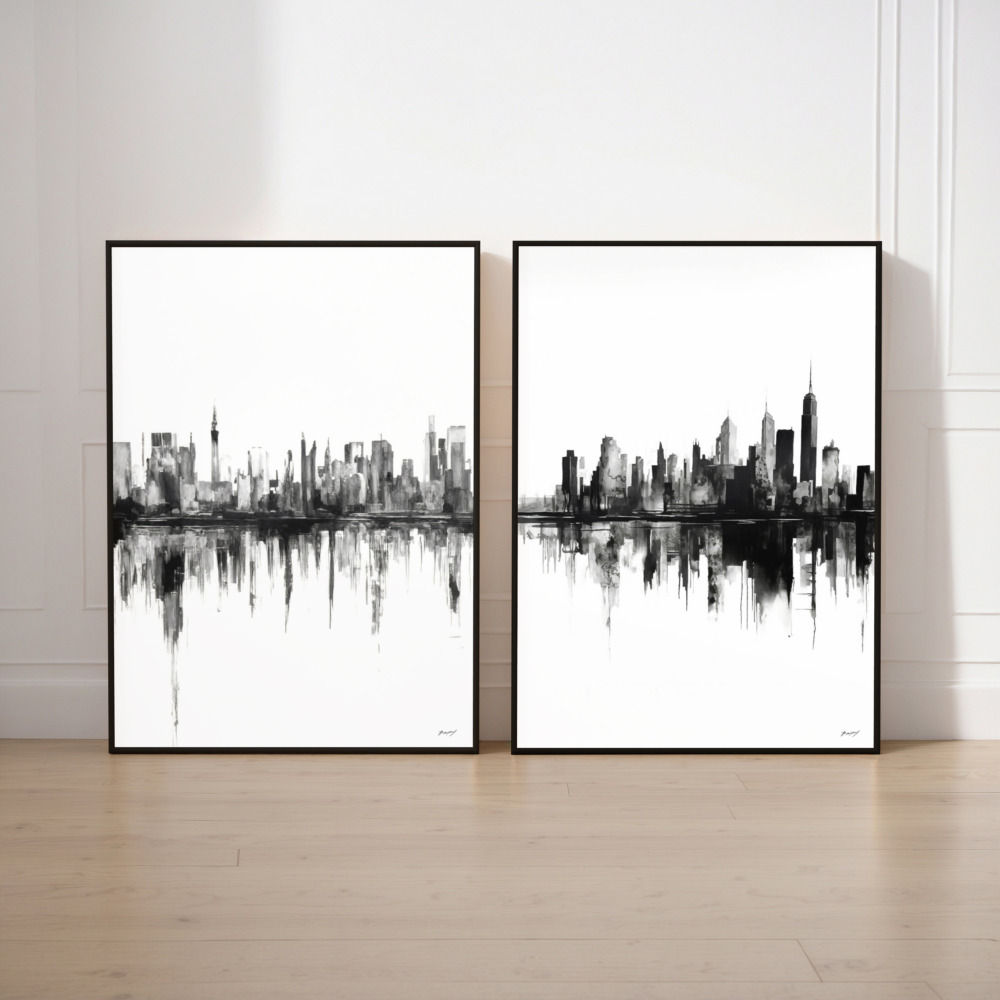
Gallery walls. Black and white is the easiest way to build a gallery wall that doesn’t look cluttered, because every piece already shares the same palette. Keep the frames consistent and the gaps even, around 5 to 8 cm. Our art print sets are designed to hang together.
Lighting. Black and white art loves good light. A picture light or a nearby lamp brings out texture and keeps the blacks from looking flat in the evening.
How to add a pop of color
If a fully monochrome room feels too strict, add color around the art rather than in it. A single colored cushion, a vase, a green plant or a rug that picks up one accent shade is enough. You can also choose a print that is mostly black and white with one small accent, such as a touch of beige, gold or muted blue. Keep it to one accent color so the black and white still does the main work.
Common mistakes to avoid
- Going too small. A small print on a big wall looks lost. When in doubt, size up or hang a pair.
- Using only stark white and pure black in a warm room. If your room is full of beige and wood, choose prints with a softer, warmer white.
- Forgetting texture. A monochrome room with flat walls, flat art and flat fabrics can feel cold. Add linen, wool, wood or plants.
- Hanging too high. Art that floats near the ceiling feels disconnected from the furniture below it.
Why black and white art is a smart long-term choice
Trends in color come and go every few years. Black and white doesn’t depend on any of them, so a print you buy today will still work after you repaint, change the sofa or move house. It also moves easily from room to room, which makes it one of the most flexible things you can hang.
Frequently asked questions
Are black and white complementary colors?
Not technically. Complementary colors are opposite hues on the color wheel, like blue and orange. Black and white are neutrals with no hue, but they create the strongest possible contrast, which is why they pair well with every other color.
What colors go with black and white art?
Almost any color. Warm neutrals and wood tones soften it, earthy colors like terracotta make it feel modern, cool blues and greens make it moody, and bright accents look sharper and more intentional next to it.
What is a black and white color scheme called?
It is usually called a monochrome or achromatic color scheme. Achromatic means without color, using only black, white and greys.
How do you add a pop of color to black and white art?
Add color around the art instead of in it: a cushion, a vase, a plant or a rug in one accent shade. Or choose a mostly black and white print with one small accent such as beige, gold or muted blue.
Does black and white art make a room feel cold?
It can if everything else in the room is also stark and flat. Warm it up with wood frames, textured fabrics, plants and prints that use an off-white or warm paper tone instead of bright white.
What frame color is best for black and white art?
Black frames look sharp and graphic, white frames let the art blend into a white wall, and natural wood frames add warmth. Choose based on the room rather than the print.
Can you mix black and white photography with line art and abstracts?
Yes. Keep one element consistent, such as the frame color or the spacing between pieces, and the mix will look planned rather than random.
Is black and white art good for small rooms?
Yes. Prints with plenty of white reflect light and keep a small room feeling open. One medium piece usually works better than several small ones.
Which room is best for black and white art?
It works in every room. Living rooms suit large statement pieces, bedrooms suit softer line art and landscapes, and home offices suit calm geometric or abstract prints.
Is black and white art still in style?
Yes. Black and white art has been a design staple for decades because it doesn’t depend on trend colors, so it keeps working as your room changes around it.
Find your black and white art
You can browse all our black and white wall art, all designed by one artist and printed to order on 230gsm fine art matte paper or rolled canvas, in sizes from 30 x 20 cm to 150 x 100 cm. Prints start from $36, shipping is free over $69, and you save 25% on 2 prints or 30% on 3 or more.