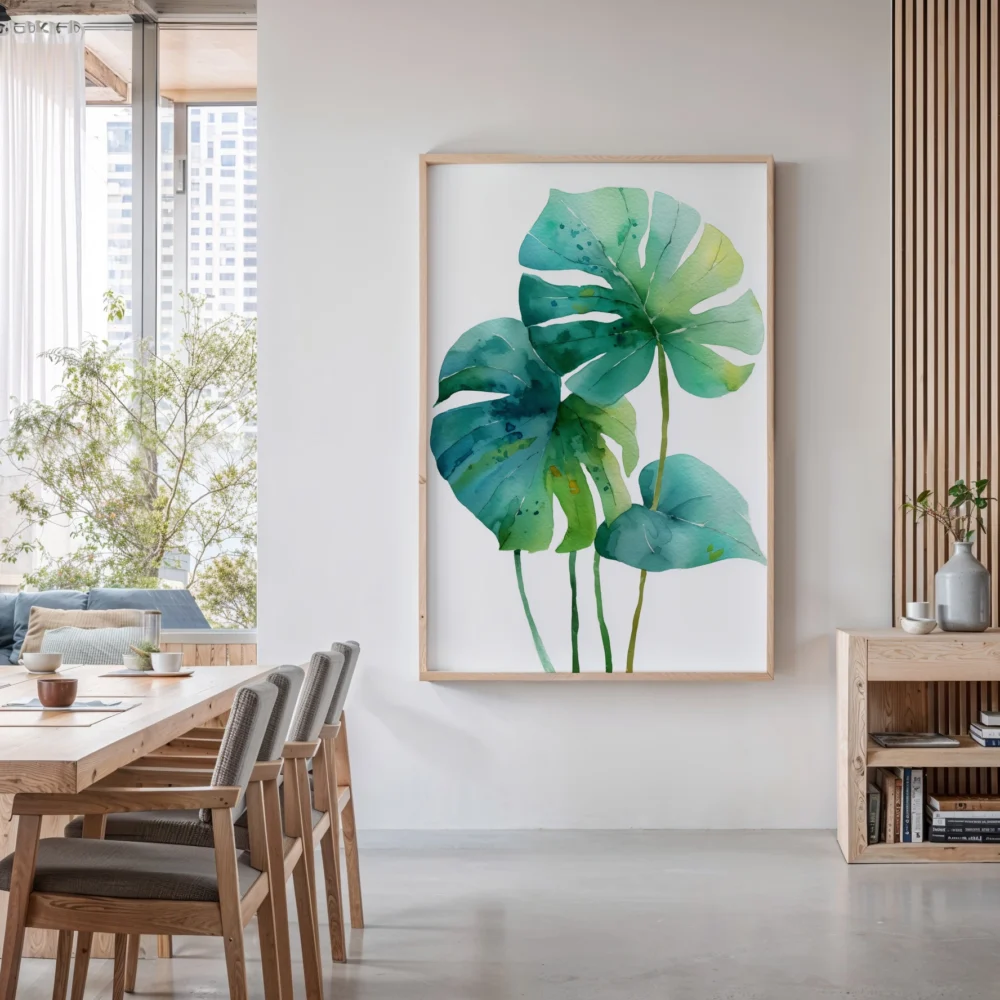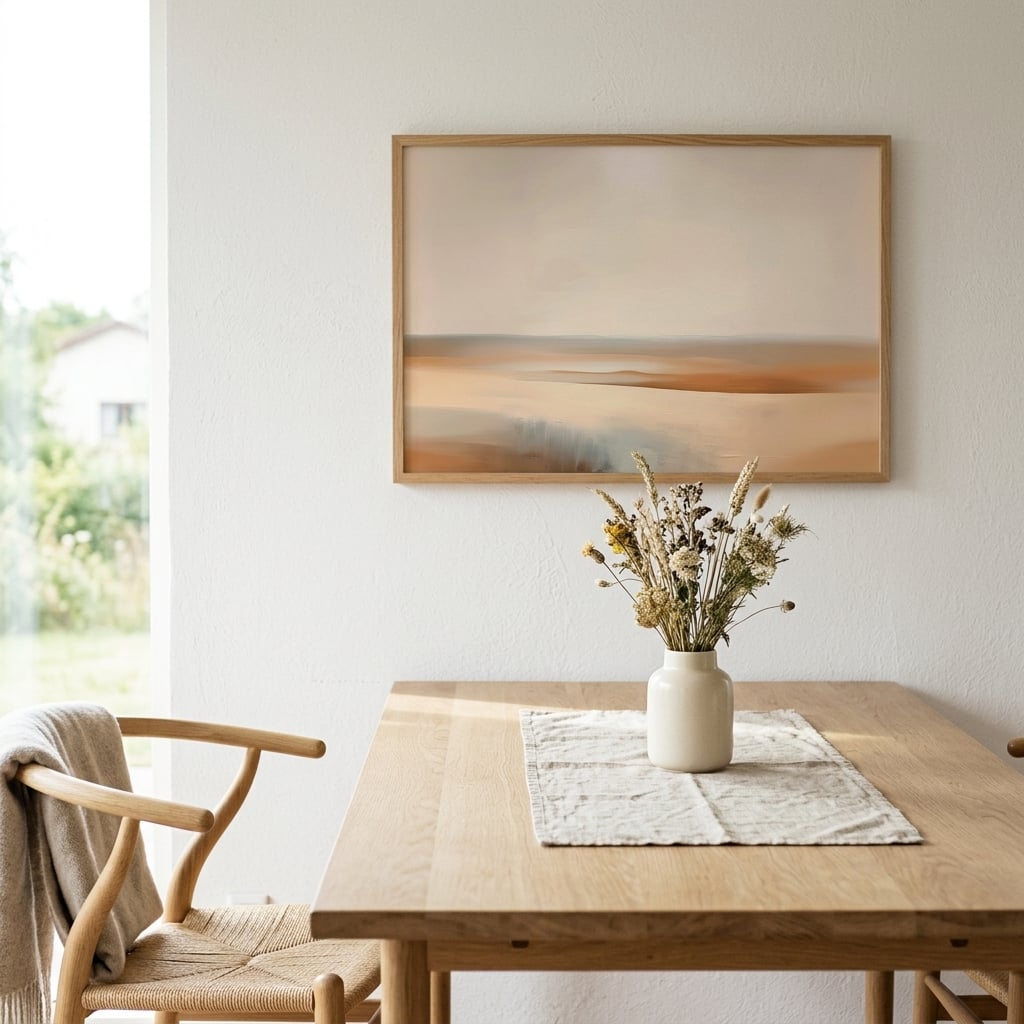
Walk into any gallery in the world and the art hangs at the same height. Not by taste, by formula: the centre of every piece sits 57 to 60 inches (145 to 152 cm) from the floor, the average human eye level. Museums have used it for a century because it works on bodies, not on trends. And yet most homes hang art a full foot too high, which is why so many walls feel vaguely off without anyone being able to say why.
This guide gives you the rule, the honest exceptions, and a room-by-room chart you can take to the wall with a pencil and a tape measure. Fifteen minutes of measuring fixes years of squinting upward.
Jump to: The 57-inch rule · Why homes get it wrong · The exceptions that matter · Room-by-room chart · Groups and pairs · The two-person method · Five common mistakes · Quick answers
The 57-Inch Rule, In One Minute
Measure 57 inches (145 cm) up from the floor. That is where the vertical CENTRE of your artwork should sit, not the top edge, not the hook. To find the nail position: take the height of your piece, halve it, subtract the distance from the top of the frame to the taut hanging wire, and add the result to 57. So a 36 in tall print with a wire that sits 4 in below the frame top gets its nail at 57 + 18 – 4 = 71 inches.
Do that once and write the little formula inside a kitchen cupboard. It is the single highest-value measurement in home decorating, and it costs nothing.
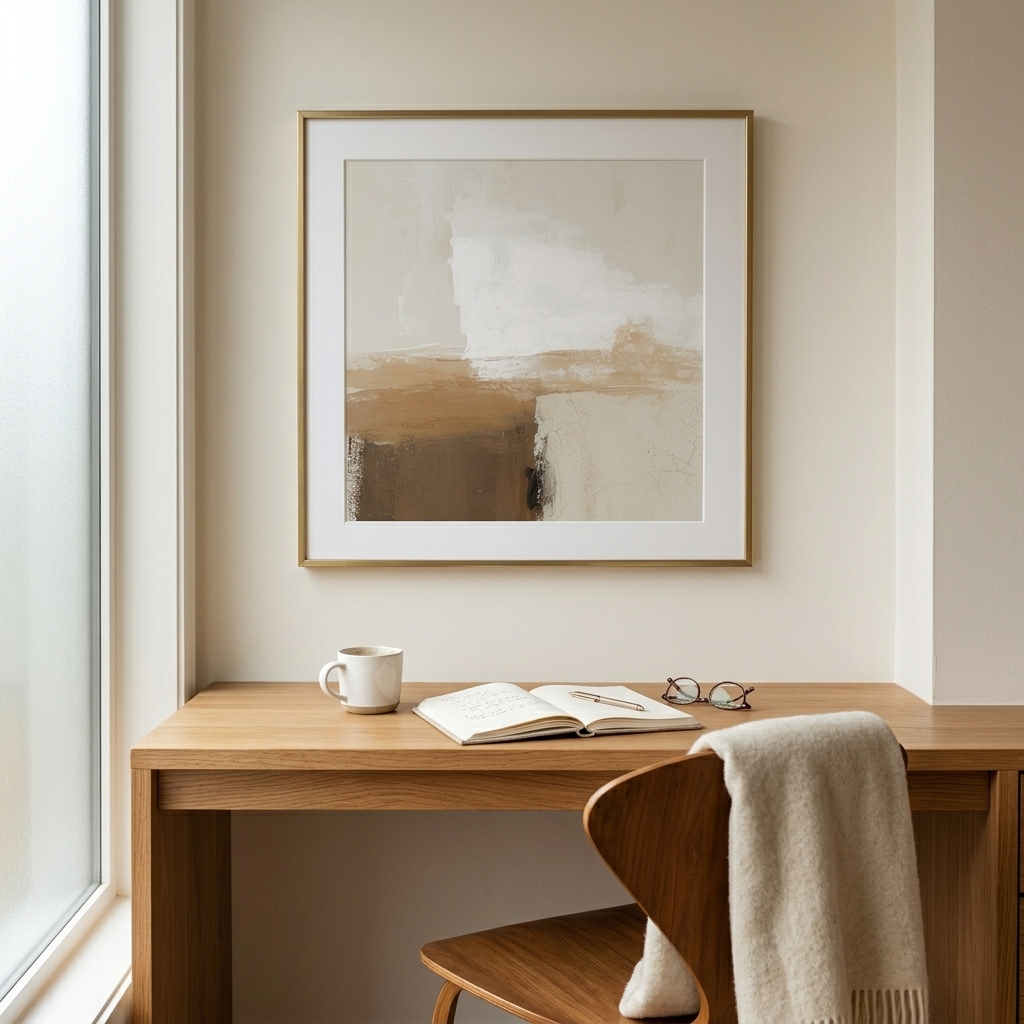
Why 57 specifically? It is the average adult eye height across men and women, and averages matter here: a home is viewed by everyone who enters it, so the compromise height wins. Some galleries use 60 inches; if your household runs tall, split the difference. What matters is picking one number and holding it everywhere, because consistency is what the eye reads as professional.
Why Homes Get It Wrong
Two habits push art upward. The first is hanging relative to the ceiling: people centre the piece in the empty space above the furniture, which on a modern 9 ft ceiling drags everything up toward the crown moulding. The second is the nail-first method, hammering at a comfortable standing reach, which for most adults lands around 65 inches, then hanging whatever fits. Both feel reasonable in the moment and both produce the floating-postage-stamp effect: a lonely rectangle adrift in plaster.
Art relates to people and furniture, not to ceilings. Lower almost always looks more expensive, more deliberate, and more like the interiors you save on Pinterest. When in doubt, drop it two inches further than feels natural. It will feel wrong on the ladder and right from the sofa, and the sofa is where you live.
The Exceptions That Actually Matter
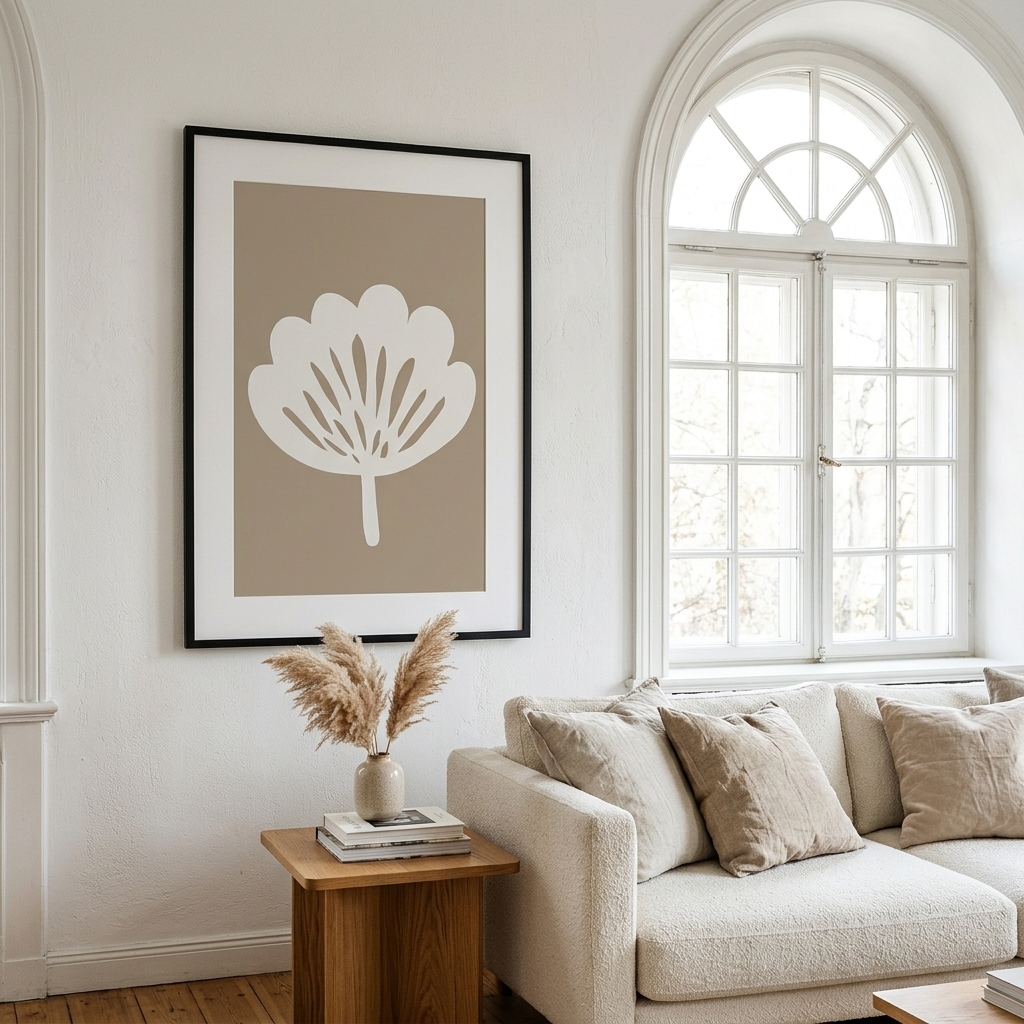
Above a sofa. Furniture overrides eye level (our above sofa wall art edit is built around these numbers). Leave 8 to 10 inches (20 to 25 cm) between the sofa back and the bottom of the frame. Any more and the two stop talking to each other; any less and heads bump frames.
Above a bed. Same logic, slightly more air (see the above bed wall art collection): 8 to 12 inches above the headboard. A wide horizontal print spanning most of the headboard width is the calmest solution in the house, and it removes the too-high temptation entirely because the headboard sets the line.
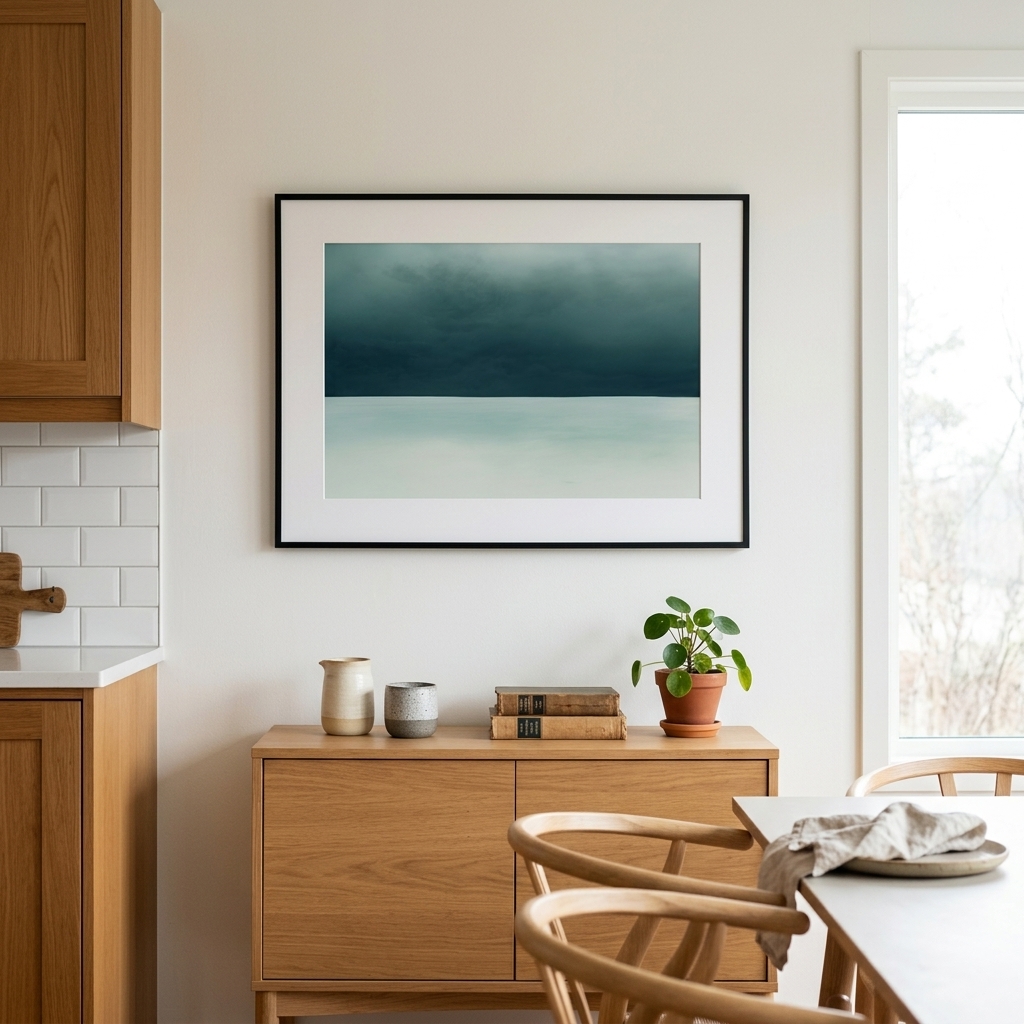
Above a console or sideboard. Keep 6 to 10 inches of breathing room. In an entryway, this usually means the centre lands a touch below 57 inches, and that is fine: the furniture sets the rule here, and an entry console is lower than a sofa back.
Dining rooms. People are seated, so eyes sit lower. Dropping the centre to around 54 to 57 inches keeps the art in the conversation rather than hovering above it like a supervisor.
Staircases. The rule goes diagonal: keep each piece’s centre 57 inches above the stair tread directly beneath it, and the whole run will climb in a clean line parallel to the handrail.
Home offices. If the art lives behind you on video calls, centre it to the camera’s framing instead: roughly level with your seated head, slightly off to one side. The 57-inch rule serves human eyes; the webcam is now an eye too.
The Room-by-Room Chart
Centre height from the floor, unless furniture rules apply:
Living room (open wall): 57-60 in / 145-152 cm · Living room (above sofa): 8-10 in above sofa back · Bedroom: 8-12 in above headboard · Dining room: 54-57 in / 137-145 cm · Hallway: 57 in / 145 cm, one line down the whole run · Entryway: 6-10 in above the console top · Home office: 57 in, or framed to the webcam · Stairs: 57 in above each tread, measured diagonally · Kids’ rooms: consider their eye level for a piece or two, around 45 in / 115 cm; art they can actually see beats art hung for visiting adults. This restraint is the heart of minimalist line art, where a single unbroken line does the work of a fully rendered image.
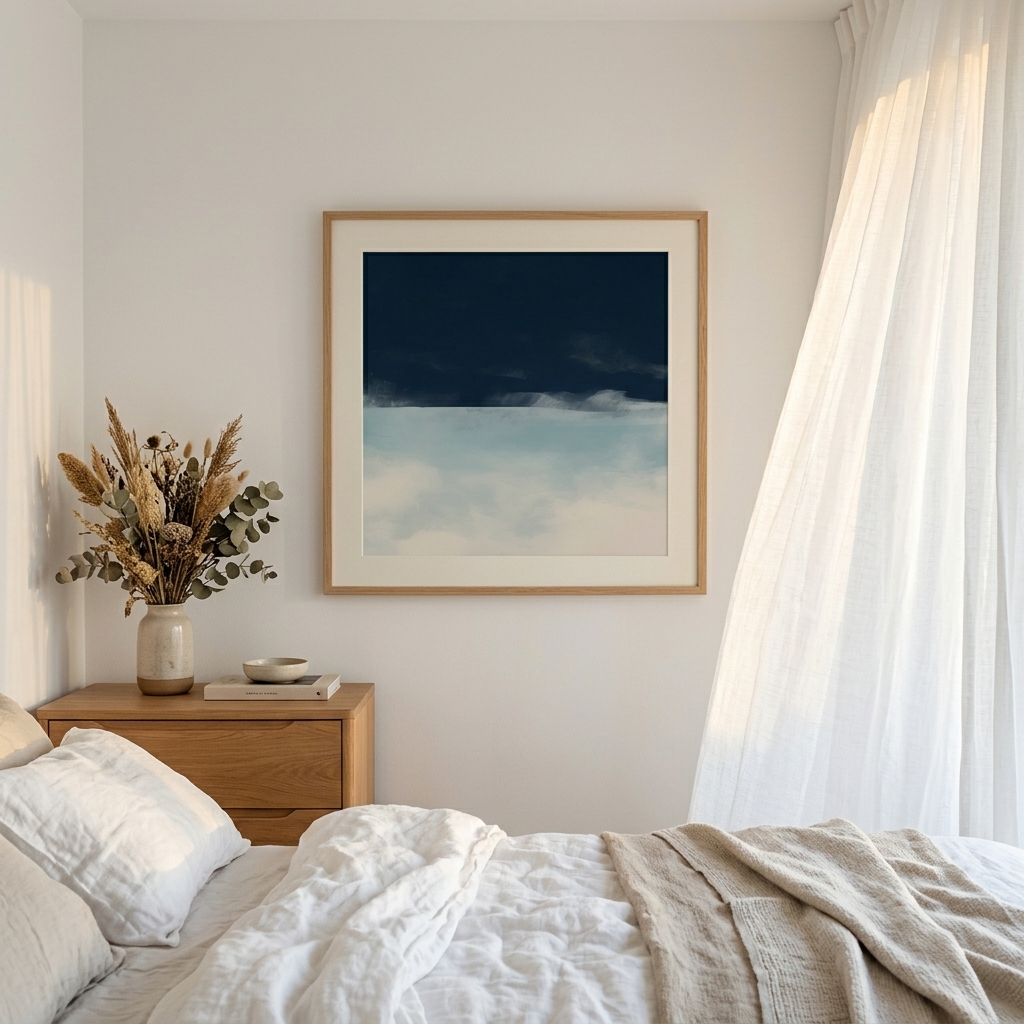
One consistency note for corridors: in a hallway, pick one centre line and never deviate. The eye reads a level line as intention; a wandering one reads as accident, even when each individual piece is perfectly placed on its own.
Hanging Groups and Pairs
Groups follow the same rule with one adjustment: treat the whole arrangement as a single artwork. The centre of the GROUP sits at 57 inches, and the gaps inside it stay tight and even, 2 to 3 inches (5 to 8 cm) between frames. Wider gaps dissolve a group into scattered singles.
For a pair, hang them as one wide piece: same height, one gap, centres level. For anything bigger, lay the layout on the floor first, photograph it, and transfer the measurements to the wall. Our gallery wall sets are sized so the group maths comes pre-solved, but the 57-inch centre still applies to the whole cluster.
The Two-Person Method (and the One-Person Cheat)
With a helper, the job takes five minutes per piece. One person holds the art against the wall and moves on instruction; the other stands back at sofa distance and directs. When it looks right from the viewing spot, mark the top edge of the frame lightly in pencil, then do the wire arithmetic from there. Never judge placement from arm’s length; the wall will fool you every time.
Solo, use the paper-template trick. Trace each frame onto kraft paper or old wrapping paper, cut it out, mark where the nail meets the wire on the template, and tape the templates up with low-tack tape. Rearrange freely, sleep on it, then hammer straight through the template’s nail mark and tear the paper away. One hole per piece, zero regret. A cheap laser level, the kind that sticks to the wall, turns hallway runs and gallery grids from an afternoon of squinting into ten calm minutes.
The Five Most Common Mistakes
Hanging to the ceiling. Covered above, and worth repeating: ceilings do not look at art. Tall slots and narrow walls have a whole format to themselves: vertical wall art.
Tiny art on big walls. Height cannot rescue scale. A wall over 8 ft wide wants a piece at least 36 in wide, or a group that adds up to it.
Different heights in one room. Every piece at its own “best height” produces visual noise. One centre line per room, always.
Ignoring the wire stretch. Hanging wire lifts under weight; measure it pulled taut or the piece lands an inch low.
Trusting the eye from two feet away. Always step back to sofa distance before committing the second nail. Walls lie at close range.
Quick Answers
Does the 57-inch rule work with high ceilings?
Yes, and it matters more there. High ceilings tempt everything upward, which shrinks the art and chills the room. Keep the centre at eye level and let the space above stay grand and empty.
What about TV walls?
The TV usually sits above the ideal art line already, so flanking art should hold the 57-inch centre rather than aligning with the screen. The mismatch reads correctly: screens are for sitting, art is for standing.
I rent and cannot make ten test holes. Any tricks?
The paper-template method above was invented for you. For no-drill options entirely, picture ledges and quality adhesive strips carry surprising weight, and both leave the deposit intact.
Once the heights are right, the art itself gets easier to choose: browse the large abstract wall art collection for open walls, or start with the piece you already own and give it the two inches lower it has been asking for. Still deciding what goes up in the first place? Our new guide to art deco’s signature motifs is a strong place to begin.