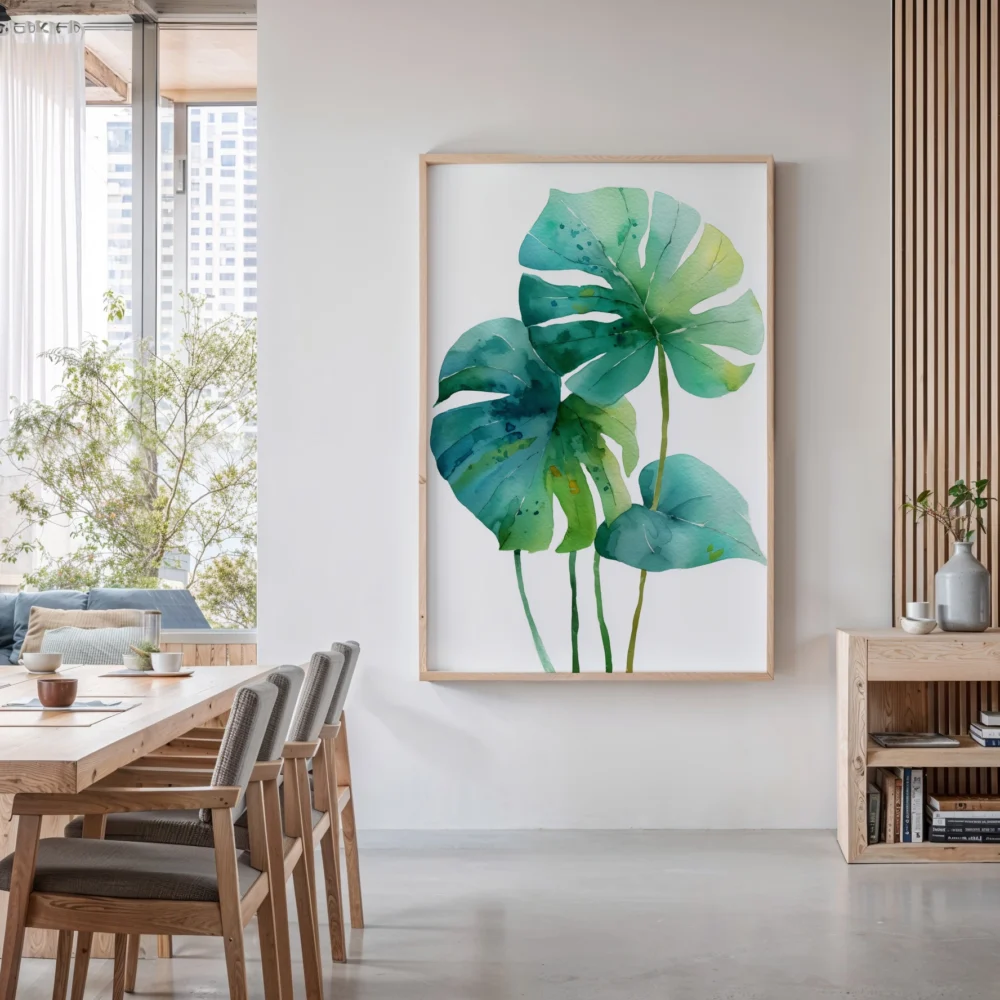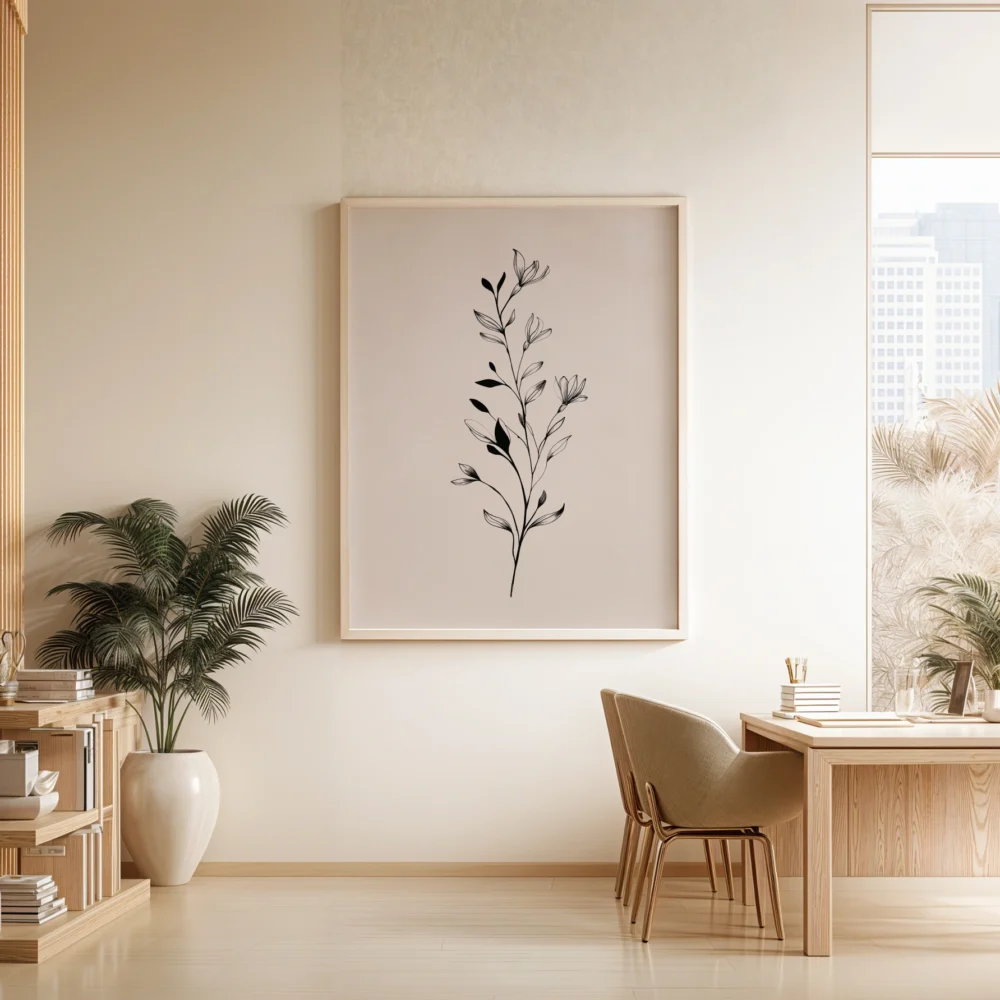
There’s something transformative about walking into a room and being stopped in your tracks by a commanding piece of art. Not a collection of small frames, not a gallery wall with twelve identical prints, but one bold, unapologetic statement that demands attention. Large scale art has emerged as the secret weapon of interior designers and homeowners who understand that walls aren’t just boundaries—they’re canvases waiting to make an impact.
The shift toward oversized wall art isn’t just a trend; it’s a response to our increasingly complex visual world. We’re surrounded by screens, notifications, and endless visual noise. In our homes, we crave simplicity, drama, and focal points that anchor our spaces with intentionality. Big art prints deliver exactly that: a singular, powerful presence that cuts through the clutter and creates an immediate sense of sophistication.
The Psychology Behind Statement Wall Art
Large-scale artwork affects us differently than smaller pieces. When you hang an oversized canvas, you’re not just decorating—you’re creating an experience. The sheer size commands visual attention, slowing down the viewer and inviting contemplation. This isn’t accidental. Art galleries have understood this principle for decades: scale influences emotional response.
An oversized piece eliminates the fragmented feeling that multiple small artworks can create. Instead of your eye bouncing between various elements, struggling to find cohesion, a single large work provides immediate visual rest. It’s the difference between reading a paragraph broken into disconnected phrases and reading fluid, uninterrupted prose. Your space feels more curated, more intentional, more complete.
Consider how artwork proportions relate to your furniture and architecture. A properly scaled oversized piece creates harmony between the vertical and horizontal elements of your room. It can even alter perceived room dimensions—making low ceilings feel taller or long narrow walls feel more balanced.
Where Oversized Wall Art Makes the Biggest Impact
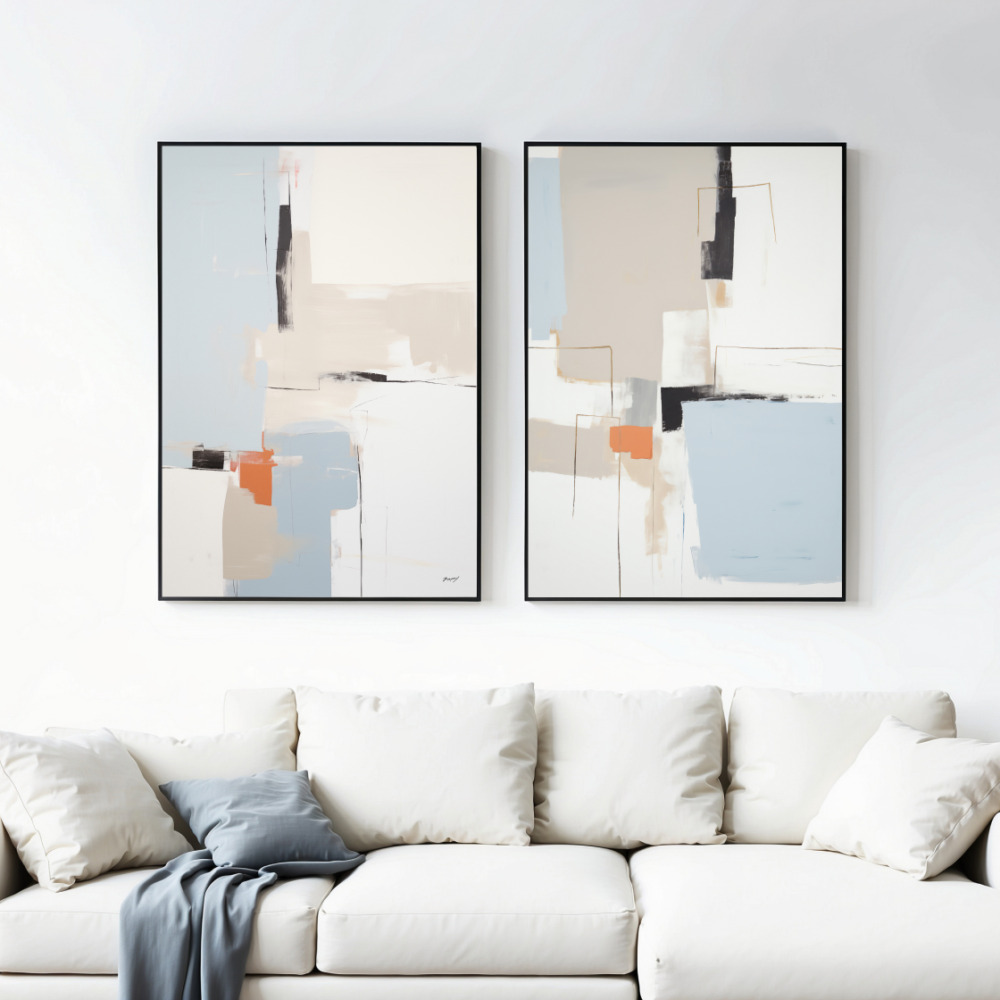
The living room sofa wall remains the most popular location for statement wall art, and for good reason. It’s typically the largest uninterrupted wall space in a home and the natural focal point when entering the room. An oversized canvas above your sofa should generally span two-thirds to three-quarters of the furniture’s width, creating visual proportion without overwhelming the space.
But don’t limit yourself to the obvious. Dining rooms are criminally underutilized for large scale art. A dramatic oversized piece behind or adjacent to your dining table transforms meals into events, conversations into experiences. The vertical orientation of most dining spaces makes them particularly suitable for tall, commanding artworks that draw the eye upward and add perceived height to the room.
Bedrooms offer another unexpected opportunity. The wall behind your headboard is prime real estate for oversized wall art that sets the mood and establishes your personal sanctuary. Unlike public spaces where you might consider guest preferences, your bedroom allows for deeply personal artistic choices—go bold, go moody, go abstract. This is your retreat.
Entryways and hallways shouldn’t be afterthoughts. A striking oversized print in your entry makes an immediate impression, setting the tone for your entire home. Long hallways, rather than becoming galleries of small frames, can be transformed by a single commanding piece that creates a destination and purpose for the space.
Choosing Your Oversized Canvas: Style Strategies
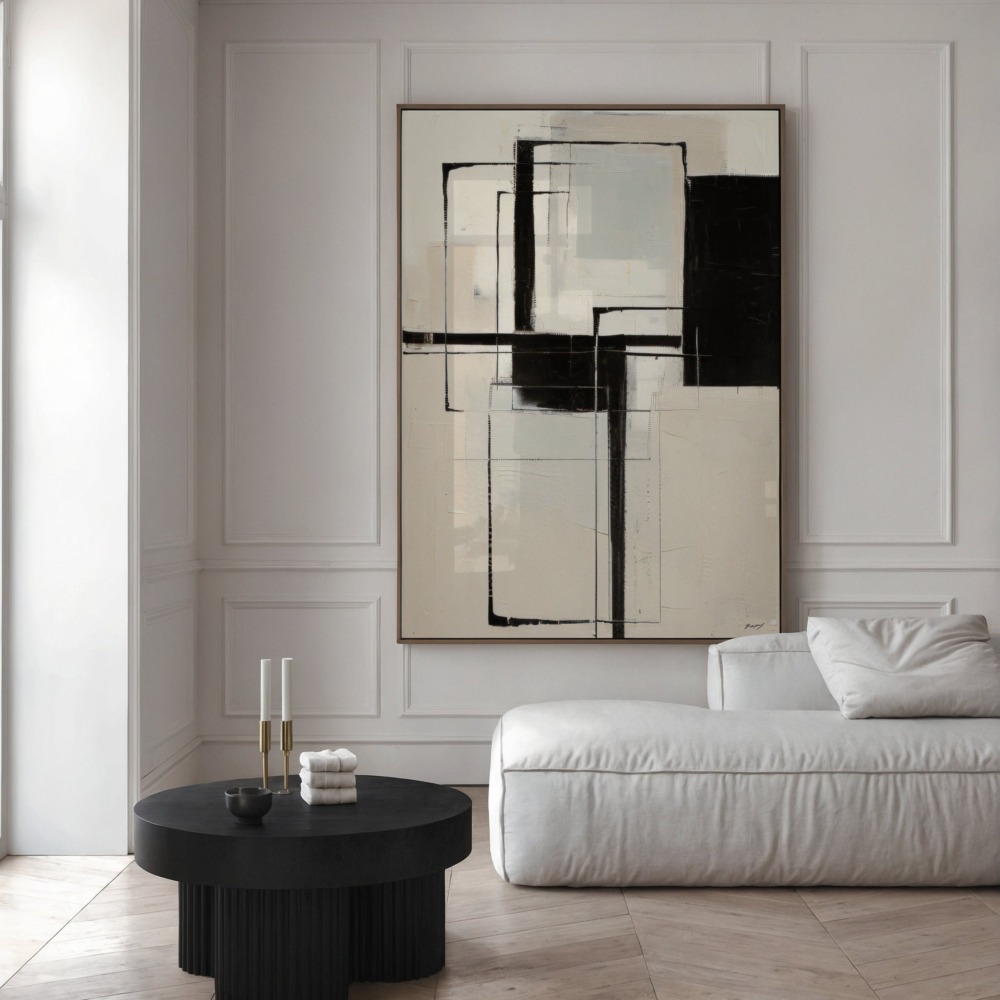
Abstract compositions dominate the oversized art market for several reasons. Large abstract works provide visual interest without becoming overwhelming or literal. They offer color, movement, and texture while allowing viewers to find their own meaning and connection. The ambiguity of abstraction makes it remarkably versatile across design styles—the same piece can feel at home in a minimalist Scandinavian space or a maximalist eclectic interior.
Minimalist and geometric designs work brilliantly at large scale because their simplicity gains power through size. What might seem too plain or basic in a small format becomes commanding and sophisticated when expanded. Think bold colorblocking, simple line work, or single-shape compositions. These canvas prints prove that you don’t need complexity to make an impact—sometimes restraint speaks loudest.
Photography also translates beautifully to oversized formats, particularly landscape and architectural subjects. A sweeping mountain vista or an urban skyline becomes immersive at large scale, creating windows to other worlds. Black and white photography gains dramatic intensity when enlarged, with tonal variations and textures becoming prominent design elements in themselves.
For those drawn to traditional or representational art, oversized botanical prints offer a bridge between classic and contemporary. Enlarged florals, leaves, or natural forms provide organic shapes and colors while maintaining the impact and drama of large scale art. They soften spaces without sacrificing presence.
Color Coordination Without Compromise
The common advice to match your art to your decor is outdated and limiting. Instead, think about color relationships and emotional resonance. Your oversized wall art should complement your space, not disappear into it. This means you can absolutely choose pieces with colors that don’t directly match your throw pillows or rug.
Consider the color temperature of your room. If your space features warm woods, creams, and earth tones, you might introduce cool blues or greens in your oversized canvas to create dynamic contrast. Conversely, a cool-toned room with grays and whites becomes more inviting with warm accent colors in your statement wall art.
Monochromatic schemes work exceptionally well with big art prints. A black and white piece, or artwork in grayscale, offers maximum versatility and timeless appeal. You can completely redecorate around it without the artwork ever feeling dated or mismatched. This is particularly valuable for oversized pieces, which represent a more significant investment than smaller decorative items.
Don’t fear bold color in large format. A vibrant, saturated oversized print can energize a neutral space, serving as the room’s personality and allowing everything else to remain understated. This approach is actually easier to execute than trying to balance multiple colorful elements—let one big statement do the heavy lifting.
Installation and Placement Secrets
Hanging oversized wall art requires different considerations than standard frames. The general rule suggests hanging artwork so the center sits at eye level, approximately 57-60 inches from the floor. However, for large scale art above furniture, you’ll want to adjust this formula, leaving 6-12 inches between the furniture top and the bottom of your artwork.
Weight distribution matters significantly with oversized canvas prints. Use appropriate wall anchors or wall studs—never rely on standard picture hanging hooks for pieces over 30 pounds. For very large works, consider French cleats or professional installation. The last thing you want is a dramatic crash in the middle of the night.
Lighting transforms oversized art from merely present to genuinely impactful. Even the most stunning statement wall art can fall flat in poor lighting. Consider installing picture lights, track lighting, or adjustable spots that highlight your piece without creating glare. Natural light is wonderful but watch for direct sun, which can fade prints over time. Indirect natural light complemented by dedicated artificial lighting offers the best of both worlds.
Making the Investment Work
Oversized wall art represents a more substantial investment than smaller pieces, but the cost-per-square-inch is often more favorable, and the impact is exponentially greater. Rather than purchasing multiple small works that never quite achieve cohesion, investing in one significant piece creates instant sophistication and design authority.
Quality matters at large scale. Print resolution, color accuracy, and material durability become more apparent when artwork spans four, five, or six feet. Look for archival quality big art prints using fade-resistant inks and premium substrates. Canvas should be properly stretched and gallery-wrapped for a finished, professional appearance.
Think of oversized canvas art as furniture-level investment rather than accessory-level decoration. You wouldn’t purchase a sofa expecting to replace it every season, and the same mindset should apply to statement wall art. Choose pieces that resonate personally rather than chasing trends, and your selection will remain relevant and loved for years.
The beauty of large scale art is its transformative simplicity. One bold choice eliminates the decision fatigue of curating multiple pieces, styling shelves, and achieving balance across numerous small elements. Your wall is complete, your room has its anchor, and you’ve created a space that reflects confidence and intention—all with a single, powerful artistic statement.
Beyond the Single Statement
While one oversized piece typically provides maximum impact, some spaces can accommodate diptychs or triptychs—large artworks intentionally divided across two or three panels. This approach maintains the commanding presence of large scale art while adding dimension and contemporary edge. The spacing between panels becomes part of the composition, creating breathing room and architectural interest.
When working with multi-panel oversized art, maintain consistent spacing between sections—typically 2-4 inches works well. Treat the entire grouping as one unit when considering placement and proportion relative to furniture and walls. The combined dimensions should follow the same proportion guidelines as single oversized pieces.
Alternatively, you might pair an oversized primary piece with much smaller complementary works, but exercise caution here. The size contrast must be dramatic enough that the smaller pieces clearly read as supporting elements rather than competing for attention. Often, this approach creates visual confusion better resolved by committing fully to the single statement or choosing multiple pieces of similar scale.