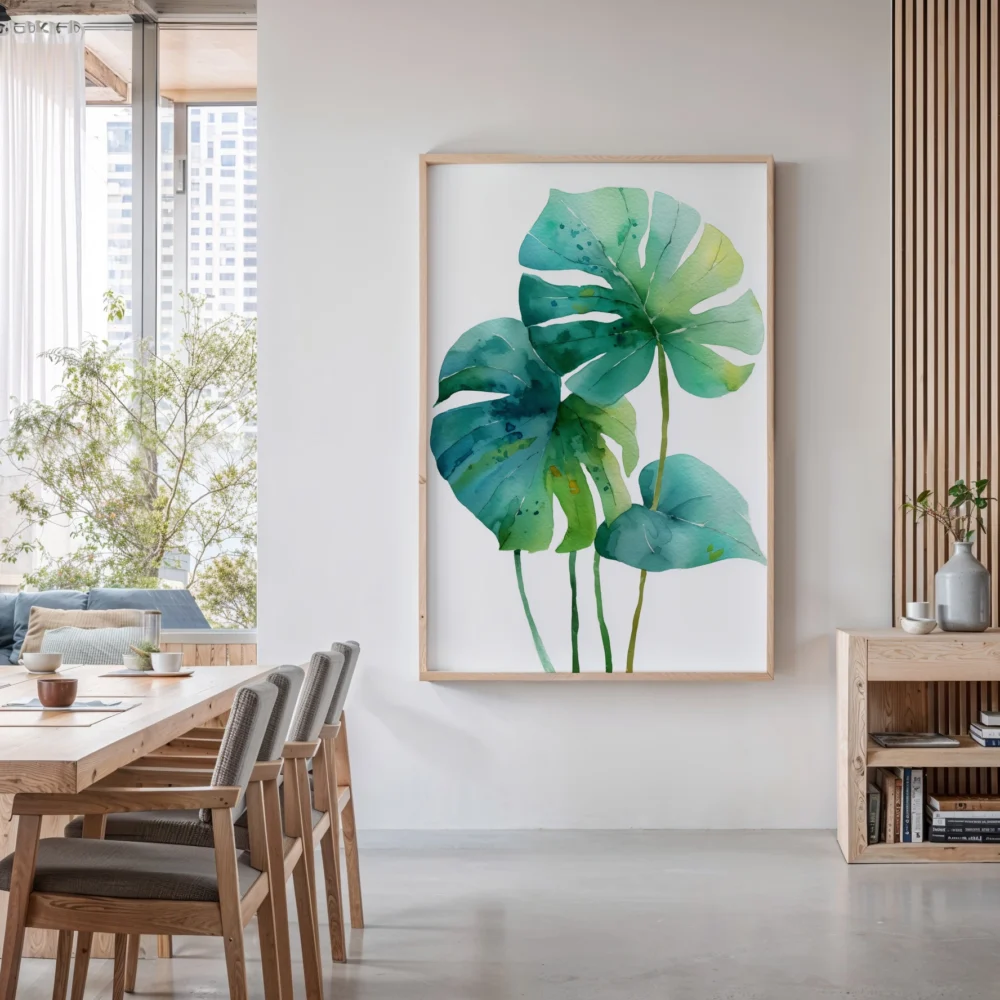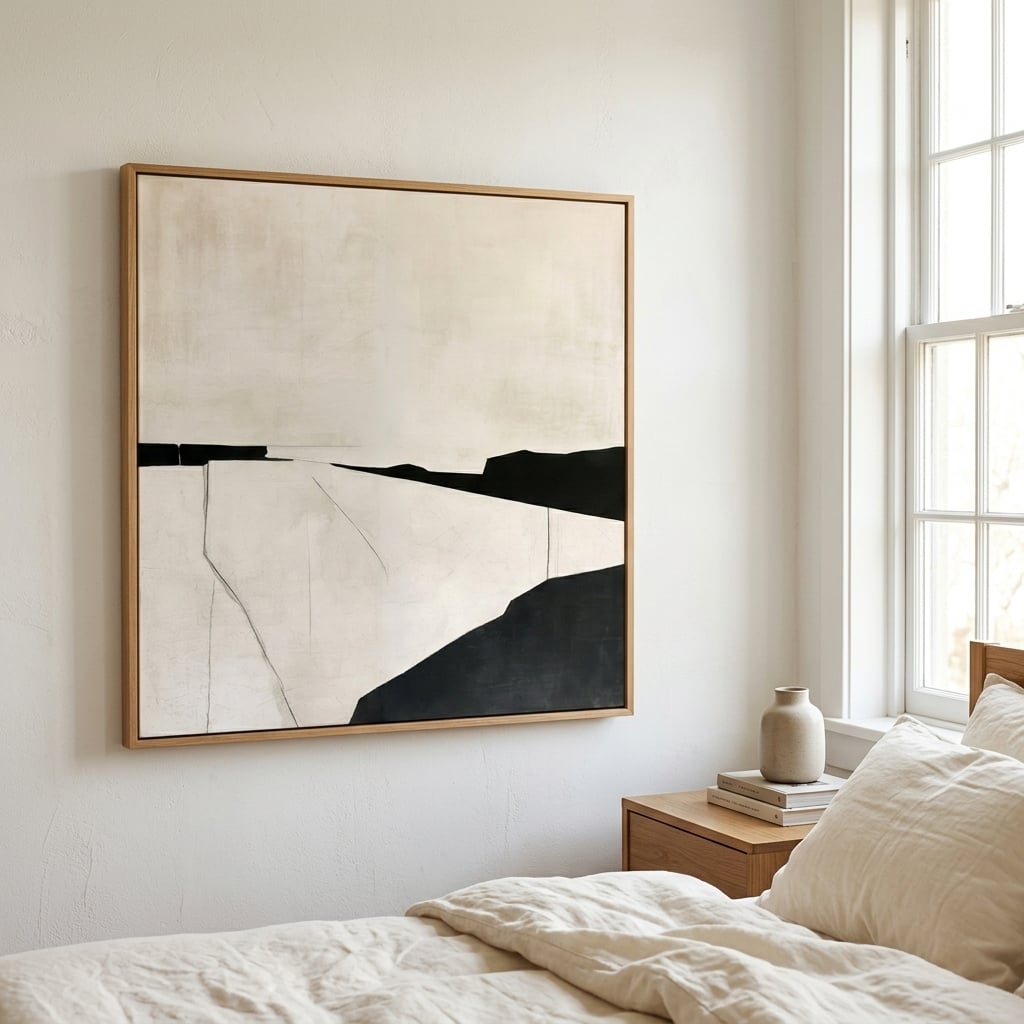
Nobody returns wall art because the colours were wrong. They return it, or worse, keep it and quietly resent it, because the size was wrong, and the size is almost always wrong in the same direction: too small. Undersized art is the most common decorating mistake in existence, partly because prints look enormous on a phone screen and partly because nobody hands you the numbers.
Here are the numbers. Every standard print size in inches and centimetres, the furniture math, the wall-coverage percentages, the group calculations, and the three-question method that gets the size right before checkout, not after.
Jump to: The standard sizes · The three-question method · The furniture math · Open walls · Groups and sets · Cheat sheet · Viewing distance · The classic mistakes · Quick answers
The Standard Sizes, Translated
Print sizes cluster into four practical tiers. Small: 8×10 in (21×26 cm) and 12×16 in (30×40 cm), for shelves, tight slots and supporting roles in groups. Medium: 16×20 in (40×50 cm) and 18×24 in (45×60 cm), the workhorses for hallways, paired arrangements and rooms with modest walls. Large: 24×36 in (60×90 cm), the single most useful size in home decorating, right for most sofas, beds and open walls. Statement: 30×40 in (75×100 cm) and up, including panoramic formats, for high ceilings, wide walls and rooms that deserve a centrepiece.
Commit one conversion to memory and the rest follow: 24×36 inches is 60×90 centimetres. That size, hung at the right height, solves more walls than every other tier combined. Above that sit the panoramics, wide formats like 36×12 and 48×16 in, built for the long low walls above sofas and sideboards where standard rectangles leave awkward flanks; they follow the same width math as everything else, just with less height to worry about.
The Three-Question Method
Question one: what is under the wall? Furniture below the art dictates its width (next section). Nothing below means the wall itself dictates (the section after).
Question two: how far away is the viewer? Sofa-distance viewing forgives detail and demands presence; corridor-distance viewing is close-up and forgives smallness. Distance converts directly into size, and we give the conversion below.
Question three: one piece or several? A group behaves as a single artwork the size of its outer boundary, which means small prints can add up to statement scale, at the price of some visual busyness. Decide the format before the size, because the math differs.
The Furniture Math
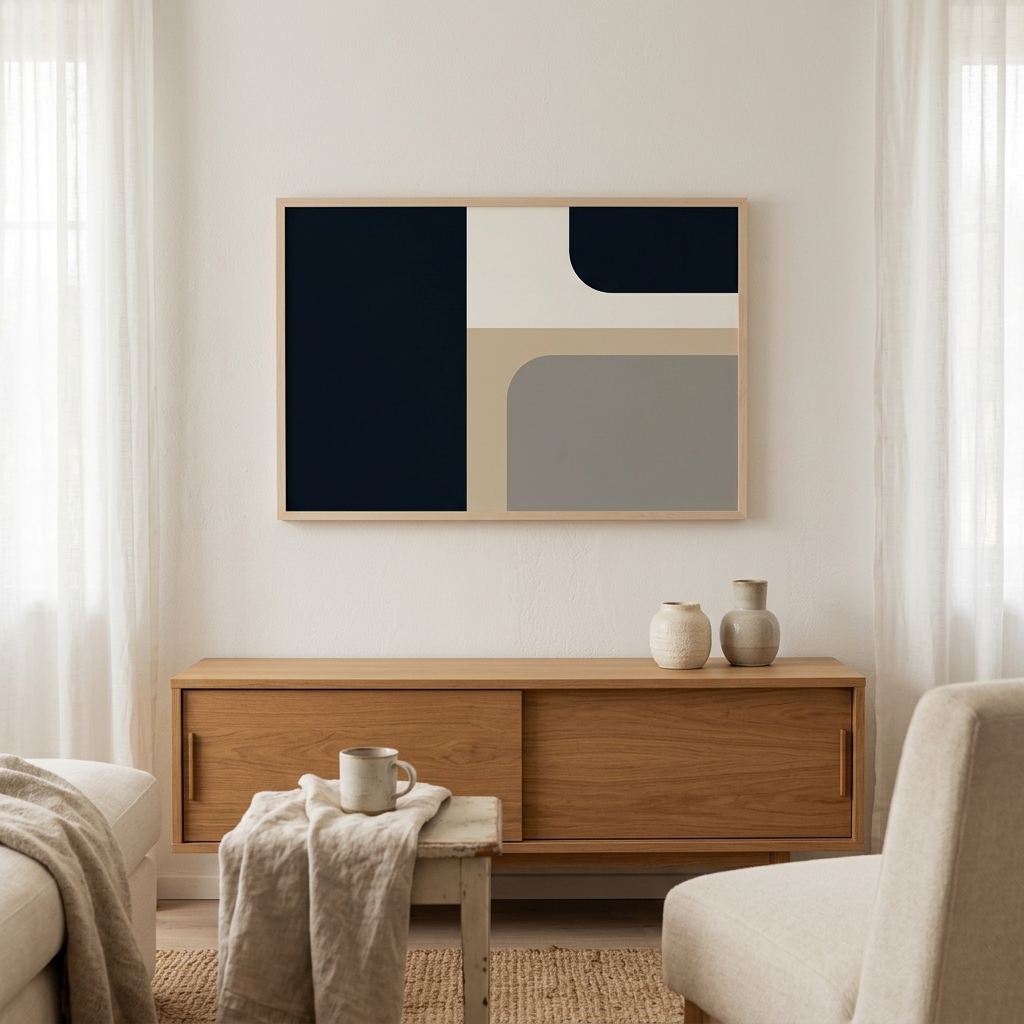
Art above furniture should span 60 to 75 percent of the furniture’s width. That single percentage settles most of the house:
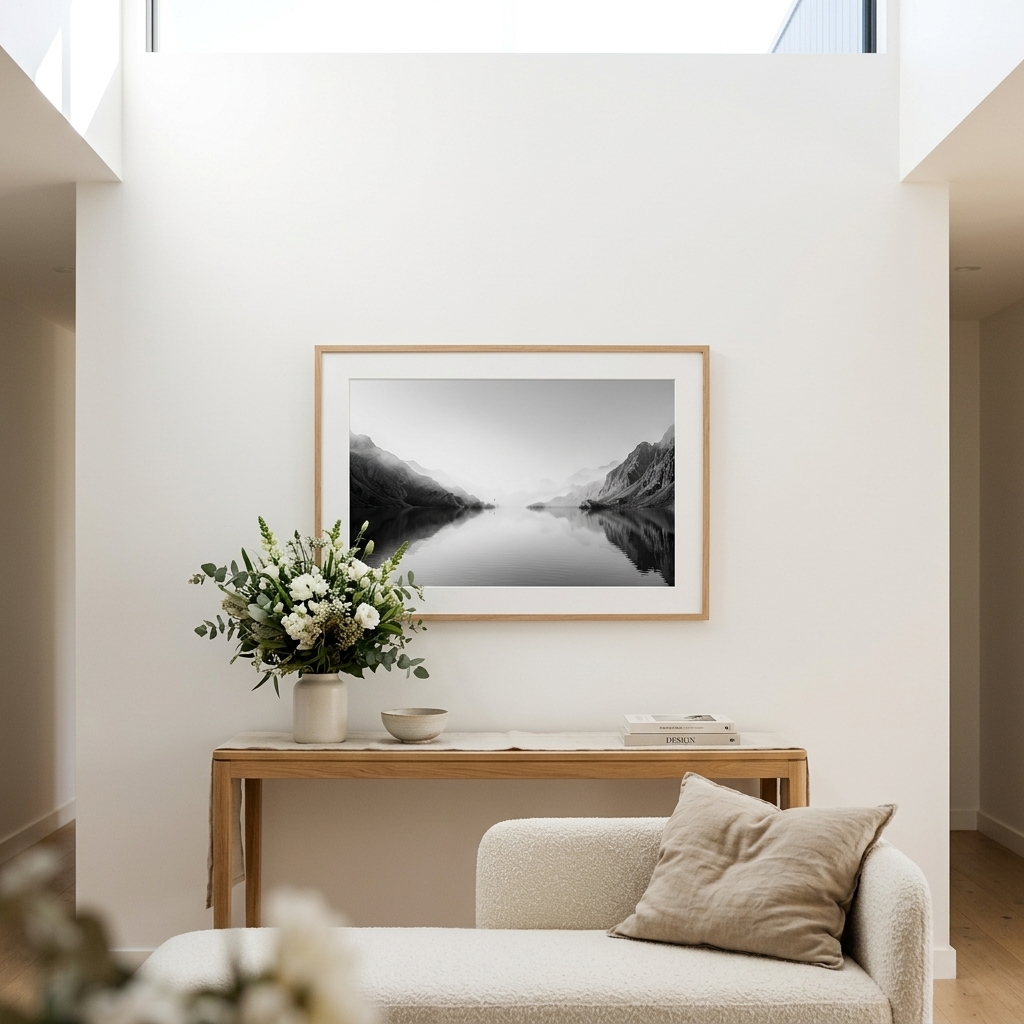
The 84 in / 213 cm sofa wants 50 to 63 inches of art: one 40×27 in horizontal, a 24×36 hung landscape plus generous margins, or a pair of verticals with a tight gap. The 60 in / 152 cm queen bed (headboard slightly wider) wants 36 to 48 inches: one horizontal print at 36×24 landscape is the calm classic. The 48 in / 122 cm console wants 29 to 36 inches: a 24×36 vertical or a 30×30 square sits perfectly. The 72 in / 183 cm sideboard wants 43 to 54 inches: a landscape statement piece or a formal pair.
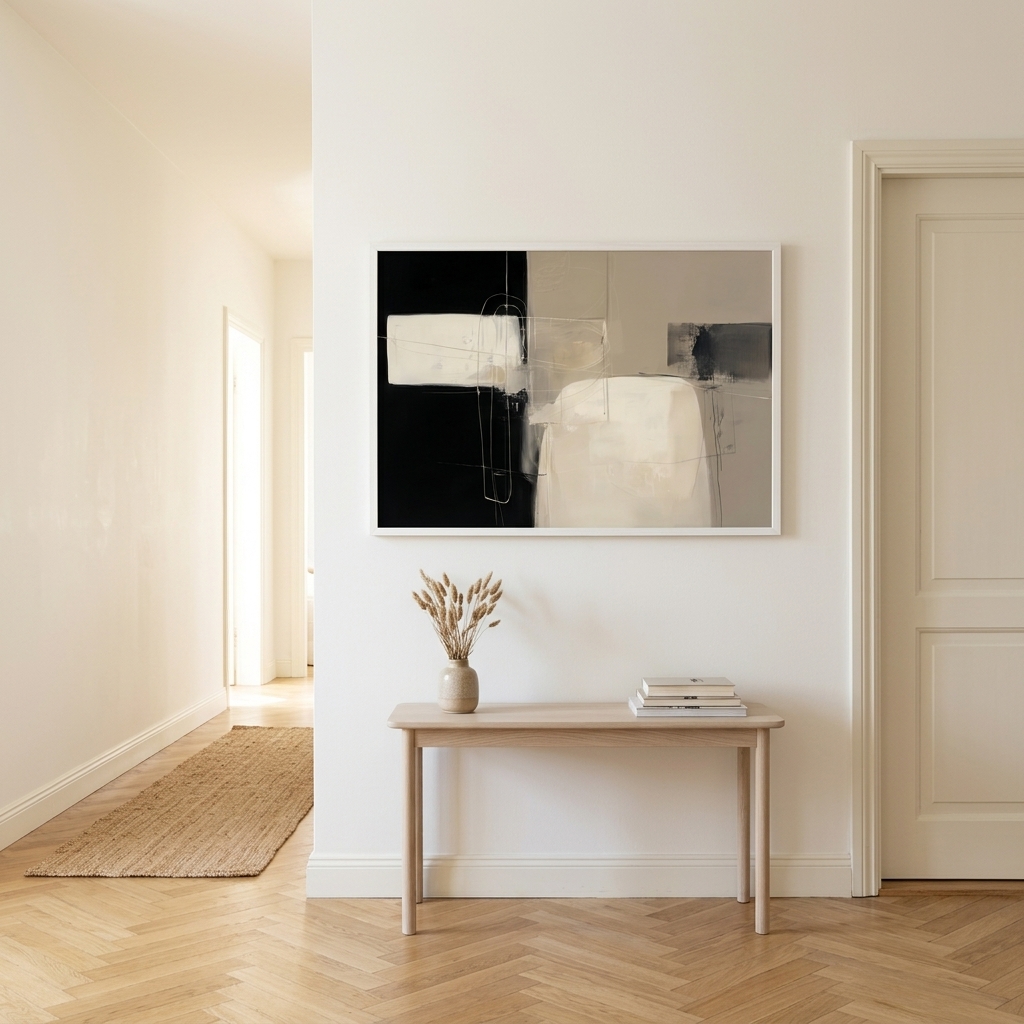
When a piece falls slightly under the range, the frame can rescue it: a wide mat and frame add 4 to 6 inches to the visual footprint. When a piece falls far under, nothing rescues it; the wall simply wins.
Open Walls: The Coverage Percentages
With no furniture to obey, the art (or the group) should fill 50 to 70 percent of the hangable zone’s width. Measure the zone, the wall minus doors, windows and permanent obstacles, multiply by 0.6 as the target, and shop to that number. A 10 ft (305 cm) zone targets roughly 6 ft (183 cm) of art: one panoramic piece, a large abstract flanked by two smaller works, or a grid.
Height follows width naturally in standard formats, with one guardrail: keep the top edge at least 12 in (30 cm) below the ceiling line, or the room starts wearing the art as a hat.
Groups, Pairs and Sets
Treat any arrangement as one artwork whose size is its outer rectangle, then apply the same furniture or coverage math to that rectangle. Internal gaps stay tight: 2 to 3 in (5 to 8 cm) for grids and pairs, up to 4 in for looser salon walls. Wider gaps make one group collapse into scattered singles.
The arithmetic in practice: two 18×24 verticals with a 3 in gap form a 39×24 unit, sofa-ready for a loveseat. Three of them make 60×24, right for a full sofa. A nine-piece grid of 12x16s at 2 in gaps builds a 40×52 statement from small parts. Our gallery wall sets are pre-composed around exactly these sums, which removes the spreadsheet from the process.
The One-Glance Cheat Sheet
Sofa: 40×27 in horizontal, or a pair of 24×36 verticals. Queen bed: 36×24 in horizontal. King bed: 40×27 in, or a matted pair. Console or entry table: 24×36 in vertical or 30×30 square. Hallway run: 16×20 or 18×24 verticals at even intervals. Open 10 ft wall: 6 ft of total art width, one piece or summed. Home office backdrop: 24×36 in, centred to the camera. Powder room: 12×16 or 16×20, one confident piece. Screenshot this paragraph; it is the whole article in nine sentences.
The Viewing-Distance Conversion
A rule from gallery practice: comfortable viewing distance is roughly 1.5 to 2 times the artwork’s diagonal. Run it backwards to size a wall: measure how far the main viewing spot sits from the wall, divide by 2, and you have the minimum diagonal that will feel substantial from that seat. A sofa 10 ft from the opposite wall implies a diagonal of at least 60 in, which is precisely the 36×48 territory people are too timid to buy. The formula is why art that filled the store feels lost at home: the store viewed it from six feet.
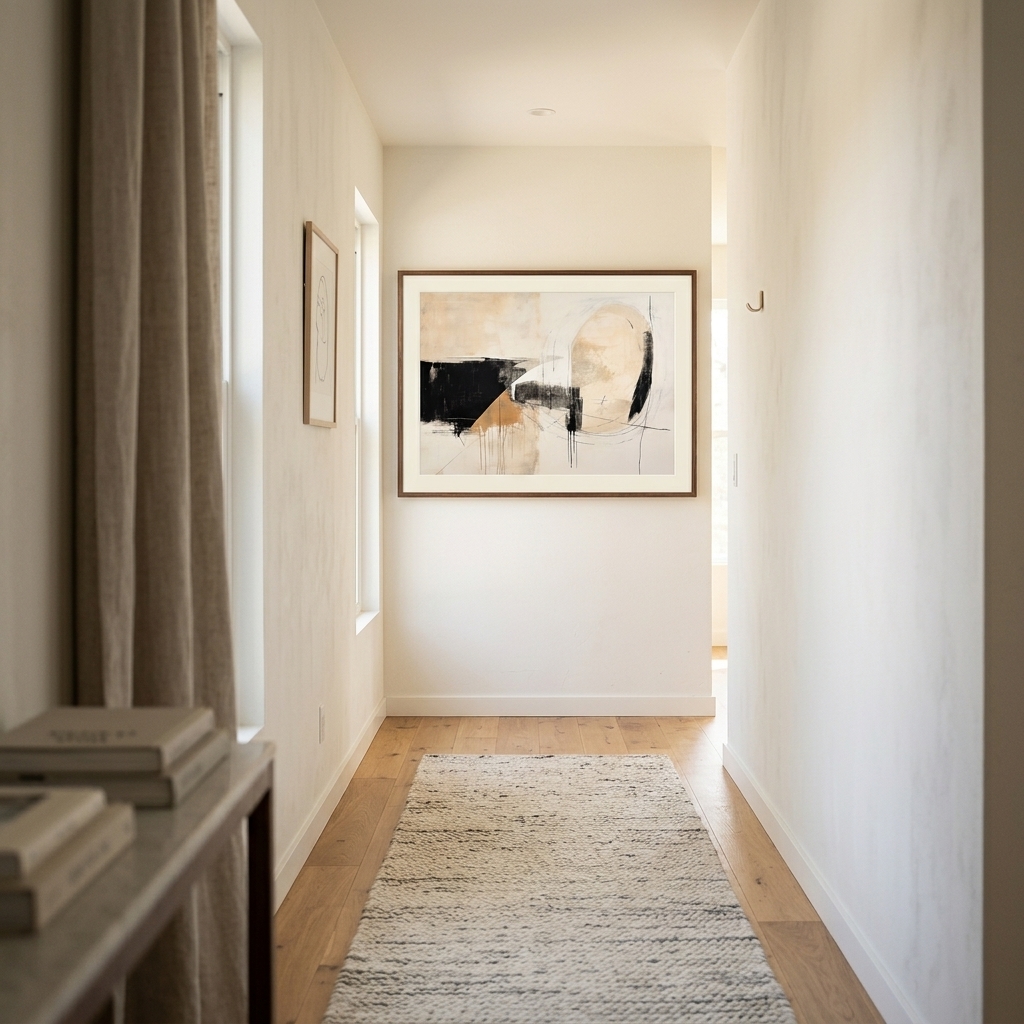
The same conversion settles corridor and stairwell art, where viewers pass within arm’s reach: at three feet of viewing distance, an 18 in diagonal is plenty, which is exactly why hallway pieces can run smaller than living room instinct suggests. Match the diagonal to the distance and every part of the house sizes itself.
The Classic Mistakes
Buying to the budget, not the wall. A too-small piece is not a saving; it is a recurring irritation with free delivery. Better one right-sized print this month than three small regrets this year.
Phone-screen scale blindness. Every print looks huge at checkout. Tape newspaper to the wall at the candidate size and live with it for a day before deciding.
Centring on the wall instead of the furniture. The art centres on what sits beneath it; the wall’s own centre is irrelevant once furniture enters.
Ignoring the frame’s contribution. Frames add real inches; a 24×36 print in a wide mat approaches 30×42. Include it in the math.
Mixing size tiers without a leader. Groups need one clearly largest piece; equal-sized clusters read as indecision.
Quick Answers
What size wall art for above a king bed?
A king runs 76 in / 193 cm wide, so target 46 to 57 inches of art: one 40×27 horizontal generously matted, or a pair of 24×36 verticals with a tight gap. Hang the bottom edge 8 to 12 inches above the headboard.
Is it better to go bigger or smaller when between sizes?
Bigger, almost without exception. Rooms absorb scale far better than they forgive timidity, and every designer’s before-and-after you have ever admired involved someone sizing up.
Do these numbers change for canvas versus paper?
The math is identical; the perception shifts slightly. Frameless canvas reads a touch larger than the same print framed on paper because nothing visually contains it. If a canvas lands at the bottom of a range, it will still carry the wall.
How high should everything hang once sized?
Centre at 57 inches from the floor, with furniture exceptions; the full chart lives in our hanging height guide, this article’s natural sequel.
Numbers in hand, the shopping gets easy: every print in the shop, from the square formats to the panoramic statements, is made to order across the full size range above, on 230gsm fine art paper or cotton canvas. For a compact reference version of these numbers, our wall art size guide page keeps the core chart one click from the shop. Measure the wall, trust the percentages, and buy the size the room is actually asking for. And if two sizes still feel possible after all the math, take the larger one; six months from now, only one of those choices will still look like a decision.