Type “art deco poster” into any search bar and you will meet two very different products wearing the same name: reproductions of hundred-year-old advertising, and new artwork made in the deco spirit. Both are legitimate. They hang differently, age differently, and suit different rooms, and almost nobody explains the difference before you pay. This article does.
Consider it the practical companion to our guide on art deco’s five signature motifs: that piece covers what makes deco deco; this one covers what to actually put on the wall, poster reproduction or original print, and how to choose between them without regret.
Jump to: Deco was born a poster · What a reproduction gets you · What an original print gets you · How to choose · Where each shines · Getting the poster look · Framing either one · Quick answers
Deco Was Born a Poster
No style in history is more at home on paper. The 1920s and 30s were the golden age of the advertising lithograph, ocean liners, grand hotels, motor races, ski resorts, and art deco supplied their visual language: flattened perspective, monumental geometry, metallic accents, and typography treated as architecture. Cassandre’s ocean liner bearing down on the viewer, the travel posters promising the Riviera in five colours, these were commercial art so confident it ended up in museums.
That heritage is why the poster format still feels like deco’s native habitat, and why the phrase “art deco poster” persists even when what is being sold is technically a fine art print. The style and the format grew up together.
What a Reproduction Actually Gets You
A reproduction poster is a photograph of a historical artwork, printed at whatever quality the seller chooses. At its best, sourced from a good archive scan, printed on decent stock, it delivers genuine time-travel: the actual image that hung in a Paris metro station in 1928. There is real pleasure in that, and for themed rooms, home bars and cinema corners, nothing else supplies the period voice so directly.
The compromises are predictable. Most cheap reproductions come from low-resolution scans that blur under close viewing, on thin poster paper that ripples in humidity and fades within a few years. Colours drift from the original lithography because nobody involved ever saw the original. And ubiquity is real: the famous images appear in thousands of homes, which is either charming heritage or wallpaper, depending on your temperament.
If you go the reproduction route, the buying rules are simple: insist on a named archive source, genuinely heavyweight stock rather than thin poster paper, and pigment rather than dye inks. Any listing that mentions none of these is selling you the blurry version.
What an Original Print Gets You
The alternative is new artwork composed in the deco language: the fans, arcs, sunbursts and stepped forms, drawn today rather than scanned from yesterday. This is what our art deco wall art collection is: original pieces by working artists, using the movement’s geometry with a century of hindsight and none of the licensing murk.
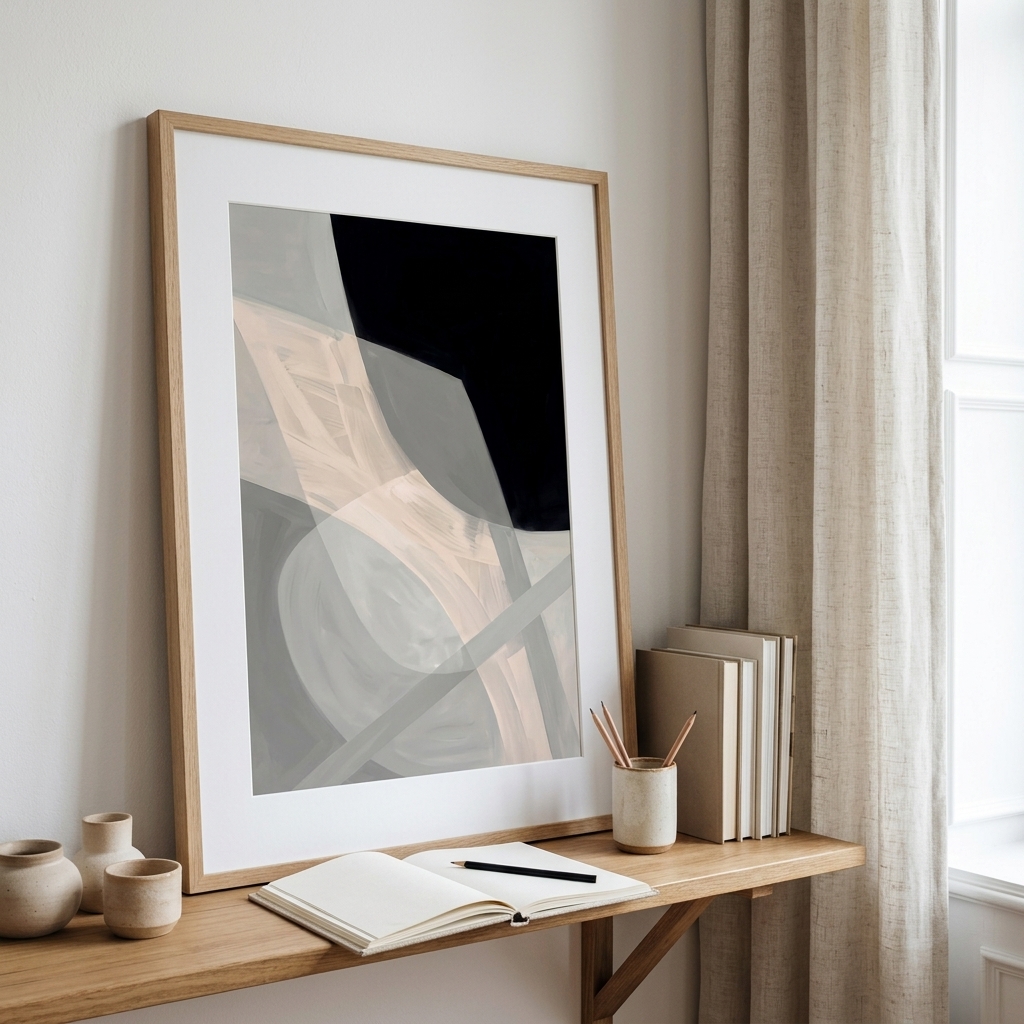
Three things change immediately. First, print quality is under your control: our pieces go onto 230gsm archival fine art paper with pigment inks rated for roughly 75 years, which means the blacks stay black and the golds stay warm for decades rather than seasons. Second, the palette can be tuned to modern interiors; originals adapt deco’s geometry to contemporary colour stories, from muted mid-century adjacents to bold colour block compositions, where reproductions are locked to 1928’s inks. Third, exclusivity flips: instead of the thousandth copy of a famous image, you hang something most guests have never seen that still reads unmistakably deco.
What an original cannot give you is the artefact feeling, the sense of holding a document from the machine age. If that is the itch, only a reproduction, or a genuinely wallet-emptying vintage original, scratches it.
How to Choose: Three Questions
Is the room themed or lived-in? A dedicated cocktail corner, home cinema or Gatsby-leaning dining room wears famous reproductions with pride; the reference is the point. In an everyday living room, an original print integrates more quietly and dates more slowly.
How close will people stand? Corridor and bar walls are viewed at arm’s length, where scan quality and paper weight become visible. The closer the viewing, the stronger the case for a properly printed original.
Are you buying one piece or building a wall? Reproductions cluster beautifully, a run of three travel posters is a classic hallway, while a single large original makes a stronger lone statement above a sofa or sideboard. Match the format to the plan.
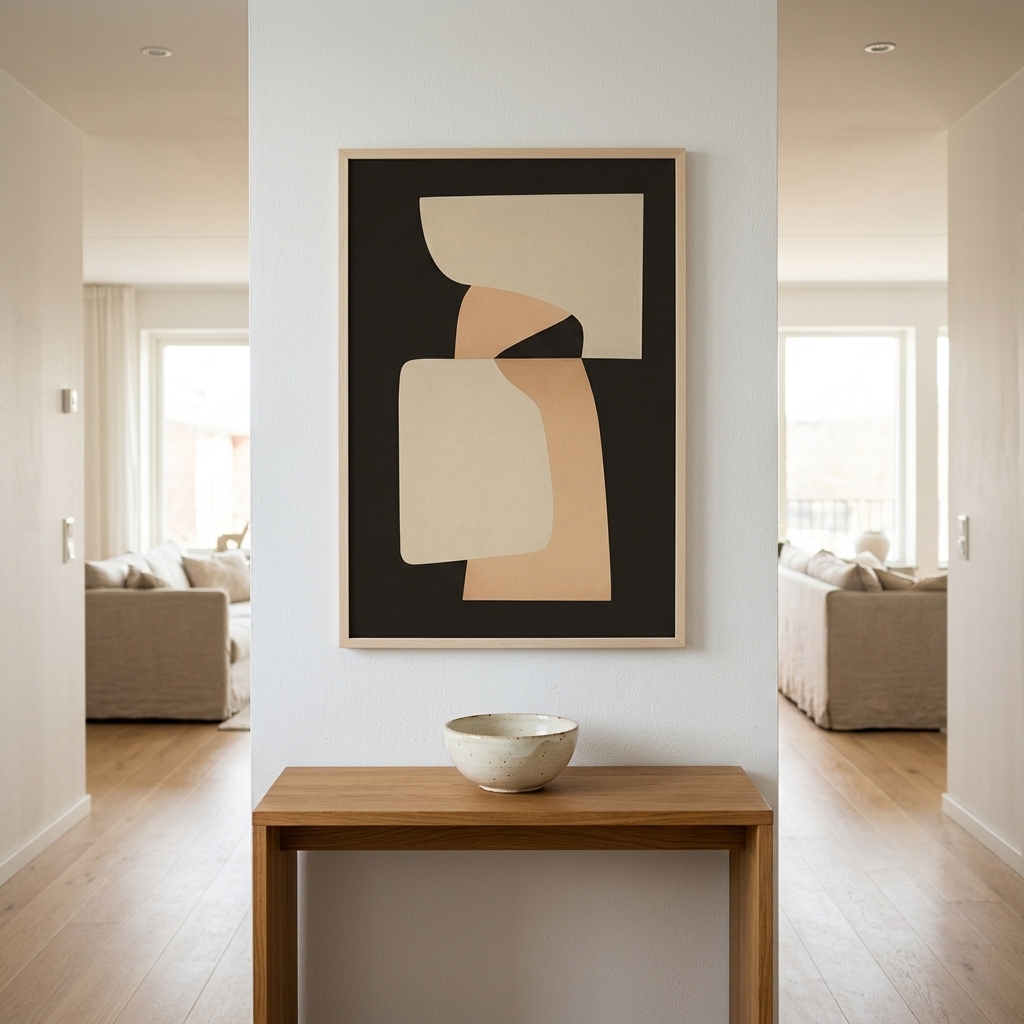
Where Each One Shines
Reproductions earn their keep where nostalgia is the brief: the home bar, the cinema snug, the guest bathroom that wants a wink, the hallway run of travel posters that turns a commute to the kitchen into a grand tour. They also suit rentals and first apartments, where the stakes are low and the charm is high.
Originals carry the rooms you live in: above the main sofa, over the bed, behind the desk on video calls. Anywhere a piece will be seen daily for years, the better paper, the tuned palette and the fact that nobody else has it start to compound. The rough rule: reproductions for rooms with a theme, originals for rooms with a future.
And the two mix better than purists admit. A famous liner poster in the hall, an original geometric statement in the lounge, one gold note shared between them, and the whole flat reads as a considered take on the same decade rather than a museum gift shop.
Getting the Poster Look Without the Poster
Much of what people love in deco posters is transferable. The look reduces to four moves: flat, confident colour laid in blocks rather than gradients; a strong central form, an arc, a sunburst, a stepped tower, holding the composition like a monument; a restricted palette of three to five inks, usually anchored by black, cream and one metallic; and generous margins that let the image sit like a plate in a book. Original prints built on those moves carry the poster’s charisma with none of its fragility, and several pieces in the collection were composed with exactly this brief.
The pairing trick from the golden age still works too: hang in odd numbers, keep frames identical within a run, and let the images share one palette note, the same gold, the same oxblood, so the set reads as a commissioned series.
Framing Either One
Deco rewards discipline at the frame. For reproductions: slim black or brass metal frames with a wide white mat, glass front, nothing ornate; the goal is museum label, not gilt theatre. For originals on heavy paper: the same slim profiles work, or go frameless-look with a floating mount if the piece has full-bleed colour. Avoid rustic wood and distressed finishes entirely; deco is a machine-age style, and it can smell sawdust from across the room.
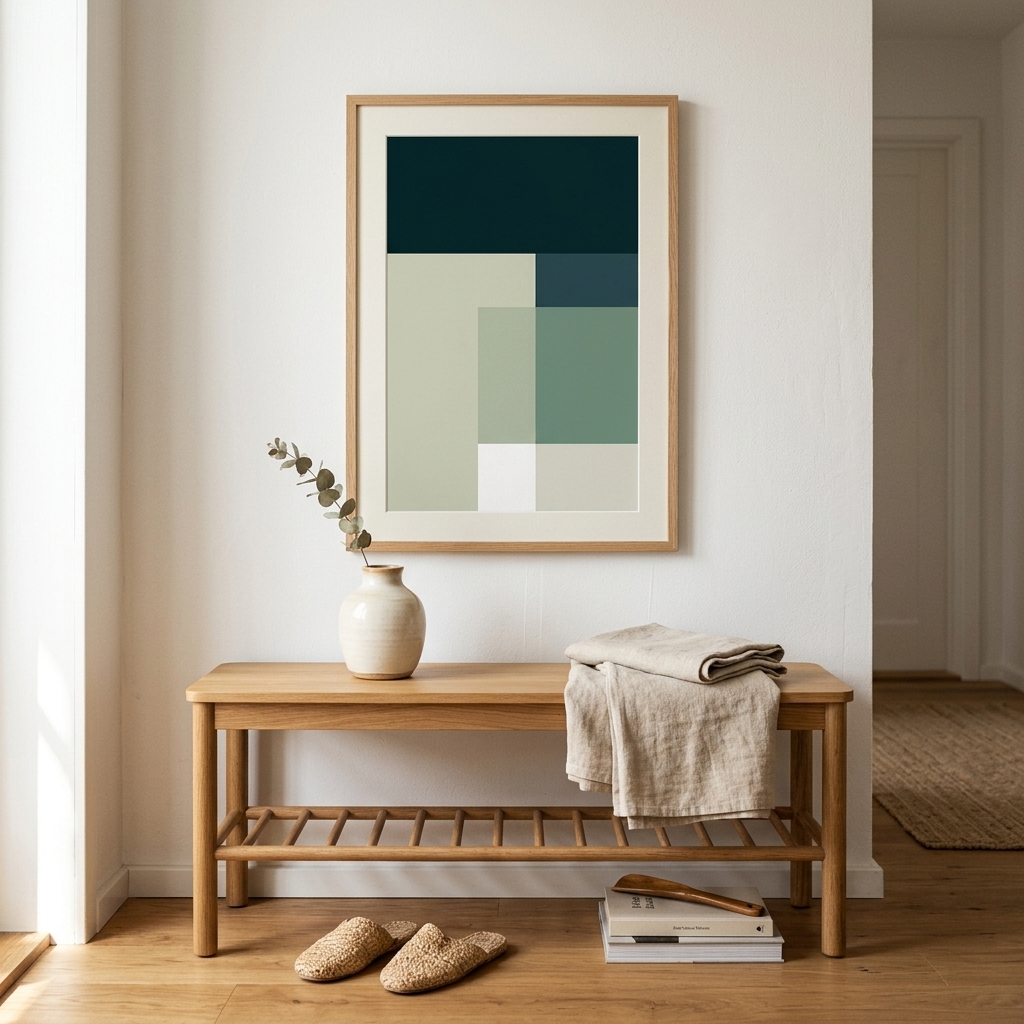
Size follows the normal rules, statement pieces at 24×36 in (60×90 cm) and up over furniture, with one deco-specific note: the style’s strong verticality makes tall formats unusually effective in slim wall slots, either side of doorways and between windows, and a matched vertical pair flanking a mirror is about as 1929 as a wall can get. A touch of vintage alongside softens the geometry when a room needs it.
Quick Answers
Are art deco posters in copyright?
It varies by artist and country, which is precisely the murk. Many 1920s works have entered the public domain; plenty have not, and estates enforce. Reputable reproduction sellers state their licensing; originals sidestep the question entirely because the artwork is new.
What colours count as art deco?
The core set: black, cream, gold and brass, deep green, oxblood red, navy, and the occasional jolt of jade or coral. The unifying rule is saturation with restraint, few colours, fully committed.
Is deco having a moment right now?
Its biggest in decades. The style’s centenary, dating from the 1925 Paris exposition that named it, has put deco back on runways, in hotel lobbies and across interiors media through 2025 and 2026. The motifs guide linked above covers why the revival looks the way it does.
Poster paper or fine art paper for a deco piece?
If it is a keeper, fine art paper, every time. Deco lives on crisp edges and dense blacks, and 230gsm archival stock holds both under close viewing for decades. Poster paper is for images you plan to outgrow.
Whichever route fits your room, the geometry is waiting: the art deco collection gathers our original prints in the movement’s language, made to order in sizes from hallway to statement, on paper built to outlast the trend cycle by a comfortable margin.