More Collections
Home / Art Print Collections / Contemporary Art Prints
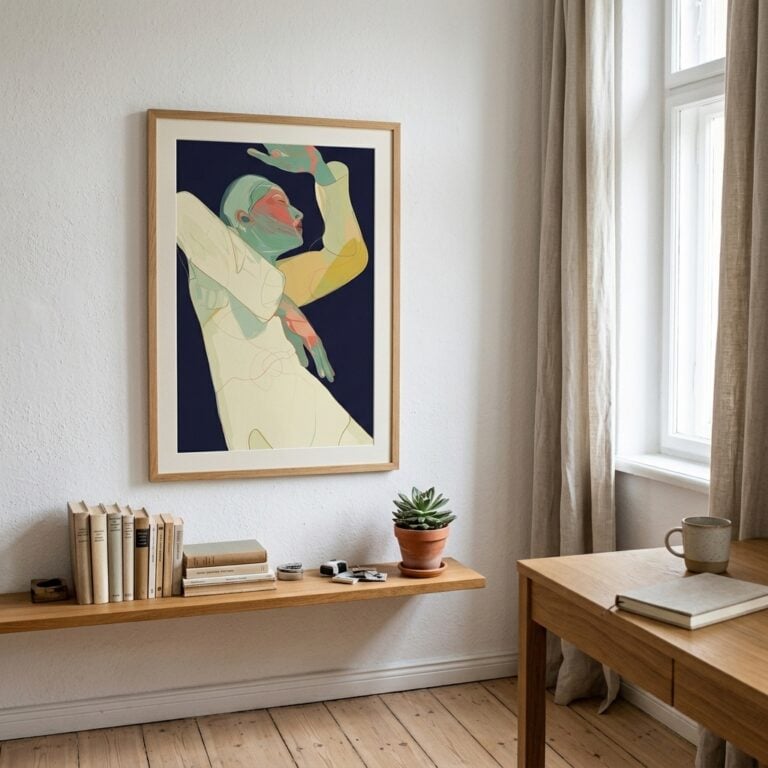
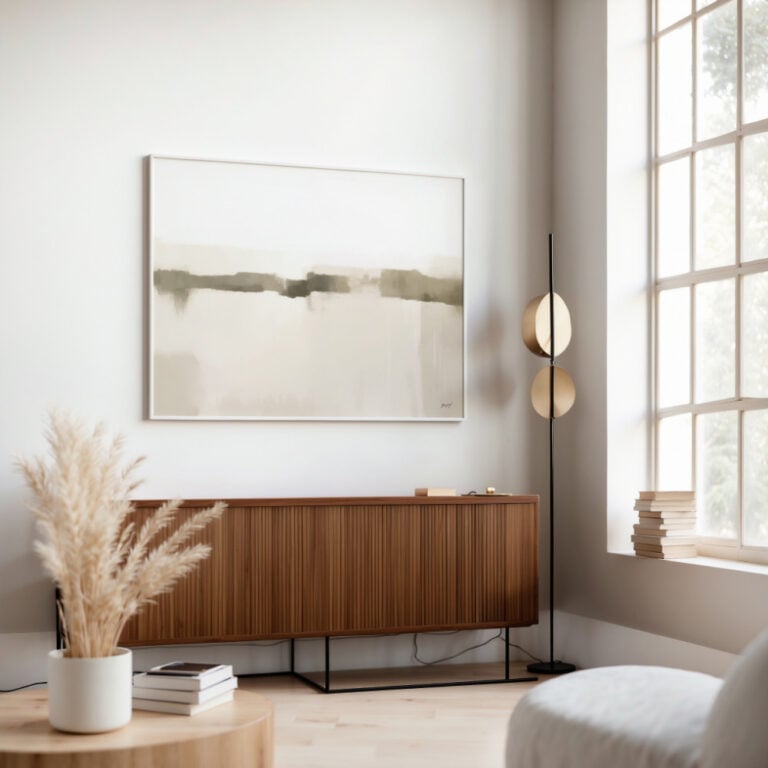
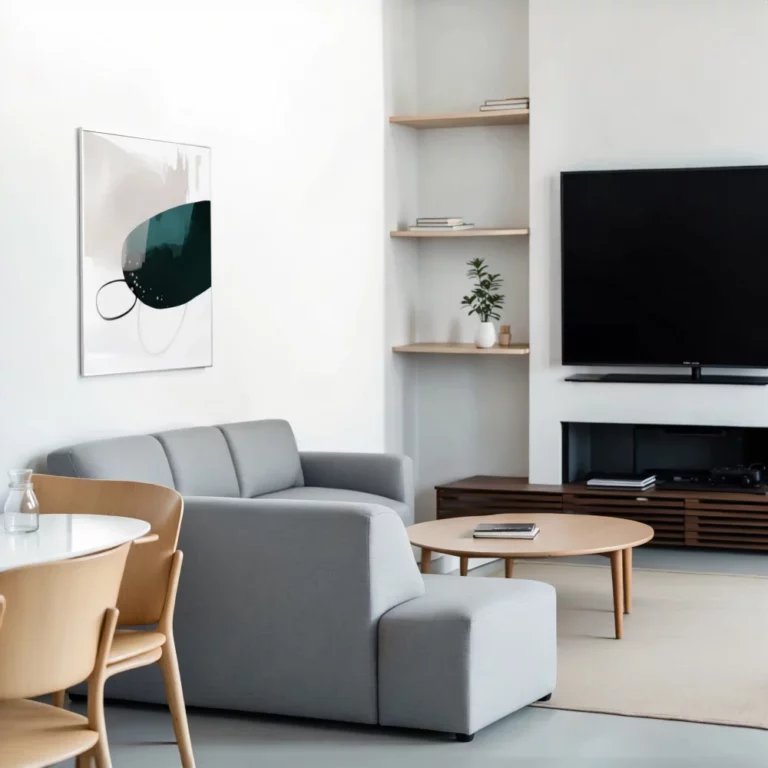
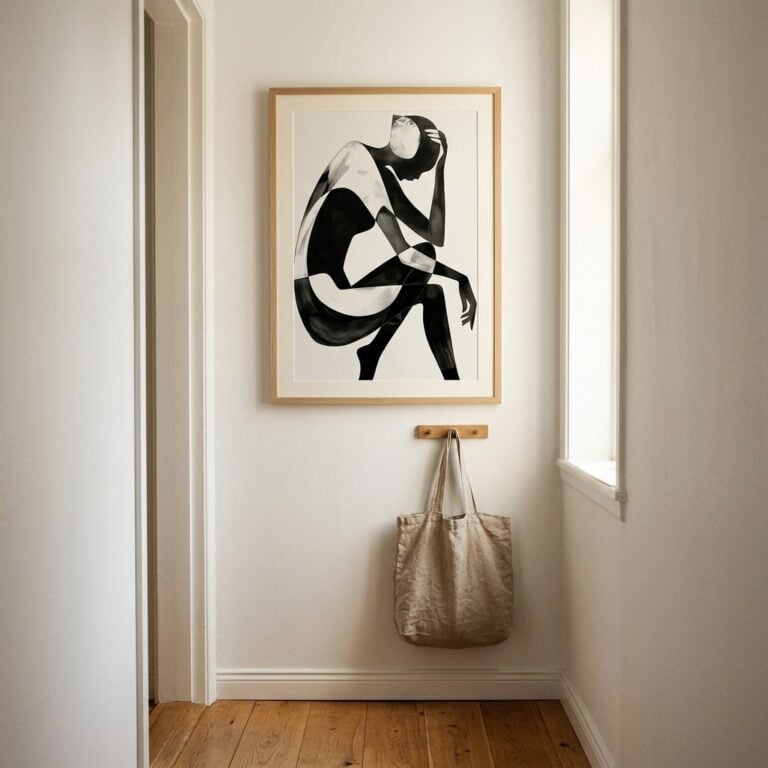
Contemporary Art Prints for Modern Interiors
Contemporary art prints are the fastest way to make a room feel current without redecorating it. The work here is built around the language modern interiors actually speak – abstraction, negative space, muted colour, confident line – rather than reproductions of older painting traditions. Start broad with modern wall art, or narrow to abstract compositions if you already know the direction. Every design is original and artist-made, printed on 230gsm fine art paper or premium cotton canvas with archival Giclée inks, and shipped worldwide.
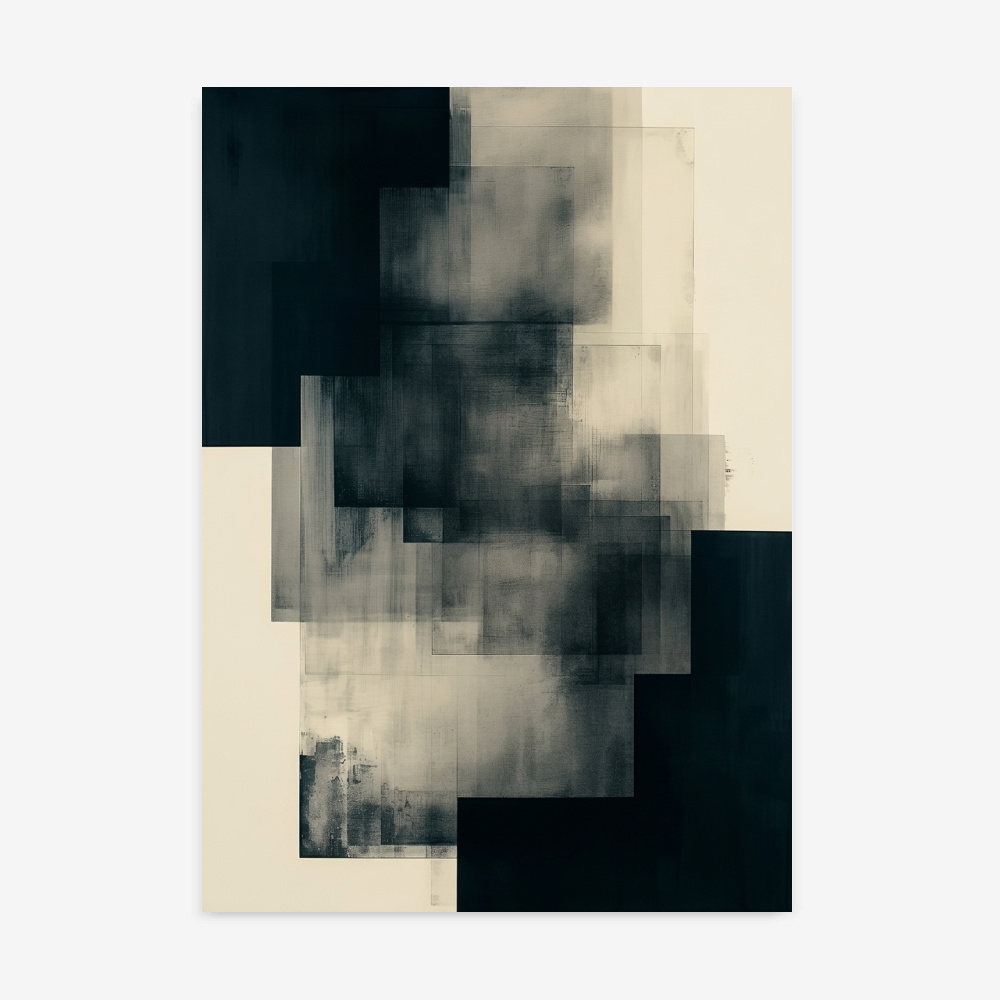
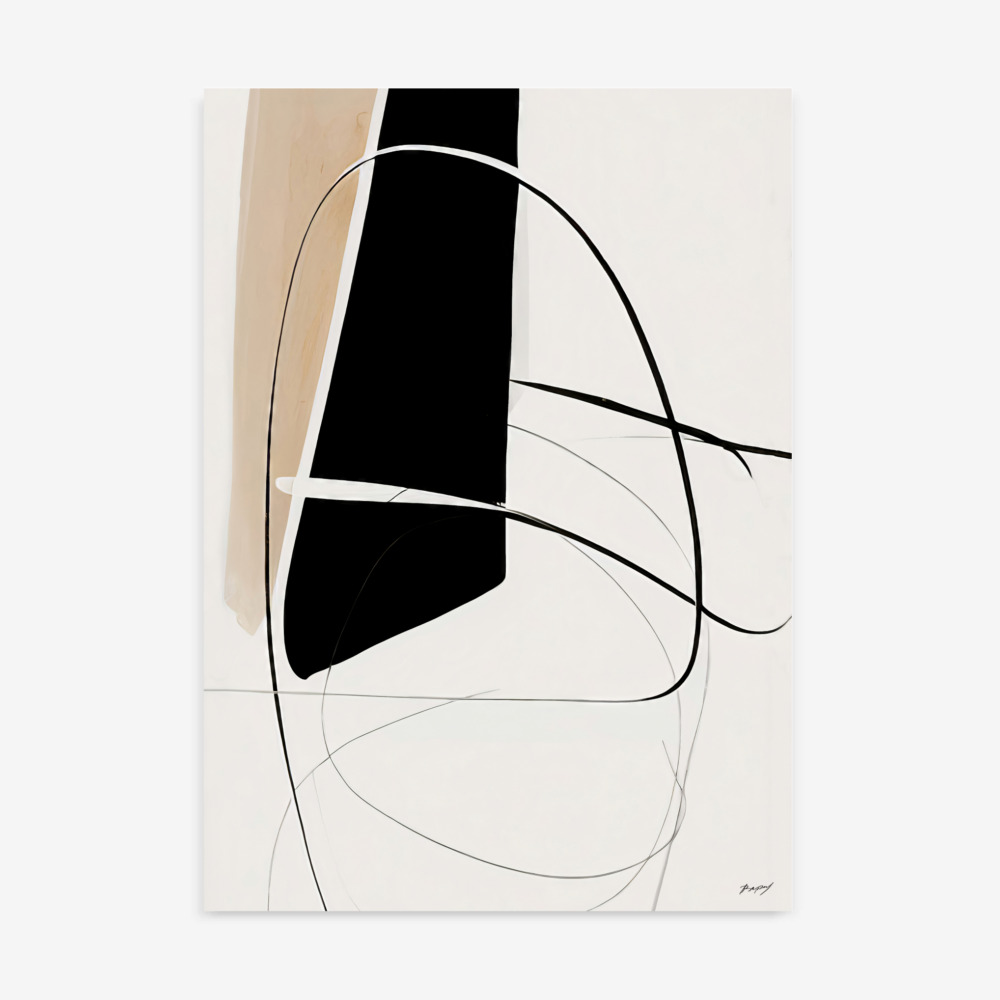
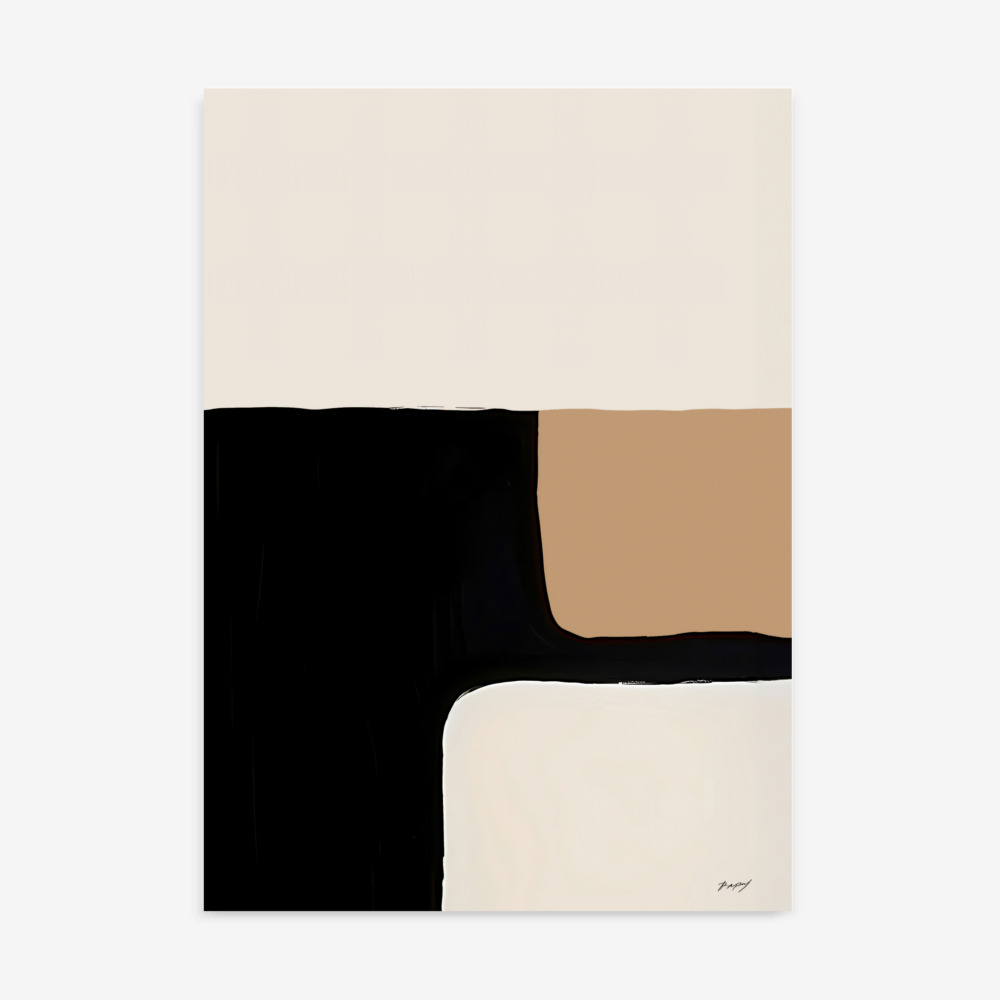
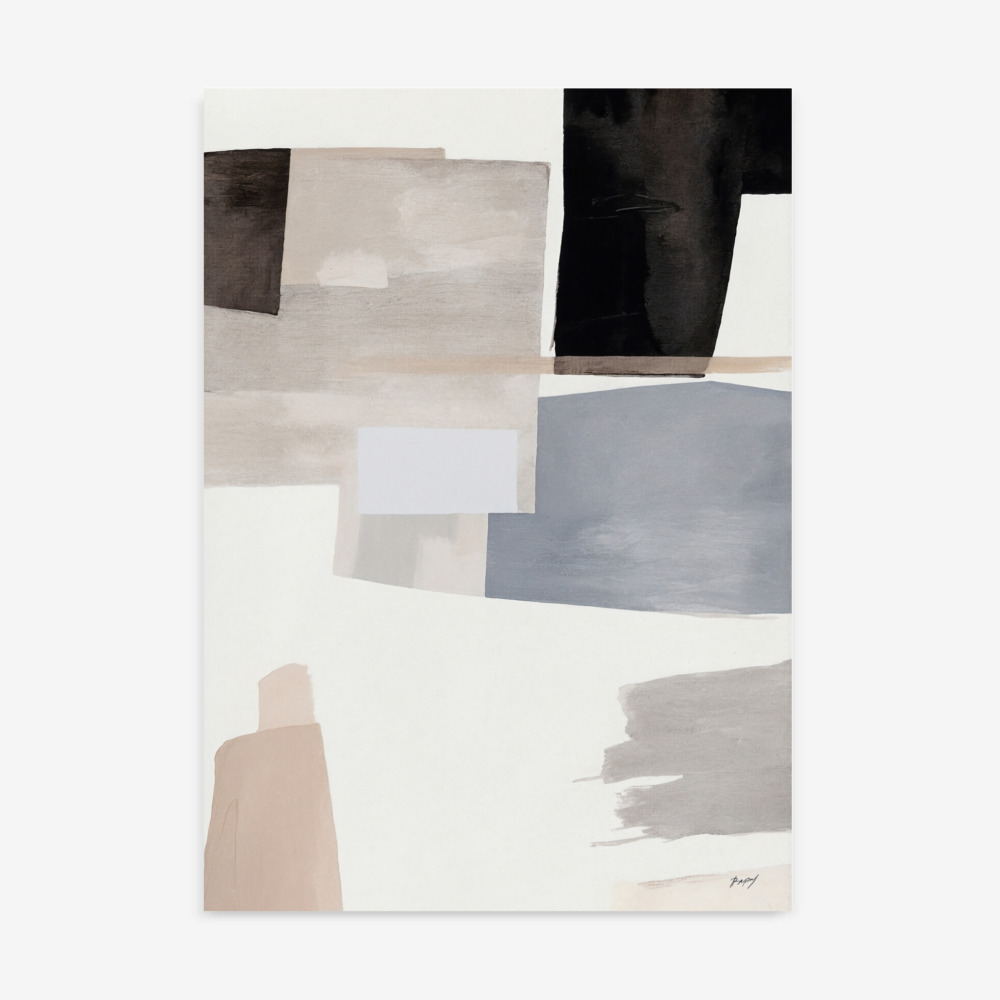
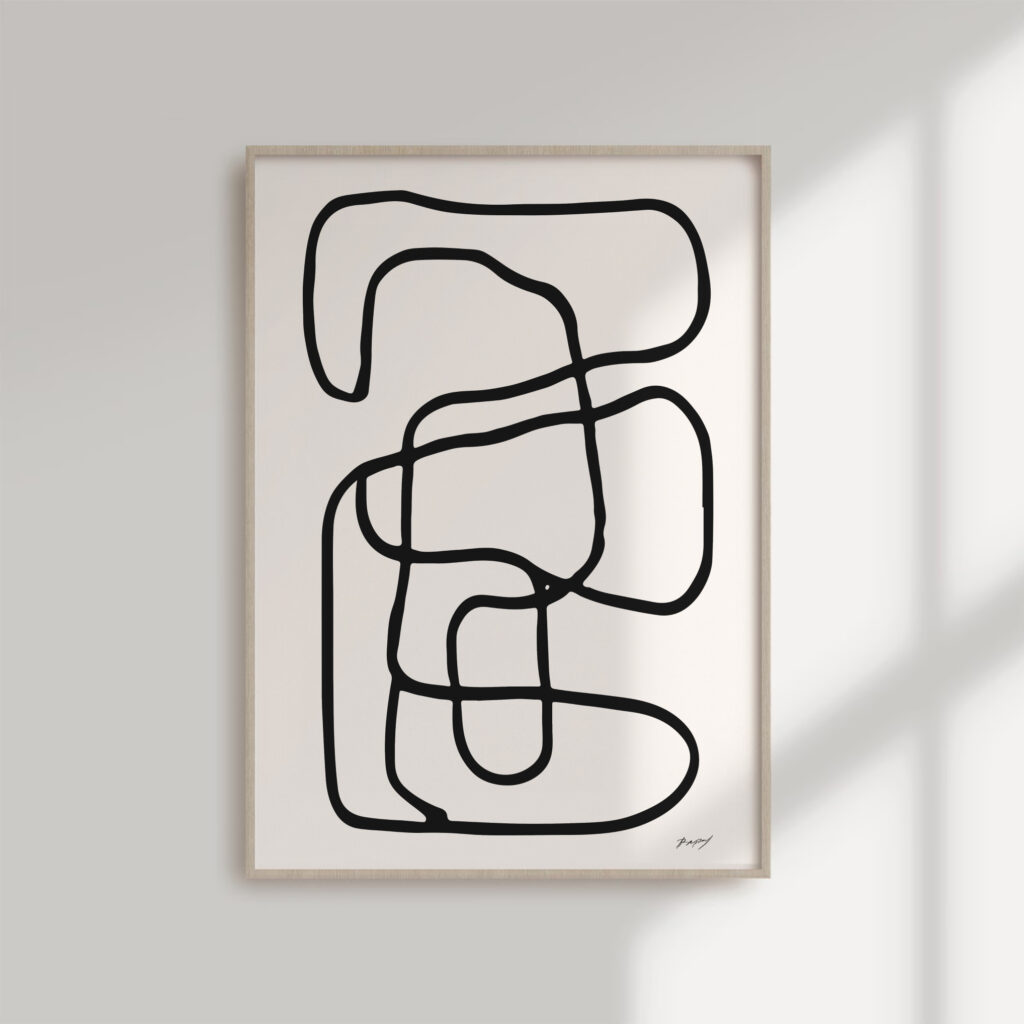
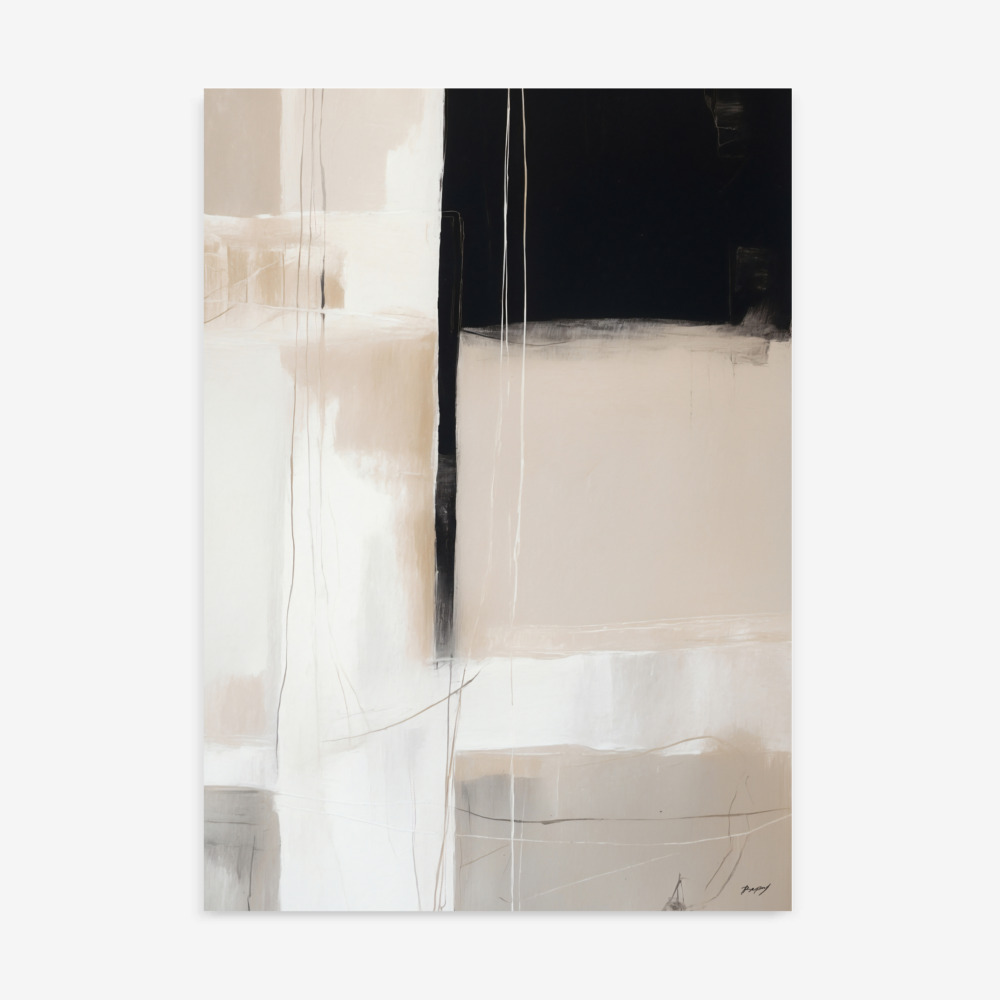
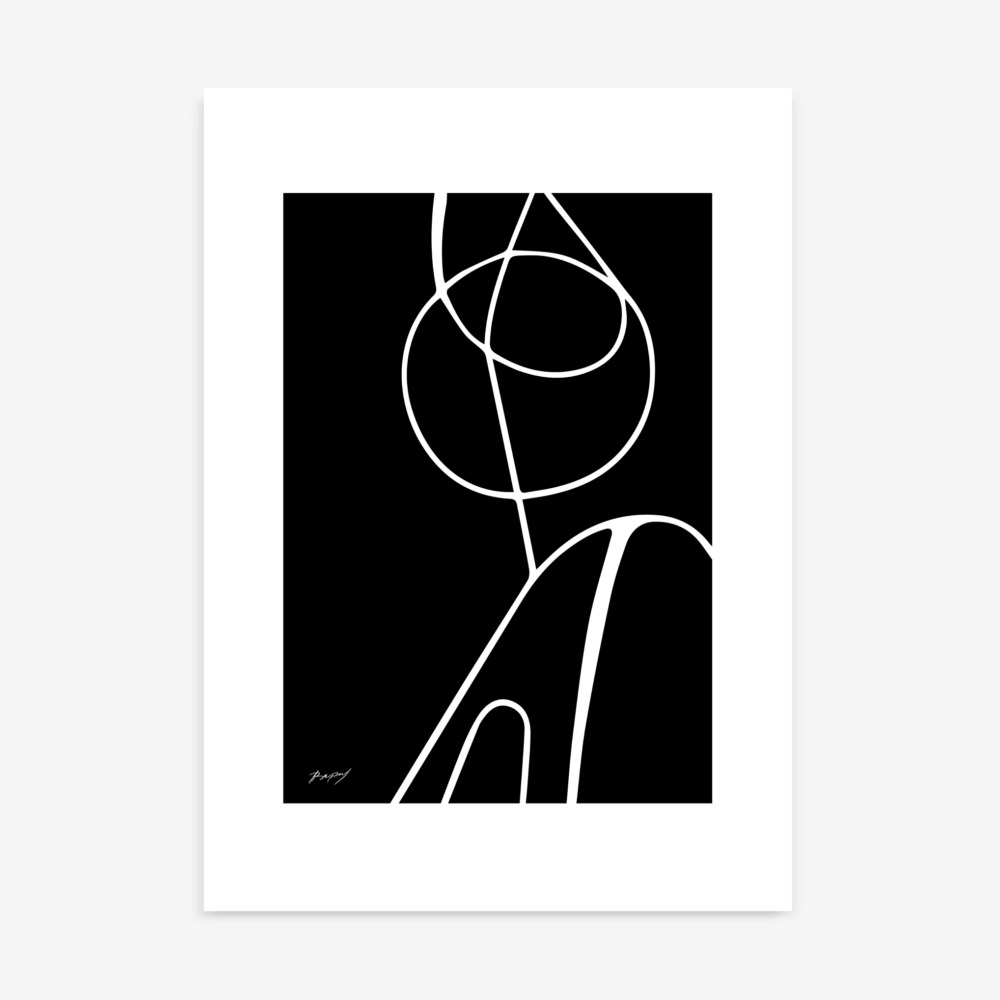
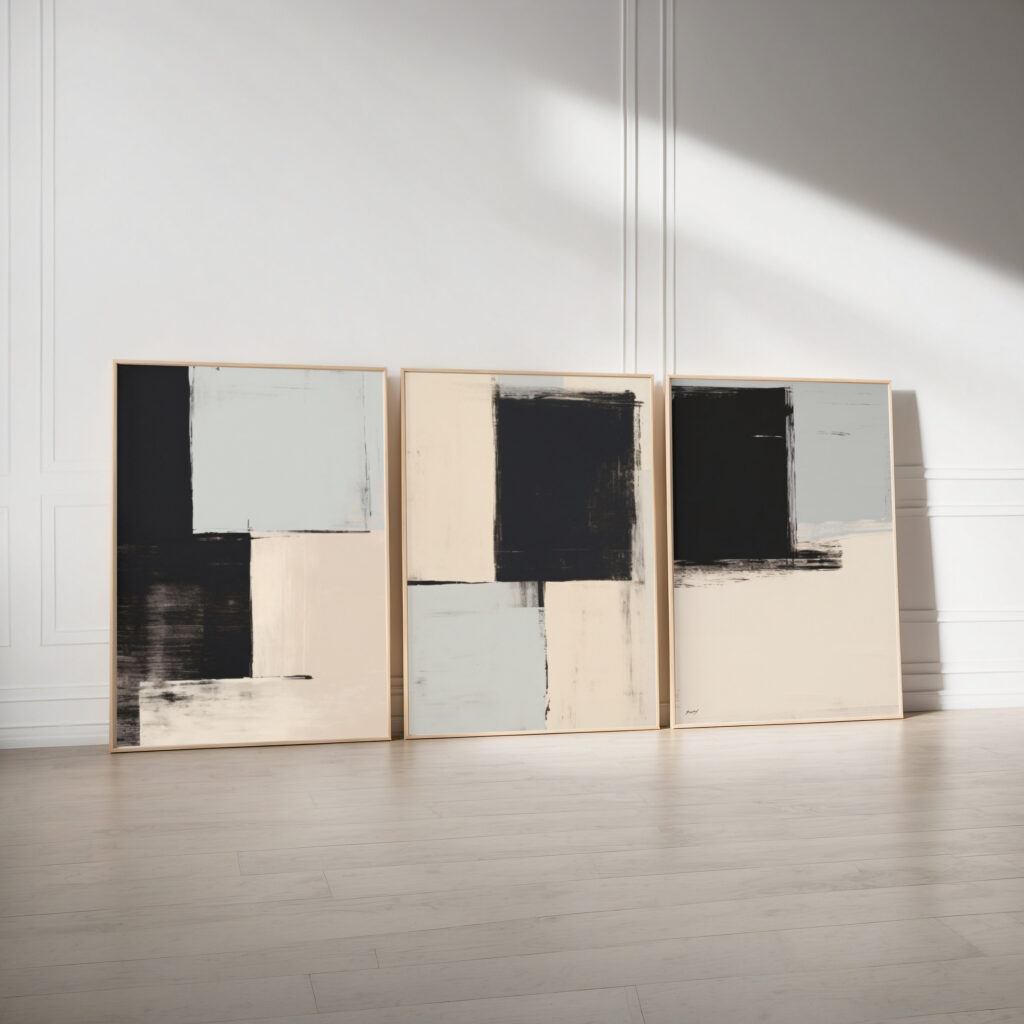
What Makes a Print Contemporary
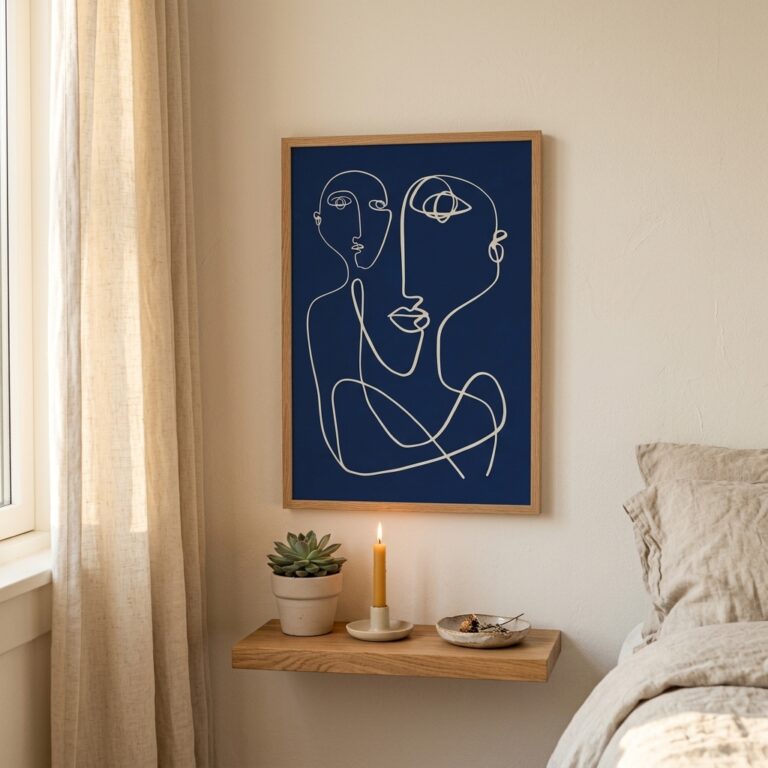
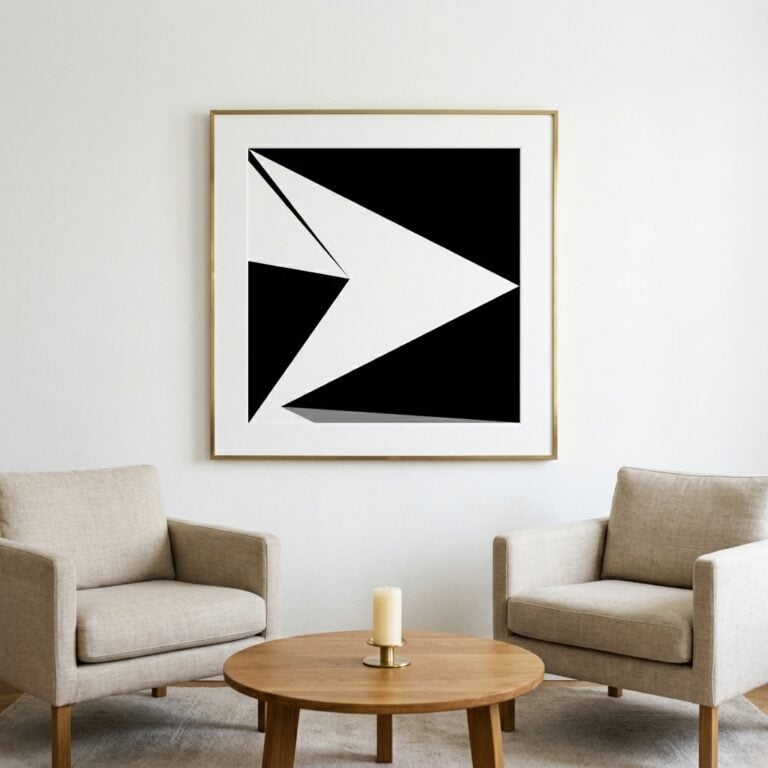
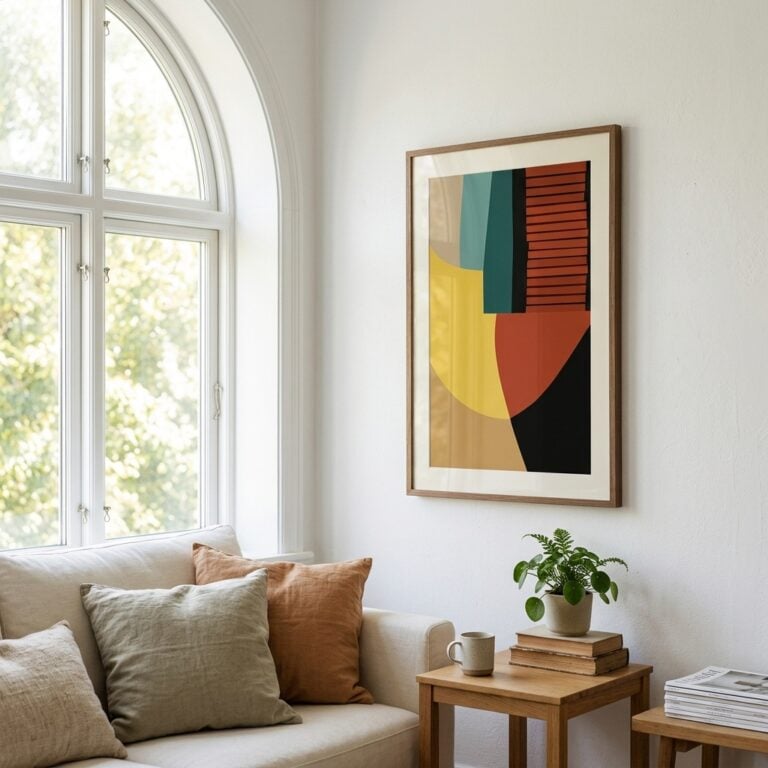
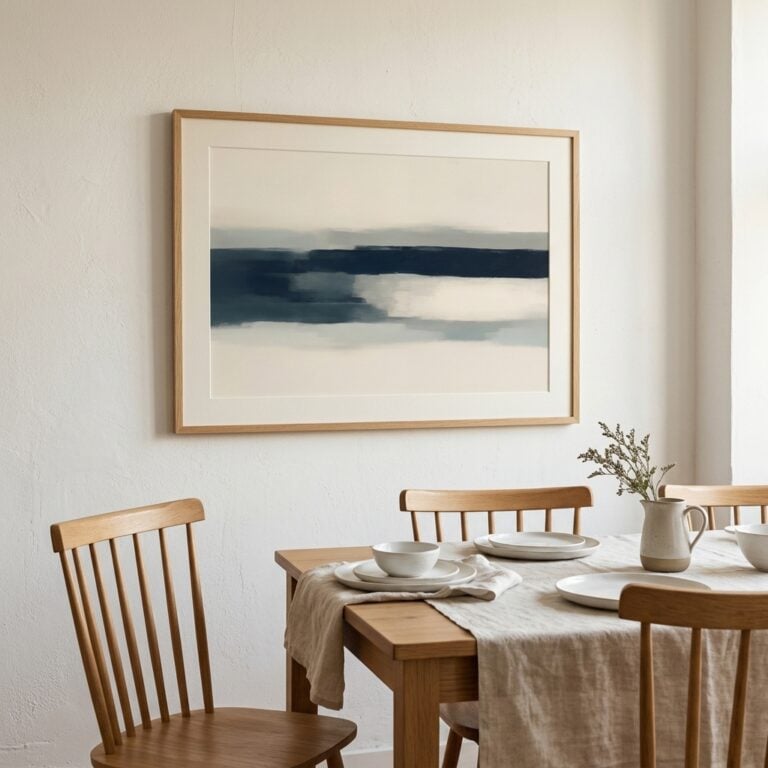
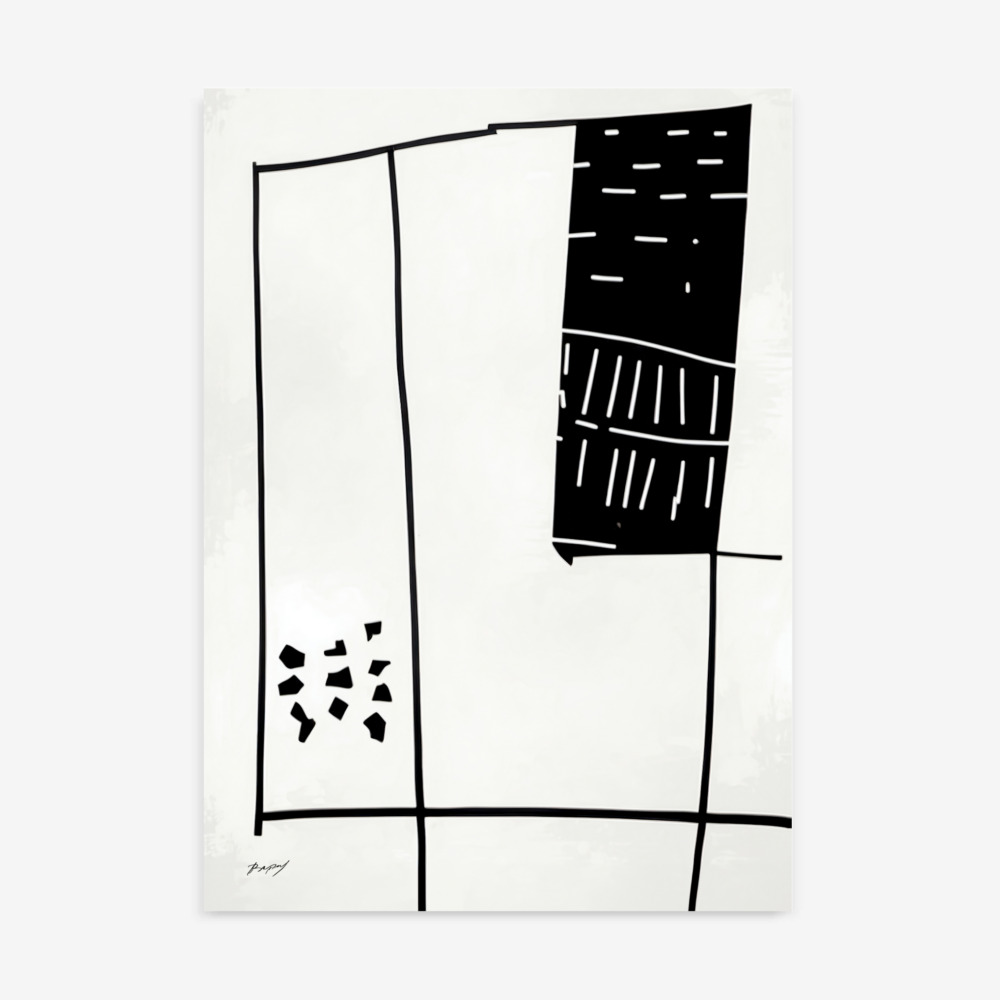
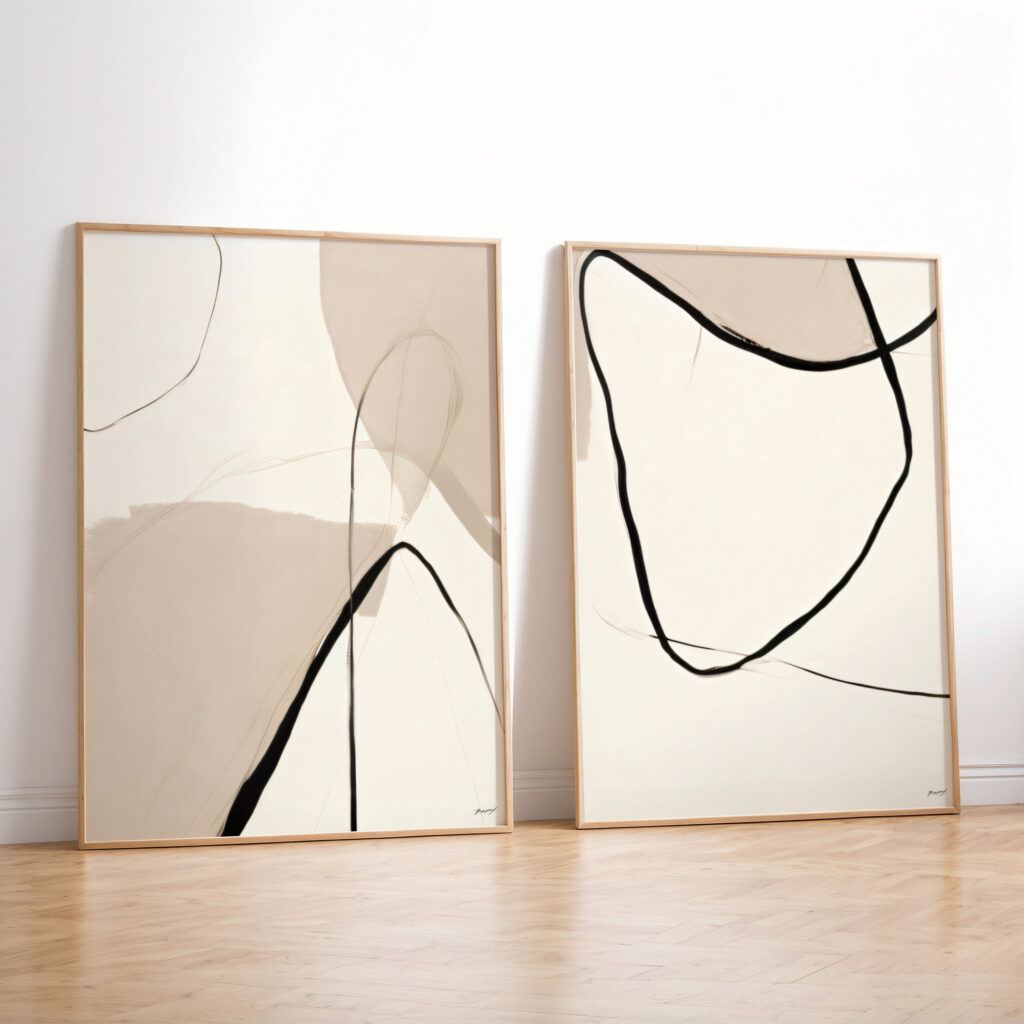
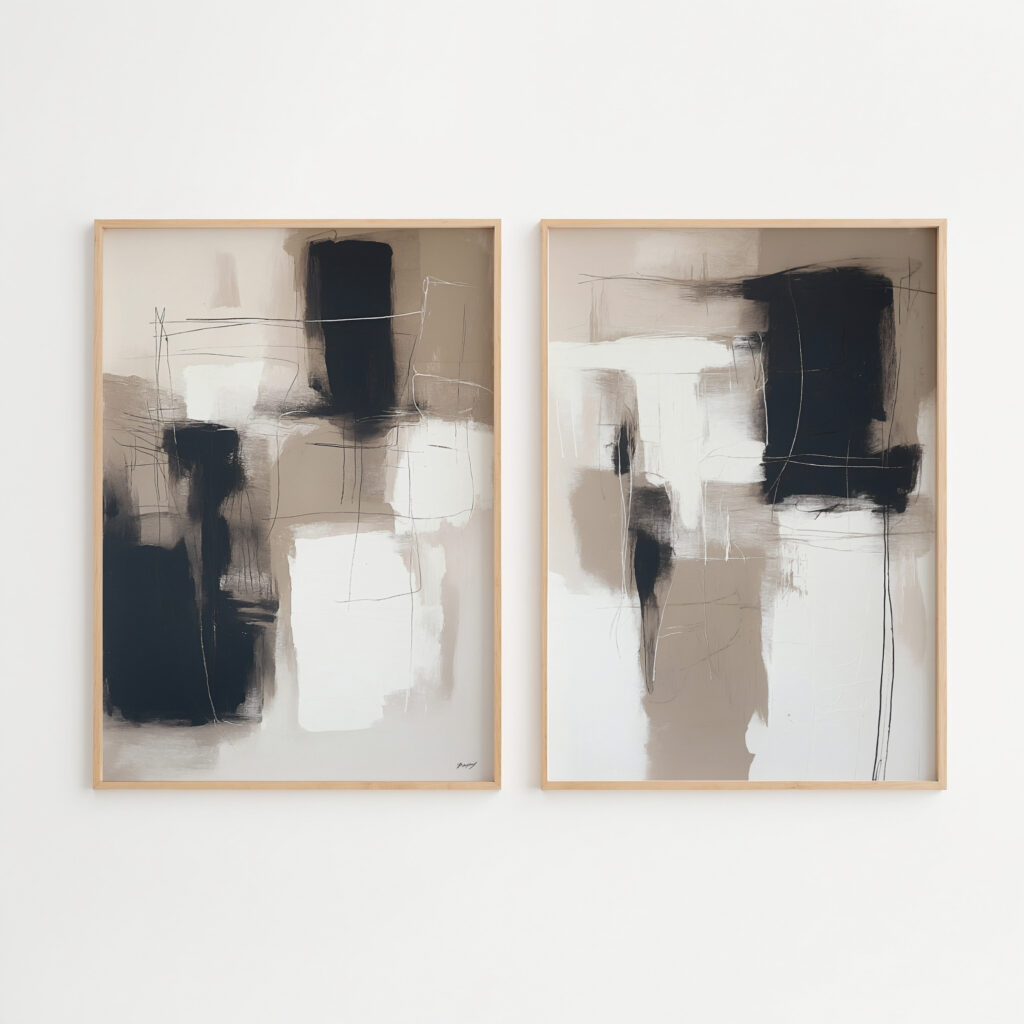
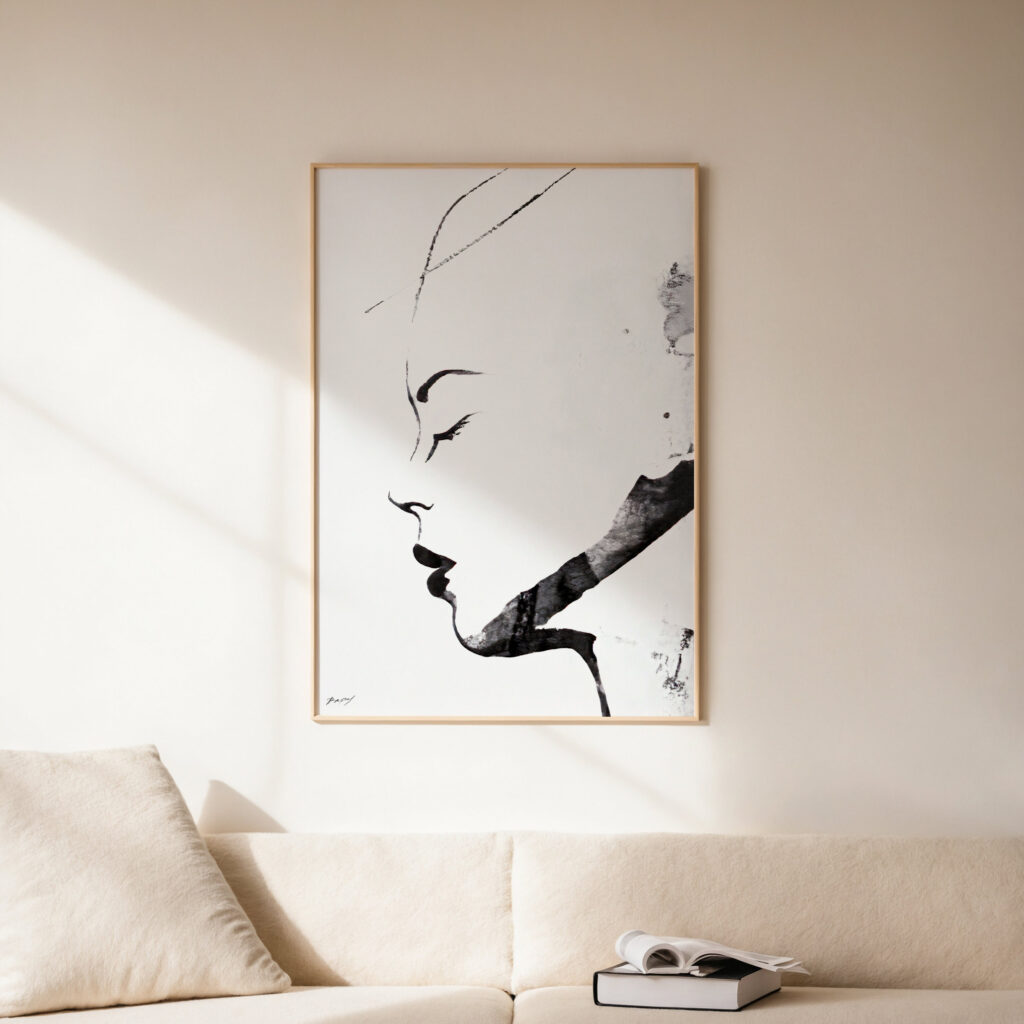
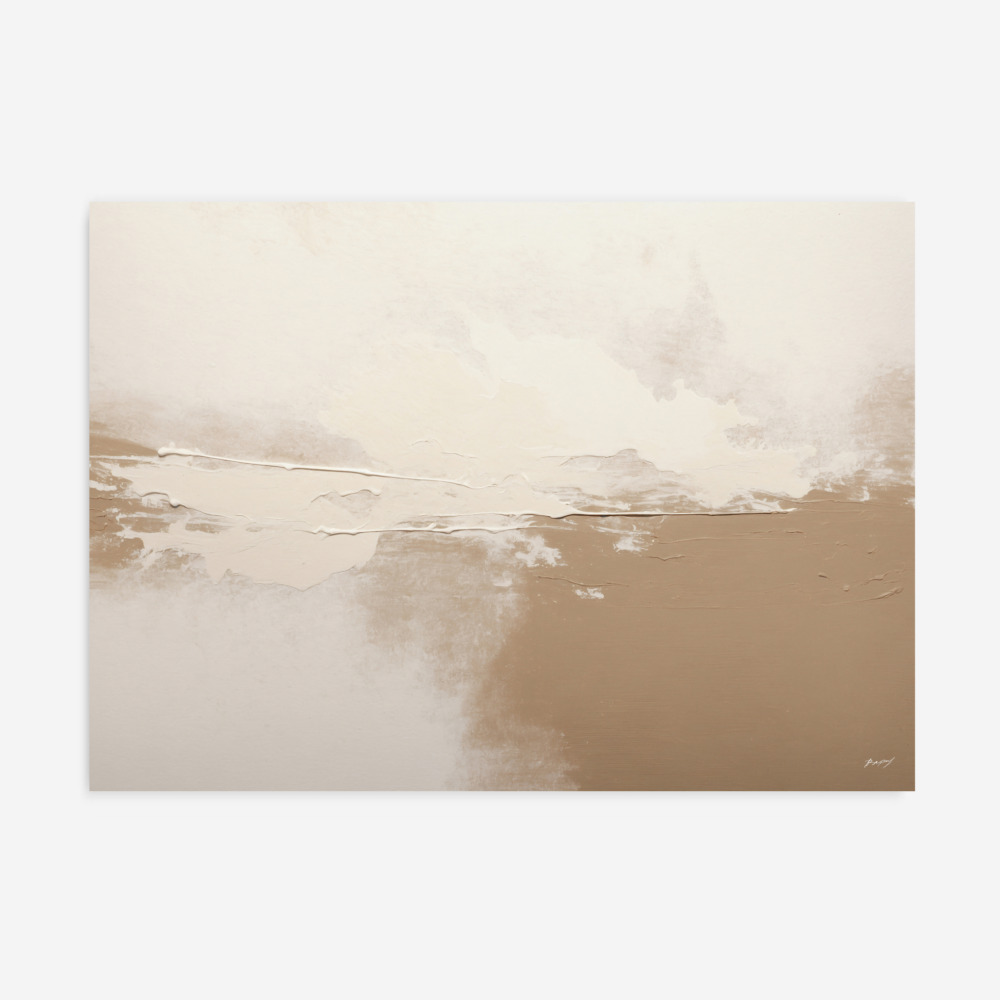
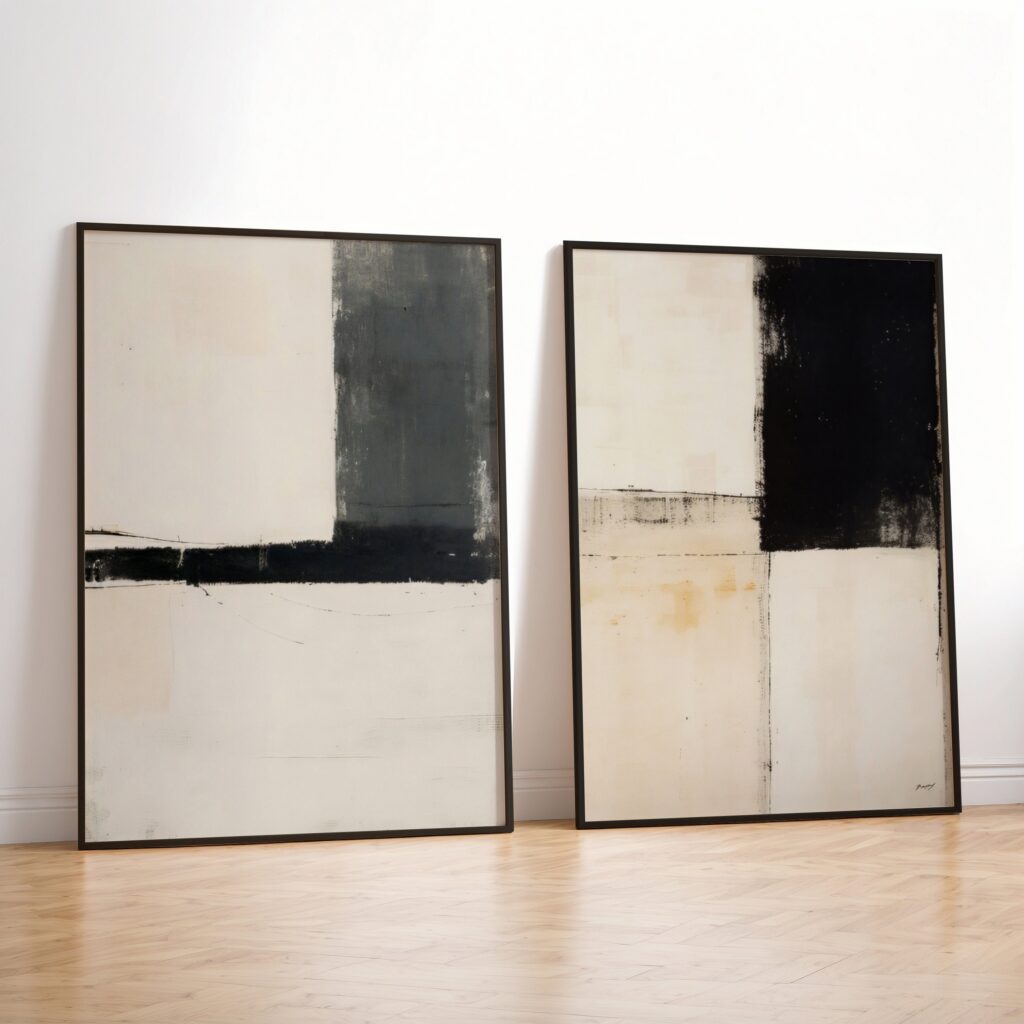
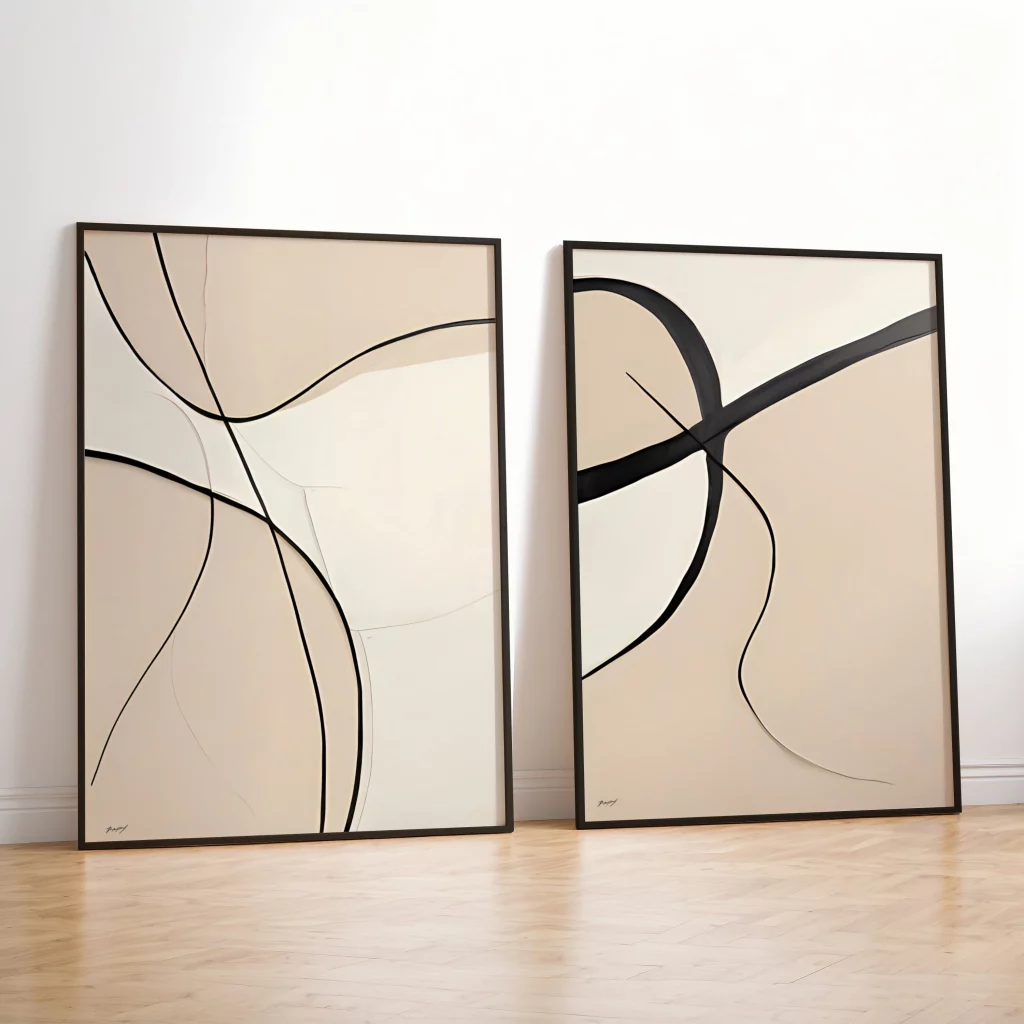
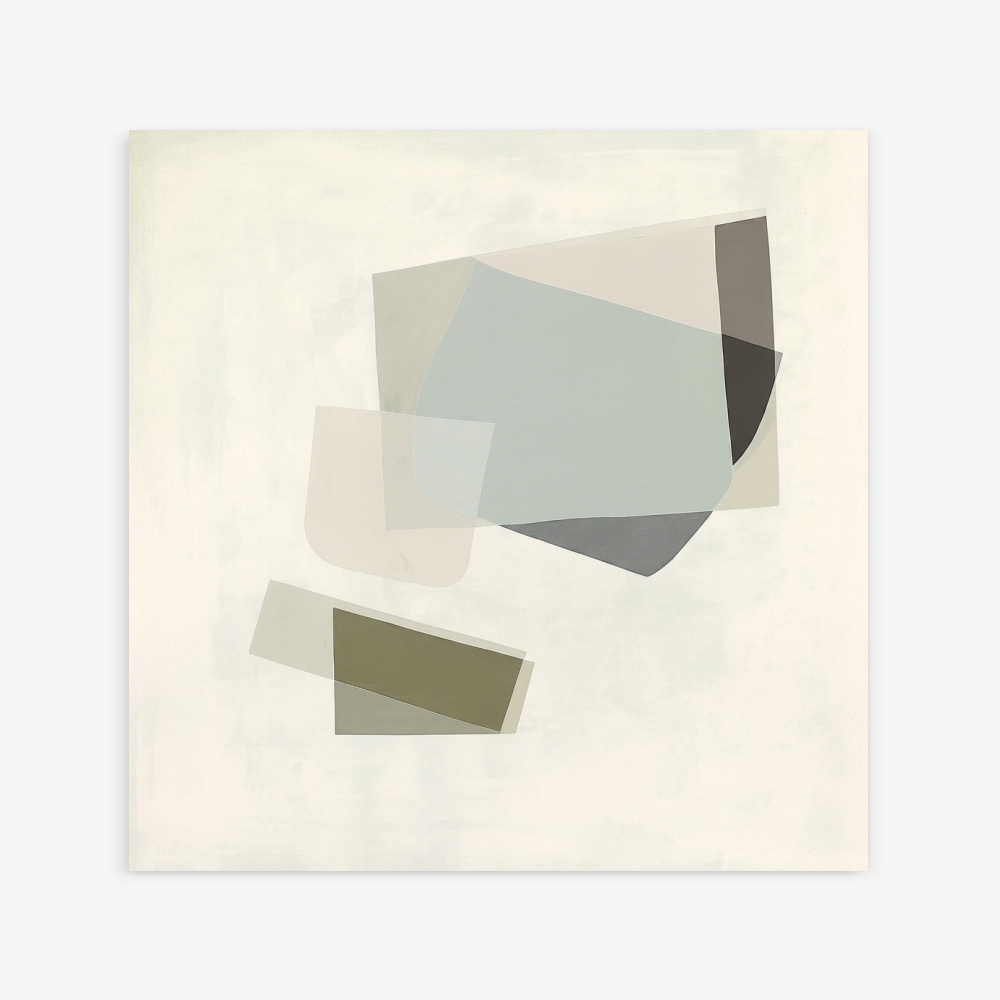
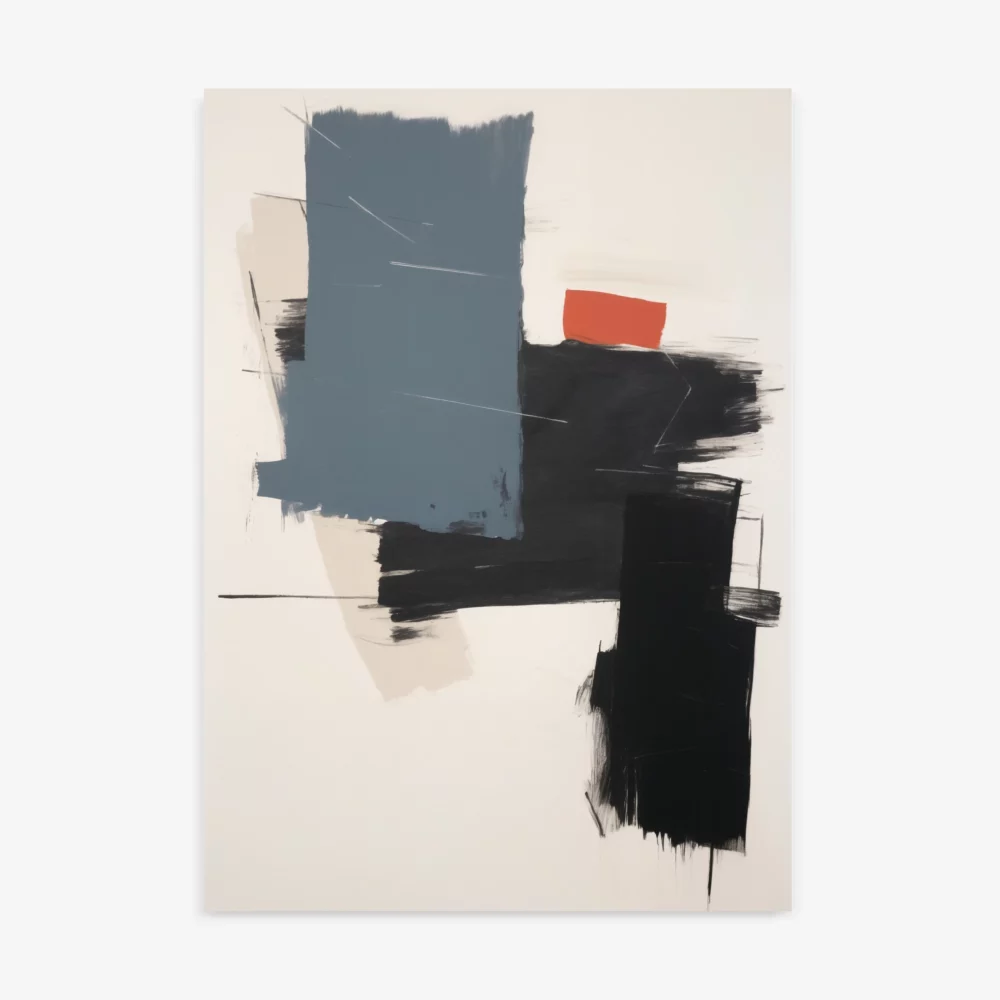
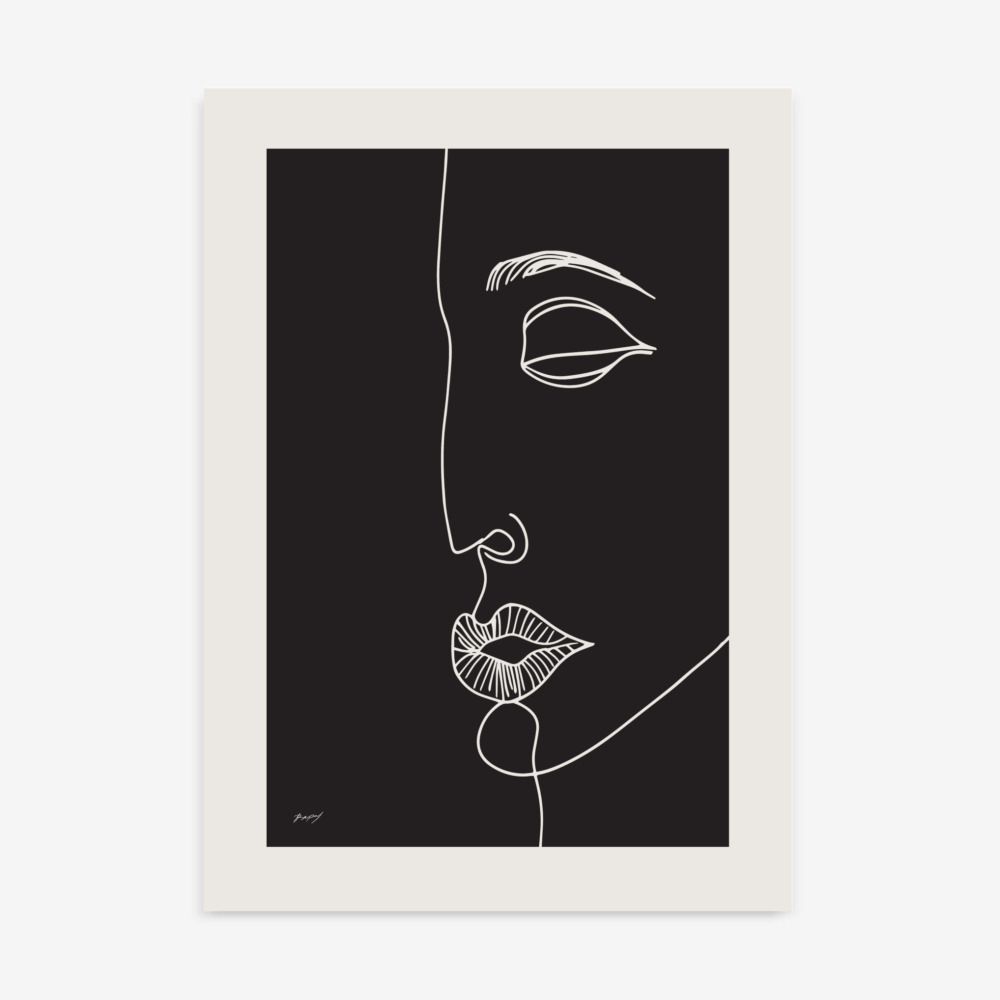
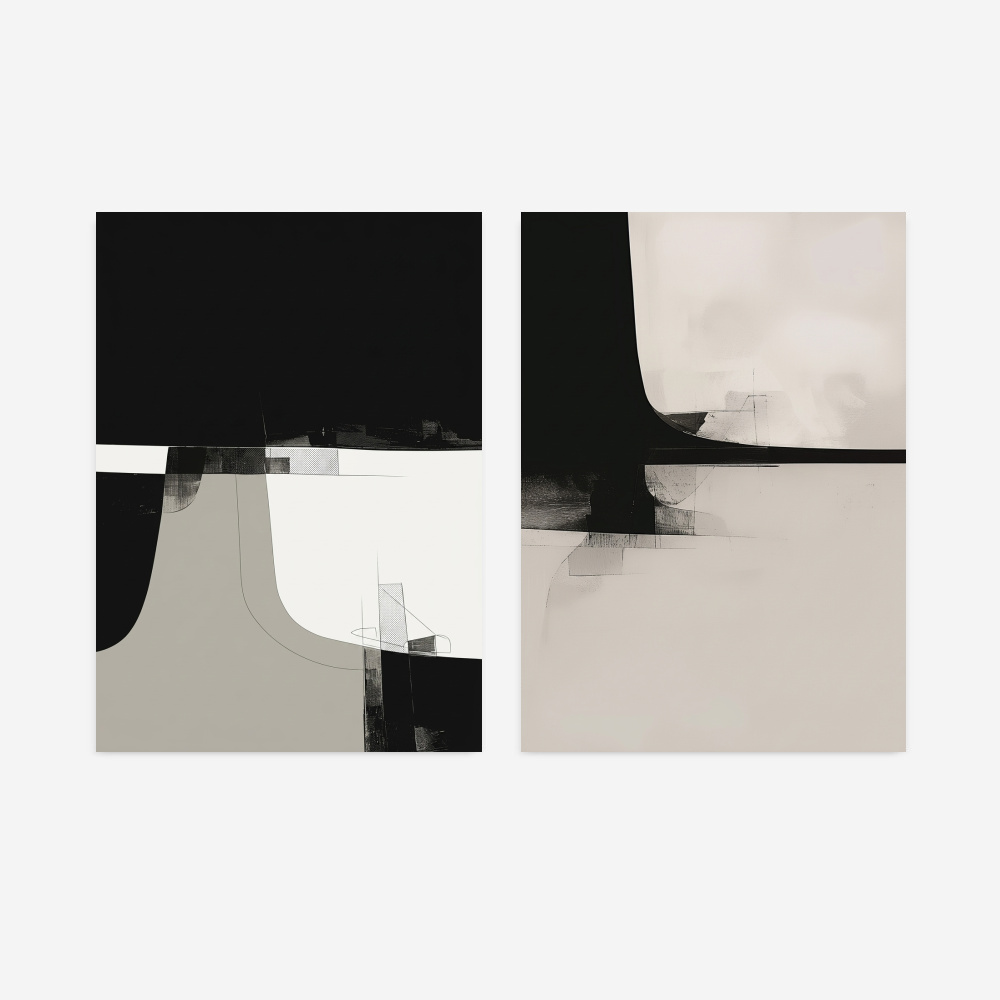
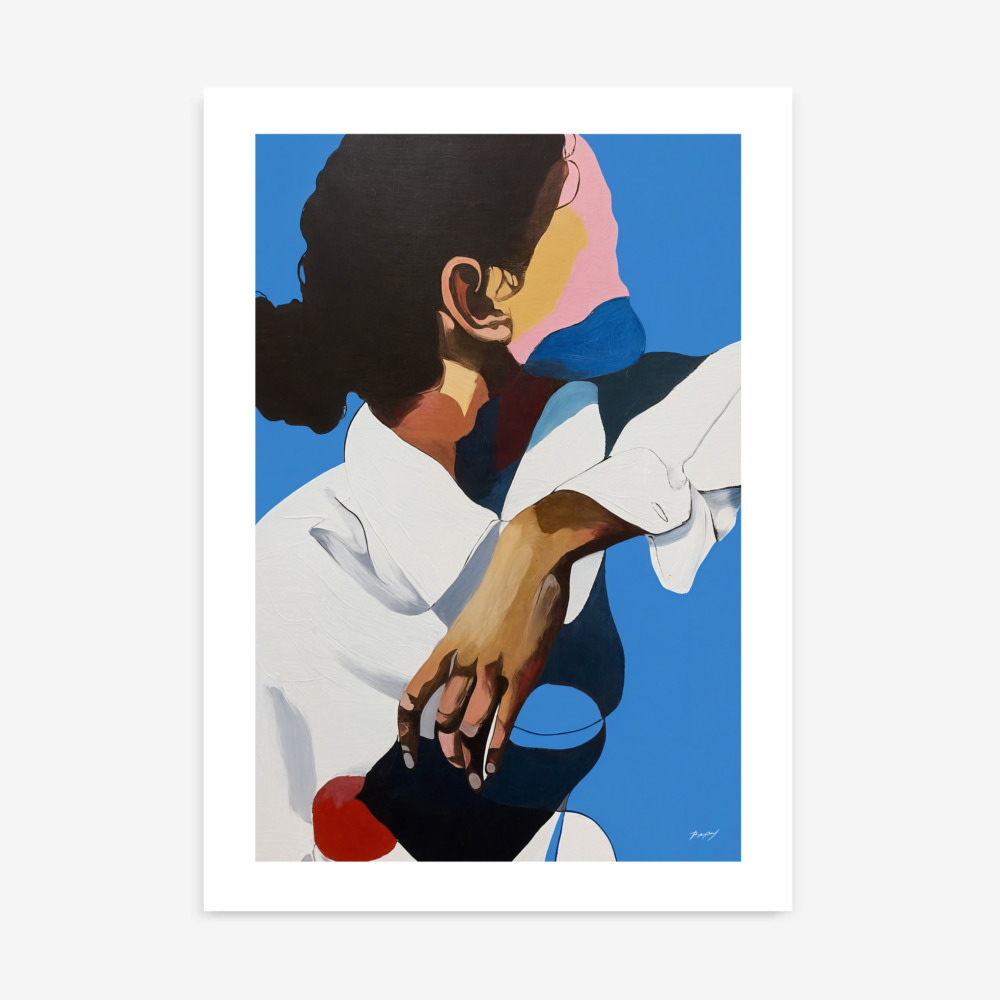
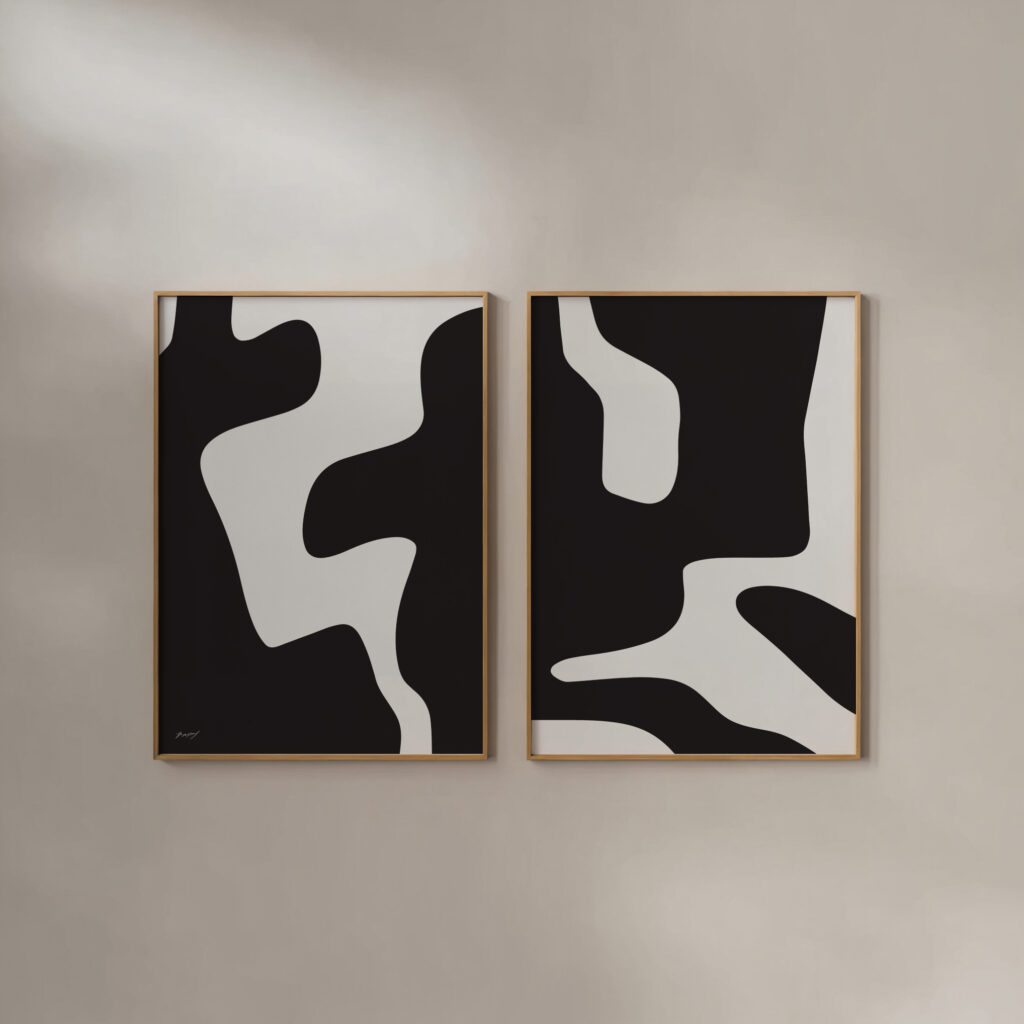
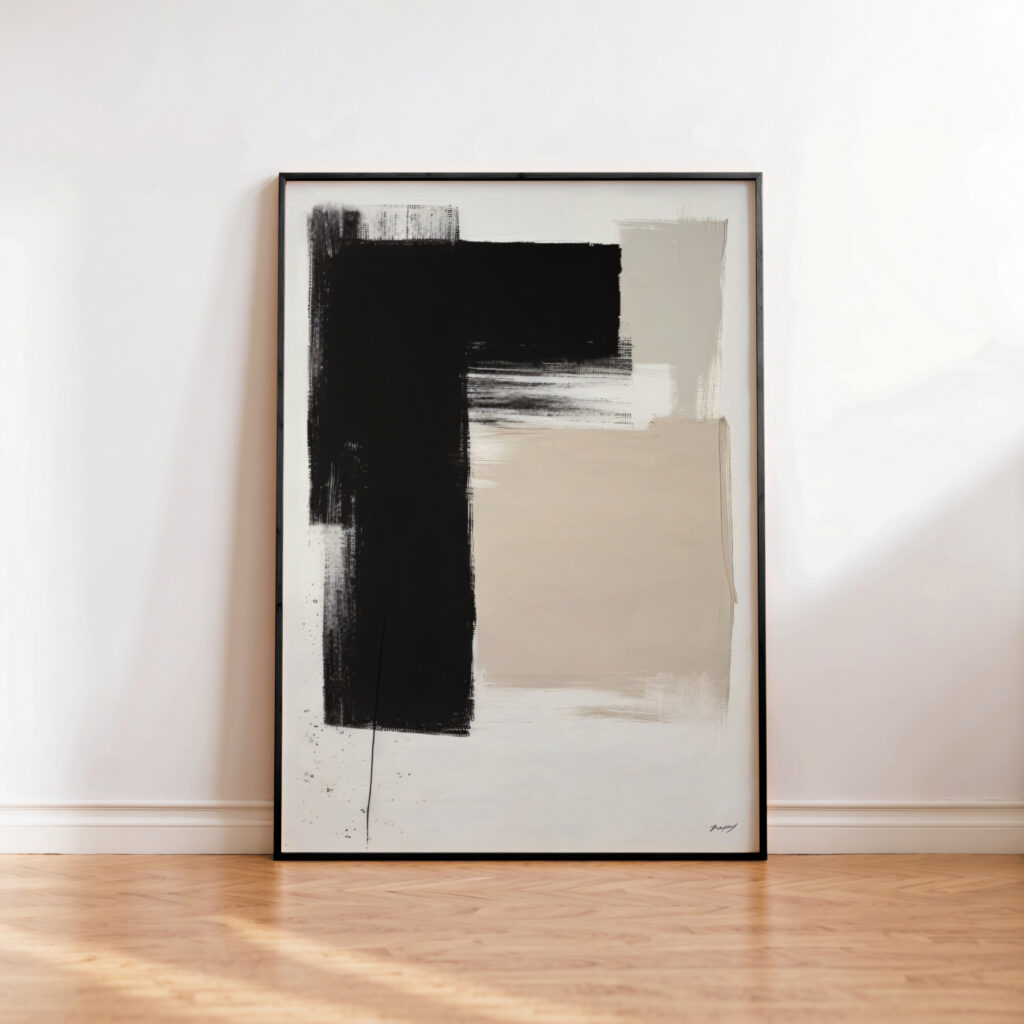
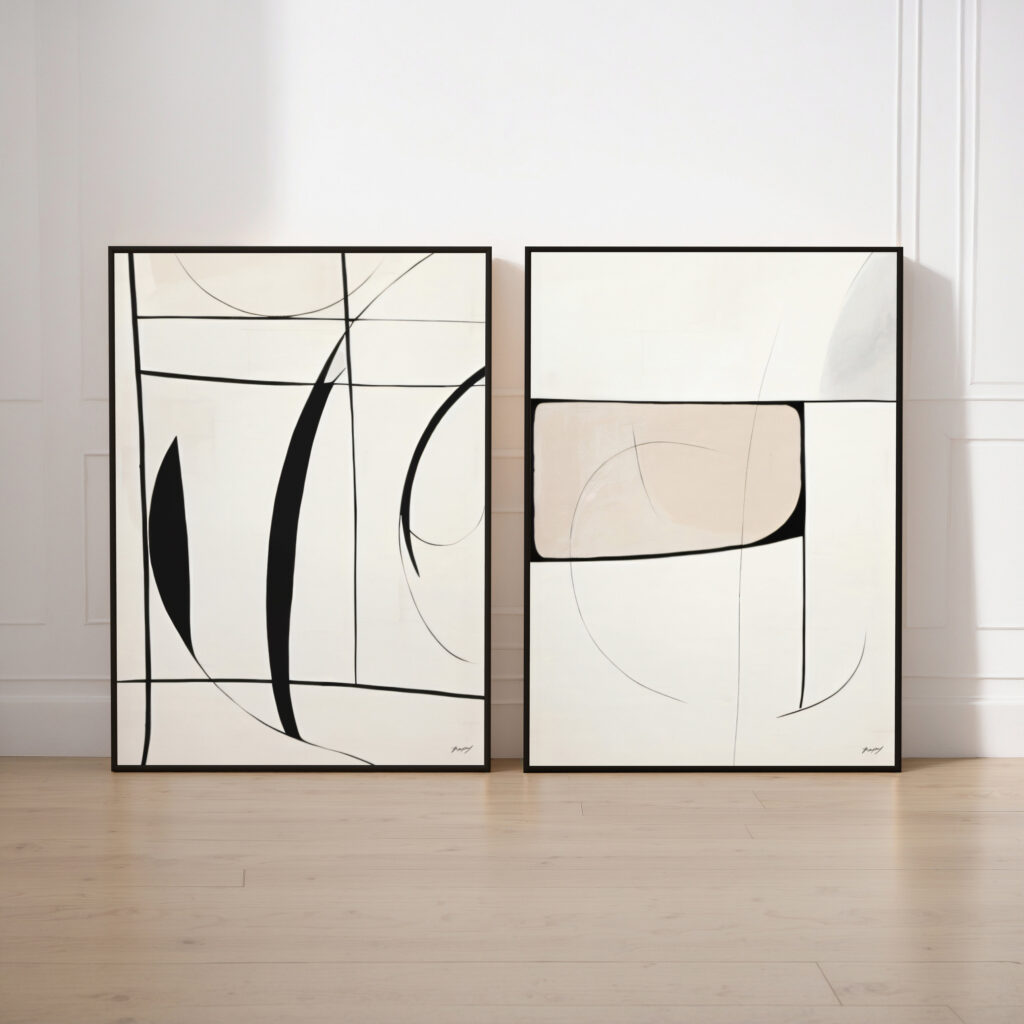
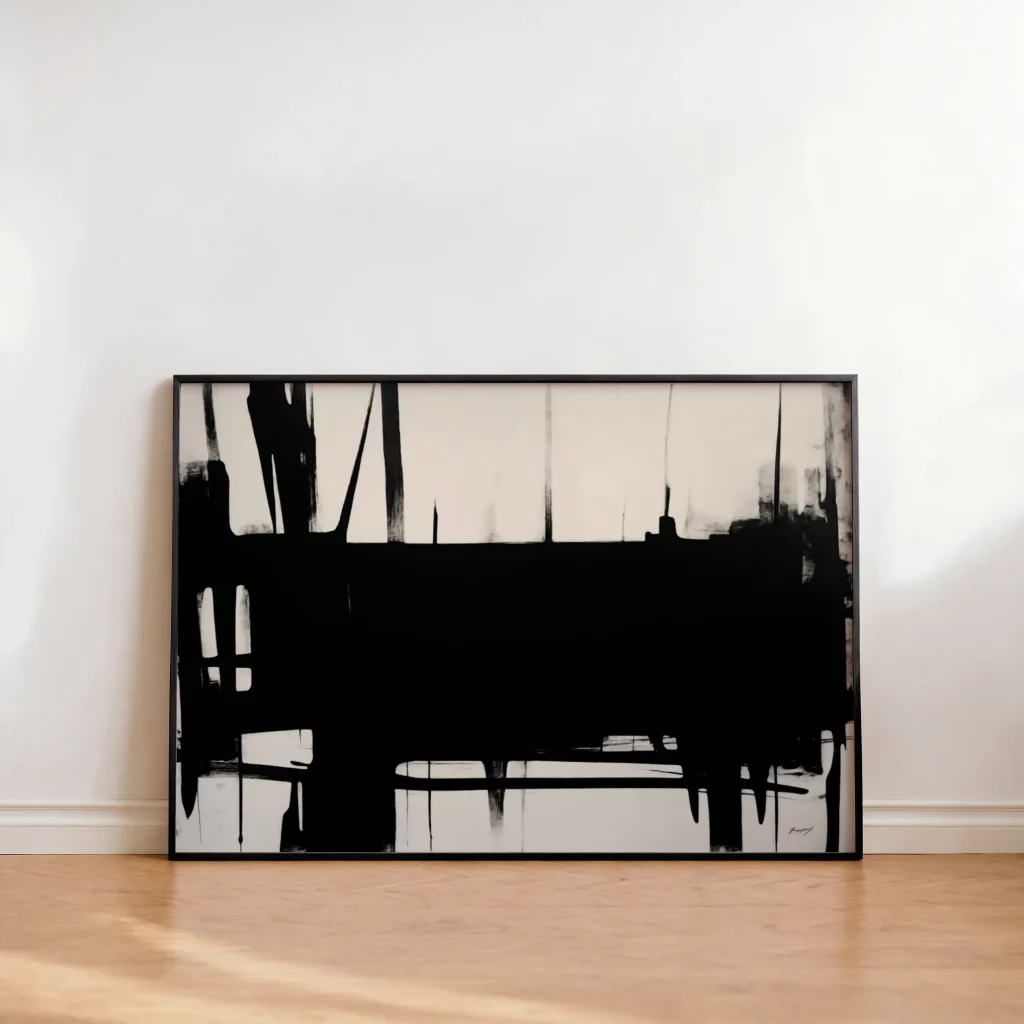
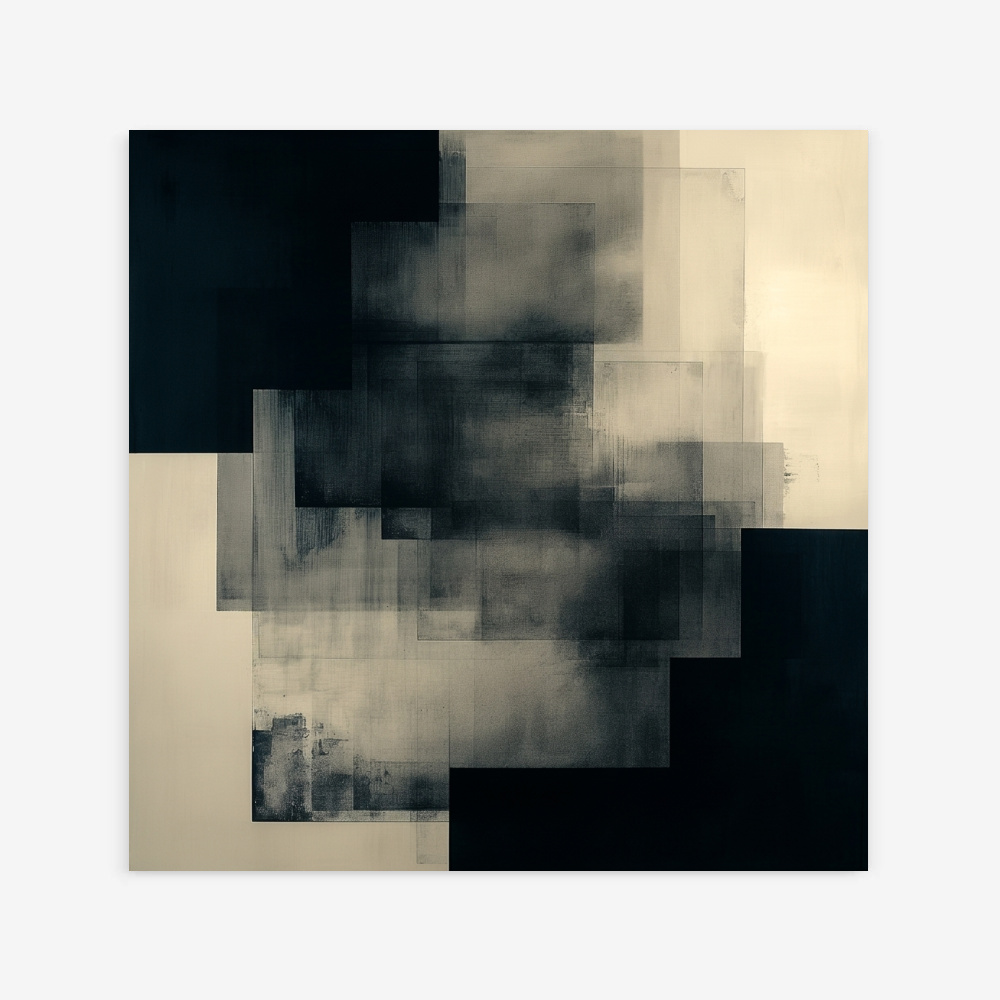
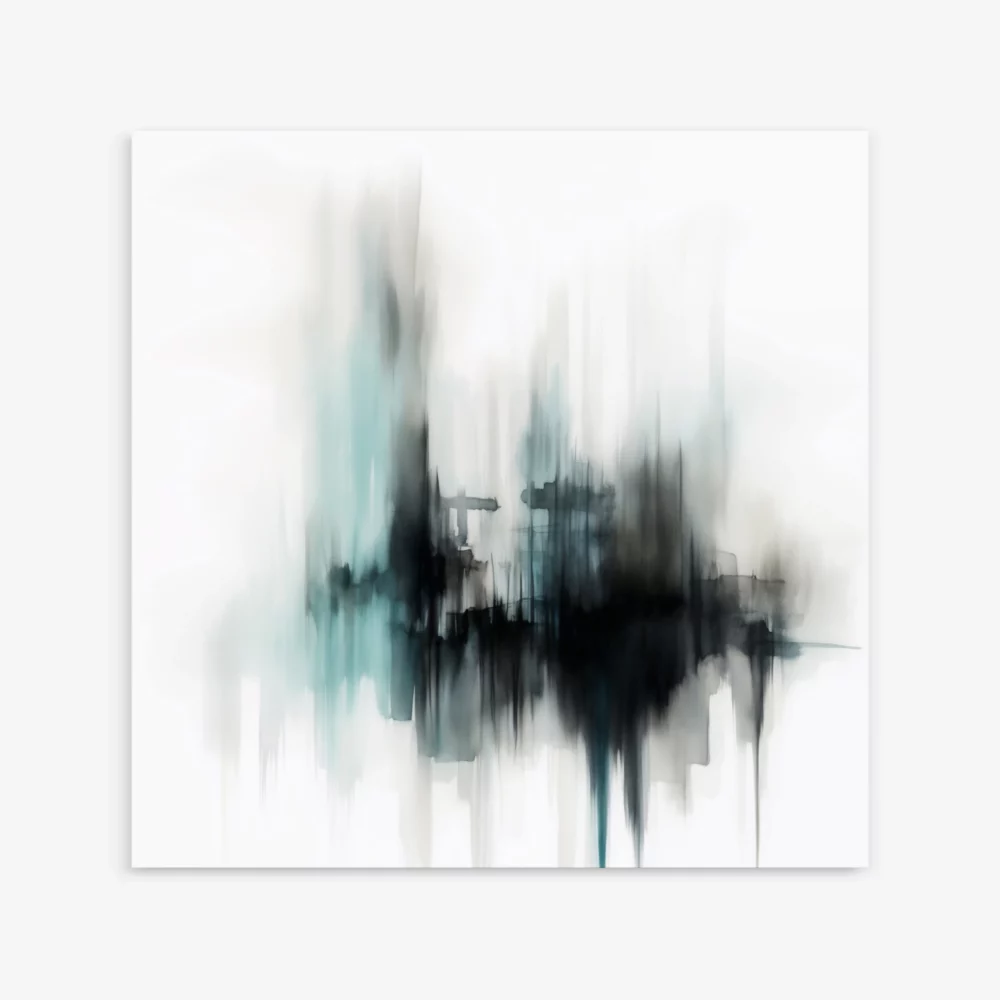
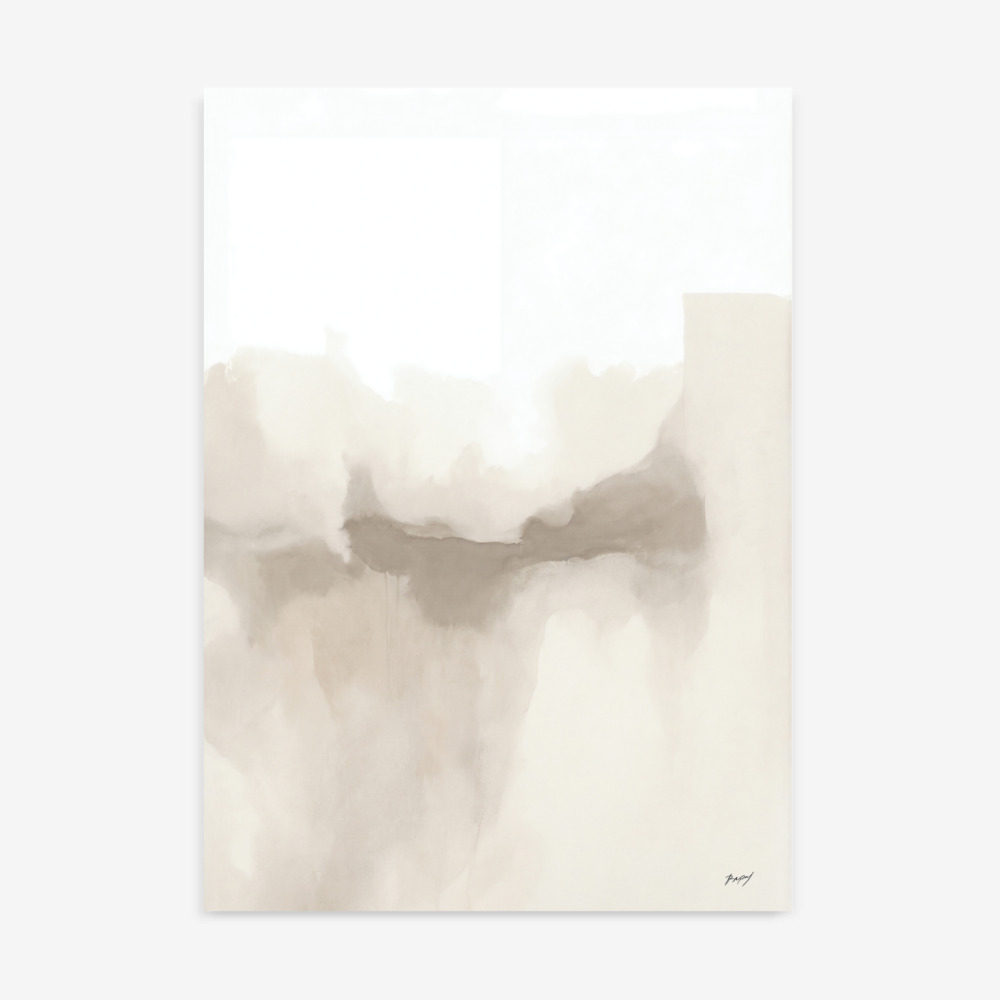
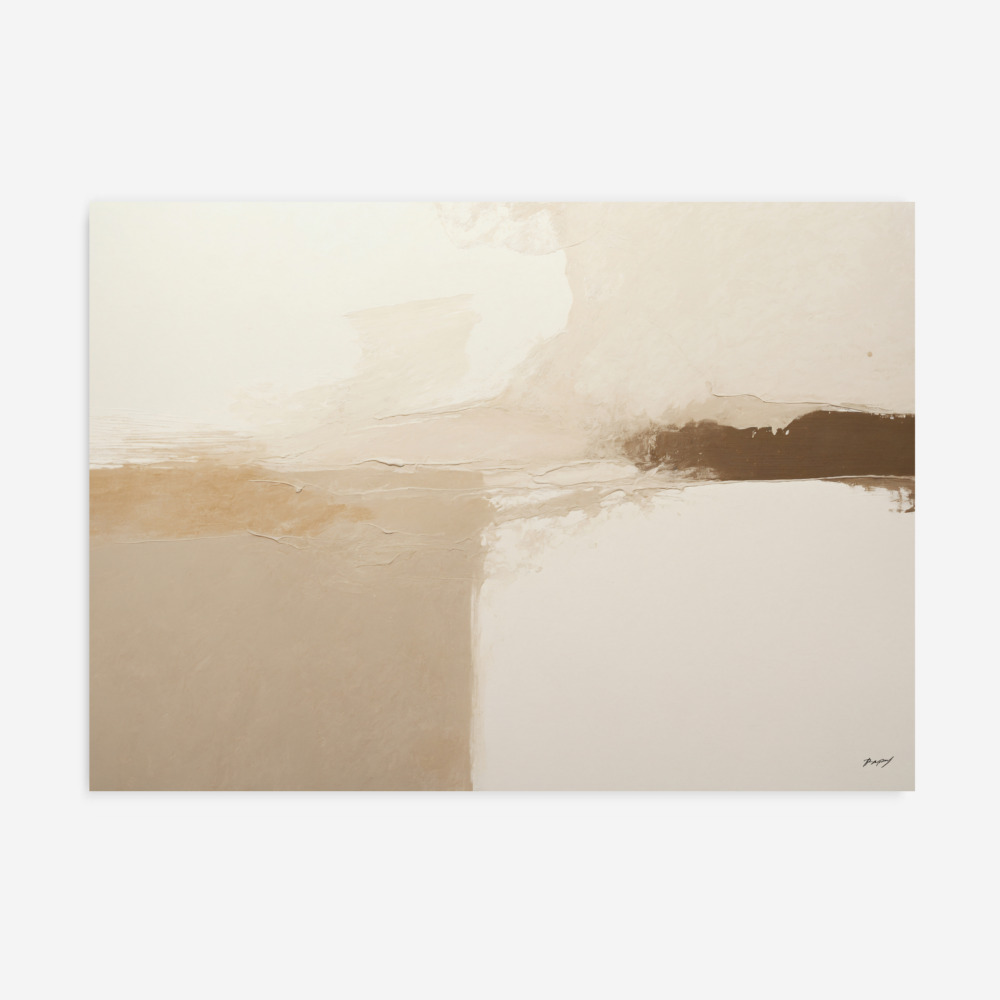
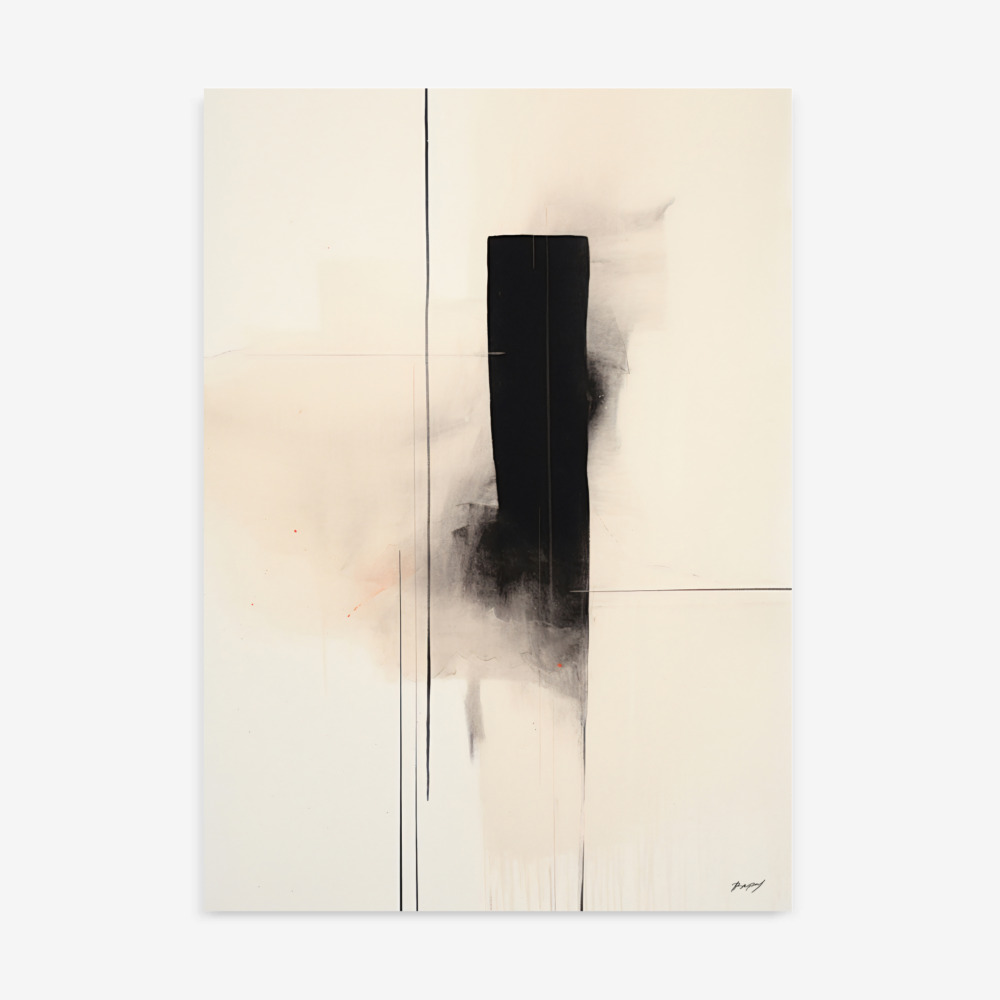
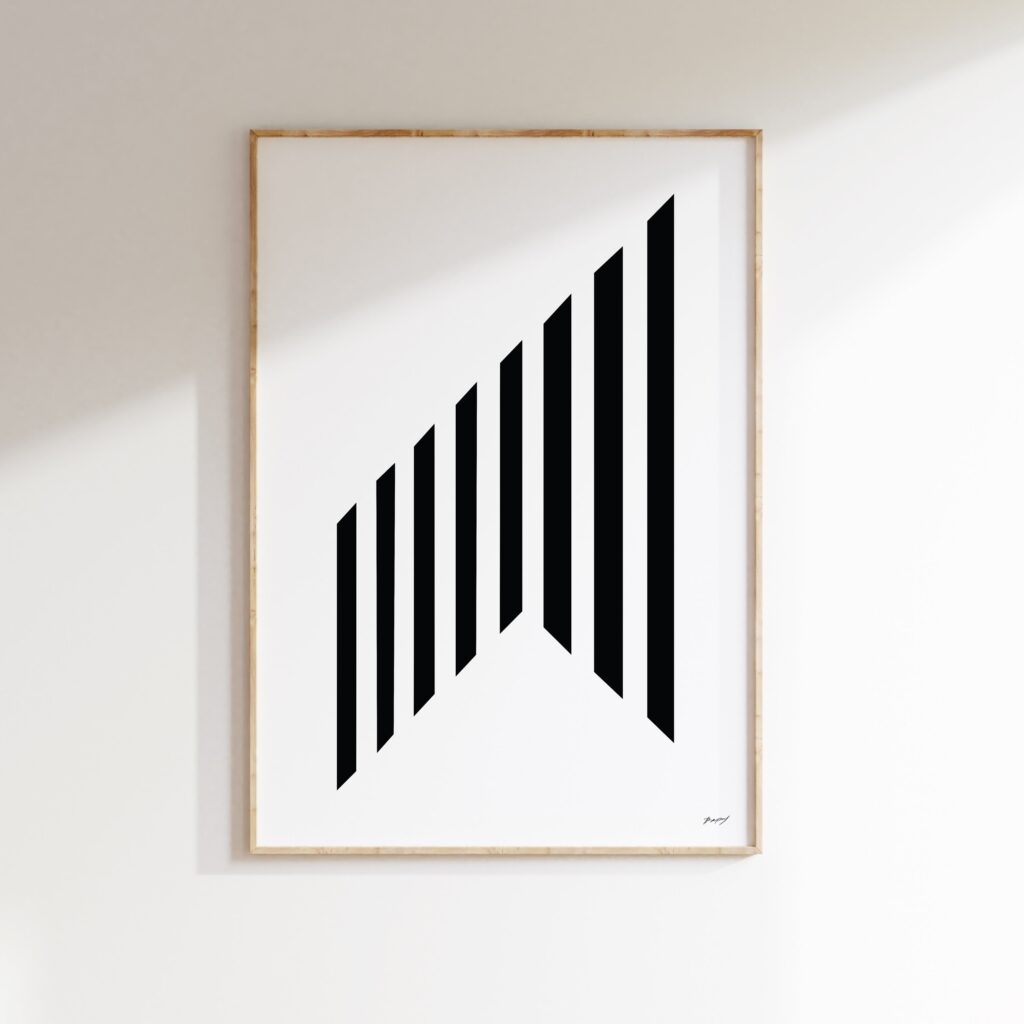
A print reads as contemporary when it prioritises composition over subject – what is left out matters as much as what is shown. Instead of a detailed scene asking to be studied, you get shape, edge, and interval: a single gesture across a pale ground, two blocks of colour meeting, a horizon reduced to three tones. The work holds a wall without demanding constant attention.
That restraint is practical, not just stylistic. Modern interiors tend to have fewer, larger surfaces and more natural light than older homes, and heavily detailed artwork gets lost across that kind of space. Simpler work scales up cleanly – a piece built from four elements still reads clearly at 40×60 in (100×150 cm), where a busy image turns to noise.
It also ages differently. Trend-driven decor dates on a predictable cycle, but work grounded in form and proportion tends to keep working through repaints and new furniture. If you are furnishing a room you expect to change, that durability is worth more than a perfect match today. Our minimalist wall art is the most pared-back end of this; colour block work sits at the bolder end.
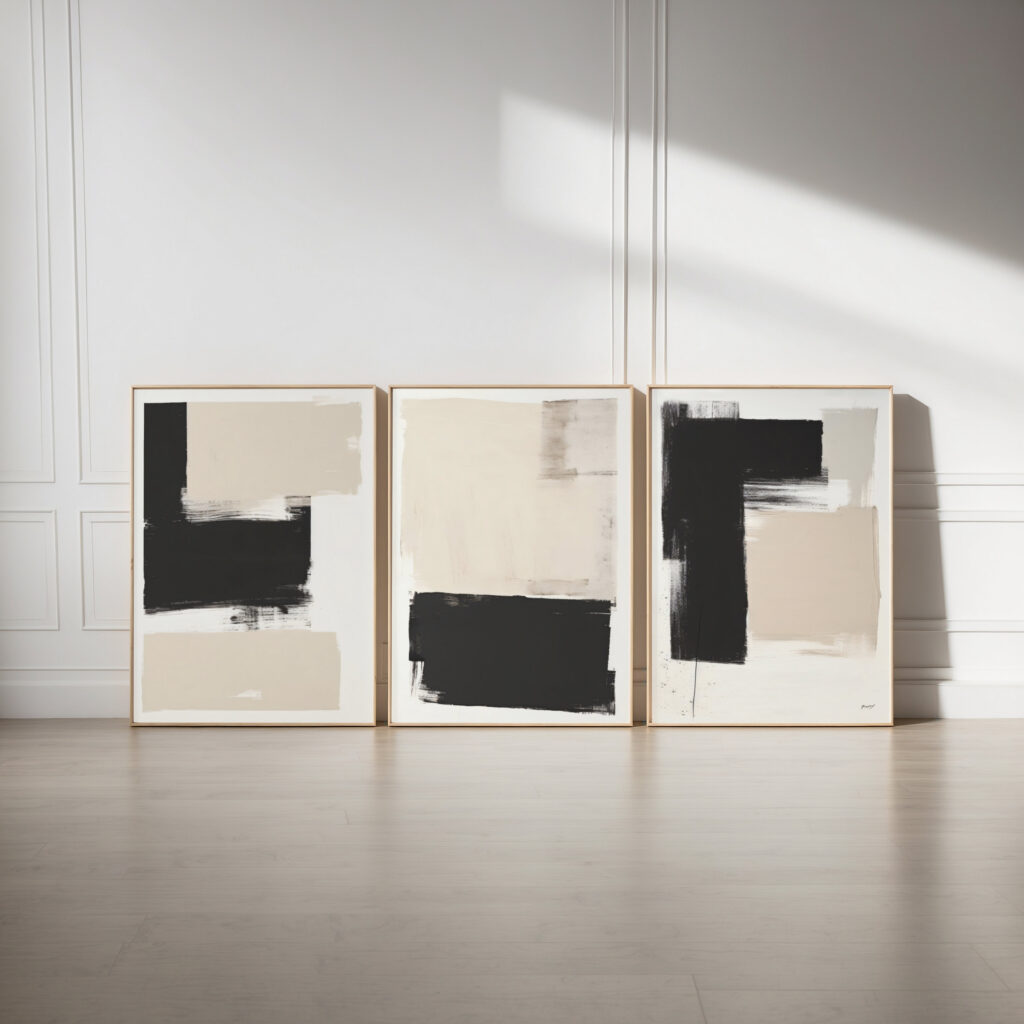
One practical note: contemporary art prints tend to look better in groups of odd numbers or in deliberate pairs than in loose accumulations. Because the individual pieces are quiet, three related works hung as one block will read as a single intentional gesture, where five unrelated ones read as clutter. If you are building a wall rather than filling a gap, the gallery wall sets are composed to hang together from the start.
Choosing Prints Room by Room
Living Room – The main wall carries the most weight, so go larger than feels comfortable. Above a sofa, the artwork should span roughly two thirds of the seating width, with the bottom edge 8-10 in (20-25 cm) above the backrest. A single 30×40 in (75×100 cm) piece or a set of three both work; see more in the living room collection.
Bedroom – Lower contrast works better here than anywhere else, since this is a room you see at the start and end of every day. Match the width of the bed rather than the wall, and hang the lowest edge 6-10 in (15-25 cm) above the headboard.
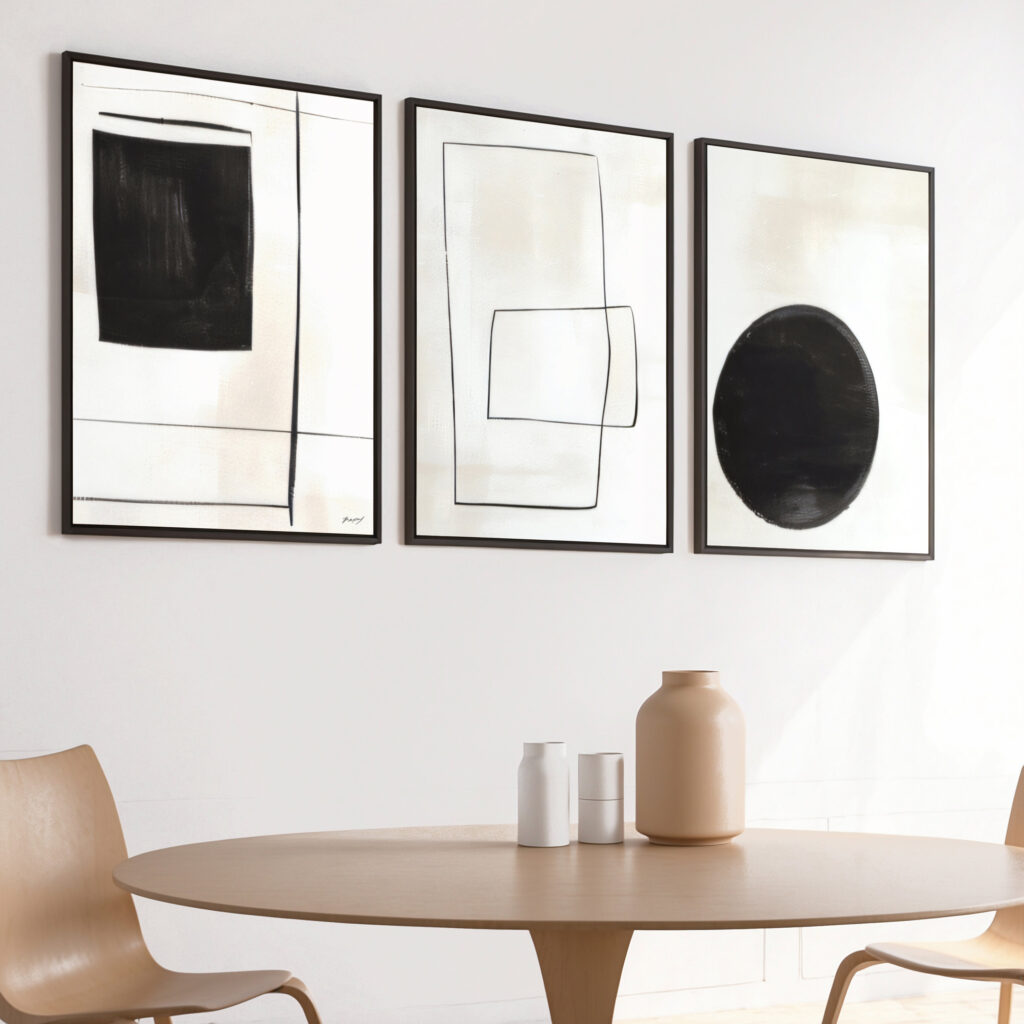
Dining Room – A single horizontal piece sits well on the long wall, centred at eye level when seated rather than standing – around 54-58 in (137-147 cm) from the floor. Avoid glass here if the room gets strong overhead light.
Entryway and Hallway – Narrow spaces suit smaller formats viewed at close range. Use 11×14 in (28×36 cm) or 12×16 in (30×40 cm) prints with 2-3 in (5-7 cm) between frames, and keep the run at a consistent centre height so the wall reads as one line.
Home Office – The wall behind you on calls and the wall you face while working do different jobs. Something quiet and structured suits the second; line art and geometric work both hold up well at close range.
Building a Palette Around Modern Work
With Warm Neutrals – Sand, oatmeal, and pale clay are the default backdrop for most modern rooms, and they need one darker anchor in the art or the wall flattens out. A charcoal line or a black-ground panel does that job. See neutral wall art for the full range.
With Deep, Saturated Walls – Against forest green, navy, or oxblood, light-ground prints give the room breathing space. Reverse the usual instinct: pale artwork on a dark wall, not the other way round.
With Wood and Stone – Oak, walnut, and travertine bring their own warmth, so cool grey artwork can read as clinical against them. Earth-adjacent tones or textured pieces pick up the material conversation instead of interrupting it.
With Black Metal and Glass – Steel-framed doors and dark hardware want graphic work with real contrast. High-contrast monochrome holds its own where softer palettes disappear – the black and white collection is built for this.
Single Statement or Coordinated Set
Choose a single large piece when the wall is the room’s focal point, and a set when the wall is wide, broken by furniture, or needs rhythm rather than a single anchor. A lone print at proper scale is the simplest route to a finished-looking room, and it is almost always the stronger choice in a small space where multiple frames compete for a limited field of view.
Sets behave differently. A pair reads as calm and symmetrical, which suits bed walls and long hallways; a trio introduces movement and handles wide living room walls better. The rule that matters is spacing – keep 2-3 in (5-7 cm) between frames so the group holds together as one shape rather than drifting apart. Prints designed as a set help here, since the palette and weight are matched by the artist; browse sets of three or scale up with large-format work if the wall can take it.
Materials, Formats and Finish
Fine Art Paper (310gsm) – A heavyweight sheet with a velvet-matte surface that holds fine detail without gloss or glare. It frames cleanly and stays flat behind glass, which makes it the better choice for graphic work where edges need to stay crisp.
Premium Cotton Canvas – Woven cotton with a low sheen, stretched and ready to hang unframed. The weave softens hard edges and adds physical depth, which suits large statement pieces and rooms where a framed grid would feel too formal. Browse contemporary canvas prints.
Archival Giclée Inks – A 12-colour archival inkset rated for roughly 75 years of fade resistance in normal indoor conditions. That matters most for work built on subtle tonal shifts, where even small colour drift changes the composition.
Every one of our contemporary art prints is made to order and ships worldwide from the studio, with free shipping on orders over $69.
Frequently Asked Questions
What are contemporary art prints?
Contemporary art prints are reproductions of art made in the present-day idiom – abstraction, minimal line work, colour fields, and pared-back figurative work – rather than reproductions of historical paintings. The defining traits are simplified composition, restrained palettes, and an emphasis on shape and space over narrative detail.
What is the difference between contemporary and modern art prints?
In strict art-historical terms, modern art refers to roughly 1860-1970 and contemporary art means work made since. In interiors the two words are used almost interchangeably to describe clean, current-looking artwork, so it is more useful to judge a print by its palette and composition than by the label attached to it.
What interior styles suit contemporary prints?
They work naturally in minimalist, Scandinavian, Japandi, mid-century, and industrial interiors, where plain walls and restrained palettes give simple compositions room to work. In traditional or period rooms a single modern piece can also succeed as a deliberate contrast rather than a clash.
What size should a contemporary print be?
Size to the furniture below it, not the wall: aim for roughly two thirds of the width of a sofa, sideboard, or bed. In practice that means 24×36 in (60×90 cm) for most dressers and small sofas, and 30×40 in (75×100 cm) or larger over a three-seater.
Should I choose fine art paper or canvas?
Choose 230gsm fine art paper for graphic, high-detail work you intend to frame, and canvas for large statement pieces you want to hang straight from the box. Canvas also avoids glass glare, which is worth considering in rooms with strong overhead or evening lighting.
Do contemporary prints work in a small room?
Yes, and often better than a cluster of small frames. One larger piece reduces visual clutter and gives the eye a single place to settle, which tends to make a small room read as more spacious rather than more crowded.
Are contemporary prints a safe choice as a gift?
They are among the safer art gifts, because abstract and minimal work does not depend on the recipient sharing a taste in specific subject matter. Staying with muted palettes and simple compositions makes it far more likely to suit a room you have not seen.