Minimalist home decor isn’t about empty rooms or sterile spaces—it’s about intentional design choices that create calm, functional environments. The minimalist approach strips away visual clutter while maintaining warmth and personality through carefully selected pieces. Whether you’re starting fresh or refining your current space, incorporating minimalist art prints and thoughtful design elements can transform how your home feels and functions.
The beauty of minimalist interior design lies in its versatility. This aesthetic works across architectural styles, budgets, and personal preferences because it focuses on core principles rather than rigid rules. From Scandinavian-inspired living rooms to Japanese-influenced bedrooms, minimalism adapts to your lifestyle while creating spaces that breathe.
The Foundation: Understanding Minimalist Interior Design
Minimalist interior design operates on three fundamental principles: intentionality, functionality, and visual simplicity. Every piece in your home should serve a purpose—whether practical, aesthetic, or emotional. This doesn’t mean sacrificing comfort or personality; it means being selective about what earns a place in your space.
Color palettes in minimalist homes typically feature neutral bases—whites, grays, beiges, and blacks—with occasional subtle accent colors. These neutral wall art choices create a cohesive backdrop that allows architectural features and carefully chosen furnishings to stand out. The restraint in color doesn’t create blandness; it establishes a sophisticated canvas for living.
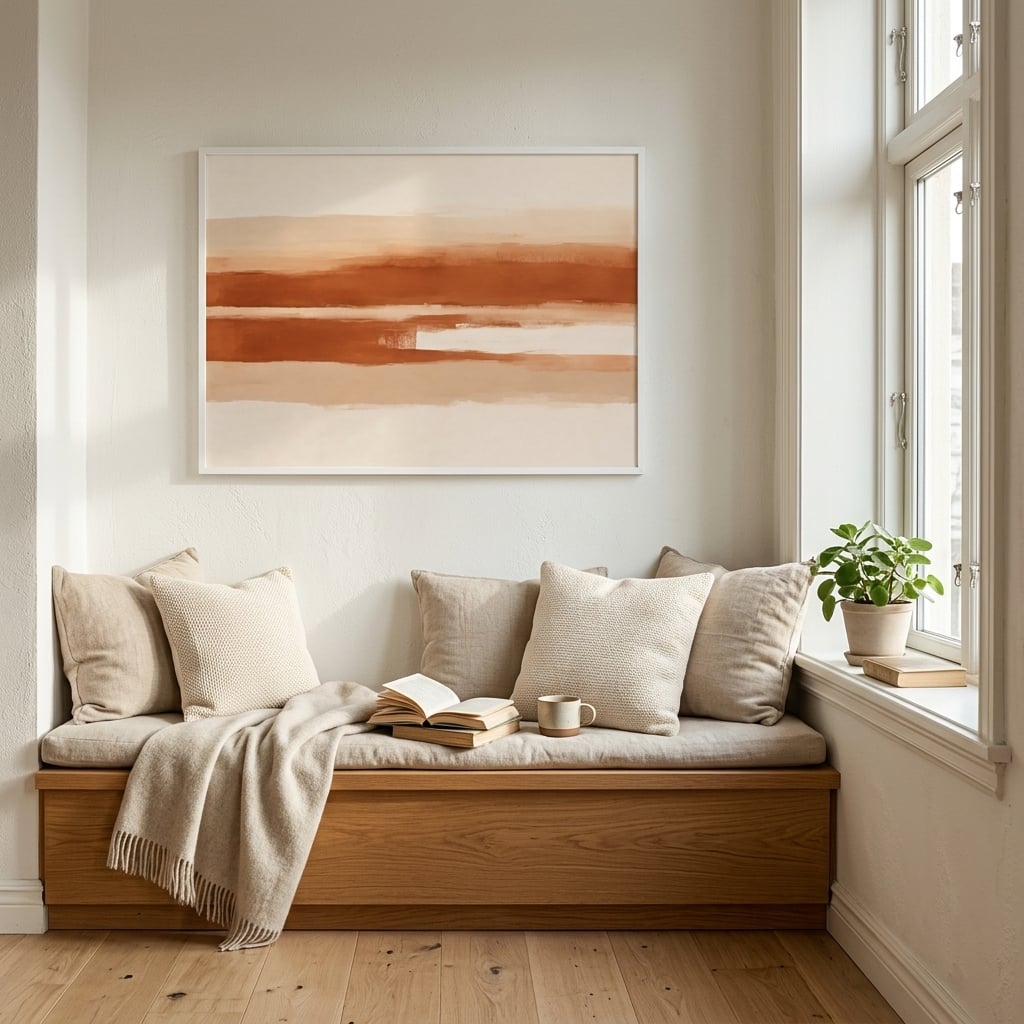
Texture becomes crucial in minimalist spaces because you’re working with fewer decorative elements. Layer different materials—linen textiles, natural wood, smooth ceramics, matte metals—to add depth without visual chaos. A chunky knit throw on a leather sofa or a rough-hewn wooden bowl on a polished concrete counter creates interest through tactile variation.
Creating a Minimalist Living Room That Invites
The minimalist living room walks a fine line between ‘curated’ and ‘cold.’ Start by selecting a focal point—typically a sofa or architectural feature—and build around it with restraint. Choose furniture with clean lines and proportions appropriate to your room size. A well-designed sofa in a quality neutral fabric can anchor your space for years.
Storage solutions are non-negotiable in minimalist living rooms. Built-in shelving, credenzas with closed storage, and multi-functional furniture pieces keep everyday items accessible but invisible. The goal isn’t to own nothing; it’s to store what you own thoughtfully. Open shelving works when styled sparingly with books arranged by color, a few sculptural objects, and negative space.
Window treatments in minimalist spaces should enhance natural light rather than compete with it. Simple roller shades, linen curtains, or even bare windows (where privacy allows) maintain the clean aesthetic. Natural light is your most valuable design element in minimalist interiors—it highlights textures, creates dimension, and changes the mood throughout the day.
Coffee tables deserve special consideration. A minimalist living room often features either a substantial single piece that makes a statement through material or form, or multiple smaller tables that offer flexibility. Glass, wood, or stone surfaces keep sight lines open while providing necessary function.
Wall Art in Minimalist Spaces
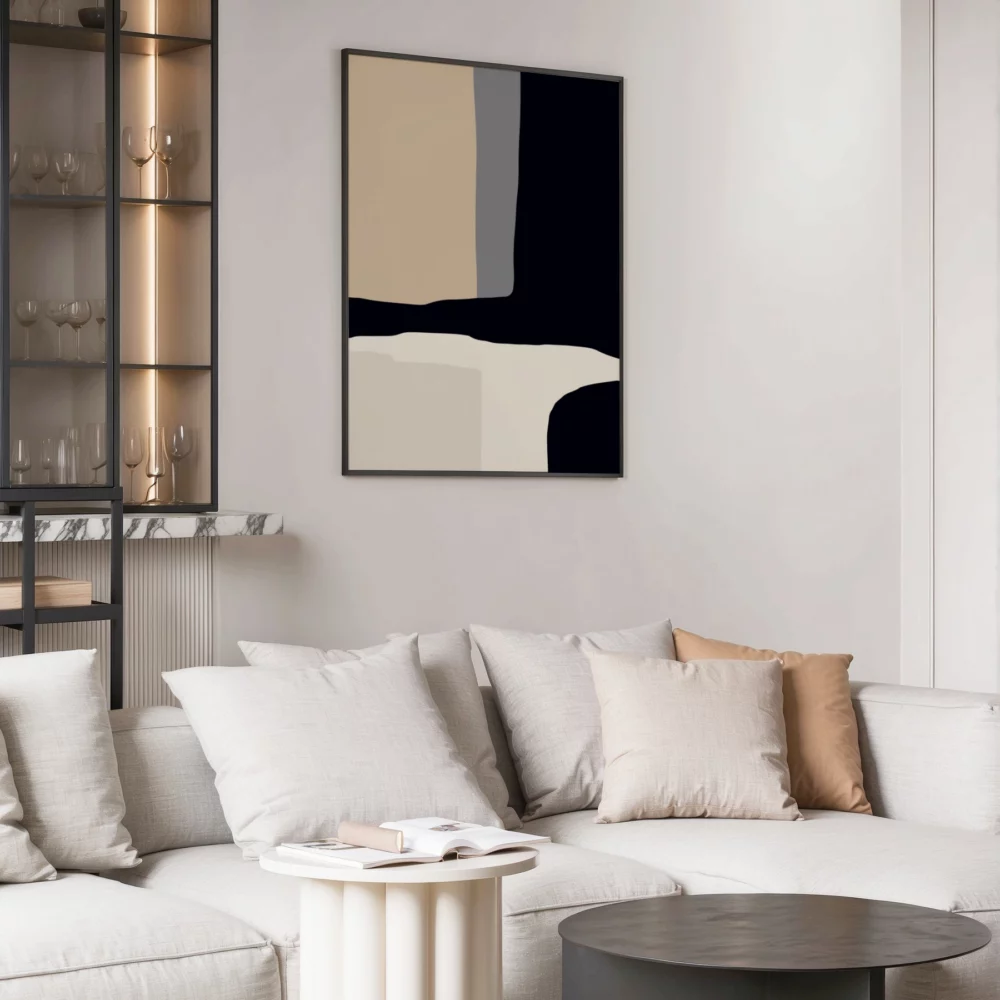
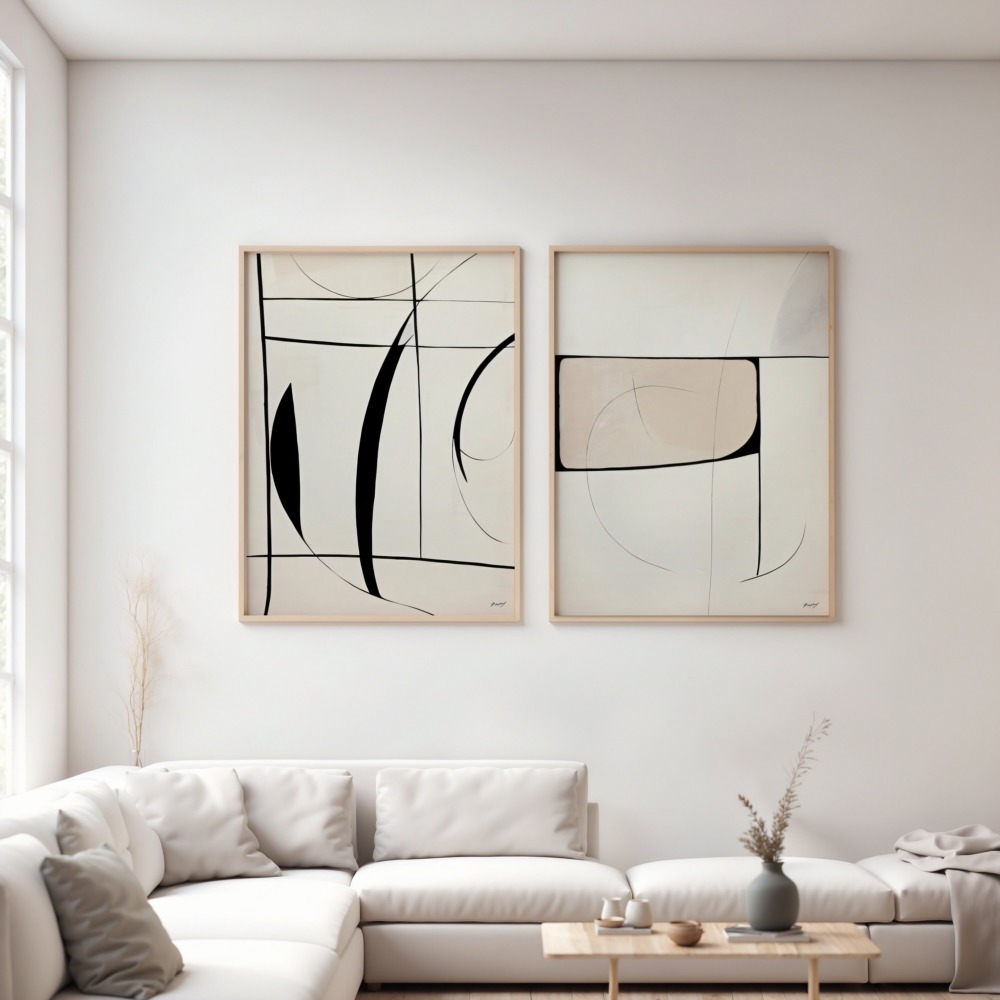
Art selection can make or break a minimalist interior. Large-scale pieces often work better than gallery walls in these spaces—a single striking print above the sofa creates impact without fragmentation. Black and white photography, abstract line drawings, and subtle geometric prints complement the minimalist aesthetic naturally. Explore more in our line art prints collection.
Frame selection matters as much as the artwork itself. Thin black frames, natural wood frames, or even frameless mounting options maintain visual simplicity. Consistent framing throughout a space—using the same frame style for all artwork—creates cohesion even when the art pieces themselves vary in subject or style.
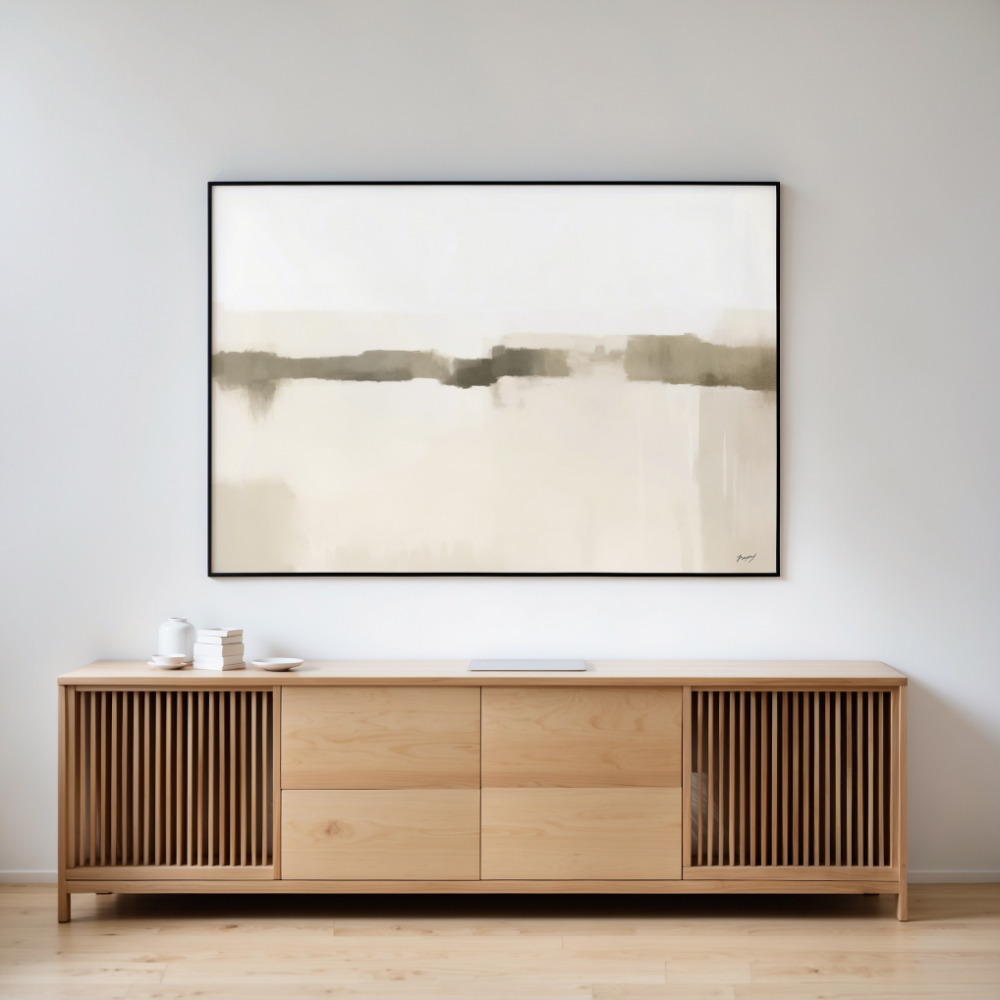
Placement follows the ‘less is more’ philosophy. Instead of covering every wall, choose strategic locations where art enhances the architecture or balances the room’s composition. A single large print centered above a console table makes more impact than three smaller pieces competing for attention. Consider the Japandi aesthetic principles when selecting and placing wall art for a particularly harmonious minimalist approach.
Achieving the Clean Home Aesthetic
The clean home aesthetic extends beyond tidiness into intentional design systems that make maintenance effortless. Start by establishing zones for specific activities—a reading corner, a coffee station, a work area—and contain each zone’s necessities within its designated space. This prevents functional items from spreading across your home.
Surface discipline is essential. Kitchen counters, entryway tables, and bedroom dressers should display only what’s actively in use or genuinely decorative. The ‘one in, one out’ rule helps maintain this standard—when you acquire something new, remove something existing. This practice prevents gradual accumulation that undermines the clean aesthetic.
Cleaning becomes simpler in minimalist spaces because there are fewer objects to move, dust, and organize. Choose furniture that either sits flush to the floor or has enough clearance for easy vacuuming underneath. Avoid decorative items that create dust-catching crevices or require special care to clean.
Minimalist Bedroom Sanctuaries
Bedrooms benefit enormously from minimalist principles because visual simplicity promotes better rest. Start with a quality bed frame in a simple design—platform beds work particularly well in minimalist bedrooms. Crisp white or neutral bedding creates a hotel-like serenity, while texture through linen or waffle-weave fabrics adds subtle interest.
Nightstands should offer closed storage for necessities while maintaining a clear surface. A single small lamp, perhaps a book, and maybe a simple vase with fresh greenery provide sufficient bedside styling. Matching nightstands on either side of the bed create symmetry that’s inherently calming.
Clothing storage requires honest assessment. If your closet overflows, no amount of minimalist design will create the aesthetic you’re seeking. A capsule wardrobe approach—fewer, higher-quality pieces in a cohesive color palette—supports both the minimalist philosophy and the practical reality of maintaining a clean bedroom.
Kitchen and Dining Minimalism
Minimalist kitchens prioritize function without sacrificing warmth. Open shelving can work but requires discipline—display only frequently used items or beautiful pieces worth showcasing. Closed cabinetry in handleless designs creates the sleekest look, while simple hardware on traditional cabinets offers a softer minimalism.
Countertop appliances should earn their visible placement through daily use. Coffee makers and knife blocks might qualify; specialty appliances used monthly should be stored away. A clean counter with perhaps a wooden cutting board, a simple soap dispenser, and a small plant creates the minimalist kitchen aesthetic without sterility.
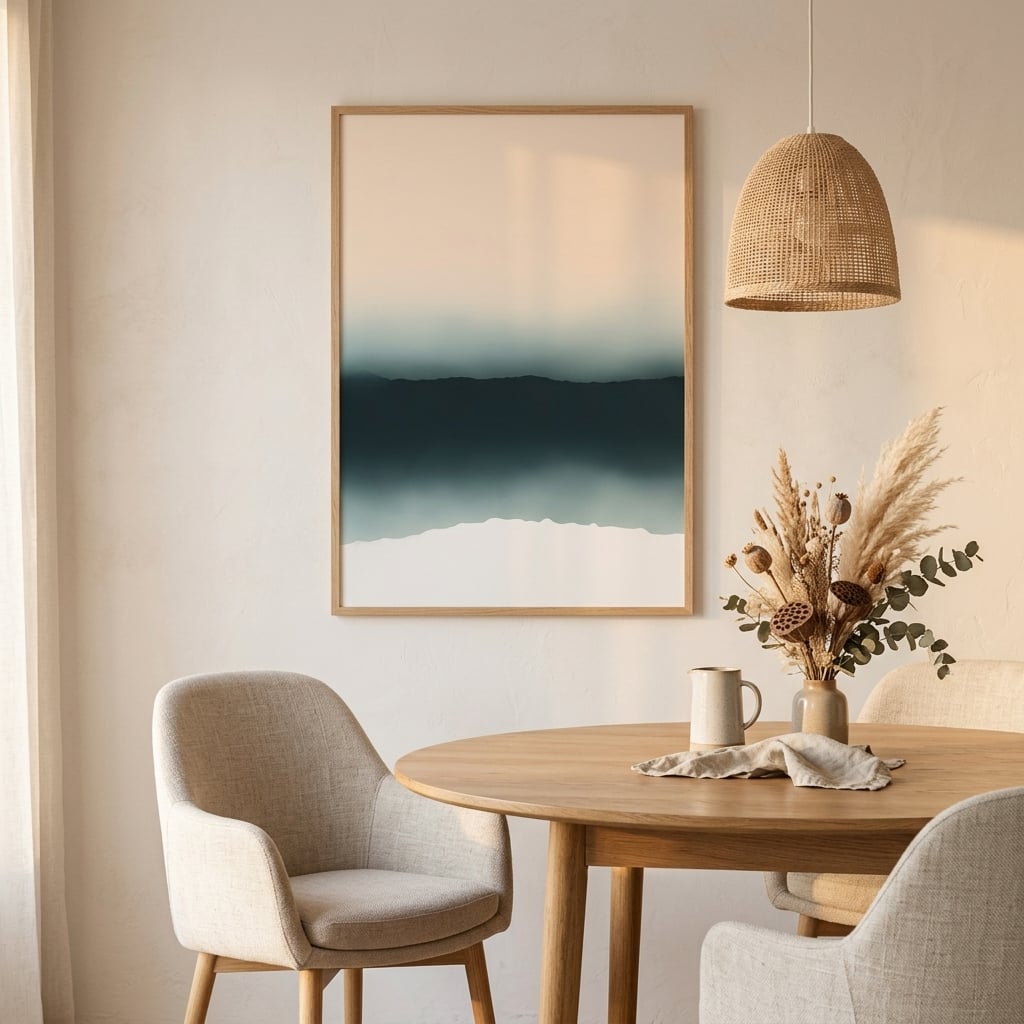
Dining areas embrace minimalism through substantial tables in natural materials paired with simple chairs. A wood table with visible grain provides warmth and texture, while metal or upholstered chairs in neutral tones keep the look clean. Centerpieces, if used at all, should be low-profile and simple—a single bowl, a small vase, or a few candles.
Bringing Nature Into Minimalist Spaces
Plants prevent minimalist spaces from feeling too austere while improving air quality and adding life. Large-scale plants like fiddle leaf figs, monstera, or snake plants make dramatic statements without creating clutter. Choose simple pots in materials that complement your overall aesthetic—concrete, ceramic, or woven baskets.
Plant placement should feel intentional rather than scattered. A single large plant in a corner, a pair of medium plants flanking a sofa, or a small collection on a dedicated plant stand works better than individual plants dotted throughout a room. This approach maintains the visual simplicity that defines minimalism.
The whole family of restraint now lives in one place: our minimalist wall art hub, from line work to zen.
Lighting in Minimalist Design
Lighting deserves significant attention in minimalist interiors because it serves both functional and atmospheric purposes. Layer three types of lighting: ambient (overhead or general), task (reading lamps, under-cabinet), and accent (highlighting art or architectural features). This layering creates depth and flexibility.
Fixture design should align with your overall aesthetic—clean-lined pendants, simple floor lamps with minimal ornamentation, or recessed lighting that disappears entirely. Metallic finishes in matte black, brushed brass, or chrome add subtle luxury without visual weight.
Common Minimalist Mistakes to Avoid
Over-editing creates spaces that feel unlived-in rather than minimalist. Your home should reflect who you are—include personal items, just be selective. A few meaningful photographs, a collection displayed cohesively, or hobby materials stored beautifully show personality without clutter.
Sacrificing comfort for aesthetics defeats minimalism’s purpose. A beautiful chair that’s painful to sit in or a sofa that’s too firm for relaxing works against the lifestyle minimalism should support. Choose pieces that serve your daily life comfortably while meeting aesthetic standards.
Ignoring scale creates proportion problems. Tiny furniture in large rooms looks lost; oversized pieces in small spaces overwhelm. Measure carefully and consider how each piece relates to the room’s dimensions and other furnishings before purchasing.
Maintaining Your Minimalist Home
Minimalism is a practice, not a one-time project. Regular editing sessions—quarterly or seasonally—help maintain your space. Walk through each room with a critical eye, removing items that no longer serve you or fit your aesthetic. Donate, sell, or discard rather than relocating clutter to storage.
Implement systems that prevent accumulation. A designated spot for mail, a routine for processing paperwork, and regular closet reviews keep minimalism functional. These habits become easier over time as you internalize the principles guiding your space.
Remember that minimalist home decor adapts to life changes. New hobbies, growing families, or shifting work situations may require adjustments to your approach. The core principles remain constant—intentionality, functionality, visual simplicity—but their application evolves with your needs.
Creating a minimalist home isn’t about achieving perfection or following rules rigidly. It’s about designing spaces that support your life by removing distractions and highlighting what matters. Whether you incorporate carefully selected art prints, invest in quality furniture, or simply embrace negative space, minimalism offers a framework for living with more by owning less. Start with one room, one decision at a time, and build the calm, functional home that serves your life best.